
Thank you, Minister of Infrastructure. Final supplementary. Member from the Sahtu.
Debates of May 28th, 2026
This is page numbers of the Hansard for the 20th Assembly, 1st Session. The original version can be accessed on the Legislative Assembly's website or by contacting the Legislative Assembly Library. The word of the day was know.
Topics
Question 1221-20(1): Marine Transportation Services 2026 Barging Season
Oral Questions
Question 1221-20(1): Marine Transportation Services 2026 Barging Season
Oral Questions

Daniel McNeely Sahtu
Thank you, Mr. Speaker. And thanks to the Minister for those replies. Those are just identifications of challenges that we face at the other end.
My last question there, Mr. Speaker, can the Minister, within his portfolio on the petroleum products division side, share some of the fuel volumes that are going to be barged down to the Sahtu communities. It really relieves the shipment over the winter road season as we get more volumes during the summer. Thank you.
Question 1221-20(1): Marine Transportation Services 2026 Barging Season
Oral Questions
Vince McKay Hay River South
Thank you, Mr. Speaker. We were fortunate with our winter haul again we were able to get a lot of fuel to the communities. But, again, we will take advantage of a good shipping season and haul more fuel. So we're forecasting deliveries to the Sahtu this year of -- to Fort Good Hope, 650,000 litres of gasoline and 3.4 million litres of diesel. And to Tulita, we're looking at about 300,000 litres of gasoline and 3.3 million litres of diesel. As always, these volumes are subject to change depending on demand and if there's a possibility of adding more, we always can. So thank you, Mr. Speaker.
Question 1221-20(1): Marine Transportation Services 2026 Barging Season
Oral Questions
The Speaker Shane Thompson
Thank you, Minister of Infrastructure. Oral questions. Member from Monfwi.
Question 1222-20(1): Equitable Access to Testing Following Lead Detection in Schools
Oral Questions

Jane Weyallon Armstrong Monfwi
Thank you, Mr. Speaker. Mr. Speaker, my questions are for the Minister of Health and Social Services. And we need to be mindful that, you know, as an Indigenous of the Northwest Territories, this is our land and our people that we are talking about. So, Mr. Speaker, a question for -- to the Minister of Health and Social Services.
Can the Minister explain why Yellowknife students were given priority access to blood lead level testing when elevated lead results were first identified but that same access has not continued for students in small communities where positive results have since been confirmed? Thank you.
Question 1222-20(1): Equitable Access to Testing Following Lead Detection in Schools
Oral Questions
Question 1222-20(1): Equitable Access to Testing Following Lead Detection in Schools
Oral Questions
Lesa Semmler Inuvik Twin Lakes
Thank you, Mr. Speaker. Mr. Speaker, what was done in -- when the first school was identified to have lead, health and social services within the city, within Yellowknife because that's where it was, made the public announcement if there were family or staff or parents of children who wanted to have their children assessed that they could contact the health care provider. Yes, in the capital, there was an email I believe, or a site where you could contact. However, in small communities, any small community that has tested positive is to contact your health centre. Many of the health centres are aware of this and so if they do the assessment and the assessment does call for needing a blood test, whereas even in Yellowknife when it said that they need an assessment, not necessarily did they all need a blood test. So it's based on the recommendation of the practitioner. And so that still stands for any of those health centres in small communities, that they just need to access their health care provider. Thank you.
Question 1222-20(1): Equitable Access to Testing Following Lead Detection in Schools
Oral Questions
Jane Weyallon Armstrong Monfwi
Okay, Mr. Speaker, it's kind of disappointing. It would be nice if, you know, the Minister would be, you know, if the Minister was working well with the other health centre, so. But anyway since the public briefing, additional test results from NWT communities have shown lead levels far higher than what was known at that time. Can the Minister explain why that department has not provided updated public information on the potential health impacts for students in those communities? Thank you.
Question 1222-20(1): Equitable Access to Testing Following Lead Detection in Schools
Oral Questions
May 28th, 2026
Lesa Semmler Inuvik Twin Lakes
Thank you, Mr. Speaker. Mr. Speaker, information that I have received from the chief public health officer is overall lead exposure has dropped dramatically in Canada and the NWT over time, and children's blood levels are at historic lows across the territory. Remaining sources of lead are well understood and manageable. GNWT has an effective testing and mitigation process in place for schools. Parents can feel confident that right now in schools drinking water is safe. And if people are concerned about their health and lead exposure, they can speak to their health care provider for more information and a health assessment. Thank you, Mr. Speaker.
Question 1222-20(1): Equitable Access to Testing Following Lead Detection in Schools
Oral Questions
The Speaker Shane Thompson
Thank you, Minister of Health and Social Services. Final supplementary. Member from Monfwi.
Question 1222-20(1): Equitable Access to Testing Following Lead Detection in Schools
Oral Questions
Jane Weyallon Armstrong Monfwi
Mr. Speaker, my next question is not to health and social services but it's to the infrastructure. Can I -- or I go back on the list then?
Then I will wait because it's for the infrastructure, McKay.
Question 1222-20(1): Equitable Access to Testing Following Lead Detection in Schools
Oral Questions
Question 1223-20(1): Security Impacts of the Ekati Diamond Mine
Oral Questions
Julian Morse Frame Lake
Thank you, Mr. Speaker. Mr. Speaker, my questions continue to be for the Minister of ECC, digging a bit more into detail on specifics now.
Mr. Speaker, can the Minister please detail for the House what his department is doing in response to the revelation that the Ekati mine site may be undersecured? Thank you.
Question 1223-20(1): Security Impacts of the Ekati Diamond Mine
Oral Questions
The Speaker Shane Thompson
Thank you, Member from Frame Lake. Minister of Environment and Climate Change.
Question 1223-20(1): Security Impacts of the Ekati Diamond Mine
Oral Questions
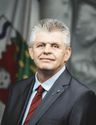
Jay MacDonald Thebacha
Thank you, Mr. Speaker. Mr. Speaker, I believe that the Member is referring to some numbers and information that was included in their CCAA filing. That information has not been shared with the Government of the Northwest Territories or the land and water boards so we're unable to assess that information at this time. Thank you, Mr. Speaker.
Question 1223-20(1): Security Impacts of the Ekati Diamond Mine
Oral Questions
Julian Morse Frame Lake
Thank you, Mr. Speaker. I am a little bit confused, I must admit. It seems like the information is on the public record. How could the department not simply access it and assess it to determine if any action needs to be taken? Thank you.
Question 1223-20(1): Security Impacts of the Ekati Diamond Mine
Oral Questions
Jay MacDonald Thebacha
Thank you, Mr. Speaker. Mr. Speaker, as we work through the assessment and the establishment of securities processed with the land and water boards, that information is generated through a process that we work collaboratively with the boards. We do an evaluation through our process. This information was not given to us directly. We don't have that information available to do that assessment. Thank you, Mr. Speaker.
Question 1223-20(1): Security Impacts of the Ekati Diamond Mine
Oral Questions
The Speaker Shane Thompson
Thank you, Minister of Environment and Climate Change. Final supplementary. Member from Frame Lake.
Question 1223-20(1): Security Impacts of the Ekati Diamond Mine
Oral Questions
Julian Morse Frame Lake
Thank you, Mr. Speaker. I am going to have to reflect on that a little bit and come up with some additional questions. I am going to move on to another one.
Mr. Speaker, I note that Diavik is already proceeding with closure and De Beers has indicated closure of their site is likely to commence soon. Has the Minister considered the risk that the longer the Ekati site is in a limbo state we could end up in a situation where GNWT takes responsibility for the site and would then have to operate the winter road alone potentially increasing the reclamation costs even further? Thank you.
Question 1223-20(1): Security Impacts of the Ekati Diamond Mine
Oral Questions
Jay MacDonald Thebacha
Thank you, Mr. Speaker. Mr. Speaker, currently the team is looking at all the potential outcomes from the potential that the one or three diamond mines potentially no longer exist in the Northwest Territories, and part of that is being calculated in the plan as we move forward with the reclamation planning process. Thank you, Mr. Speaker.
Question 1223-20(1): Security Impacts of the Ekati Diamond Mine
Oral Questions
The Speaker Shane Thompson
Thank you, Minister of Environment and Climate Change. Oral questions. Member from Great Slave.
Question 1224-20(1): Transboundary Water Impacts of Wonder Valley AI Data Centre Project
Oral Questions

Kate Reid Great Slave
Thank you, Mr. Speaker. Mr. Speaker, I had a constituent reach out to me yesterday about the Wonder Valley AI data centre. It's backed by a celebrity investor, and it's to be built near Grand Prairie, which is in the Mackenzie Basin watershed. It's expected to be 65 square kilometres in size and estimated to use up to 24 million cubic metres of clean water annually. To put that in perspective, 24 million cubic metres is lifetime consumption of 460,000 people, Mr. Speaker. Alberta has decided there's no environmental assessment needed, just permits. So my question for the Minister of Environment and Climate Change is how will the GNWT assess impacts on water quantity or quality and intervene if required? Thank you, Mr. Speaker.
Question 1224-20(1): Transboundary Water Impacts of Wonder Valley AI Data Centre Project
Oral Questions
The Speaker Shane Thompson
Thank you, Member from Great Slave. Minister of Environment and Climate Change.
Question 1224-20(1): Transboundary Water Impacts of Wonder Valley AI Data Centre Project
Oral Questions
Jay MacDonald Thebacha
Thank you, Mr. Speaker. Mr. Speaker, as the Member has indicated, the Wonder Valley AI data centre project is a large project. It certainly is a large water consumer and currently there are no regulatory submissions within the province of Alberta so therefore at this time there is no project to do an evaluation on. We will continue to monitor the situation and evaluate -- participate when the opportunity arises. Thank you, Mr. Speaker.
Question 1224-20(1): Transboundary Water Impacts of Wonder Valley AI Data Centre Project
Oral Questions
Kate Reid Great Slave
Yeah, thank you, Mr. Speaker. So, Mr. Speaker, without an environmental assessment I don't know at what point the Minister could intervene. Could he clarify? Thank you.