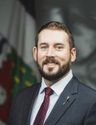
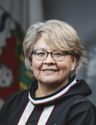
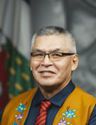
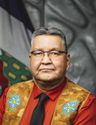
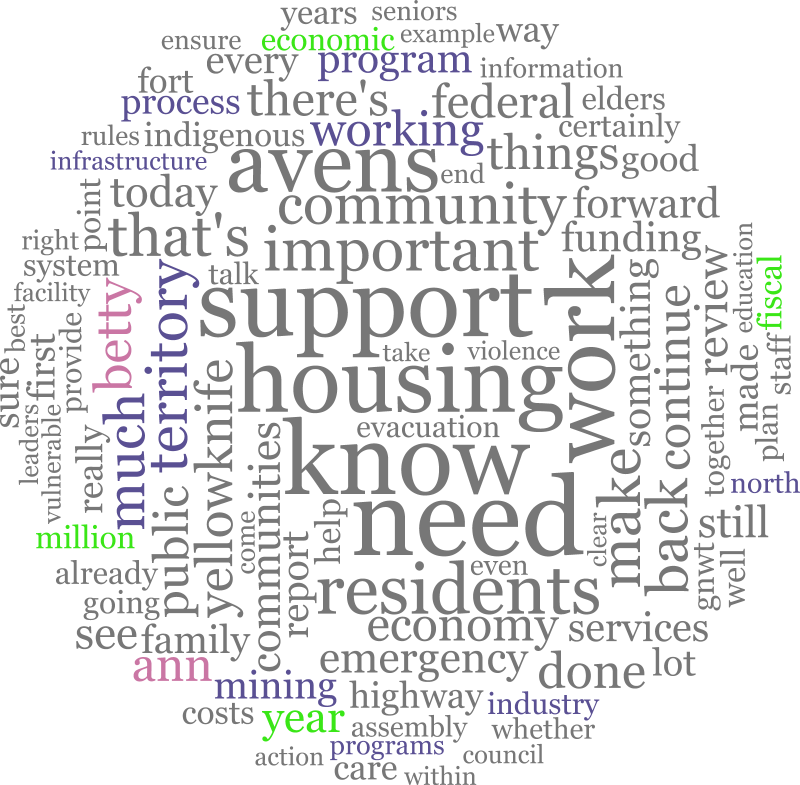
This is page numbers of the Hansard for the 20th Assembly, 1st Session. The original version can be accessed on the Legislative Assembly's website or by contacting the Legislative Assembly Library. The word of the day was need.

Topics

Members Present

Hon. Caitlin Cleveland, Mr. Edjericon, Mr. Hawkins, Hon. Lucy Kuptana, Hon. Vince McKay, Mr. McNeely, Ms. Morgan, Mr. Morse, Mr, Nerysoo, Ms. Reid, Mr. Rodgers, Hon. R.J. Simpson, Mr. Testart, Hon. Shane Thompson, Hon. Caroline Wawzonek, Mrs. Weyallon Armstrong, Mrs. Yakeleya

The House met at 1:30 p.m.

---Prayer or reflection

Prayer Or Reflection

The Speaker

The Speaker Shane Thompson

I'd like to thank Suzie Napayok for the opening, guiding words. Colleagues, I'd like to draw our attention to the presence of Daryl Dolynny in the gallery, a Member of the 17th Legislative Assembly. Welcome back to our Assembly.

Member from Range Lake -- or Yellowknife Centre, sorry.

Point Of Order
Point Of Order

Robert Hawkins

Robert Hawkins Yellowknife Centre

That's okay, sometimes you can't tell us apart, Mr. Speaker. We do it to ourselves.

Mr. Speaker, I rise on a point of order regarding Bill 26 which received second reading in the House on May 29th, 2025, and was referred to the Standing Committee on Government Operations on that date.

Mr. Speaker, our rules lay out the procedures for the committee to review bills in chapter 8.3, and I do not believe they have been followed in this case. Rule 8.3(1) specifies that, quote, bills referred to a standing committee, special committee, shall not be proceeded until the Assembly receives the report of the committee or 120 calendar days past from the day the bill was given second reading, end quote.

The clear expectation is that committee will report on the review of a bill within 120 days or at the earliest opportunity subsequent to the passage of the 120 days.

Mr. Speaker, further, Rule 8.3(4) states that, and I quote, a standing or special committee shall conduct its clause-by-clause review of a public -- sorry, of a bill in public, end quote.

Mr. Speaker, yesterday was the earliest opportunity subsequent to the passage of 120 days from the date of the referral to standing committee, and the bill was not reported back to the House.

Further, the committee has not conducted a public clause-by-clause review as required by rules.

Mr. Speaker, that's my point of order, and if you do allow debate, I will have some comments. Thank you.

Point Of Order
Point Of Order

The Speaker

The Speaker Shane Thompson

Thank you, Member from Yellowknife Centre. I am going to call on the chair from Frame Lake to respond. Do you need time to respond? Are you prepared to do it now, or would you like to respond later on? Member from Frame Lake.

Point Of Order
Point Of Order

Julian Morse

Julian Morse Frame Lake

Thank you, Mr. Speaker. Mr. Speaker, I think I would need a little bit of time just to speak with committee staff and make sure that my response is in order with everything required of me as a chair.

Point Of Order
Point Of Order

The Speaker

The Speaker Shane Thompson

Thank you, Mr. Chair. So my ruling is we will bring this back before Committee of the Whole. Thank you.

Ministers' statements. Minister of Finance.

Minister's Statement 146-20(1): 2025-2026 Fall Economic and Fiscal Update
Ministers' Statements

Caroline Wawzonek

Caroline Wawzonek Yellowknife South

Thank you, Mr. Speaker, for this opportunity to provide the Legislative Assembly with the fall economic and fiscal update. This statement will describe the changes that have happened since Budget 2025 was released, review the supplementary appropriations to date for 2025-2026, and outline how we are revising our fiscal strategy goals to better match the uncertain economic times that we find ourselves in.

2025 has, again, been marked by notable natural disasters which were a major focus for many residents and workers over the past few months. The year is not over and still there are active wildfires across the territory. More specifically, residents in Fort Providence and Whati had to evacuate in late August and the Tthets'éhk'édélı̨ First Nation was under evacuation alert for a short period.

The wider Canadian economy, alongside much of the world's geopolitical situation, are facing times of notable uncertainty. The United States is the largest economy in the world and remains under a state of rolling tariff changes that reverberate through the world. For the territory, the private sector remains highly dependent on a single resource commodity, which makes us particularly vulnerable to international markets and consumer demand swings.

In response to the level of ongoing uncertainty, we are modifying our fiscal strategy. The previous fiscal strategy aspired to increase operating budgets through a combination of new revenue generation and expenditure management to decrease short-term debt and increase fiscal capacity so that the GNWT could continue to respond to expenditure shocks. Unfortunately, significant economic disruptions are upon us even sooner than anticipated.

We will be responsive by investing in the stability and resilience of the territory. While these goals will increase debt, we are careful to ensure that our debt remains affordable and that investments provide long-term economic benefits.

The federal government granted us a borrowing limit increase in March 2025 and with this higher borrowing limit, we gained $1.3 billion in flexibility to respond to new challenges and continue investments in public infrastructure. To be clear, increased borrowing does not mean increased revenue. To make an analogy, our credit card limit has increased but our income has not. We remain committed to stay within the guardrails of the fiscal responsibility policy to restrain the rate of debt accumulation. Even with a shifting of our formal fiscal strategy, fiscal responsibility and sustainability remain key pillars for the GNWT.

We will continue to expect good value in all programs and services, keep a close eye on public sector growth, and seek innovative paths forward to find efficiencies.

The dominance of the diamond mining industry over the past few decades makes the territorial economy especially sensitive to the shifting tides of global markets. In recent months, new hurdles have emerged. American import tariffs have added uncertainty for markets, particularly in mining and other resource and trade dependent industries.

Earlier this year, the Government of the Northwest Territories provided targeted support measures to the diamond mines, including temporary tax relief and operational assistance. This support does not change the reality that the planned closure dates of the mines are already upon us. The recent tariffs and market demand volatility reminds us of the vulnerability of our economy and the dependence for contracts many businesses associated to the mines rely on. We must continue to reduce barriers to speed up new investments and encourage a more diversified private sector.

Declining diamond production, slow to no growth in private investment, and housing shortages continue to weigh on the economic outlook. Public and private sector employment have remained relatively steady. Wages have grown in mining and public administration but are flat in other key sectors. Inflation has eased, offering relief to households, and total active businesses has recovered to pre-pandemic averages.

The economy does not stand still. It will continually evolve in response to changing human and social dynamics that surround us. I have long said that I remain optimistic for the Northwest Territories' potential future and that remains true, now in particular, with changes coming on the national landscape.

The federal government is looking North and seems to be sincerely hearing the calls from leaders across the Territories to deal with the lack of connections in and between 40 percent of Canada's landmass. This is a challenge to our sovereignty that all of Canada should be aware of but investing in true nation building by looking towards the Arctic can build Canada into the northern Arctic leader that many Canadians see ourselves as.

The Arctic Economic and Security Corridor is already on the list of nation-building projects, and there is continued interest in the Mackenzie Valley Highway as the department of defense has invested significant resources to upgrade the Inuvik airport as a future forward operating location. In addition, energy connections broadly remain a strategic focus, including projects like Taltson, as does the critical minerals sector where the Northwest Territories has several advanced opportunities.

Mr. Speaker, we started this fiscal year with a projected operating surplus of $170 million. Consistent with the previous fiscal strategy, this represented enough of a cash surplus to fully pay for the 2025-2026 capital budget without additional borrowing. We are now projecting an operating surplus of $16 million. This $154-million decline in our operating balance takes into account the two supplementary appropriations prepared and year-end expenditure projections.

Approved supplementary spending to date this year is $47 million that comes with $38 million in federal support, for a net total of $9 million of new spending compared to Budget 2025. Among the new spending, higher salaries for educators required $2 million under the school funding framework. Transitional housing and shelter services, harbour restoration in Hay River, and contributions to physical activity, sport and recreation were each approved for $1.8 million in supplementary support. Aurora College was approved for $528,000 for the practical nurse training program. The Yellowknife courthouse will receive $246,000 for approved security improvements, including a new sheriff position and other upgrades.

The second supplementary funding process totals $87 million with $15 million of offsetting support. This is proposed new spending and it is primarily focused on three measures: Additional wildfire suppression costs, funding to education bodies to assist with the loss of Jordan's Principle funding, and further subsidies that are proposed to shield ratepayers from electricity price spikes that stem from low water. It would also include funding for the disaster response and recovery and proposed funding to continue fish plant operations in Hay River.

Mr. Speaker, 2025-2026 infrastructure budgets are also seeing increases. So far this year, the Legislative Assembly has approved supplementary capital budgets of $179 million, which includes $113 million in offsetting revenue, either federal funding or carried over from the previous year, for a net increase to the capital budget of $65 million. Most of this increase was for the first year of a new three-year annual $42-million housing investment commitment made after Budget 2025. This investment reflects an emphasis on mandate priorities that include suitable, accessible, and affordable housing.

Taking all these factors into account, we are now expecting to close the fiscal year with $840 million in short-term borrowing. And that will bring our total debt to $1.862 billion, an increase of $90 million compared to the original Budget 2025 projection.

Keeping our own fiscal house in order, Mr. Speaker, remains essential, but our progress towards meeting the original fiscal goals has been hindered by rising expenditure pressures and significant economic and geopolitical uncertainty. Revising the fiscal strategy to enable strategic investments that foster opportunity and stability for Northerners is essential amid challenging times.

Revising the fiscal strategy is also allowing more time to complete the work we started to find the best fiscal foundation for a sustainable healthcare system. We are providing the time needed for the healthcare system sustainability unit and the Northwest Territories Health and Social Services Authority public administrator to complete their work, while not sacrificing patient care. We are looking forward to the outcome of this work being incorporated into the 2027-2028 business planning process.

Despite the revised fiscal direction, I am reaffirming the GNWT's commitment to the fiscal responsibility policy and the guidelines that keep debt affordable and within the borrowing limit. With that continued guidepost, we are maintaining a balance between fiscal flexibility but still mindful of the need for restraint in the face of slow revenue growth.

Mr. Speaker, the Government of the Northwest Territories sees the challenges we face as opportunities to support an economy in transition. We remain committed to long-term sustainability but our near-term focus must be on stability and resilience. And with continued federal partnership, a continued focus on efficiency, and a commitment to maximizing northern benefits, we are creating conditions for a stronger and more diversified economy. Thank you, Mr. Speaker.

Minister's Statement 146-20(1): 2025-2026 Fall Economic and Fiscal Update
Ministers' Statements

The Speaker

The Speaker Shane Thompson

Thank you, Minister of Finance. Ministers' statements. Minister responsible for Housing NWT.

Minister's Statement 147-20(1): Capital Delivery Status Update
Ministers' Statements

Lucy Kuptana

Lucy Kuptana Nunakput

Mr. Speaker, I am committed to building more homes for Northerners. We are turning this commitment into action through multi-year planning with funding from the Government of the Northwest Territories, the Canadian Mortgage and Housing Corporation, and Housing NWT.

Each year for the rest of this Legislative Assembly, Housing NWT will invest $50 million annually, including $41.6 million per year from the Government of the Northwest Territories, to build new homes and repair existing ones.

This is a result of strong collaboration among Members of this House and reflects a key strength of this government, which I am proud to be a part of. This collaboration and ongoing funding commitment continues to bring us towards improving the suitability, accessibility, and affordability of housing in the NWT.

Since the start of the 20th Legislative Assembly, Housing NWT has completed 81 new housing units, 67 homes are being built as we speak, and we plan to build 152 more over the next two years, reaching 300 newly constructed homes over the life of this government. These projects rely on strong partnerships with contractors, local housing organizations, and Indigenous governments to plan and build homes that meet the needs of communities. We are also supporting residents to gain skills and education in the trades, with the additional requirement for each new construction contract to include an apprenticeship work assignment.

Mr. Speaker, our strategy focuses on new construction, as well as major renovation projects to existing public housing units. This includes replacing older units and upgrading units to improve the condition and extend their lifespan. We are using data from the Territorial Housing Needs Assessment to adjust our housing portfolio and align planning decisions with the types of housing that Northerners need both now and in the future.

Housing NWT staff are continuously looking for ways to meet and collaborate with Indigenous governments to improve housing outcomes. To date, we have entered into formal agreements with four Indigenous governments, including the Tlicho government, the Sahtu Secretariat Incorporated, the Deline Got'ine government, and the Gwich'in Tribal Council. These agreements help us work together on sustainable shared housing goals.

Construction on the 50-unit mixed-use building in Yellowknife progressed very well this summer. So far, the foundation, the utility service tie-ins, and the municipal connections are complete. We are exploring innovative ways to continue construction through the winter season. Off-site manufacturing of the mass timber and building envelope will continue this winter in southern Canada. These pieces will be ready and delivered to the worksite in the spring. This future mixed-use building is located on 50th Street and will support vulnerable populations directly with access to safe and stable housing.

I would like to extend my sincere thanks to the city of Yellowknife for the land contribution, CMHC's Rapid Housing Initiative of $20.8 million in funding, and PCL Construction and Stantec as design-build partners in this project.

Mr. Speaker, I would also like to highlight the modernization of Aspen Apartments. This project demonstrates strategic initiative, an important step forward in improving public housing and reducing reliance on third party landlords. This upgrade will extend the building's service life by 25 years and add 36 newly owned units to Housing NWT's portfolio. This project is on track to be completed by mid-November. Once construction is complete, public housing tenants currently renting from third party landlords will move into the building. This will free up market rental units in Yellowknife, providing more homes for residents in need of market housing. We are switching from oil heat to a cleaner biomass system as part of our energy plan and, again, to strategically invest in our buildings and reduce costs in the long-term.

Work continues across the NWT, with the award of Housing NWT's most recent design-build contract to ARCAN Construction Ltd. who will work with METCAN Building Solutions, a northern Indigenous-owned NWT manufacturer of modular homes. The contract will deliver 84 units to eight communities in the form of duplexes and four-plexes, with construction beginning in spring 2026. Homes will be constructed in Hay River at METCAN Building Solutions' facility to ensure durability, efficiency, and suitability for northern conditions.

I am pleased to report that earlier this summer, Housing NWT entered into a negotiated contract with the Fort Smith Metis Council to deliver a public housing duplex. Other negotiations are underway with Indigenous governments for additional 14 units, and I look forward to providing more details as negotiations progress.

We are advancing our energy strategy by switching to biomass and electric heating where possible, including Housing NWT's first ever electric boiler in Fort Smith. Other exciting energy initiatives include testing cold climate heat pump technology in partnership with the Arctic Energy Alliance and designing all new buildings to be at least 20 percent more energy efficient than the 2015 model National Energy Code. At the end of the month, a biomass heating system will be online in Fort Providence for the Seniors Multiplex.

Mr. Speaker, I look forward to sharing more updates as we continue to make progress and deliver more homes for Northerners. Quyananni, Mr. Speaker.

Minister's Statement 147-20(1): Capital Delivery Status Update
Ministers' Statements

The Speaker

The Speaker Shane Thompson

Thank you, Minister responsible for Housing NWT. Ministers' statements. Members' statements. Member from Great Slave.

Member's Statement 710-20(1): Northwest Territories Nominee Program
Members' Statements

Kate Reid

Kate Reid Great Slave

Thank you, Mr. Speaker. Mr. Speaker, today I want to continue to talk about the NWT nominee program. In September, the Minister announced that Immigration Refugees and Citizenship Canada has increased the Northwest Territories' 2025 allocation for our nominee program by 47 nominees which brings the total to 197. This does not restore the NWT allocations 2024 levels of 300 spots, but it's a step in the right direction.

I'm heartened to see that the Minister continues to advocate to her federal counterparts when she was in Ottawa with her Cabinet colleagues and Council of Leaders, and then this week in Toronto, she attended the forum of Ministers responsible for immigration meeting. I'm hopeful for some good news.

Limited spots means that there are knock-on effects for newcomers, many who are panicked and need support. Crucial support is not readily available in the NWT, including but not limited to immigration lawyers. This creates intense anxiety for people who think they are doing all the right things, following all the right paths, and are stymied by the whiplash of federal policy changes. Additionally, I hear from newcomers that they continue to be frustrated that those here the longest are not considered a priority, which means they need to apply to extend their work permits which puts them into perpetual limbo.

Mr. Speaker, I also wish to raise two important points:

1. We are not facing the same challenges south of 60 that have created this policy turnaround. Our newcomers are already here and established, building their lives and families and supporting our communities; and,

2. While the support of the business community here in Yellowknife and in our regional centres is greatly appreciated, I would also like to highlight that everyone in the NWT who is not Indigenous also has a newcomer story in their family. Being kind to those who want the same opportunity to be a good neighbour costs nothing and makes our communities stronger. I will have questions for the Minister of ECE. Thank you.

Member's Statement 710-20(1): Northwest Territories Nominee Program
Members' Statements

The Speaker

The Speaker Shane Thompson

Thank you, Member for Great Slave. Members' statements. Member from Range Lake.

Member's Statement 711-20(1): Government Support for Mining Industry
Members' Statements

Kieron Testart

Kieron Testart Range Lake

Mr. Speaker, in 2017, Premier Bob McLeod raised a red alert over oil and gas development in the Beaufort Sea after Prime Minister -- then Prime Minister Trudeau declared a moratorium without consulting the Northwest Territories. At the time, I was fairly critical of that. I was focused on other aspects of the economy, particularly mining, but now I owe him an apology because I see the real value of that red alert in sending a clear signal across the country and the world that the NWT was open for business and fighting to preserve the opportunity to develop its own resources.

Mr. Speaker, today we need a new red alert, a red alert over our mining industry. Northerners were sent -- or the North's economy was sent into shock waves when the Ekati mine stopped open pit mining earlier this summer. Hundreds of jobs were lost. The economy is at risk of losing its most significant private sector contributors through Ekati and all the mine's employment, training, infrastructure investment, face an uncertain future after years of relying on this industry to support our economy, and Indigenous nations who co-manage our regulatory system are soon to lose financial and economic benefits from their agreement with these companies.

Mr. Speaker, mining contributes 24 percent of the NWT's GDP, and if you add in the spinoffs to the larger economy it exceeds 40 percent. This should not be a surprise that the mines were eventually going to close. All mines do. But we stand completely, seemingly, unprepared for this eventuality. No new projects have been meaningfully advanced and are on the horizon to replace the mining decline. The three things that have led to this are declining exploration, outdated systems of mineral tenure, and ineffective policy that have stalled out our mining sector. And despite the urging of industry experts to correct this for more than a decade to both the federal and territorial governments, we only have further inaction and hesitation to show for it. We must act now at the midpoint of this Assembly before it is too late to reverse this decline. And if we don't, it will continue to send a chilling message that the NWT is not open for business contrary to the messaging of the government. It's time for a red alert for mining, it is time for an independent review of mining decline, it is time to expand the mineral incentive program and a North of 60 tax credit, and it is time to modernize the tenure system after ten years of languishing in regulatory process. Thank you.

Member's Statement 711-20(1): Government Support for Mining Industry
Members' Statements

The Speaker

The Speaker Shane Thompson

Thank you, Member from Range Lake. Members' statements. Member from the Sahtu.

Member's Statement 712-20(1): Small Business Week
Members' Statements

Daniel McNeely

Daniel McNeely Sahtu

Thank you, Mr. Speaker. Economy related, Mr. Speaker. The potential of the Mackenzie Valley Highway presents boundless business opportunities for small businesses in the Northwest Territories, recognizing that Small Business Week starts this coming Sunday, October the 19th to October the 25th. I'd like to take this opportunity to encourage all entrepreneurs and small business owners across the Northwest Territories to participate in this important celebration for entrepreneurialship. Small Business Week is Canada's entrepreneurial celebration, and it offers valuable opportunities for the business owners to learn, connect, interact, and celebrate with experts and other entrepreneurs from across our great nation.

Mr. Speaker, as we look forward to the economic opportunities that infrastructure projects like the Mackenzie Valley Highway will bring to our territory, it's more important than ever that our small businesses are prepared and equipped to seize these opportunities. I encourage all NWT entrepreneurs to take advantage of the resources and events scheduled, available during the Small Business Week to strengthen our businesses and position themselves for future successes.

Small businesses are the backbone of our northern economy, and supporting their growth, stability, and development is essential to bringing a prosperous future and building a prosperous future of the residents of the Northwest Territories and thus attracting certainty on future investment. Mahsi.

Member's Statement 712-20(1): Small Business Week
Members' Statements

The Speaker

The Speaker Shane Thompson

Thank you, Member from the Sahtu. Members' statements. Member from Inuvik Boot Lake.

Member's Statement 713-20(1): Mackenzie Valley Highway
Members' Statements

Denny Rodgers

Denny Rodgers Inuvik Boot Lake

Thank you, Mr. Speaker. Mr. Speaker, last week, I had the privilege to attend the Council of Leaders. I was invited as chair of the accountability and oversight committee as an observer. I'd like to thank the Council of Leaders, the Indigenous leaders, our Premier and Cabinet for that invitation.

Mr. Speaker, I would say there's some kudos to be sent out. I think that certainly our Premier and his Cabinet did a great job in presenting to the federal Ministers. The Indigenous leaders likewise. It was very much a we are speaking with one voice, and I thought that was a great approach. And certainly some of the things they discussed down there, Mr. Speaker, housing, the ongoing criminal activity, health concerns and, of course, the major infrastructure projects.

While I was there, Mr. Speaker, there was also a presentation done by the Sahtu Secretariat Incorporated as well as in collaboration with GNWT on the proposed Mackenzie Valley Highway. And, again, what I thought was a good presentation. There was some -- certainly some representation there from the federal government as well. And, Mr. Speaker, it's an exciting project. And I know, and I've heard the Minister speak about it today, that the Slave Geological Highway has kind of gotten a little more of a boost, I guess, from the federal government than the Mackenzie Valley Highway, but I think, Mr. Speaker, as a group, I think we need to make sure we continue to push and to ensure that the Mackenzie Valley Highway remains our number one priority. I think it's our road, it's good for everyone, it's good for the entire territory. Not only for the -- you know, for the defence and for sovereignty and the things that are important to our nation, and certainly important to us, but I would argue as an energy corridor as well, Mr. Speaker. We talk about we have mining -- the mines that are now closing down. We know, and I've said it many times, you know, we're sitting on 19 trillion cubic feet of natural gas in the Beaufort Delta. We've seen the Indigenous government in that region, the Inuvialuit, starting their own development in that process. So imagine, Mr. Speaker, not only would that provide an energy source, energy security within our own territory for us, Mr. Speaker, but also the revenue and the royalties that come with that to make us more of a have-territory and we're not sad here during budgets, Mr. Speaker, and fighting over the small amount of revenue that we do have. So, again, Mr. Speaker, I think the Mackenzie Valley Highway, we -- you know, we have an office set up in Ottawa. I had an opportunity to speak with our envoy down there. I had some very positive conversations. We need to continue that push. I think we need to continue to make sure that the Mackenzie Valley Highway is the number one project, Mr. Speaker. The Slave Geological, yes, it's important, but it's ten years out likely. We have permits in place, we are ready to put shovels in the ground in the Mackenzie Valley Highway. We need to keep that plan. Thank you, Mr. Speaker.

Member's Statement 713-20(1): Mackenzie Valley Highway
Members' Statements

The Speaker

The Speaker Shane Thompson

Thank you, Member from Inuvik Boot Lake. Members' statements. Member from Monfwi.

Member's Statement 714-20(1): Support for Transitional Students
Members' Statements

Jane Weyallon Armstrong

Jane Weyallon Armstrong Monfwi

Thank you. Thank you, Mr. Speaker. Mr. Speaker, with the closure of the Aurora College 19 community learning centres, students who live outside of Yellowknife, Fort Smith, and Inuvik, face even greater challenges in accessing programs or transitional -- or transitioning successfully into university level studies. These students are left with few options to upgrade their skills or complete prerequisite courses and, as a result, face barriers to obtaining funding under the student financial assistance program.

Take, for example, a 19-year-old Tlicho citizen from Behchoko who was denied financial support from student financial assistance for enrolment in an emergency medical responder program at NAIT. This program is a critical first step towards becoming a paramedic, yet it is not recognized as post-secondary program under current funding policies. This student is passionate about serving her community, and yet she is being told her education does not qualify.

Mr. Speaker, living in small communities with poor education outcome, many of our youth rely on this kind of program to move forward. If we fail to support our youth in obtaining positive education outcomes now, we are setting them up for failure in a future where they will most certainly end up relying on income support. In a territory where we urgently need Indigenous healthcare workers, we must do better. We must ensure our funding systems reflect the realities of modern training pathways and support those who choose to serve.

Mr. Speaker, the SFA framework as it currently exists does not support university bridging programs, which are essentials for students who do not meet direct requirements for university. These programs offer academic upgrading, skill development, and transitioning support that can make the difference between access and exclusion. Now is the time to look at amending the Student Finance Assistance Act and regulation to explicitly include university bridging programming as eligible for financial support. Mr. Speaker, can I have unanimous consent to conclude my statement.

---Unanimous consent granted

Mr. Speaker, doing so would align with the Act's intent and ensure that students are not penalized for systemic gaps in educational access. Education is a right, not a privilege, which we have said quite a few times. We need to ensure that every student in the Northwest Territories has a fair chance to succeed regardless of where they live or the path they must take to realize their dreams. Masi.

Member's Statement 714-20(1): Support for Transitional Students
Members' Statements

The Speaker

The Speaker Shane Thompson

Thank you, Member from Monfwi. Members' statements. Member from the Mackenzie Delta.

Member's Statement 715-20(1): Condition of Dempster Highway
Members' Statements

George Nerysoo

George Nerysoo Mackenzie Delta

Thank you, Mr. Speaker. Mr. Speaker, today I would like to follow up on my colleague's Member's statement from Boot Lake on the condition of the Dempster Highway. As my colleague stated, I too have been receiving daily texts about the highway conditions in terms of safety.

Mr. Speaker, I personally drive this highway on occasion, and I know what the residents of the Beaufort Delta are referring to and have them express their concerns about the horrible conditions of the highway at this time of the year. Just to put into context, when I went to Inuvik with the cab, the cab driver was driving 35 kilometers in the section in question. A two-hour drive turned into a three-and-a-half-hour drive.

Mr. Speaker, residents of the Beaufort Delta often ask me what are you doing about the conditions of the Dempster Highway, and I wish I could do something. All I can do is bring this to the attention of the Minister and his department and hope that something will be done for the safety of all users of the Dempster Highway.

Mr. Speaker, communication between all levels of this department is important to relay message on to everyone concerned. Mr. Speaker, in closing, I know the department has a website to update the users of the Dempster Highway. Communication between the Ministers and the regional departments must be maintained so the Minister's kept up to date on the condition on the highway systems throughout the NWT. Thank you, Mr. Speaker. I will have questions for the Minister of Infrastructure at the appropriate time.

Member's Statement 715-20(1): Condition of Dempster Highway
Members' Statements

The Speaker

The Speaker Shane Thompson

Thank you, Member from Mackenzie Delta. Members' statements. Member from Yellowknife North.

Member's Statement 716-20(1): Family Violence
Members' Statements

Shauna Morgan

Shauna Morgan Yellowknife North

Mr. Speaker, today I'm speaking about a difficult thing, and I urge listeners to take care of yourselves and seek support when you need it.

Family violence is one of those things that we seldom talk about inside or outside of this building, yet it is so pervasive that it affects every aspect of northern life, people's health, their ability to work, our economy, the ability of communities to function. It impacts people of every culture, Indigenous and non-Indigenous, of every education level and every income bracket.

The rates of intimate partner violence in the NWT are astronomical - 12 times the national average. One of this Assembly's priorities is to prevent, interrupt, and address the effects of trauma, but every day in our communities the cycle of trauma and violence is repeating itself.

It would be so much easier if it was just a matter of law and order, just punishing the bad guys, keeping them away forever from the helpless victims. But our family and community webs are too interconnected to separate the good guys and the bad guys like that. And survivors are not helpless. We may get frustrated when they go back, sometimes again and again, to abusive situations, but people's choices are complicated and the only way out is for survivors to be able to take their power back, to gain more realistic options and to make their own choices.

Over the past 25 years, the NWT has had family violence action plans, research studies, calls to action, and in 2023 a new strategic framework was published, yet this government continues to miss opportunities to make fundamental changes.

I say no more strategies, reports, hand-wringing, until we've taken action on the main recommendations that keep being raised over and over. Survivors need safe housing options. We don't yet have safe homes even in every region, and the ones that exist, for example the safe homes run by the YWCA with partners in Fort Simpson and Fort Good Hope, are constantly in danger of losing funding and shutting down. We need more transitional housing options because people cannot stay in a shelter long term. We need better ways of enforcing emergency protection orders and ways to make EPOs more responsive to changing needs. We need a justice system that is accessible, that doesn't re-traumatize people, and that has options for reconciliation and healing. Survivors need better access to legal aid. Abusers need supportive housing too and opportunities to heal and unlearn violent behaviours. These are big, expensive changes, Mr. Speaker, but the cost of the status quo is much, much more. Thank you.

Member's Statement 716-20(1): Family Violence
Members' Statements

The Speaker

The Speaker Shane Thompson

Thank you, Member from Yellowknife North. Colleagues, family violence is a challenging topic, and if anybody's listening needs support or assistance, please contact the RCMP, health centres, or visit the government website to find resources available to you.

Members' statements. Member from Tu Nedhe-Wiilideh.

Member's Statement 717-20(1): Negotiation of Akaitcho Final Agreement
Members' Statements

Richard Edjericon

Richard Edjericon Tu Nedhe-Wiilideh

Mr. Speaker, in the face of global uncertainty, the federal government has embraced a one-Canada approach, encouraging provinces and territories to work together in the national interest to build a stronger and more resilient economy where security is built on cooperation and shared prosperity. Canada is a country of many distinct and diverse nations where cooperation is key to success, and the same is true about our own territory. For us to be at our best, we must first ensure that we are united and working together; however, I fear our efforts to build the unity we need for our territory to grow and prosper remains overshadowed by the lack of resolution on the Akaitcho land claim and self-government agreement. The absence of this final agreement is not only denying my constituents the recognition and rights they deserve but also holding back the economic progress of our entire territory. Without this agreement, we face uncertainty around land access, long-term development, and investment. And let me be clear, it is not the Akaitcho or their leaders standing in the way of prosperity. They have been at the negotiating table for years, working to find a fair and just realization of our treaty. What my people feel in holding this process back is the lack of urgency and vision from the government to finalize this crucial process.

As this crucial moment for our territory's economic future, our government must recognize that long-term sustainability of economic growth can only be built on the foundation of reconciliation and respect for my communities. That foundation starts with finalizing the agreement. My constituents have waited for 125 years. They shouldn't have to wait for another 100 years. I have questions for the Premier on this issue at the appropriate time. Thank you, Mr. Speaker.

Member's Statement 717-20(1): Negotiation of Akaitcho Final Agreement
Members' Statements

The Speaker

The Speaker Shane Thompson

Thank you, Member from Tu Nedhe-Wiilideh. Members' statements. Member from Frame Lake.

Member's Statement 718-20(1): Yellowknife Encampment
Members' Statements

Julian Morse

Julian Morse Frame Lake

Thank you, Mr. Speaker. Mr. Speaker, this spring, an encampment was established in Yellowknife's downtown which caused a significant amount of public concern. It was quickly apparent we were right back where we left off last fall, and the situation was just as untenable this time. However, this year, something changed.

Peter Adourian, a lawyer representing residents of the encampment, approached the GNWT to see if they could work together to identify a better solution. This quickly resulted in an orderly dismantling of the encampment and moving it to a mutually agreed-upon location which was much better suited to the residents of the encampment and the community.

It was an incredibly effective approach, and I think it provides an important lesson for government in how we approach solutions to homelessness. This summer, I took the opportunity to meet with some of the residents of the encampment. Interestingly, the young men I spoke with were previously housed but faced eviction for various reasons. When asked why they chose to camp instead of accessing shelters, they noted that the shelters don't feel like a safe place to be. They're sleeping on mats in a large room or a hallway. They don't have somewhere to keep their things. It's just not a solution that works for them.

In putting myself in their shoes, Mr. Speaker, I can't blame them. I wouldn't feel comfortable sleeping in a shelter. Would you want to sleep on one of those floors? Would you want your children to? Shelters are an important short-term solution, but they are not housing and they are not a viable alternative to encampments.

Something else stood out to me when visiting this encampment. Rather than coming to anyone for government handouts, these folks took the situation into their own hands. It was clear that it was important to them to have agency over their housing. While the encampment itself may not be an end goal, the residents of the encampment are demonstrating exactly the kind of independence we work so hard to foster in people, and I believe this represents a huge opportunity. We clearly need a solution for people who are unhousable within the current spectrum of solutions offered. I would suggest that the best people to talk to about what that can look like would be the people in the encampments themselves. They are already standing up a solution, and they're currently doing it at a significantly lower cost than those run by government. We need to harness their energy and help them solve this problem for themselves. I am not suggesting this would be an easy solution or that it comes without risk but I do believe, Mr. Speaker, that it is the best way forward. Thank you.

Member's Statement 718-20(1): Yellowknife Encampment
Members' Statements

The Speaker

The Speaker Shane Thompson

Thank you, Member from Frame Lake. Members' statements. Member from Yellowknife Centre.

Member's Statement 719-20(1): Support for Northwest Territories Economy
Members' Statements

Robert Hawkins

Robert Hawkins Yellowknife Centre

Thank you, Mr. Speaker. Mr. Speaker, I'm going to join my colleagues on this mini-theme day regarding the economy. But first I'm going to set the table.

Mr. Speaker, some of us, Mr. Testart and I in particular, have asked the government to prorogue. And the reason we do proroguing is to reset the government's refocus and align its mandates. Mr. Speaker, it's true the economy is listed as one of the four mandate pillars, but it doesn't feel like that. Mr. Speaker, the opportunity being missed here is, frankly, that the federal government has changed, maybe our focus has changed, or maybe our focus should align with those who have the bags of money that we continually count on, because government building more government is not a true economy, Mr. Speaker.

So what is the economy right now? Well, if you speak to the folks on the street, there's nothing but fear. That's the economy. It's the economy of concern and worry about where we're going in the future. It's not a day that goes by I don't hear someone talk about how they're afraid that there's no mine on the future. Now, the government will say well, we're investing in training. By the time next year rolls around, potentially the risk of those thousand jobs moving out of the Northwest Territories, it'll be too late to train anyone. And by the time NICO, Pine Point, Prairie Creek, or Nechalacho comes online, five, ten years from now, all of those workers are long gone, Mr. Speaker. Mr. Speaker, there will be no one to train, to retool.

You know, we've bought into the mantra and we chanted you will never get another diamond, that's true. But we have ways we can fix that, Mr. Speaker. The mining industry has come forward and said yes, we want an independent mining committee to look at the decline. We could bring back people like Bob McLeod, fantastic people who are in business, like Daryl Bealieau and others in the industry who can talk about what would change the narrative.

Mr. Speaker, I'm prepared to eat my hat today in the sense of I often thought Bob McLeod was off the page. What's happening? He's turning into the Metis Churchill. Goodness sakes. Ten years ago, he said this was important, and some of us gave him a hard time but it's turning out he was true. He turned the page way ahead of us, Mr. Speaker. So when he called for a red alert on the economy, Mr. Speaker, he must have felt something or knew something we didn't know. So I join my colleague, Mr. Testart, in saying I agree the red alert matters because we need to be asking ourselves the serious, serious question: Where is the tax credit for mining? We need to immediately modernize our ten-year system for mineral staking, settle land claims, and approve many other things that we can do. We should get our blue chip committee telling us how do we turn the page and get our economy back rolling forward. Thank you, Mr. Speaker.

Member's Statement 719-20(1): Support for Northwest Territories Economy
Members' Statements

The Speaker

The Speaker Shane Thompson

Thank you, Member from Yellowknife Centre. Members' statements.

Member's Statement 720-20(1): Celebration of Life of Betty Ann Villenueve
Members' Statements

Shane Thompson

Shane Thompson Nahendeh

Colleagues, Betty Ann was born on February 2nd, 1968, the daughter of Jo and Alice Villenueve, in Fort Simpson. She was a sister to four siblings and mother to Skyler, Steven and Cheyenne. Betty Ann spent her life in Fort Simpson, close to her family and those she grew up with.

When she was young, she was known to be close with her father Jo and a bit of a daddy's girl. Often, Jo was the only one who could get Betty Ann to do anything, and it was through him that Betty Ann learned to love dancing, as they would often be dancing and jigging together. Sometimes her brother Jo would join them. It's well known in Fort Simpson that Jo is one of the best jiggers in town, so it is not surprising that they share the love of jigging.

From a young age, Betty Ann and her brother Jo were always close. They were there for each other and, as children, would go on little adventures along the airstrip on rafts. Once they played hooky from school to try hunting with Jo's bow and arrow, sometimes the cousins and other kids in town would join them. The airstrip was a popular place to play. Two of the sisters remembered picking flowers that grew like a jungle for Betty Ann. They would pick so many flowers and bring them back to Alice. In a day they would bring her several batches of them, so she would have to get rid of some to make room for more.

Betty Ann was also known for her caring and was often the nurse when people would get hurt. When her niece was badly burned, Betty Ann jumped to help. She helped take control of the situation, went to the hospital, took down all the information that was needed to care for her niece, and then helped her for care. She jumped in to help when her sister couldn't handle seeing her daughter in pain and needed someone. Betty Ann was there, and that was common with her and her other nieces and nephews. She always had a soft spot for them and cared for them and helped her and the family when it was needed.

As Betty Ann finished school, she spent time in various positions in the community, from the Sub Arctic, the Northern Gas Bar, firefighter's training, and many other odd jobs she would pick up. One of her positions was at the Nahanni Inn where she met Wayne. Together they had children and continued to live in Fort Simpson.

The kids remember Betty Ann as being loving, caring, and an attentive mother who would always make sure the kids ate first and made the best soup. Betty Ann was known to make holidays special with her love for decorating which is evident to the community, as many would drive by her yard and see decorations with Christmas lights or Halloween decorations. During the holidays, her children would say that she would be Martha Stewart up the house as she went all out for the holidays to make it look like Hallmark holidays.

Betty Ann really had a big heart for her family and her children and animals, her extended family and her friends. This was her to a T.

Being respectful of the time, I have attached other stories from family and friends, which I will like them to be deemed as read.

The family would like to talk everybody for their prayers and support during this difficult time. She will be sadly missed, especially by her partner Robin.

When the kids were still young, Betty Ann and Wayne decided to get married. They kept it very small and didn't tell many. The kids were surprised to learn the wedding would be happening in the living room the next day, they quickly cleaned the House for the wedding, just to have it destroyed by rice that was thrown in celebration. It was a very small and intimate wedding, which seemed to be just how Betty Ann wanted it. About her, her partner, and her children.

With Cheyenne being the youngest, Betty Ann would often tell the brothers, Skyler and Steven, to watch out for her. One summer they were playing in their yard, and Cheyenne kept running towards the long grass, Steven was getting more and more upset because he was supposed to make sure Cheyenne was all good. The boys would get in trouble if anything happened to her, and he was afraid he would lose her in the grass. Betty Ann came up with a solution, to get shoestrings and tie them together and then tie Cheyenne to Steven so they couldn't separate and Cheyenne could not run off. It ended up being a tug of war between Cheyenne and Steven as she still tried to run into the grass. While Betty Ann probably laughed, she also ensured Cheyene's safety, and likely put Steven at a little more at ease knowing his sister wouldn't get lost. Something a caring and inventive mother would think of. Making things work with what she had.

During Christmas and Halloween, she was good at directing the kids, as she would often get everything out and then tell the kids exactly where to hang the decorations. Her love for decorating and making holidays special, shows how much she cared about others and wanted to make things extra special for all those around her.

As life moved on for Betty Ann and the kids got older, Betty Ann remarried to Michael. It was another very intimate wedding that many in the family did not know about. But that was Betty Ann, no one could tell her what to do when she was younger, except her dad Jo, and she often continued to do the things she wanted as she got older.

Michael and she were a duo that often drove to Wrigley or Yellowknife to see his family. Michael shared his love for Dene culture and the Drum with Betty Ann. They would often be at drum dances, with Michael teaching younger people in the family and community to drum. Betty Ann learned and practiced a lot of culture with Michael.

Arlie Brown shared memories of her sassy and caring personality. When she first moved to Fort Simpson, she met Betty Ann, amongst all the other staff at Nahanni Inn. She had a hard time remembering all the names of everyone and as she was having lunch, and Betty Ann was working, Arlie accidentally called her, "Betty Sue". She immediately said sorry, but the damage was done, and Betty Ann went into the kitchen and didn't say a word to her. A couple of days later, she said good morning to Betty Ann, but she just flicked her hair and walked away. She didn't give up and kept saying good morning every day. Betty Ann eventually came around and one day came with a gift for her and apologized for being so rude. From then on, they were good friends, talking practically every day on the phone. Betty Ann also had a sassy side to her, but ultimately was a caring and forgiving person.

Betty Ann had a close network of cousins. Often when she would see them, she greeted them with a "hey Cuz!" And a housing. She was typically a warm presence with a big smile, and treated her cousin's children as her own, as she doted on them. Her and Michael would gift small drums to the younger boys, and she taught others how to play bingo. She and Cathy played bingo with Amaria for her first time, even before she knew what big numbers like 45 were. Betty Ann would help her and tell her it's a 4 and a 5. Then Nateyaa fondly remembers a time she gave him a huge bag of change in an enormous zip log baggie. I'm sure a lot of Canadian was bought with that.

Some of her cousins share these words:

"Betty Ann was not only our cousin, but she was always there for us with open arms and a loving smile in times of need. It was a connection of the heart we all shared throughout the years of experiences with laughter, tears, and mutual understanding. She had an extraordinary capacity for empathy; she could sense something was wrong and would ask, "what's wrong'. She would provide comfort, strength, laughs and a jolly smile in times of need. Our conversations with her, whether serious or silly, always left you feeling uplifted and understood. She had a gift for listening without judgment. She had a special bond with each family member and had nicknames for many. She will be deeply missed and will have a special place in our hearts."

Betty Ann's love of dancing, from her childhood, carried on in her life. As her kids would often stop at her House to see her with the satellite music station on the tv, playing blasting music, as she danced away while cleaning.

I ask that we remember her the way she would have wanted us to. Dancing away with her loved ones, smiling and laughing.

Members' statements. Member from Deh Cho.

Member's Statement 721-20(1): Eulogy for Samuel Gargan
Members' Statements

Sheryl Yakeleya

Sheryl Yakeleya Deh Cho

Thank you, Mr. Speaker. Today I want to honour the life and legacy of Samuel Gargan, a respected Dene leader, a dedicated public servant, and a proud Northerner whose contributions have left an enduring mark in the Northwest Territories.

Born in 1948 at Redknife River, Sam's life was deeply rooted in the land and the people of the North. His journey was one of service, guided by a profound respect for tradition, community, and the natural world.

Prior to his election in 1983, Mr. Gargan worked as a counsellor with Higher North, was a classroom assistant at Elizabeth Ward School in Fort Providence and was a director with the Dene Nation. He was a member of the Fort Providence Hamlet and Band Council and sat as National Aboriginal Health Board with the Assembly of First Nations. For 16 years, he represented the people of the Deh Cho as the MLA in this Legislative Assembly with integrity, compassion, and unwavering commitment.

In 1995, he was elected Speaker of the House, a role he embraced with humility and a deep sense of responsibility. In his first speech as Speaker, Sam reminded us that tradition is more than ceremony. It is a foundation of values. He pledged to uphold both the cultural and procedural traditions of the Assembly, ensuring that every voice was heard and respected. He believed that leadership was not just about personal gain but about service and that every decision made in the House should serve as an example to our people.

Sam's leadership extended far beyond the walls of this legislature. Sam served as the mayor of Fort Providence in early 2001 but stepped down from that position in June of 2001 after being elected as Chief of the Deh Gah Got'ie First Nations, also located in Fort Providence.

In 2009, Sam was chosen as grand chief of the Deh Cho First Nations. He was a passionate advocate for the protection of our communities, our water, our animals, and our land.

At the elders' Parliament in 2014, he posed a question that continues to resonate today. Who is going to protect the people? Who is going to protect the animals, the water, and the land? This was not just a rhetorical question; it was a call to action, a reflection of the values he lived by every day.

Sam was also a devoted husband and father. He often spoke of the love and support he received from his wife Alphonsine and their children. He credited them as a source of his strength throughout his public life, and their presence was a constant reminder of the importance of family and community.

Those who knew Sam remember a man who led with wisdom, humility, and a quiet strength. He was a bridge between generations, a guardian of traditions, and a tireless advocate for the North. His legacy lives on in the communities he served, in the values he championed, and in the example he set for future leaders. Though he is no longer with us, Sam's spirit remains on the land he loved, in the people he served, and in the traditions he upheld. Mahsi cho, Sam. Thank you for everything. Your legacy lives on. Mahsi, Mr. Speaker.

Member's Statement 721-20(1): Eulogy for Samuel Gargan
Members' Statements

The Speaker

The Speaker Shane Thompson

Our condolences and prayers go out to the family during this difficult time.

Members' statements. Returns to oral questions. Recognition of visitors in the gallery. Member from Yellowknife Centre.

Recognition Of Visitors In The Gallery

Robert Hawkins

Robert Hawkins Yellowknife Centre

Thank you, Mr. Speaker. Mr. Speaker, I'll start off by saying, first I'll acknowledge a former colleague and friend -- not former friend, but former colleague of the Legislative Assembly. Punctuation matters as they say.

So, Mr. Speaker, let me start again, just to make sure we're clear. Former colleague of this House and a friend, I'll say, who used to be the Member for Range Lake, as you've already acknowledged, Mr. Daryl Dolynny. He's also been an entrepreneur in the city, but he's currently the CEO and president of Avens. I appreciate him being here today. By his side, he also has some folks. He has board member Taig Connell, Ron Allen, and I believe from my notes here that were just sent to me, I believe we might have Steven Nicholas up there, Sara Fullerton and Carol Norwegian and Jessica Ewing and Dina van delft. Without the benefit of my spectacles, I'll assume they're all sitting there at this very moment and along with our millions of subscribers, mostly from Avens. Thank you.

Recognition Of Visitors In The Gallery

The Speaker

The Speaker Shane Thompson

Thank you, Member from Yellowknife Centre. Recognition of visitors in the gallery. Member from Tu Nedhe-Wiilideh.

Recognition Of Visitors In The Gallery

Richard Edjericon

Richard Edjericon Tu Nedhe-Wiilideh

Thank you, Mr. Speaker. I too want to recognize the former MLA Daryl Dolynny and also his colleagues and the board members and also everybody in the gallery here today, I just want to say mahsi for being here.

Recognition Of Visitors In The Gallery

The Speaker

The Speaker Shane Thompson

Thank you, Member from Tu Nedhe-Wiilideh. Recognition of visitors in the gallery. Member from Range Lake.

Recognition Of Visitors In The Gallery

Kieron Testart

Kieron Testart Range Lake

Thank you, Mr. Speaker. I too want to recognize the former Member for Range Lake, Daryl Dolynny. He's a good friend and is a tireless advocate for seniors in our community. I also want to recognize his team and the Avens board who have come here to join us today. Thank you very much for being here.

Recognition Of Visitors In The Gallery

The Speaker

The Speaker Shane Thompson

Thank you, Member from Range Lake. Recognition of visitors in the gallery.

If we missed anyone in the gallery here today, welcome to your chambers. I hope you are enjoying the proceedings. It is always nice to see people in the gallery, and I appreciate the fact that you allow us the privilege of representing the people of the Northwest Territories for the four years.

Recognition of visitors in the gallery. Acknowledgements. Oral questions. Member from Range Lake.

Question 777-20(1): Status of Mineral Resources Act Regulations
Oral Questions

Kieron Testart

Kieron Testart Range Lake

Thank you, Mr. Speaker. Earlier today we called for a -- some of us called for a red alert into mining because the situation is dire. We have aging legacy mines that are closing, no new mines on the horizon. Can the Minister of Industry, Tourism and Investment speak to why the MRA was passed at the end of the 18th Assembly. It's been ten years before it's come into force, and we do not see a clear path forward. Can the Minister speak to the status of the Mineral Resources Act regulations? Thank you.

Question 777-20(1): Status of Mineral Resources Act Regulations
Oral Questions

The Speaker

The Speaker Shane Thompson

Thank you, Member from Range Lake. Minister of ITI.

Question 777-20(1): Status of Mineral Resources Act Regulations
Oral Questions

Caitlin Cleveland

Caitlin Cleveland Kam Lake

Thank you very much, Mr. Speaker. Mr. Speaker, I appreciate the Member bringing up the Mineral Resources Act regulations in the House today. The technical working group has been working hard in unison and collaboratively with Indigenous governments, and that is the most important part of this work, is that it's done collaboratively, and I'm happy to say that the policy intentions document is going out for engagement this fall. Thank you.

Question 777-20(1): Status of Mineral Resources Act Regulations
Oral Questions

Kieron Testart

Kieron Testart Range Lake

Thank you, Mr. Speaker. Policy intentions are great, but they don't result in new regulations or a Mining Act that's in force. So when will the -- let's just focus on the outdated 19th century tenure system. When will the tenure system be modernized, computerized, and online map staking available to bring the Northwest Territories in to 2025 like other jurisdictions that are doing far better than we are? Thank you, Mr. Speaker.

Question 777-20(1): Status of Mineral Resources Act Regulations
Oral Questions

Caitlin Cleveland

Caitlin Cleveland Kam Lake

Thank you, Mr. Speaker. Mr. Speaker, the policy intentions document is a very important part because it's really important to give people, residents, the opportunity to feed into the process before the regulations are fully drafted and really baked in. And that was something that was requested by multiple residents and concerns that were brought forward that residents have the opportunity to feed into this process.

So in response to the Member's questions, so the draft regulations will be ready for section 35 consultation in winter of 2027. So once we get the feedback from the policy intentions document, that work will be taken by Department of Justice, and that drafting will be taking place, public posting in spring of 2027, and then it will go through step G of the intergovernmental gouncil secretariat process in summer of 2027, and then from there, it'll be public posting of the draft regulations once that process is done. Thank you.

Question 777-20(1): Status of Mineral Resources Act Regulations
Oral Questions

The Speaker

The Speaker Shane Thompson

Thank you, Minister of ITI. Final supplementary. Member from Range Lake.

Question 777-20(1): Status of Mineral Resources Act Regulations
Oral Questions

Kieron Testart

Kieron Testart Range Lake

Thank you, Mr. Speaker. So 2027 is the plan. Is the Minister able to work with partners because it's very important that we do; it's part of the devolution agreement; it's part of our co-management system. But is the Minister able to work with partners to expedite this process to indicate the dire state of our exploration? Exploration's dropped by 50 percent since 2018. That's a huge decline. Can the Minister bring those concerns to that table and expedite this process? Because we desperately need reform now. We don't say red alert idly. Will the Minister act and expedite this process so we can have this modernized system in place right away? Thank you.

Question 777-20(1): Status of Mineral Resources Act Regulations
Oral Questions

Caitlin Cleveland

Caitlin Cleveland Kam Lake

Thank you, Mr. Speaker. Mr. Speaker, short answer, yes. Absolutely, this is a key focus of mine, it's a key focus of my colleagues, is making sure that we can get this piece of legislation done. I can also say that through Council of Leaders and the working groups that we are -- or sorry, the time that we spend with Indigenous leadership in this territory. The economy is incredibly important to everyone that is at the table, and we're hearing that from Indigenous governments as well. We're not travelling alone as Cabinet in these conversations. We're travelling alongside Indigenous leadership, and we're travelling as a team. And I think that's really critically important. So the short answer is yes, it's very important to me that this work gets done and gets done as quickly as possible. Thank you.

Question 777-20(1): Status of Mineral Resources Act Regulations
Oral Questions

The Speaker

The Speaker Shane Thompson

Thank you, Minister of ITI. Oral questions. Member from Yellowknife Centre.

Question 778-20(1): Mining and Economic Opportunities
Oral Questions

Robert Hawkins

Robert Hawkins Yellowknife Centre

Thank you, Mr. Speaker. Again, joining the semi-mini theme day, Mr. Speaker, I want to talk about the economy and more particular, I want to speak about the mining issue.

Mr. Speaker, my Member's statement I pointed out that the benefit of an independent sort of mining committee to review, we could convene a three-person or four-person blue chip panel and bring back Bob, you know, our guy who knows his stuff, who called the red alert, Mr. Speaker. Would the Minister be willing to do that, create a panel of people who have specialized expertise, could say what are the issues they foresee in our economy that's slowing mining down, because we all know it is truly the foundation of our economic future. Thank you, Mr. Speaker.

Question 778-20(1): Mining and Economic Opportunities
Oral Questions

The Speaker

The Speaker Shane Thompson

Thank you, Member from Yellowknife Centre. Minister of ITI.

Question 778-20(1): Mining and Economic Opportunities
Oral Questions

Caitlin Cleveland

Caitlin Cleveland Kam Lake

Thank you very much, Mr. Speaker. Mr. Speaker, I appreciate the Members bringing this up and, you know, I remember when the red alert was issued back in 2017. I was cheering Bob on. I've long been a fan of former Premier McLeod. And I remember the crux of that being no decisions about the North without the North. And that's something that we still stand by on this side of the House. Meeting with industry is something that I do on a regular basis and, Mr. Speaker, acknowledging how important it is that we as Cabinet work together and there's never a one silver bullet or there's never one issue or one challenge we can work through. I don't do that on my own. I do that alongside the Minister of Environment and Climate Change and the Minister of Strategic Infrastructure because all of our departments play a critical role in working together with industry. So those meetings are already happening, and they're happening on a very regular basis. Thank you.

Question 778-20(1): Mining and Economic Opportunities
Oral Questions

The Speaker

The Speaker Shane Thompson

Colleagues, personal names not allowed in the House, please and thank you. I would appreciate both sides to respect that. Thank you.

Member from Yellowknife Centre.

Question 778-20(1): Mining and Economic Opportunities
Oral Questions

Robert Hawkins

Robert Hawkins Yellowknife Centre

Absolutely, Mr. Speaker. You're a steady hand on the till when it comes to the rules.

Mr. Speaker, former Premier McLeod, or I called him other things, Mr. Speaker, I really mean that endearingly. He had a vision. And you know what? The reason I say this is because the Minister is in power to make decisions. I appreciate she wants to consult but what's wrong with convening a three-person panel as an example? Because they could talk about the power of a North of 60 mineral tax credit. They could talk about the power of the mineral tender system. They could talk about different things about stakeholder engagement, including building relationships as the Premier had said yesterday how important that is.

Mr. Speaker, can the Minister use her authority, which she is full able to do this, to create something to get these things done because we're not seeing movement on this file. Thank you.

Question 778-20(1): Mining and Economic Opportunities
Oral Questions

Caitlin Cleveland

Caitlin Cleveland Kam Lake

Thank you, Mr. Speaker. Mr. Speaker, the Member is asking me to create something that already exists. These meetings are already happening. These collaborations are already happening. I'm already working with industry to learn from them and also to collaborate and carry our voices forward together. As Cabinet, we work very closely with Council of Leaders, and those conversations about industry are then carried forward to the federal government and to other key stakeholders together as a team. So these conversations are already happening. This work is already happening. So I'm saying great idea to the Member; we're doing it. Thank you.

Question 778-20(1): Mining and Economic Opportunities
Oral Questions

The Speaker

The Speaker Shane Thompson

Thank you, Minister of ITI. Final supplementary. Member from Yellowknife Centre.

Question 778-20(1): Mining and Economic Opportunities
Oral Questions

Robert Hawkins

Robert Hawkins Yellowknife Centre

Mr. Speaker, I'm referring to something outside government, and how I'll frame it this way very quickly is a person in the industry said they're not doing this, and they're a well-known person in the industry. They talk about the disconnect between the NWT geological society -- or survey, sorry, and industry on hand. They used to have regular meetings, Mr. Speaker. It's that kind of relationship outside of government.

So, Mr. Speaker, would the Minister be willing to sit down and talk about that and find a way to bring back an independent panel to be able to make recommendations because our economy is beyond on the ropes, Mr. Speaker. We need action now. Thank you.

Question 778-20(1): Mining and Economic Opportunities
Oral Questions

Caitlin Cleveland

Caitlin Cleveland Kam Lake

Thank you, Mr. Speaker. Mr. Speaker, I heard the Member asked to sit down. I'm always happy to sit down with a Member. Frequently, if I'm in town, I'm generally in my office, and I'm always on my phone, so very happy to have time either on the phone or in person with the Member. I have regular meetings with what would be considered industry or independent panelists who otherwise referred to as Chamber of Mines. I have a meeting with them today. Very happy to inform the Member or sit down and have a conversation with the Member about what we talk about.

In addition to that, Mr. Speaker, there is a lot of other stuff that's going on in addition to what the Member is talking about, conversations that are happening, but then also we meet with the advanced projects of this territory on a very regular basis and find out where they're at, what some of their challenges are, how we can support one another because we have common goals at the end of the day.

We're also, myself along with the Premier and the Minister of Environment and Climate Change, working on a regulatory streamlining. This is very important work to all of us and something that we definitely want to see when we talk about reducing red tape across the board. And we're ensuring at the end of the day that we have a map of what is happening in the territory, how we can support one another and how we can work together. So very happy to sit down with the Member anytime. Thank you.

Question 778-20(1): Mining and Economic Opportunities
Oral Questions

The Speaker

The Speaker Shane Thompson

Thank you, Minister of ITI.

Colleagues, we've just taken ten minutes and had two questions, two sets of questions. So, please, be brief in our preamble and really succinct with your answers.

Oral questions. Member from Great Slave.

Question 779-20(1): Northwest Territories Nominee Program
Oral Questions

Kate Reid

Kate Reid Great Slave

Thank you, Mr. Speaker. I will be succinct. Yesterday it was reported that the federal Minister for IRCC said that some nominee programs are getting a boost to numbers. Can the Minister let the House know if that includes the NWT.

Question 779-20(1): Northwest Territories Nominee Program
Oral Questions

The Speaker

The Speaker Shane Thompson

Thank you, Member from Frame Lake. Minister of Education, Culture and Employment.

Question 779-20(1): Northwest Territories Nominee Program
Oral Questions

Caitlin Cleveland

Caitlin Cleveland Kam Lake

Thank you very much, Mr. Speaker. Mr. Speaker, I am happy to report that the Northwest Territories has negotiated the full reinstatement of its nominee program.

Question 779-20(1): Northwest Territories Nominee Program
Oral Questions

Kate Reid

Kate Reid Great Slave

Thank you, Mr. Speaker. Good news indeed. Mr. Speaker, many newcomers experience great anxiety as goalposts shift and changes are made without prior notice to the program which creates excruciating uncertainty for applicants. Will the Minister commit to be providing more information on the amount of spaces, the timeline, and process for applicants to anticipate in the 2026 intake. Thank you, Mr. Speaker.

Question 779-20(1): Northwest Territories Nominee Program
Oral Questions

Caitlin Cleveland

Caitlin Cleveland Kam Lake

Thank you very much, Mr. Speaker. Mr. Speaker, the Member reflected in their statement about the fact that I was just in Toronto at our meeting with Ministers from across the country. This was something that I raised at the table, was the uncertainty that repetitive kind of announcements of new allotments has created and also the late announcements of what our 2026 will look like. So I have asked for more advanced notice so that we know what levels will look like and more forward-looking outlook so we're not finding out year after year in that same timeframe. Thank you.

Question 779-20(1): Northwest Territories Nominee Program
Oral Questions

The Speaker

The Speaker Shane Thompson

Thank you, Minister of Education, Culture and Employment. Final supplementary. Member from Great Slave.

Question 779-20(1): Northwest Territories Nominee Program
Oral Questions

Kate Reid

Kate Reid Great Slave

Thank you, Mr. Speaker. Mr. Speaker, will the Minister speak to whether ECE's recent engagement campaign this past September, whether or not that campaign has identified a need to support newcomers who have been in the NWT the longest; that is to say, the current program supports folks whose work permits are expiring but folks who have been here the longest extend. Thank you, Mr. Speaker.

Question 779-20(1): Northwest Territories Nominee Program
Oral Questions

Caitlin Cleveland

Caitlin Cleveland Kam Lake

Thank you very much, Mr. Speaker. Education, culture and employment's currently working on the What We Heard report in order to gather all that information and be able to publish it for everybody to be able to see what feedback we were receiving. I can say or share with the Member that just in emails that I've received from people across the territory who are living here and wanting to participate in the nominee program that responses really vary. People's circumstances are so unique, and, really, people are looking for that certainty and they want to call the North home. And so I expect that we'll see a diverse range of responses and that we'll need to make strategic decisions that benefit the territory at the end of the day but also balance the need of Canadian newcomers and employers. Thank you.

Question 779-20(1): Northwest Territories Nominee Program
Oral Questions

The Speaker

The Speaker Shane Thompson

Thank you, Minister of Education, Culture and Employment. Oral questions. Member from Tu Nedhe-Wiilideh.

Question 780-20(1): Status of the Akaitcho Process Negotiations
Oral Questions

Richard Edjericon

Richard Edjericon Tu Nedhe-Wiilideh

Thank you, Mr. Speaker. I just want to recognize Chief Drygeese traditional territory and home of the Yellowknives Dene First Nation.

Mr. Speaker, as we approach the end of the year, my question is to the Premier. If he could update this House on what progress has been made towards finalizing the Akaitcho land claim and self-government agreement in 2025. Thank you, Mr. Speaker.

Question 780-20(1): Status of the Akaitcho Process Negotiations
Oral Questions

The Speaker

The Speaker Shane Thompson

Thank you, Member from Tu Nedhe-Wiilideh. Mr. Premier.

Question 780-20(1): Status of the Akaitcho Process Negotiations
Oral Questions

R.J. Simpson

R.J. Simpson Hay River North

Thank you, Mr. Speaker. So back in 2023, a consultation draft of the Akaitcho treaty agreement-in-principle was concluded, and the Akaitcho chiefs, or First Nations, wanted to do an internal review of that agreement-in-principle before external consultation continues. And so that was in, as I said, 2023. It was in 2024 when they requested that there's no -- there will be no external consultation until they were comfortable, their membership were comfortable with the agreement-in-principle. And that is, from what I understand, still the status. The last meeting with the Akaitcho was in May on this topic, and since then they have been continuing their internal review.

So at this point, Canada, the GNWT, are waiting for that to conclude. So the ball is in their court. Thank you.

Question 780-20(1): Status of the Akaitcho Process Negotiations
Oral Questions

Richard Edjericon

Richard Edjericon Tu Nedhe-Wiilideh

Thank you, Mr. Speaker. Has the recent changes in federal leadership and its renewed focus on economic development had a positive impact on the progress of these negotiations? Thank you, Mr. Speaker.

Question 780-20(1): Status of the Akaitcho Process Negotiations
Oral Questions

R.J. Simpson

R.J. Simpson Hay River North

Thank you, Mr. Speaker. And so as I said, because this has been taken internally by the Akaitcho, there hasn't been any progress and so any changes in the federal government's position haven't really had an impact. However, I know that the federal government is looking to cut costs across government and so there is -- you know, we need some clarity on what this extended internal review means for the funding to conduct such a review and how long the federal government will continue to provide funds. So in terms of the economic focus, I can't say there's been an impact, but we're waiting to find out what impact there could be with the upcoming federal budget. Thank you.

Question 780-20(1): Status of the Akaitcho Process Negotiations
Oral Questions

The Speaker

The Speaker Shane Thompson

Thank you, Mr. Premier. Final supplementary. Member from Tu Nedhe-Wiilideh.

Question 780-20(1): Status of the Akaitcho Process Negotiations
Oral Questions

Richard Edjericon

Richard Edjericon Tu Nedhe-Wiilideh

Thank you, Mr. Speaker. Given the agreement's significance to both reconciliation certainty and economic certainty in the Northwest Territories, can the Premier confirm whether finalizing the Akaitcho agreement is a major priority of this government and what steps are being taken to demonstrate that commitment. Thank you, Mr. Speaker.

Question 780-20(1): Status of the Akaitcho Process Negotiations
Oral Questions

R.J. Simpson

R.J. Simpson Hay River North

Thank you, Mr. Speaker. It is a major priority. I think it should be evident to everyone why that's a major priority. When we have settled land claims, we have certainty. You know, prospective investors would have certainty. The money would flow into the territory from the federal government to the First Nations to administer their lands and self-governments. So, yes, it's a priority to get this done. However, it is in the hands of the Akaitcho right now. That being said, we're continuing to try to do our best to strengthen our relationship with the Akaitcho, and so we have been working with them on the Arctic economic and security corridor. The Akaitcho -- actually, the chiefs came down to the Council of Leaders which was very encouraging to see them down there in Ottawa and making contribution to that table. So in terms of the treaty, the agreement-in-principle, things are where they are with the Akaitcho. They're still doing internal review. But our overall relationship, it is advancing. Thank you, Mr. Speaker.

Question 780-20(1): Status of the Akaitcho Process Negotiations
Oral Questions

The Speaker

The Speaker Shane Thompson

Thank you, Mr. Premier. Oral questions. Member from Yellowknife North.

Question 781-20(1): Family Violence Strategic Framework and Action Plan
Oral Questions

Shauna Morgan

Shauna Morgan Yellowknife North

Thank you, Mr. Speaker. My questions today are for the Minister responsible for the Status of Women.

So in October 2023, the Minister responsible for Status of Women at the time released a strategic framework for addressing family violence in the NWT. It was called Reclaiming the Capable Person: We Are All Capable Persons When We Have Community. I do appreciate the title and the recommendations contained within it, many of which echo recommendations that have been made repeatedly over the past 20 years. The strategic framework indicates that it was released as a draft and it was going out for input and then an action plan was supposed to be released.

So can the Minister confirm whether she did, in fact, receive any input on this strategic framework from Indigenous and community governments and other key stakeholders? Thank you, Mr. Speaker.

Question 781-20(1): Family Violence Strategic Framework and Action Plan
Oral Questions

The Speaker

The Speaker Shane Thompson

Thank you, Member from Yellowknife North. Minister responsible for the Status of Women.

Question 781-20(1): Family Violence Strategic Framework and Action Plan
Oral Questions

Lucy Kuptana

Lucy Kuptana Nunakput

Thank you, Mr. Speaker. Mr. Speaker, I can confirm that the GNWT did engage with stakeholders to gather input for the development of Family Violence Strategic Framework, and this involved reaching out to community partners like the NWT family violence shelters, frontline service providers, and government departments. This work also involved researching and tracking developments in other jurisdictions. In 2023, a What We Heard report called Insights Guiding the Development of a Family Violence Strategic Framework was prepared and available on the GNWT website. Thank you, Mr. Speaker.

Question 781-20(1): Family Violence Strategic Framework and Action Plan
Oral Questions

Shauna Morgan

Shauna Morgan Yellowknife North

Okay, thanks to the Minister for that. I understand there was a What We Heard report, and then the strategic framework was, in fact, released. But it did say in the framework that the intention was to move from this general framework with some general recommendations to an actual action plan. So when will a new action plan on family violence be released with funding attached, timelines, and milestones? Thank you, Mr. Speaker.

Question 781-20(1): Family Violence Strategic Framework and Action Plan
Oral Questions

Lucy Kuptana

Lucy Kuptana Nunakput

Thank you, Mr. Speaker. The gender equity division has begun work on coordinating with other departments through a family violence interdepartmental working group which was reactivated in August of 2025. This interdepartmental working group consists of members from health and social services, justice, Housing NWT, education, culture and employment, and executive and Indigenous affairs through their integrated service delivery agency.

The working group will also be working closely with a family violence coordinator to provide overall direction on the development of a corresponding family violence strategic framework action plan, including indicators which will be reported on annually. The projected completion date for the action plan is June of 2026, and a release of the annual report is the spring of 2027.

The family violence strategy is funded through the national action plan to end gender-based violence, which includes enhanced core funding for NWT families, shelters, and transitional housing projects. Thank you, Mr. Speaker.

Question 781-20(1): Family Violence Strategic Framework and Action Plan
Oral Questions

The Speaker

The Speaker Shane Thompson

Thank you, Minister responsible for Status of Women. Final supplementary. Member from Yellowknife North.

Question 781-20(1): Family Violence Strategic Framework and Action Plan
Oral Questions

Shauna Morgan

Shauna Morgan Yellowknife North

Thank you, Mr. Speaker. And I appreciate that we do now have a date for the action plan to be released.

Overall, I would just like to know what is going to be done differently this time. We've had many working groups and action plans in the past. What will be done differently this time that will lead to transformative change not only in government policy and legislation and the justice system but also leading to wide-spread access to safe homes and transitional housing that would really allow survivors to take their power back? Thank you, Mr. Speaker.

Question 781-20(1): Family Violence Strategic Framework and Action Plan
Oral Questions

Lucy Kuptana

Lucy Kuptana Nunakput

Thank you, Mr. Speaker. I understand as both Minister responsible for the Status of Women, and also Minister responsible for Housing NWT, that the added need for transitional and supportive housing is critical to the healthy growth of families and communities. We cannot continue to work in a silo as departments but need to work together to make better informed decisions. We also need to be responsible as leaders to speak out against family violence and violence in general. We need to raise our children and grandchildren to uphold traditional values and teach them that women and children are sacred. We need to do better both as a government and in communities and with leadership speaking out against family violence. Thank you, Mr. Speaker.

Question 781-20(1): Family Violence Strategic Framework and Action Plan
Oral Questions

The Speaker

The Speaker Shane Thompson

Thank you, Minister responsible for the Status of Women. Oral questions. Member from Frame Lake.

Question 782-20(1): Opening of Yellowknife Transitional Housing Facility
Oral Questions

Julian Morse

Julian Morse Frame Lake

Thank you, Mr. Speaker. Mr. Speaker, my questions are for the Minister of Housing NWT.

Mr. Speaker, Housing NWT has announced the pending opening of a transitional housing facility near the Yellowknife Airport. Can the Minister describe how the department has engaged with our homeless population on this solution. Thank you.

Question 782-20(1): Opening of Yellowknife Transitional Housing Facility
Oral Questions

The Speaker

The Speaker Shane Thompson

Thank you, Member from Frame Lake. Minister responsible for Housing NWT.

Question 782-20(1): Opening of Yellowknife Transitional Housing Facility
Oral Questions

Lucy Kuptana

Lucy Kuptana Nunakput

Thank you, Mr. Speaker. Mr. Speaker, engaging with our encampment folks over the last couple of years has been important both through EIA's integrated service delivery and with Housing NWT. One thing that we found with Housing NWT is that we worked with encampment folks and people that are camping broadly, meeting with them weekly, having those visits, having those discussions, see how we could work with them, and either talk about discussions in terms of transitional housing, supportive living, but also reintegrating them into the overall housing system. Thank you, Mr. Speaker.

Question 782-20(1): Opening of Yellowknife Transitional Housing Facility
Oral Questions

Julian Morse

Julian Morse Frame Lake

Thank you, Mr. Speaker. I certainly am pleased to hear that the Minister's staff have been meeting with encampment residents. I would note that the residents themselves felt that the meetings were not as frequent as the Minister has said in her answer. But I am pleased to hear that they've been meeting.

Mr. Speaker, what kind of opportunities are being provided to potential occupants of this facility to have influence over its design, location, and construction? Thank you, Mr. Speaker.

Question 782-20(1): Opening of Yellowknife Transitional Housing Facility
Oral Questions

Lucy Kuptana

Lucy Kuptana Nunakput

Thank you, Mr. Speaker. Considering the urgent need for transitional housing in Yellowknife, we needed to move quickly and move forward with the design. And in terms of the occupancy, we're working with Yellowknife partnerships committee, the Salvation Army, the YWCA, the Yellowknife Women's Society, the city of Yellowknife, the RCMP, the fire department, along with Housing NWT and EIA, to work in collaboration so this facility will be a proper facility out at the Folk on the Rocks site. Thank you, Mr. Speaker.

Question 782-20(1): Opening of Yellowknife Transitional Housing Facility
Oral Questions

The Speaker

The Speaker Shane Thompson

Thank you, Minister responsible for Housing NWT. Final supplementary. Member from Frame Lake.

Question 782-20(1): Opening of Yellowknife Transitional Housing Facility
Oral Questions

Julian Morse

Julian Morse Frame Lake

Thank you, Mr. Speaker. And, again, I'm pleased to hear that the department is doing a pretty extensive engagement with various NGOs, but I do want to continue to advocate that that engagement also -- and involvement occurs with the population themselves.

Mr. Speaker, I note that the capacity of the facility is planned to accommodate 25 people. Does the Minister have a current estimate for unsheltered residents in our community, and will the 25 spaces be sufficient to meet that need? Thank you.

Question 782-20(1): Opening of Yellowknife Transitional Housing Facility
Oral Questions

Lucy Kuptana

Lucy Kuptana Nunakput

Thank you, Mr. Speaker. At this time, the need for 24 spaces is tied back to the need in 2024 of 30 individuals that would be without shelter and which was further informed by the utilization of the on the land camp which was 20 at its peak. We have been able to add shelter beds during this time to help meet the need. Thank you, Mr. Speaker.

Question 782-20(1): Opening of Yellowknife Transitional Housing Facility
Oral Questions

The Speaker

The Speaker Shane Thompson

Thank you, Minister responsible for Housing NWT. Oral questions. Member from Mackenzie Delta.

Question 783-20(1): Maintenance of Dempster Highway
Oral Questions

George Nerysoo

George Nerysoo Mackenzie Delta

Thank you, Mr. Speaker. My questions are for the Minister of Infrastructure in regards to my Member's statement.

Communication with the department and the regional department is important to ensure the safety all our users of NWT highways. How often is your office staff in contact with the regional department to look at improvements and/or maintenance reports from the highway inspectors? Thank you, Mr. Speaker.

Question 783-20(1): Maintenance of Dempster Highway
Oral Questions

The Speaker

The Speaker Shane Thompson

Thank you, Member from Mackenzie Delta. Minister of Infrastructure.

Question 783-20(1): Maintenance of Dempster Highway
Oral Questions

Vince McKay

Vince McKay Hay River South

Thank you, Mr. Speaker. The department is in regular contact with the region, the regional superintendent for road safety. We are constantly in contact with the contractors also to ensure that the proper work is being done on those roads. Thank you, Mr. Speaker.

Question 783-20(1): Maintenance of Dempster Highway
Oral Questions

George Nerysoo

George Nerysoo Mackenzie Delta

Thank you, Mr. Speaker. Highway inspection is very important, especially within the Beaufort Delta region, from the border right to Tuktoyaktuk. How many highway inspectors are there in the Beaufort Delta? Thank you, Mr. Speaker.

Question 783-20(1): Maintenance of Dempster Highway
Oral Questions

Vince McKay

Vince McKay Hay River South

Thank you, Mr. Speaker. I don't know that off the top of my head for highway inspections, but I'm quite certain that a lot of the staff that drive on the highway would be reporting any issues or concerns. The goal of the department is to have safe highways in the Northwest Territories that are, you know, safe for NWT residents to use. Thank you, Mr. Speaker.

Question 783-20(1): Maintenance of Dempster Highway
Oral Questions

The Speaker

The Speaker Shane Thompson

Thank you, Minister of Infrastructure. Member from Mackenzie Delta. Final supplementary.

Question 783-20(1): Maintenance of Dempster Highway
Oral Questions

George Nerysoo

George Nerysoo Mackenzie Delta

Thank you, Mr. Speaker. There's a vacancy of a highway inspector in Fort McPherson. Has this position been filled, or is there any interest in this position? Thank you, Mr. Speaker.

Question 783-20(1): Maintenance of Dempster Highway
Oral Questions

Vince McKay

Vince McKay Hay River South

Thank you, Mr. Speaker. I don't know if that position's been filled or not. I know, like any position in the GNWT and in the territories, we are struggling to recruit people. So I'll have to find out for the Member and get back to him on whether that position's been filled or not. Thank you, Mr. Speaker.

Question 783-20(1): Maintenance of Dempster Highway
Oral Questions

The Speaker

The Speaker Shane Thompson

Thank you, Minister of Infrastructure. Oral questions. Member from Monfwi.

Question 784-20(1): Support for Transitional Students
Oral Questions

Jane Weyallon Armstrong

Jane Weyallon Armstrong Monfwi

Thank you, Mr. Speaker. Mr. Speaker, further to my colleague's comment on economic development, Mr. Speaker, if we want our youth to contribute to the NWT economy, we need SFA to be proactive. With that in mind, can the Minister provide rationale as to why the student financial assistance regulations allow for programs or courses in the access programs at Aurora College to be considered post-secondary level but exclude bridging, preparatory, or transitional courses or programs which in mind serve the same purpose? Thank you.

Question 784-20(1): Support for Transitional Students
Oral Questions

The Speaker

The Speaker Shane Thompson

Thank you, Member from Monfwi. Minister of Education, Culture and Employment.

Question 784-20(1): Support for Transitional Students
Oral Questions

Caitlin Cleveland

Caitlin Cleveland Kam Lake

Thank you very much, Mr. Speaker. Mr. Speaker, I want to start by acknowledging the comments of the Member and let her know that I am looking into kind of where that differentiation is, and how we can be a lot more clear about this for residents.

So, Mr. Speaker, there are some transitional or bridging programs that students can qualify for -- or may qualify for funding for under the SFA program, and that's for ones that earn credit toward a certificate, diploma, degree. And so in that example that the Member gave during their statement, there are paramedic and medical -- or emergency medical training programs that are delivered through designated institutions leading to recognized credentials that are eligible for SFA. And I think that's the really key part, is that it has to be accredited and it has to be eligible for credentialing so that we can ensure that we're investing in programs people can take and take into the workplace. Thank you.

Question 784-20(1): Support for Transitional Students
Oral Questions

Jane Weyallon Armstrong

Jane Weyallon Armstrong Monfwi

Okay, thank you. Okay, Mr. Speaker, how does the department plan to address the systemic barriers that prevent students like the 19-year-old Tlicho citizen from Behchoko accessing financial support for training that directly contribute to fulfilling critical workforce gaps in the territory? Thank you.

Question 784-20(1): Support for Transitional Students
Oral Questions

Caitlin Cleveland

Caitlin Cleveland Kam Lake

Thank you very much, Mr. Speaker. Mr. Speaker, if a person is doing a training program that is less than 12 continuous weeks or is kind of more in tune with workforce development training, there are programs that are available through the labour side through workforce development. And so depending on what the program might be, there is that side of things. And there also is the student financial assistance that's really focused on certificates, diplomas, and the degree funding area. So we do have a whole breadth of programs that students can access. But the really key part about this is we want to ensure that at the end of the day students are ending up with credentials and certifications that they can carry from workplace to workplace to workplace. Thank you.

Question 784-20(1): Support for Transitional Students
Oral Questions

The Speaker

The Speaker Shane Thompson

Thank you, Minister of Education, Culture and Employment. Final supplementary. Member from Monfwi.

Question 784-20(1): Support for Transitional Students
Oral Questions

Jane Weyallon Armstrong

Jane Weyallon Armstrong Monfwi

Thank you. What alternative supports or funding mechanism are currently available or being considered for students pursuing nontraditional or short-duration programs that lead to essential certification in fields like emergency response and health care? Thank you.

Question 784-20(1): Support for Transitional Students
Oral Questions

Caitlin Cleveland

Caitlin Cleveland Kam Lake

Thank you very much, Mr. Speaker. So, Mr. Speaker, in addition to the workforce development programs that I just spoke of that I would be very happy to provide the Member with. We also have upgrading programs directly in our high schools. There's the adult learning basic education that's now been taken online to make sure students in every community have access to it. That's through Aurora College. We also have alternative high schools in the territory where people can do modularized learning. I know the House has heard me speak about Phoenix School before. There's also Sunrise Institution up in the Sahtu. So there's multiple different examples across the territory of alternative learning environments for students. In addition to that, we'll also see some new programs come out of education, culture and employment in response to the closure of the community learning centres by Aurora College, and those are leading directly to the purpose of employment. Thank you.

Question 784-20(1): Support for Transitional Students
Oral Questions

The Speaker

The Speaker Shane Thompson

Thank you, Minister of Education, Culture and Employment. Oral questions. Member from Great Slave.

Question 785-20(1): Northwest Territories Nominee Program
Oral Questions

Kate Reid

Kate Reid Great Slave

Thank you, Mr. Speaker. And I just want to continue my questions with the nominee program for the Minister of ECE.

So legal aid in the NWT does not cover immigration law issues. Other jurisdictions offer these services to residents. Will the Minister commit to investigating this issue with the Minister of Justice and provide information on services that might be developed or, barring that, supports and pathways for newcomers who need them? Thank you, Mr. Speaker.

Question 785-20(1): Northwest Territories Nominee Program
Oral Questions

The Speaker

The Speaker Shane Thompson

Thank you, Member from Great Slave. Minister of Education, Culture and Employment.

Question 785-20(1): Northwest Territories Nominee Program
Oral Questions

Caitlin Cleveland

Caitlin Cleveland Kam Lake

Yes, Mr. Speaker, I can definitely work with ECE officials in order to explore this further. Thank you.

Question 785-20(1): Northwest Territories Nominee Program
Oral Questions

Kate Reid

Kate Reid Great Slave

Thank you, Mr. Speaker. Banner day.

Mr. Speaker, the NWT lacks robust newcomer supports. Without appropriate services, newcomers are deterred from choosing to remain in the NWT. Providing those services is top of mind for organizations like CDETNO, FFT, and the Literacy Council. I know the Minister knows this, and she speaks with them. Can she confirm as to whether in her conversations with these support organizations, who have flagged key services for newcomers that lack adequate funding, whether these services will be addressed by her department or federal funding partners. Thank you, Mr. Speaker.

Question 785-20(1): Northwest Territories Nominee Program
Oral Questions

Caitlin Cleveland

Caitlin Cleveland Kam Lake

Thank you very much, Mr. Speaker. So settlement services in the Northwest Territories are funded by the federal government. This was a key topic of conversation at our meeting in Toronto, and I will continue to pursue increases in settlement services for the territory. Thank you.

Question 785-20(1): Northwest Territories Nominee Program
Oral Questions

The Speaker

The Speaker Shane Thompson

Thank you, Minister of Education, Culture and Employment. Final supplementary. Member from Great Slave.

Question 785-20(1): Northwest Territories Nominee Program
Oral Questions

Kate Reid

Kate Reid Great Slave

Thank you, Mr. Speaker. And I'm sure more information will come out in due course. But just to confirm, the Minister said the allocation has been restored to 300. Does that mean that 103 spaces will be open for this remaining calendar year? Thank you, Mr. Speaker.

Question 785-20(1): Northwest Territories Nominee Program
Oral Questions

Caitlin Cleveland

Caitlin Cleveland Kam Lake

Thank you, Mr. Speaker. The quick answer is yes. And the added information to that is that we have until the end of the year to use those spaces, and so this is something that the Department of Education, Culture and Employment is going to have to work on in very short order.

I'd also just like to reflect on the work that staff have done in order to support this program for the year. They've been working, you know, on their heels all year and being very responsive and as responsive as possible with the amount of requests that have come in. So I just want to thank them for their incredible work on this. Thank you.

Question 785-20(1): Northwest Territories Nominee Program
Oral Questions

The Speaker

The Speaker Shane Thompson

Thank you, Minister of Education, Culture and Employment. Oral questions. Member from Range Lake.

Question 786-20(1): Mineral Incentive Program
Oral Questions

Kieron Testart

Kieron Testart Range Lake

Thank you, Mr. Speaker. Mr. Speaker, one of the requests to correct the decline in mining is financial incentives that will help support the industry, lower costs with very high cost jurisdictions. We hear that all the time. So can the Minister inform us of the mineral incentive program, how -- what its uptake was or is currently and what the economic benefits have been to our communities as a result. Thank you.

Question 786-20(1): Mineral Incentive Program
Oral Questions

The Speaker

The Speaker Shane Thompson

Thank you, Member from Range Lake. Minister of ITI.

Question 786-20(1): Mineral Incentive Program
Oral Questions

Caitlin Cleveland

Caitlin Cleveland Kam Lake

Thank you very much, Mr. Speaker. So, Mr. Speaker, we have $1.5 million in our mineral incentive policy program that provides funding to people who are, for example, doing exploration in the territory and working to advance projects. Typically, in an annual year, we see some of the funding for the MIP program actually return to the territory if people are unable to use it. So events in the territory like forest fires can actually have an impact on whether or not the proponents can use the full amount. Thank you.

Question 786-20(1): Mineral Incentive Program
Oral Questions

Kieron Testart

Kieron Testart Range Lake

Thank you, Mr. Speaker. Has the Minister spoken to industry or done analysis of why those funds aren't able to be accessed and bring policy reforms to correct that so we can get all the money out the door? Thank you.

Question 786-20(1): Mineral Incentive Program
Oral Questions

Caitlin Cleveland

Caitlin Cleveland Kam Lake

Thank you so much, Mr. Speaker. So, Mr. Speaker, industry, tourism and investment staff do get the money out the door. The question then becomes whether or not proponents can spend it in the calendar year that they have, and there's different reasons why that could be impacted. It could be impacted by their ability to stack with other funding that they want to stack with based on commodity prices. It can also be impacted by events here in the territory. Like I explained before, wildfires had an impact on people's ability to spend some of those dollars as well. Thank you.

Question 786-20(1): Mineral Incentive Program
Oral Questions

The Speaker

The Speaker Shane Thompson

Thank you, Minister of ITI. Final supplementary. Member from Range Lake.

Question 786-20(1): Mineral Incentive Program
Oral Questions

Kieron Testart

Kieron Testart Range Lake

Thank you, Mr. Speaker. Mr. Speaker, does the Minister believe this program -- sorry, does the Minister believe this program should be expanded at a time when mining is in decline, at a time when exploration has dropped by 50 percent when we need more people out there looking; does the Minister believe this program should be expanded? Thank you.

Question 786-20(1): Mineral Incentive Program
Oral Questions

Caitlin Cleveland

Caitlin Cleveland Kam Lake

Absolutely, Mr. Speaker, I want more exploration in the territory. I think our biggest wins in speaking to Chamber of Mines, in speaking to proponents, in speaking to industry leaders in the territory, our biggest wins is to get on infrastructure projects that should have been completed decades ago. Thank you.

Question 786-20(1): Mineral Incentive Program
Oral Questions

The Speaker

The Speaker Shane Thompson

Thank you, Minister of ITI. Oral questions. Member from the Sahtu.

Question 787-20(1): Colville Lake School
Oral Questions

Daniel McNeely

Daniel McNeely Sahtu

Thank you, Mr. Speaker. Today my questions are for the Minister of ECE in regards to the Colville Lake School mobilization. Can the Minister provide an update since our last correspondence that we've had during the summer months there? Thank you.

Question 787-20(1): Colville Lake School
Oral Questions

The Speaker

The Speaker Shane Thompson

Thank you, Member from the Sahtu. Minister of Education, Culture and Employment.

Question 787-20(1): Colville Lake School
Oral Questions

Caitlin Cleveland

Caitlin Cleveland Kam Lake

Thank you very much, Mr. Speaker. So, Mr. Speaker, I appreciate the questions from the Member. So the intention is to have -- and working very closely with the Department of Infrastructure to have the Colville Lake modulars move to the territory long before winter road season starts, and so we're looking at doing that this fall, and having them set up in the Northwest Territories and ready to get onto this coming winter road. Thank you.

Question 787-20(1): Colville Lake School
Oral Questions

Daniel McNeely

Daniel McNeely Sahtu

Thank you, Mr. Speaker. And thanks to the Minister for the update. Critical to the mobilization for these three pieces of modulars are -- my understanding and looking at the information the Minister provided is two of these modulars are extremely wide and extremely long. It would be 24 feet wide to be specific. And knowing the windy blind spots on the winter road, will the Minister commit to working with the counterpart for Minister of Infrastructure on minimizing preparatory measures for the transportation such as additional resources to flood the three river crossings to ensure that safety measures are taken prior to the shipment? Thank you.

Question 787-20(1): Colville Lake School
Oral Questions

Caitlin Cleveland

Caitlin Cleveland Kam Lake

Thank you very much, Mr. Speaker. Mr. Speaker, the Department of Education, Culture and Employment is working very closely with the Department of Infrastructure on this. This is certainly out of ECE's wheelhouse but safety is always, you know, a top of mind item for the Government of the Northwest Territories, and I can certainly follow up with the Minister of Infrastructure. Thank you.

Question 787-20(1): Colville Lake School
Oral Questions

The Speaker

The Speaker Shane Thompson

Thank you, Minister of Education, Culture and Employment. Final supplementary. Member from the Sahtu.

Question 788-20(1): Progress Towards a Polytechnic University
Oral Questions

Daniel McNeely

Daniel McNeely Sahtu

Thank you, Mr. Speaker. And thanks to the Minister for that response here. And will the Minister provide a draft journey management schedule so that leadership on the other end would know that this government is taking preparation measures for winter road shipment? Thank you.

Question 788-20(1): Progress Towards a Polytechnic University
Oral Questions

Caitlin Cleveland

Caitlin Cleveland Kam Lake

Thank you very much, Mr. Speaker. I'd be happy to work with the departments and working groups in order to put something together as an all-of-government response for leadership from the Sahtu. Thank you.

Question 788-20(1): Progress Towards a Polytechnic University
Oral Questions

The Speaker

The Speaker Shane Thompson

Thank you, Minister of Education, Culture and Employment. Oral questions. Member from Yellowknife Centre.

Question 788-20(1): Progress Towards a Polytechnic University
Oral Questions

Robert Hawkins

Robert Hawkins Yellowknife Centre

Thank you, Mr. Speaker. Mr. Speaker, I'd like to ask the Minister of Education, Culture and Employment if she could give this House an update where the polytech is on the work plan of the department and the college and when can we see some type of movement forward on this particular initiative that's important to the growth of training and education in the Northwest Territories. Thank you.

Question 788-20(1): Progress Towards a Polytechnic University
Oral Questions

The Speaker

The Speaker Shane Thompson

Thank you, Member from Yellowknife Centre. Minister of Education, Culture and Employment.

Question 788-20(1): Progress Towards a Polytechnic University
Oral Questions

Caitlin Cleveland

Caitlin Cleveland Kam Lake

Thank you very much, Mr. Speaker. Mr. Speaker, in the mandate agreement that was issued in collaboration with the Aurora College board of governors earlier this year, there is a timeline associated with it, in the back of it, that shows all of our milestones that we intend to reach, and we are on task to reaching them together. Thank you.

Question 788-20(1): Progress Towards a Polytechnic University
Oral Questions

Robert Hawkins

Robert Hawkins Yellowknife Centre

Thank you, Mr. Speaker. Mr. Speaker, I wouldn't call that esoteric but there was some interesting -- I didn't follow any of that language other than there's a timeline, we're meeting the timeline, and the timeline's on time. I mean, you know, what public information can be delivered in this House today as to where or what we can expect? In other words, have they met all their qualifications to now transition formally into a polytech? Are they doing a public announcement in the next six months or three months that they will be talking about the next phase such as how do they fully transition Aurora College to a -- like, those kinds of things. I think the public is curious as to where it is in this point in time because the topic has disappeared. Thank you.

Question 788-20(1): Progress Towards a Polytechnic University
Oral Questions

Caitlin Cleveland

Caitlin Cleveland Kam Lake

Thank you so much, Mr. Speaker. Mr. Speaker, I just wanted to be respectful of trying to keep my time low.

So in the implementation plan in the mandate agreement, it starts with identify first the made-in-the North degree, so the very first one for Aurora College. They identified that in the spring to Members of this House and have subsequently identified it publicly as well as their Bachelor of business administration specializing in Indigenous governance, which we're all very excited about and very excited to see that come.

They are currently working on their process with Campus Alberta Quality Council application. That process is due to start this fall. And they've signalled, you know, who they want on their team, which is part of the process. And now they are working to align schedules with the Campus Alberta Quality Council. So that as well is still on time.

The board of governors continues to work together on moving forward with both infrastructure, their federal engagement, establishing mechanisms for third party funding, and continues also to work on their program expansion. Thank you.

Question 788-20(1): Progress Towards a Polytechnic University
Oral Questions

The Speaker

The Speaker Shane Thompson

Thank you, Minister of Education, Culture and Employment. Final supplementary. Member from Yellowknife Centre.

Question 788-20(1): Progress Towards a Polytechnic University
Oral Questions

Robert Hawkins

Robert Hawkins Yellowknife Centre

Thank you, Mr. Speaker. I'd qualify that as the third best answer I've heard today. So that was pretty good.

So, Mr. Speaker, the next question is simply this: Is the government, is the Minister, is the department, still committed to this project? Thank you.

Question 788-20(1): Progress Towards a Polytechnic University
Oral Questions

Caitlin Cleveland

Caitlin Cleveland Kam Lake

Thank you, Mr. Speaker. Mr. Speaker, at the end of the day the transformation really is about offering programs that Northerners want to see and that we as a territory need for people to have access to. So those are things like continuing with nursing, reinstating the education program, and beyond that especially within the trades. And so absolutely we're committed to the education of northern students. Thank you.

Question 788-20(1): Progress Towards a Polytechnic University
Oral Questions

The Speaker

The Speaker Shane Thompson

Thank you, Minister of Education, Culture and Employment. Oral questions. Member from Yellowknife North.

Question 789-20(1): 2023 Wildfire Emergency Response After-Action Review Recommendations
Oral Questions

Shauna Morgan

Shauna Morgan Yellowknife North

Thank you, Mr. Speaker. I'd like to continue on with questioning from yesterday for the Minister of Municipal and Community Affairs regarding the recommendations from the after-action review.

The review recommended that the government come up with a structured process to review, prioritize, and act on the findings of not just this review but all the previous after-action reviews so we don't keep repeating mistakes over and over. The government said it agreed but then explained how findings are being brought to the territorial planning committee, but this process doesn't seem to be transparent or leading to efficient and effective improvements.

So, first, will the government establish a public dashboard or some other mechanism that is accessible to everyone in the public that lists all the recommendations coming out of past after-action reviews, the government's response, and charting the progress towards actually achieving the recommendations? Thank you, Mr. Speaker.

Question 789-20(1): 2023 Wildfire Emergency Response After-Action Review Recommendations
Oral Questions

The Speaker

The Speaker Shane Thompson

Thank you, Member from Yellowknife North. Minister of MACA.

Question 789-20(1): 2023 Wildfire Emergency Response After-Action Review Recommendations
Oral Questions

Vince McKay

Vince McKay Hay River South

Thank you, Mr. Speaker. So in regards to establishing a dashboard, we don't have any plans to put anything up there as of yet, but I will commit to checking with the department and see what we can do to put something out there so that there's the availability for residents to follow on what actions will be taken for all 35 recommendations. That being said, the recommendations that have been put out there, our goal, to make sure that we're committed to implementing them, following them, and making sure that our task is to have the least impact on communities that don't have the ability to fully implement what some of these recommendations are. For an example, they may not have the capacity to fully implement all the training right away and will need the government's support, which we will do.

So, again, to put that on a website or a database just for everybody to review, I don't know if that's possible, but I will commit to looking into it so we can see what we can do. Thank you, Mr. Speaker.

Question 789-20(1): 2023 Wildfire Emergency Response After-Action Review Recommendations
Oral Questions

Shauna Morgan

Shauna Morgan Yellowknife North

Thank you, Mr. Speaker. So in order to ensure accountability to achieving recommendations, we also have to be clear as to what the recommendations were actually saying or actually recommending. For example, Recommendation 19 is to create an emergency social services plan to address what will be done to support vulnerable populations in emergencies. The government has said it agrees but then offloads this responsibility once again to local communities when what the report said was missing is a territorial emergency social services plan because social services are a territorial responsibility.

Will the Minister ensure that a territorial emergency social services plan for vulnerable populations is created and that the GNWT will take a lead on implementing actions that we know ahead of time will be beyond local capacity, such as airlifting vulnerable groups or housing them together during evacuations? Thank you, Mr. Speaker.

Question 789-20(1): 2023 Wildfire Emergency Response After-Action Review Recommendations
Oral Questions

Vince McKay

Vince McKay Hay River South

Thank you, Mr. Speaker. As this involves more than just MACA, every community, every agency, every NGO, every department is responsible to have some form of emergency plan. These emergency plans are not always ran by the government. So, you know, a lot of this falls under EIA and with the emergency social services, but the goal is to have documented four emergency plans all vulnerable and residents who need assistance, to have the assistance available in the case of an emergency, whether it be a local emergency, small emergency, territorial emergency, or regional emergencies.

So our goal is to have these working groups in place in order to assure from the community level all the way up to the territorial government that these plans are in place to help residents navigate during an emergency. Thank you, Mr. Speaker.

Question 789-20(1): 2023 Wildfire Emergency Response After-Action Review Recommendations
Oral Questions

The Speaker

The Speaker Shane Thompson

Thank you, Minister of Municipal and Community Affairs. Final supplementary. Member from Yellowknife North.

Question 789-20(1): 2023 Wildfire Emergency Response After-Action Review Recommendations
Oral Questions

Shauna Morgan

Shauna Morgan Yellowknife North

Thank you, Mr. Speaker. So I know the Minister has mentioned over and over again that some of these responsibilities fall to local communities. Will the Minister ensure that funds are actually available for communities to implement the preparedness activities, the things they're committing to in their emergency plans, rather than simply offering templates, workshops, information? Thank you, Mr. Speaker.

Question 789-20(1): 2023 Wildfire Emergency Response After-Action Review Recommendations
Oral Questions

Vince McKay

Vince McKay Hay River South

Thank you, Mr. Speaker. Having been at the other end of this, I totally agree. We do supply a lot of funds to assist local communities in emergency planning. There are some funds available for training, whether it be on the ICS system, which the GNWT also does some of that training and support community governments in the ICS training. And part of that being we need to make sure that what services or training that's being provided is something that's needed or the community's capable of doing. Some of them might need the resources of other communities or the government.

So I will look at what we need for some of these communities, and we'll work with the community governments, continue to work with community governments on fulfilling their capacities and making sure that they're ready in the time an emergency as needed. Thank you, Mr. Speaker.

Question 789-20(1): 2023 Wildfire Emergency Response After-Action Review Recommendations
Oral Questions

The Speaker

The Speaker Shane Thompson

Thank you, Minister of Municipal and Community Affairs. Oral questions. Member from Monfwi.

Question 790-20(1): Forgiveness of Elders' Arrears for Housing
Oral Questions

Jane Weyallon Armstrong

Jane Weyallon Armstrong Monfwi

Thank you. Thank you, Mr. Speaker. This is for Minister of Finance. So my first question: Can the Minister of Finance provide a timeline of when elders with arrears and outstanding mortgages be completed within this fiscal year. With the high cost of living, especially in small communities, this will benefit many of our elders living on fixed income. Thank you.

Question 790-20(1): Forgiveness of Elders' Arrears for Housing
Oral Questions

The Speaker

The Speaker Shane Thompson

Thank you, Member from Monfwi. Minister of Finance.

Question 790-20(1): Forgiveness of Elders' Arrears for Housing
Oral Questions

Caroline Wawzonek

Caroline Wawzonek Yellowknife South

Thank you, Mr. Speaker. I can't provide a timeline. I can say that the Minister of housing and myself have actually spoken about this as recently as yesterday and that we are looking to see some solutions for this as quickly as possible. My hope is that there is a solution ready within this fiscal year. Obviously, at this point we've only had some initial discussions, the Minister and I, so I'm a bit hesitant to put that kind of a marker on it but I agree with the urgency. Thank you.

Question 790-20(1): Forgiveness of Elders' Arrears for Housing
Oral Questions

Jane Weyallon Armstrong

Jane Weyallon Armstrong Monfwi

Thank you. Can the Minister provide information as to how many elders' arrears in writing off old mortgages files are completed. Currently, we still have many elders that their pensions are being garnished and they are on payment plans. Thank you.

Question 790-20(1): Forgiveness of Elders' Arrears for Housing
Oral Questions

Caroline Wawzonek

Caroline Wawzonek Yellowknife South

Thank you, Mr. Speaker. Mr. Speaker, that type of information, particularly where they are already under some form of a garnishment by the GNWT for these arrears, that information is held by the comptroller general's office, and I would be happy to get that and make sure that it is shared in an appropriate way. I want to make sure there's not any sharing of information that shouldn't be made public. But certainly the Member can -- I can make sure that using the tools of this House that the Member has that information. Thank you.

Question 790-20(1): Forgiveness of Elders' Arrears for Housing
Oral Questions

The Speaker

The Speaker Shane Thompson

Final supplementary. Member from Monfwi.

Question 790-20(1): Forgiveness of Elders' Arrears for Housing
Oral Questions

Jane Weyallon Armstrong

Jane Weyallon Armstrong Monfwi

Mr. Speaker, this is the same questions that I asked Minister of housing, so it still relates to finance, so do I need to --

Question 790-20(1): Forgiveness of Elders' Arrears for Housing
Oral Questions

The Speaker

The Speaker Shane Thompson

-- ask the question (audio)

Question 790-20(1): Forgiveness of Elders' Arrears for Housing
Oral Questions

Jane Weyallon Armstrong

Jane Weyallon Armstrong Monfwi

Okay. Okay, then, thank you. Thank you. Mr. Speaker, overcrowding is an unfortunate result of the ongoing housing crisis. Can the Minister commit to allocating additional houses in Tlicho communities aside from what is already allocated in the budget to deal with the overcrowding situation? Thank you.

Question 790-20(1): Forgiveness of Elders' Arrears for Housing
Oral Questions

The Speaker

The Speaker Shane Thompson

That is a far stretch. If the Minister is willing to answer it, we will. If not, we'll have to bring it up there. Minister of Finance.

Question 790-20(1): Forgiveness of Elders' Arrears for Housing
Oral Questions

Caroline Wawzonek

Caroline Wawzonek Yellowknife South

Mr. Speaker, I don't have the ability to allocate houses. But it does relate certainly to the work that myself and the Minister of housing are actively involved on, and there is shared responsibility in the mandate for the GNWT between Department of Finance and Housing NWT to work on the housing assessment. It's being led by housing. I know that Minister spoke to it yesterday. But the Department of Finance has been involved in support and certainly would be involved in support of arrears, dealing with arrears, and all of those issues in some ways do bundle together, Mr. Speaker, that they'll help improve the overall housing spectrum within the Northwest Territories. So certainly commit to continue working with my colleague and with the Member who certainly brings that firsthand knowledge of what's happening on the ground. So, again, I'll commit to getting those meetings moving, Mr. Speaker. Totally acknowledge the urgency. Thank you.

Question 790-20(1): Forgiveness of Elders' Arrears for Housing
Oral Questions

The Speaker

The Speaker Shane Thompson

Thank you, Minister of Finance. Oral questions. Member from Great Slave.

Question 791-20(1): Opening of Yellowknife Transitional Housing Facility
Oral Questions

Kate Reid

Kate Reid Great Slave

Thank you, Mr. Speaker. Mr. Speaker, I have questions for the Minister of Housing NWT. I want to just carry on from my colleague from Frame Lake was asking about the transitional housing facility that will be on the Folk on the Rocks site. When does the Minister anticipate that facility will be opening? Thank you.

Question 791-20(1): Opening of Yellowknife Transitional Housing Facility
Oral Questions

The Speaker

The Speaker Shane Thompson

Thank you, Member from Great Slave. Minister responsible for Housing NWT.

Question 791-20(1): Opening of Yellowknife Transitional Housing Facility
Oral Questions

Lucy Kuptana

Lucy Kuptana Nunakput

Thank you, Mr. Speaker. Mr. Speaker, this is something that Housing NWT and the Department of Executive and Indigenous Affairs have been working on over the last year. With the facility itself, it looks like it's a bit delayed. We are still waiting for approvals from NAV CANADA and Transport Canada due to the facility being close to the airport. Thank you, Mr. Speaker.

Question 791-20(1): Opening of Yellowknife Transitional Housing Facility
Oral Questions

Kate Reid

Kate Reid Great Slave

Thank you, Mr. Speaker. Mr. Speaker, can the Minister speak to how long this process with those agencies has been going on? It's getting cold outside. Thank you.

Question 791-20(1): Opening of Yellowknife Transitional Housing Facility
Oral Questions

Lucy Kuptana

Lucy Kuptana Nunakput

Mr. Speaker, absolutely. The process is getting long, and we are going to be heading into winter soon, so that's very concerning. We're hoping to have the facility opened by December. We have continuous discussions with infrastructure, with Transport Canada, with NAV CANADA. We have a builder awarded for the transitional housing facility, and the RFP did just recently close for the operations of the facility. So we're ready to go. We're just waiting on approvals. Thank you, Mr. Speaker.

Question 791-20(1): Opening of Yellowknife Transitional Housing Facility
Oral Questions

The Speaker

The Speaker Shane Thompson

Thank you, Minister responsible for Housing. Oral questions. Member from Range Lake.

Question 792-20(1): North of 60 Mining Tax Credit
Oral Questions

Kieron Testart

Kieron Testart Range Lake

Thank you, Mr. Speaker. Mr. Speaker, I'd like to ask about the North of 60 mining tax credit that's been advocated by this government, that's been advocated by other northern governments and by our industry. We don't have the capacity to carry such a credit. The federal government would have to do it. Can -- I'm not sure who, either the Premier or the Minister of ITI -- inform us of is this still -- the creation of a North of 60 tax credit still a priority for our federal engagement? Thank you.

Question 792-20(1): North of 60 Mining Tax Credit
Oral Questions

The Speaker

The Speaker Shane Thompson

Thank you. I'm going to turn to the Premier, and then he can direct it if he needs to. Thank you. Mr. Premier.

Question 792-20(1): North of 60 Mining Tax Credit
Oral Questions

R.J. Simpson

R.J. Simpson Hay River North

Thank you, Mr. Speaker. Yes, it still is a priority. When I was down in Ottawa just a couple weeks ago, a few weeks ago, myself and the Deputy Premier met with Minister Champagne, and we raised this. We had a good discussion about the need for it, about the cost of doing business in the territory, about the level of investment, and all those types of things that surround this type of initiative. The Minister was there, the deputy Minister was there, and other high-level officials from the Department of Finance. So we have made the case a number of times through a number of avenues and will continue to advocate for the North of 60 mineral exploration tax credit. Thank you, Mr. Speaker.

Question 792-20(1): North of 60 Mining Tax Credit
Oral Questions

Kieron Testart

Kieron Testart Range Lake

Thank you, Mr. Speaker. That's great news. I'm glad that this hasn't fallen off the agenda. But I'd like to know is the Council of Leaders behind the tax credit as well and can we marshall or combine that combined leadership caucus, get everyone on the same page in calling for this important economic tool to grow our economy and restore our mining decline? Thank you.

Question 792-20(1): North of 60 Mining Tax Credit
Oral Questions

R.J. Simpson

R.J. Simpson Hay River North

Thank you, Mr. Speaker. There's a number of Indigenous governments that are in support of this. Whether there's an official position from the Council of Leaders, I'd have to go back and check my notes. And I never want to speak on behalf of the Council of Leaders. We are just one member. And, you know, when there's a group, the members don't like it when just one member speaks on behalf of the entire group. So I will say that there are -- there is support from Indigenous governments. In terms of the actual Council of Leaders, I will have to get back to the Member. Thank you.

Question 792-20(1): North of 60 Mining Tax Credit
Oral Questions

The Speaker

The Speaker Shane Thompson

Thank you, Mr. Premier. Final supplementary. Member from Range Lake.

Question 792-20(1): North of 60 Mining Tax Credit
Oral Questions

Kieron Testart

Kieron Testart Range Lake

Thank you, Mr. Speaker. I look forward to receiving that back.

Finally, a former Premier have called for red alerts around federal inaction on our economy. Is the Premier willing to stand up and call for a red alert and insist that the North of 60 tax credit be implemented and drive the national narrative around northern mining in the hands -- in the leadership -- squarely in the leadership of the NWT and get us this tax credit and move forward in collaboration with all partners to grow our mining economy and reserve the decline? Thank you.

Question 792-20(1): North of 60 Mining Tax Credit
Oral Questions

R.J. Simpson

R.J. Simpson Hay River North

Thank you, Mr. Speaker. So this government has been in office for about five months, and they haven't released a budget yet, so I'd say it's a little premature to issue a red alert. We have had a much different relationship with this government. The conversations at the official's level, at the Ministers level, have been much more, I'd say, fruitful. There's been much more interest I have found. There's a real desire to advance the development of critical minerals and to make investments in the North that show the world that Canada is investing in the North in terms of sovereignty and security. Thank you, Mr. Speaker.

Question 792-20(1): North of 60 Mining Tax Credit
Oral Questions

The Speaker

The Speaker Shane Thompson

Thank you, Mr. Premier. Colleagues, the time is up for oral questions. Follow-up to oral questions, Mr. Clerk.

Follow-up To Oral Questions

Clerk Of The House Mr. Glen Rutland

Thank you, Mr. Speaker. Pursuant to Rule 7.2(7), I have received follow-up information for the following oral questions from the first session of the 20th Legislative Assembly. Oral question 682, 692, and 726. These follow-ups will be provided to Members and printed in full in today's Hansard. Thank you, Mr. Speaker.

Follow-up To Oral Questions

The Speaker

The Speaker Shane Thompson

Thank you, Mr. Clerk. Oral questions. Written questions. Returns to written questions. Replies to the Commissioner's address. Petitions. Reports of Committees on the Review of Bills. Reports of Standing and Special Committees. Tabling of documents. Minister of Finance.

Tabled Document 385-20(1): 2026-2027 Capital Estimates Tabled Document 386-20(1): Supplementary Estimates (Operations Expenditures and Borrowing Authorization), No. 3, 2024-2025 Tabled Document 387-20(1): Supplementary Estimates (Infrastructure Expenditures), No. 2, 2025-2026 Tabled Document 388-20(1): Supplementary Estimates (Operations Expenditures), No. 2, 2025-2026 Tabled Document 389-20(1): Fall 2025 Economic and Fiscal Update Tabled Document 390-20(1): Northern Employees Benefits Services (NEBS) Pension Plan Annual Report for the Year Ended December 31, 2024
Tabling Of Documents

Caroline Wawzonek

Caroline Wawzonek Yellowknife South

Mr. Speaker, I wish to table the following six documents: 2026-2027 Capital Estimates; Supplementary Estimates (Operations Expenditures and Borrowing Authorization), No. 3, 2024-2025; Supplementary Estimates (Infrastructure Expenditures), No. 2, 2025-2026; Supplementary Estimates (Operations Expenditures), No. 2, 2025-2026; Fall 2025 Economic and Fiscal Update, and the Northern Employees Benefits Services (NEBS) Pension Plan Annual Report for the Year Ended December 31, 2024. Thank you, Mr. Speaker.

Tabled Document 385-20(1): 2026-2027 Capital Estimates Tabled Document 386-20(1): Supplementary Estimates (Operations Expenditures and Borrowing Authorization), No. 3, 2024-2025 Tabled Document 387-20(1): Supplementary Estimates (Infrastructure Expenditures), No. 2, 2025-2026 Tabled Document 388-20(1): Supplementary Estimates (Operations Expenditures), No. 2, 2025-2026 Tabled Document 389-20(1): Fall 2025 Economic and Fiscal Update Tabled Document 390-20(1): Northern Employees Benefits Services (NEBS) Pension Plan Annual Report for the Year Ended December 31, 2024
Tabling Of Documents

The Speaker

The Speaker Shane Thompson

Thank you, Minister of Finance. Tabling of documents. Mr. Premier.

Tabled Document 391-20(1): Additional Information for Follow-Up to Oral Question 692-20(1)
Tabling Of Documents

R.J. Simpson

R.J. Simpson Hay River North

Mr. Speaker, I wish to table the following document: Additional Information for Follow-up to Oral Question 692-20(1), Extended Health Benefits Program. Thank you, Mr. Speaker.

Tabled Document 391-20(1): Additional Information for Follow-Up to Oral Question 692-20(1)
Tabling Of Documents

The Speaker

The Speaker Shane Thompson

Thank you, Mr. Premier. Tabling of documents. Notices of motion. Noticing the time, colleagues, we need to give our translators a break. I will call a brief break.

(SHORT RECESS)

Tabled Document 391-20(1): Additional Information for Follow-Up to Oral Question 692-20(1)
Tabling Of Documents

The Speaker

The Speaker Shane Thompson

Colleagues, I call session back to order. Motions. Member from Range Lake -- or Yellowknife Centre.

Motion 61-20(1): Remuneration of Essential Staff During an Evacuation, Carried
Motions

Robert Hawkins

Robert Hawkins Yellowknife Centre

It can happen to anyone, Mr. Speaker. And even twice a day. Mr. Speaker, I'd like to read a motion.

Whereas Avens is a care community for elders and seniors based in Yellowknife that provides long-term care services for residents under contract with the Northwest Territories Health and Social Services Authority (NTHSSA);

And whereas in August 2023, when the city of Yellowknife was under evacuation order, Avens was forced to evacuate 57 vulnerable residents, including some from long-term care facilities in Hay River and Fort Smith who were selected by the Government of the Northwest Territories for placement at Avens;

And whereas Avens was left with reduced staff due to additional demands from the Government of the Northwest Territories and was therefore unable to locate care sites and secure additional supports in order to maintain full services for its residents during their four weeks in the Edmonton/Leduc area;.

And whereas this work was done without financial assistance and resulted in Avens incurring over $1.3 million in evacuation costs to transport, house, and safely care for Avens residents;

And whereas a little over $900,000 was reimbursed to Avens under the Government of Canada's Disaster Financial Assistance Fund but the remaining balance of costs incurred has not been repaid by any government;

And whereas the Government of the Northwest Territories has refused to reimburse Avens the balance of the $400,000 which includes essential staffing costs dating back to the evacuation;

And whereas the 2023 Wildfire Emergency Response After-Action Review does not address compensating staff and incurring extraordinary operational expenses;

Now therefore I move, seconded by the Member for Sahtu, that the Legislative Assembly recommend that the Government of the Northwest Territories reimburse Avens $400,000 which is the portion of the costs incurred from their assistance to the government during the 2023 wildfire evacuation and it is not covered by the federal Disaster Assistance Fund;

And furthermore that the Government of the Northwest Territories, in its response to the 2023 Wildfire Emergency Response After-Action Review, provide guidelines on how to address remuneration of essential staff during an evacuation particularly for the non-governmental organizations providing contract services to the Government of the Northwest Territories;

And futhermore that the Government of the Northwest Territories respond to this motion within 120 days.

Thank you, Mr. Speaker.

Motion 61-20(1): Remuneration of Essential Staff During an Evacuation, Carried
Motions

The Speaker

The Speaker Shane Thompson

Thank you, Member from Yellowknife Centre. Member from Range Lake.

Motion 61-20(1): Remuneration of Essential Staff During an Evacuation, Carried
Motions

Kieron Testart

Kieron Testart Range Lake

Thank you, Mr. Speaker. Pursuant to section 77(1) of the Legislative Assembly and Executive Council Act, I'm informing the House of a conflict of interest in this motion as my wife is the chair of -- a chair of the board of Avens, the community for seniors. I shall withdraw from the proceedings accordingly to avoid this conflict. Thank you, Mr. Speaker.

Motion 61-20(1): Remuneration of Essential Staff During an Evacuation, Carried
Motions

The Speaker

The Speaker Shane Thompson

Thank you, Member from Range Lake. Member from Yellowknife Centre.

Motion 61-20(1): Remuneration of Essential Staff During an Evacuation, Carried
Motions

Robert Hawkins

Robert Hawkins Yellowknife Centre

Thank you, Mr. Speaker. Mr. Speaker, before I begin, I want to recognize the team from Avens that is in the gallery today. I named them all to the best I could earlier, but.

Motion 61-20(1): Remuneration of Essential Staff During an Evacuation, Carried
Motions

The Speaker

The Speaker Shane Thompson

Oh, just one, sorry. I apologize.

Motion 61-20(1): Remuneration of Essential Staff During an Evacuation, Carried
Motions

Robert Hawkins

Robert Hawkins Yellowknife Centre

Thank you, sir. And what important representation it is, may I point out.

Mr. Speaker, I rise to talk about how important this motion is to Avens but, in fairness, the motion is also important to all territorial partners that help ensure Northerners were well cared for during the 2023 evacuation. Let us not forget the important role that NGOs play in service to our northern people, our government, and any institution that they collaborate with. They are key partners to our northern success.

What an experience, Mr. Speaker. Like no others, you know very well yourself more than 50 percent of the NWT was evacuated during that experience. It was completely unreal, the work and stress this caused so many. But, Mr. Speaker, what was overlooked in any form is the everyday -- we can't overlook -- sorry -- in any form the everyday people who rose to the occasion during this absolute urgent crisis. Yes, as we look back, we can say Thank God our city wasn't razed and other communities weren't razed, Mr. Speaker.

So during that experience, so much had to be done and by so many as the fire was barreling down on this city and other towns, Mr. Speaker. In particular to Yellowknife, the city was under great duress. That fire could have jumped the line at any time. It could have turned back. Sure, that's a possibility, or it could have rained for several weeks. It didn't, though. And all we had were unknowns at the time when evacuation was ordered. Unknowns, Mr. Speaker.

So Avens, an agency such as themselves, had to make decisions, and they had to make responsible decisions. And in my opinion, they did. Hindsight is always 20/20. So I repeat: They had to make decisions given what information that they knew at the time. So when you're faced with choices that are limited and unclear, you have to do your best.

Mr. Speaker, Avens was this government's crucial partner during the crisis caring for the most vulnerable. I say clearly, this government because why is this government? Because in my view, it's always the same government. The faces of leadership change, that's true, but it is the consistent policy as it moves forward. It's the foundation of how we do business here. It may be the same government, but it evolves over time. So I'm talking about not just this government and the previous government.

So who is responsible? This government, Mr. Speaker.

So where are we today? Avens has made choices. They had to make choices in absence of any clear direction, policy, instructions, Mr. Speaker. They had to do their best. And, again, I think they did do their best. Now the problem is didn't -- but it didn't come was -- was the instructions until later. Government wants to share the responsibility, Mr. Speaker, by telling Avens they are now responsible for these costs. But, Mr. Speaker, that is completely unfair. This, moreover, is why we're here dealing with this particular disappointment today.

Mr. Speaker, Avens has been treated unfairly. Could you imagine any other community or any other NGO being left to hold the bag on a government responsibility and instructions to leave with your people, our most vulnerable, with no details as to how to do it? No limits, no parameters, Mr. Speaker.

Avens has always been a vital NGO that serves the lifeline of seniors across this territory. And in many ways, I feel it's shameful that we've allowed this dedicated organization to be left hanging at this point. Their plight is quite stressful, and it's unfortunate that it's here on the floor today. It didn't need to be.

Mr. Speaker, I personally find it unacceptable that the government continues to cite guidelines that were introduced post-mortem to the disaster as reasons for refusing the legitimate staffing costs. Mr. Speaker, this motion and this issue is all about fairness. And the problem is fairness is being denied.

Mr. Speaker, we must not allow changes in policy after the fact influence the outcome. Mr. Speaker, we must deal with the reality of what they were facing during that day, including the instructions, or I should say lack thereof.

Mr. Speaker, the facts are clear: Avens, a territorial seniors advocacy group and a long-term care provider, was thrusted into an impossible situation during the wildfire season. Mr. Speaker, there was no support, again no guidelines, no assistance from the government. It was merely just, Here you go. Avens organized its own plane. But guess what? Somebody came and commandeered it. That would be NTHSSA. Mr. Speaker, they were struggling to find a way to get out. A plane did finally come, and they did get out.

Mr. Speaker, this is very important. They had done work, the government took their plane, and then they had to find their own way. There's a cost and expenses seniors and elders in vulnerable care are challenging to deal with. A lot of work has to go into this.

This is an insane reality to consider, Mr. Speaker, especially when in those days, even the hours before the evacuation, the GNWT was still sending seniors over who were stranded from one evacuation area to the other. They were still receiving people. Everyone was fully aware how challenging this would be but dumping the weight on -- dumping the weight, but what's important, a significant weight and expectation, costs, and managing on this NGO is no less than a Herculean task.

Now, thankfully, Avens at the time has both the talent and help and ability to help manage through this crisis otherwise I don't even want to speculate where we would have been. Mr. Speaker, the fact is seniors would have been put into some risk. I dare not guess how far.

So to be clear, Avens arranged its own transportation, which is a little more challenging than you can think than organizing a minor hockey team, Mr. Speaker, or a little more trickier than organizing 60 useful players full of sugar on a soccer bus trip for a ride for six hours. This is a difficult undertaking. We're talking about people of the greatest of need. And I can't stress that. Specialized care, Mr. Speaker, crucial equipment. It's not that easy. None of these things would have been easy to do. I can't even imagine where you would start your undertaking of your logistics of planning this. This was challenging.

Now, Mr. Speaker, to be fair, the government did help on the return logistics, but then, again, they helped everyone on the return logistics three weeks later. So that was -- in all fairness, they did help with that. But it was still undertaken largely and the expenses all fell on the shoulders of Avens. However, as we need to move forward, this was done by Avens in the sense of helping them. They were being our important partner.

So let's be frank. This was part of a broader effort to assist individuals that Avens was trying to support, Mr. Speaker. Important residents needed the specialized care, and that cost money. So I mention this today just in case this government wants to take a more broader picture about how this gesture of what they've done to this organization sends ripple effects. We have capable hands who rose to the occasion, Some may even say heroic efforts, and yet they feel years later it's been nothing but a struggle. The good deeds and duty they rose to has been ignored.

Mr. Speaker, they are not asking for anything that isn't fair. What they've been told by the government is they must absorb the costs that the government dumped on them. It was Avens responsibility according to the government. But, frankly, Mr. Speaker, if you talk to Avens, they've been saddled with costs that they really, really shouldn't have. To cover these real expenses, that's all they're asking for, Mr. Speaker. Avens has been forced to take out a second mortgage. Mr. Speaker, it's shameful that this organization is now having to mortgage one of their paid-down buildings to navigate through this financial crisis. This is a new burden that the government has offloaded on this NGO. Can you imagine if this was a problem in Inuvik that an NGO was told you have to pay? Could you imagine if this was a problem in Fort Smith? I mean, we'd be up in arms. Mr. Speaker, don't treat this NGO a terrible -- in an I'd say a biased way. It deserves the respect, the years of partnership it's represented in this community and our territory.

Now, we're suggesting there are ways to figure this out. But, Mr. Speaker, the problem is not Avens anymore; it really should be the GNWT. It's deeply troubling how this reflects poorly on our commitment to organizations that rise to the occasion to support our most vulnerable citizens. Mr. Speaker, this service couldn't be done cheaper by the government. So in other words, my view is -- and I feel that it's so frustrating when you see the value for the -- the value the government gets by going to an NGO and yet here they are told you've got to pay more. It's so unfair.

Mr. Speaker, the accountability and transparency on this issue is where we're going next. Avens was one of the very first organizations in the NWT to compile lessons learned and action plans for future disaster situations, particularly those affecting the most vulnerable sector. This proactive approach should have been met with encouragement and collaboration from our government. It's not a blame exercise, Mr. Speaker; it's about thinking forward and thinking. Let's be honest, these things probably will happen again, whether they're in Yellowknife or not. Look no further than Fort Providence this summer. They had a major evacuation, and we need to ask ourselves what rules are we playing by? Are they updated? Are they fair, Mr. Speaker?

But this government hasn't even acknowledged the work that has been done and what it costs and certainly what they found after their clear and fair assessment. Mr. Speaker, this needs to be reviewed. When agencies invest time and their resources into providing thoughtful and professional recommendations, they should not be met with silence on top of ignoring the moral and ethical financial responsibilities. Ignoring and shelving these vital suggestions sends a message from this government that you're truly not valued, your expertise or insights are not necessary.

In my view, it's shameful, Mr. Speaker. We talk about caring for our vulnerable population while failing to act on varied recommendations they're trying to offer to help improve the system and things that will help save lives.

I am proud to stand here and support Avens because they really do make a community difference. They're accountable, they're transparent, they have a healthy board, they manage their finances well. I mean, you know, their residents are happy. Not everyone's happy every day, that's real life, but the fact is they love Avens. They recognize the work that is there. They recognize that every institution has challenges. And I'd say the overall community loves and is very proud of the work that's done at Avens. And I would say that that is a gold standard that we need to live by. Yet it comes down to what is meaningful to act here. We need to support this. Sitting silently while this happens is unfair. We must not allow the legitimate financial responsibility to pass us by.

Mr. Speaker, we could change this today. Honestly, we could. All the government needs to do is say we will find a way. And they could do that. They could say that. And I would welcome that. Mr. Speaker, I implore the Members to keep that in mind, that all we have to do is say yes. I understand there will be pressures from our community members about feeling this may be a Yellowknife issue. And I understand that. You have concerns too. And I understand perspectives of the communities and why you need to do what you need to do. I do respect that. But, Mr. Speaker, look at this: Avens is not just a Yellowknife issue; it's a territorial tragedy.

Mr. Speaker, again, they were sent people who were in long-term extended supportive care from Fort Smith, Hay River to Yellowknife. But it doesn't end there. Avens is also where it looks after many elders and seniors from every region of the territory, some from the top of the Mackenzie Delta down through the Sahtu to the Deh Cho. Avens welcomes anybody. And they help provide care, kindness, and dignity support, so those folks, no matter where they're from, get the best life and supports as they reach the final chapter of their lives.

Mr. Speaker, living with full dignity is one of the mandates that Avens has. Now, I'm not reading their mandate letter; I can just tell you by being on the ground there, they make sure everyone feels empowered and has the most dignity as possible. And that support runs true through all the staff. That quality of life in those final days is so important.

Mr. Speaker, we need to say yes. This House needs to get behind our seniors, elders, and vulnerable people. And we can do that today. So, again, if you feel it's not part of your constituency, ask yourself what if this very example happened to yours? You'd want that wrong righted today.

Mr. Speaker, I look to this government and say to them seize this moment and remember your promise to support our elders and seniors. What may be subtle here today is many people in history down the road may not know that the contribution you're making to this motion, but deep down inside you'll know that you've supported seniors. And that should help warm all our souls as we protect that community. Mr. Speaker, yes, there may not be a placard of every one of our names on this building that said we fought for that 400K that Avens was deserved, but deep down inside, as I said, we know what we did was right, and we know we did it together. And that includes Cabinet. You can do what's right too.

Mr. Speaker, in closing here, what the community is asking is only about fairness. And we can do this together. There's a measure of accountability and compassion that could be taken in action today, and I need your help, everyone's help here. You know, we need to rise, just like Avens, to the occasion. When faced down with troubling challenges, they did the right thing and we need to do the right thing by them. They deserve our support, nothing less.

Mr. Speaker, our vulnerable citizens mean a lot to me, and I feel that we need to make sure that gets demonstrated here. Mr. Speaker, this is just a rounding error as far as the government's budget is concerned. I think we could do better. And I'm not even saying shame, shame, you owe them an apology. I'm just saying write the cheque to fill the hole that they've been left with, Mr. Speaker.

With our collective support, this government will show Avens we care about them and we care about their commitment, Mr. Speaker. And finally, the important thing here, this also sends a message to every one of our community organizations that we don't leave them hanging when the government comes crawling and saying we need you now. How would they feel otherwise watching this example that's happened to Avens? So in the memory of everybody who committed themselves with the fullness of honour and zeal and commitment, I thank them for what they did in the 2023 fire evacuation. Let us fulfil. That thanks by showing them that the money is there to pay for their costs. Thank you, Mr. Speaker -- oh, and, Mr. Speaker, I will be asking for a recorded vote. Thank you very much.
Motion 61-20(1): Remuneration of Essential Staff During an Evacuation, Carried
Motions

The Speaker

The Speaker Shane Thompson

Thank you, Member from Yellowknife Centre. To the motion. Member from Inuvik Boot Lake.

Motion 61-20(1): Remuneration of Essential Staff During an Evacuation, Carried
Motions

Denny Rodgers

Denny Rodgers Inuvik Boot Lake

Thank you, Mr. Speaker. Mr. Speaker, the Member from Yellowknife Centre put it eloquently enough, so I don't need to repeat all the reasons why he said. Unfortunately, Mr. Speaker, again, this is a victim of an unprecedented disaster, something we hadn't seen before. There are, I'm sure, many others out there, including Indigenous governments, who put a lot of extra effort in to assist the government in doing this and getting us through this. I don't believe Avens should have to endure this financial hardship. I believe it's a federal responsibility and, in my opinion, that's where the funding should be coming from to pay this deficit and not from our government; however, Mr. Speaker, having said that, the feds to this point haven't coughed up that money. But I do support the motion brought forward by the Member from the Yellowknife Centre and will be voting for it today. Thank you.

Motion 61-20(1): Remuneration of Essential Staff During an Evacuation, Carried
Motions

The Speaker

The Speaker Shane Thompson

Thank you, Member from Inuvik Boot Lake. To the motion. Member from the Sahtu.

Motion 61-20(1): Remuneration of Essential Staff During an Evacuation, Carried
Motions

Daniel McNeely

Daniel McNeely Sahtu

Thank you, Mr. Speaker. And thanks to the Member from YK Centre for bringing this motion forward. I second this motion on the principles of fairness and respect. I do have elders staying in that centre and also have visited that centre and seen the expansion, and it's a beautiful facility, and it really stands up to shine this government that we are behind our seniors' community, and it doesn't matter where they come from. So on fairness, I support this motion as a seconder. And as mentioned, I couldn't have said it any better than the mover. I think all of us in this House here in some way or fashion do have relatives or friends staying at the facility, so we should keep that in mind and stand behind what is best for our territory and community and, respectfully, the elders that we stand behind and serve in all areas of the region. Thank you, Mr. Speaker.

Motion 61-20(1): Remuneration of Essential Staff During an Evacuation, Carried
Motions

The Speaker

The Speaker Shane Thompson

Thank you, Member from the Sahtu. To the motion. Member from Tu Nedhe-Wiilideh.

Motion 61-20(1): Remuneration of Essential Staff During an Evacuation, Carried
Motions

Richard Edjericon

Richard Edjericon Tu Nedhe-Wiilideh

Thank you, Mr. Speaker. When I go into my four communities in my riding, we have not very much elders left in our communities and the ones that are there are shipped out to Hay River, Fort Smith, and even here in Yellowknife. And we've got to continue to support our elders in our communities, and I know for a fact that we have elders here as well in this facility here in Yellowknife, from Lutselk'e, Dettah, N'dilo, and they really enjoy that facility. And I'm going to support this motion from YK Centre and the seconder from the Sahtu for that reason. Nobody should have to go through what the elders endured during this fire evacuation a few years ago, and I know that we have learned a lot since then. But right now, Mr. Speaker, I support this motion. Mahsi.

Motion 61-20(1): Remuneration of Essential Staff During an Evacuation, Carried
Motions

The Speaker

The Speaker Shane Thompson

Thank you, Member from Tu Nedhe-Wiilideh. To the motion. Member from Yellowknife North.

Motion 61-20(1): Remuneration of Essential Staff During an Evacuation, Carried
Motions

Shauna Morgan

Shauna Morgan Yellowknife North

Thank you, Mr. Speaker. So I certainly know from my own experience during the 2023 evacuations attempting to contribute to evacuating and supporting vulnerable populations within Yellowknife. I know that non-profits were in an extremely difficult and at times impossible situation having no clear guidelines set out ahead of time both as to what roles and responsibilities were for the evacuation between themselves, the territorial government, the city, and no clear guidelines as to what they could or couldn't spend money on or be reimbursed for. And so it does seem unfair. I agree that they were only told afterwards what expenditures would be eligible for reimbursement and from where.

So I do support the premise of this motion. I don't personally have the details or evidence in front of me in terms of what exactly Avens sort of spent money on and if there's debate as to whether they should or shouldn't have spent money on certain things and so, like, I don't have the power to review that, but I do think that the GNWT does need to review this instead of just saying that, you know, an entire category of things is not eligible, I think the government has a responsibility to look at this and determine that if the expenditures that were made were reasonable and proportionate in order to do what they were obligated to do, which was protect seniors, protect their residents, take care of them during this evacuation, that funds should be reimbursed. But obviously I don't have the sort of spreadsheets and receipts and all that in front of me that I personally can make that decision, but I do think it deserves the GNWT looking at this again and if, in fact, those expenses were reasonable and proportionate to what needed to be done that Avens be reimbursed. Thank you, Mr. Speaker.

Motion 61-20(1): Remuneration of Essential Staff During an Evacuation, Carried
Motions

The Speaker

The Speaker Shane Thompson

Thank you, Member from Yellowknife North. To the motion. Minister of Finance.

Motion 61-20(1): Remuneration of Essential Staff During an Evacuation, Carried
Motions

Caroline Wawzonek

Caroline Wawzonek Yellowknife South

Thank you, Mr. Speaker. Mr. Speaker, I want to start by simply saying that Avens has been and remains an important partner to the GNWT in terms of delivering advocacy and support and services to residents, to seniors, to their families. They've been fulfilling that role for a great many years. And the residents that live there, Mr. Speaker, depend upon that sort of services, depend upon the services of the staff that are there. And so, Mr. Speaker, I do -- I acknowledge that there's -- many residents who were brought here as well as staff were here earlier but, Mr. Speaker, at this point, I want to provide a bit of information with respect to some of why the decision is where it is right now and how it has come there, and I want to assure, certainly the residents of Avens and the families of Avens, it is not because of any lack of caring for the residents, for their families, and for the staff that work there or about -- or for even a moment considering that Avens isn't a key partner. All of those things are true, and all of the statements that were made in that respect are accurate, they're fair, and there's not going to be any contest with respect to that.

Mr. Speaker, back in 2023, it was already said almost 50 percent of this territory was evacuated. That was following on earlier evacuations that happened that year and evacuations that happened the year before that and on the heels of the COVID pandemic that created an emergency situation in this territory for two years.

Mr. Speaker, none of that was fair. None of it felt fair. There were many people over the course of those years who went through those emergencies who felt that they were not treated what they called fairly or that felt that they experienced costs or income losses or revenue losses that they wanted compensation from, and quite simply not everyone was made whole at any of those junctures, Mr. Speaker. And, unfortunately, we're at another one of these junctures where an organization that is very well respected, that is an important partner, is coming forward and saying we feel that there's an element of compensation that we've not have been afforded in the course of the emergency.

So how we come to be there, Mr. Speaker, there was -- again, as was noted earlier, health care facilities were evacuated from multiple communities, including Stanton, and the folks that staff those facilities and support staff were called on to assist in moving them in a manner that was not expected and to then continue to provide care when they were evacuated alongside many other public servants from the GNWT who were asked to continue to perform their duties from difficult circumstances. All levels of government, municipal governments, some trying to remain, certainly in the zones that were being evacuated, some key staff remained, which was very difficult for them. Others were evacuated, but that was equally difficult, to continue performing their roles, and a lot of folks in the private sector and the non-profit sector similarly -- airlines would be one example -- asked to perform their services even when bases were moved and facilities were not what they usually were. So there was a lot of that sense, and if we want to say that that was unfair for everyone. But in this context, Mr. Speaker, I'd suggest fairness needs to be considered for what it means, which is acting impartially.

So what the GNWT received after from Avens specifically was, firstly, a claim for almost a million dollars, $989,000, and this did cover costs for overtime, accommodations, per diems, laundry, security, transportation, supplies, a lot of the costs that were incurred to support residents directly. Indeed, it's my understanding that this was all of the costs that were there to support the residents of Avens directly with one exception, Mr. Speaker, and that is a second invoice that was originally for $400,000, which I gather is the subject of the motion that's before us. And the reason this element was denied when the other one was fully covered, because this reflected a choice made on how to incentivize staff to attend their work duties. Specifically, it was an offer made and a decision made to offer a lieu time payment and to offer lieu time as an incentive to work your regular shift. And I want to right now say I am by no means passing judgment or suggesting that that was, you know, one way or a good way or a bad way or otherwise. That was a choice that was made that staff who work for Avens were being offered a lieu time payout in order to come and work what was a regular shift. And that, Mr. Speaker, we've gone back to Public Safety Canada. They've confirmed that if it's lieu time that occurs and arises during the emergency, if you have a lieu time that arises during the emergency, it can be part of your payment but when it's used as an incentive structure just as would be a bonus, let's say, that is not eligible. And so the GNWT has continued to apply that approach, Mr. Speaker. So similarly to decisions that would have been made, for example, if there was a public servant that they would certainly get paid their time for working and overtime for working but not be paid an incentive amount to show up to perform their duties.

So, you know, I understand, and, you know, I hear the comments that are being made. I, you know, appreciate the sense that this was all an unfair experience. And, again, Mr. Speaker, I think that sense of unfairness lingers for a great many people. But in terms of trying as a public government to do our best to be impartial in how we apply these rules, many of which, in this context, come from the federal government system, which is really the lion's share of what takes up emergency costs and emergency payouts, Mr. Speaker, that -- trying to be impartial as best as we can and apply some reasonableness by going and fighting to make sure that we get as much as we can for all of those making these claims, that we're certainly happy to continue to do. But there's, as I say, a great, a great many people, across the territory in all levels of government, in the private sector, in the NGO sector, who no doubt incurred some costs and/or had losses that are not being covered and, in terms of fairness, trying to continue to navigate that space as impartially as possible continues to be the approach.

Now, that said, Mr. Speaker, this is a motion; it is seeking to direct the government to take certain steps and, in that context, in keeping with the usual practice, Cabinet will abstain and accept the direction as it may come. Thank you, Mr. Speaker.

Motion 61-20(1): Remuneration of Essential Staff During an Evacuation, Carried
Motions

The Speaker

The Speaker Shane Thompson

Thank you, Minister of Finance. To the motion. Member from Frame Lake.

Motion 61-20(1): Remuneration of Essential Staff During an Evacuation, Carried
Motions

Julian Morse

Julian Morse Frame Lake

Thank you, Mr. Speaker. Mr. Speaker, I am at this time in support of the motion and support the motion coming forward as written. I mean, it sounds -- I appreciate that explanation from the finance Minister, and, you know, it unfortunately sounds like this is all hinging on a bit of a technicality in terms of how it was claimed, what was claimed, whether it was proceeding during the emergency. I think the thing that was clear to me is during the 2023 evacuation, a lot of things were up in the air. There wasn't very much clarity for a lot of people involved, I think GNWT staff, various NGOs, and a lot was happening quickly, and so decisions might have been made on the fly that could have been made differently if things weren't proceeding and people didn't have to make decisions quickly and just deal with the situation they were dealing with. But they were. So I think, you know, it just feels really unfortunate to me that an organization as integral to our community as Avens, that does this kind of work, has been left in the lurch for a bit of money, you know, that, of course, the federal government is in a much better position to cover. This is money that was directly related to an evacuation of a scale that the territory has never seen before, I hope never does again, and I certainly hope, as we've been talking about in the House this week, that we learn from the events that happened and put a much more robust system and a much clearer set of rules in place so that if emergencies like this ever do happen again that we're much better prepared for it. I certainly expect that from the Department of MACA and that Minister. But I'll leave my comments at that, Mr. Speaker. I don't want to further elaborate on things already said by Members. I think the point is well made. I'll vote in favour of the motion. Thank you.

Motion 61-20(1): Remuneration of Essential Staff During an Evacuation, Carried
Motions

The Speaker

The Speaker Shane Thompson

To the motion. Member from Monfwi.

Motion 61-20(1): Remuneration of Essential Staff During an Evacuation, Carried
Motions

Jane Weyallon Armstrong

Jane Weyallon Armstrong Monfwi

Thank you, Mr. Speaker. Mr. Speaker, we all know forest fire 2023 affected a lot of NWT residents mentally, emotionally, and financially. When Behchoko was evacuated in 2023, we had residents, both the seniors, families with small children, escaping to Yellowknife with fires both sides of the road. And our elders, depending on the space in the facilities, our elders were sent to various places. Some of them were sent to Sahtu, and a lot of them were sent to Yellowknife. And when that forest fire evacuation happened in Yellowknife, many of our elders got caught up in the system. Some of them were sent to Vancouver, to various places, and they had health issues with no interpreters. So this really had an impact on us. So it's just there are some people in my region that are still affected mentally and emotionally, and every time there's forest fire is mentioned, it triggers. It's stress on many of our residents, especially those with families and those -- for senior citizens. So this forest fire 2023, we're still paying for the effects of it. There are still some -- lot of people -- businesses, we heard businesses and to be fair and everything, there are some residents who are affected financially. There were a lot of people that paid for their own accommodations. They provided for themselves. And nobody is looking out for them because as a result of the government policy, they were not eligible so they couldn't get reimbursement. And yes, I do agree senior citizens are the most vulnerable in our society. We need to look after them. But I would like to include in this motion is that I would support it to include to be retroactive to all other residents who spent their own money not just only in my riding but in Yellowknife as well and in Hay River. There's a lot of people that are saying we're still affected, we're still paying our bills. So this motion is good. I like it. And I will support, but I would like to see more done for other NWT residents who were affected by the forest fire 2023. So that way we'll, like, if -- we talked about -- our colleague mentioned fairness, so then we're going to be fair to all the rest of the NWT who were affected. Yellowknife residents, Behchoko residents, Whati residents right now, and for Fort Providence, Hay River, Enterprise, you know, there's a lot of people that were affected by this. So I will support this motion but with some -- you know, I would like to see the mover and the seconder to be working with other Members to be retroactive. Thank you.

Motion 61-20(1): Remuneration of Essential Staff During an Evacuation, Carried
Motions

The Speaker

The Speaker Shane Thompson

Thank you, Member from Monfwi. To the motion. Member from Great Slave.

Motion 61-20(1): Remuneration of Essential Staff During an Evacuation, Carried
Motions

Kate Reid

Kate Reid Great Slave

Mr. Speaker, like other folks before me, I really do appreciate the intention behind this motion. As you recall, my questions yesterday spoke to the needs of elders and folks with disabilities in evacuation, and I mean I think this is top of mind for a lot of us. I also appreciate the context that was provided by the finance Minister just now. The resources that we have are stretched, and our pockets are not endless. The surplus has dropped by $150 million. So I can see both sides of the equation, Mr. Speaker.

I'd also like to point out that I have something that one of my colleagues likes to refer to as motion sickness, Mr. Speaker, simply put. I do recognize that this is a sincere and good tool that Regular Members have to direct the government, but the direction is non-binding, Mr. Speaker, and I find that very frustrating indeed. I will support this motion based on principle, but I am sad to say that I can already see the writing on the wall. Thank you, Mr. Speaker.

Motion 61-20(1): Remuneration of Essential Staff During an Evacuation, Carried
Motions

The Speaker

The Speaker Shane Thompson

Thank you, Member from Great Slave. To the motion. Member from the Deh Cho.

Motion 61-20(1): Remuneration of Essential Staff During an Evacuation, Carried
Motions

Sheryl Yakeleya

Sheryl Yakeleya Deh Cho

Thank you, Mr. Speaker. I do support -- I will be supporting the motion. I think that, you know, reimburse them, to think about the seniors. And we talk about safe communities for residents and it's one of our priorities, so thinking about that and thinking about how even in my riding when people got evacuated from from here to -- like the Member from Monfwi said, to Vancouver, people are still dealing with the effects of that. And financially too, some people are still dealing with that. So I'm thinking about that and how we care for seniors, how Avens does a lot of work for -- even my constituents, I have a couple of constituents that have -- that were there, had their end of life care there. And so with that, I will be supporting this motion and also looking at the changes that the Member from Monfwi wanted in for reimbursement for people that were affected back then and even up until this last evacuation. Thank you, Mr. Speaker.

Motion 61-20(1): Remuneration of Essential Staff During an Evacuation, Carried
Motions

The Speaker

The Speaker Shane Thompson

Thank you, Member from the Deh Cho. To the motion. Member from Mackenzie Delta.

Motion 61-20(1): Remuneration of Essential Staff During an Evacuation, Carried
Motions

George Nerysoo

George Nerysoo Mackenzie Delta

Thank you, Mr. Speaker. I too will be supporting this motion. Like my colleague here saying that these motions are non-binding and can already see the outcome of it, but supporting and reimbursing our greatest resources, our elders, I've always stated that, you know, these elders, we're losing elders at a rapid pace and they're our greatest resources to have within our community. So we have to support them in every way possible. And the non-binding issue is still at the forefront because you can already see the outcome of it, but the intent is there and the support is there, so therefore I will be supporting this motion. Thank you, Mr. Speaker.

Motion 61-20(1): Remuneration of Essential Staff During an Evacuation, Carried
Motions

The Speaker

The Speaker Shane Thompson

Thank you, Member from Mackenzie Delta. To the motion.

Motion 61-20(1): Remuneration of Essential Staff During an Evacuation, Carried
Motions

Some Hon. Members

Question.

Motion 61-20(1): Remuneration of Essential Staff During an Evacuation, Carried
Motions

The Speaker

The Speaker Shane Thompson

Question has been called. Before we go to the vote, Member from Yellowknife Centre can conclude the debate.

Motion 61-20(1): Remuneration of Essential Staff During an Evacuation, Carried
Motions

Robert Hawkins

Robert Hawkins Yellowknife Centre

Thank you, Mr. Speaker. I won't be long. I will just quickly say first off thank you to all my colleagues who spoke. Every one of them said something of value that I thought was very interesting. I will take on that note specifically the comments made by my good colleague from Monfwi and Deh Cho. I think what I look forward to is working with them to create a motion to say exactly what they want to say, and that way we get that conversation out specifically to target those folks who need that type of help. And I just said to my colleague from Deh Cho and Monfwi that I'd help them work that through so we'd get something done in a timely way.

Mr. Speaker, it is mentioned by two colleagues, my good colleague from McKenzie Delta, including Great Slave, about it being a non-binding motion. That is true. But what needs to be also true at the same time is the fact that it's a strong voice from this side of the House. So, you know, whatever the final number ends up being is the words were spoken, and I'm hopeful that the department will listen and find a way through this process.

The Minister of Finance points out a comment, and I appreciate what she did in the context of putting stuff -- as I often say the phrase setting the table of the issue. But keep in mind that, you know, things cost what they cost in an emergency, so either you keep people there and you have to pay what you pay or you don't, and then you've got to deal with what you've got. And the clear, simple analogy is, as I said to my good colleague from Inuvik here, which was a plumber may be worth $100 during the day, but you call them at 3 in the morning, they're worth 200 bucks, or else they don't come. So you tell people as the place is under grave threat, well, we're going to pay you regular, I mean, there's a stress there. We have to be real and fair. People have to be appreciated and respected. And I don't think it was a balloon cost. I think it was respect for those who chose to commit themselves to make sure they didn't leave. Because the last thing you needed was people panicking and leaving. And that's part of one of the messages being said here.

Just tying it up very quickly, this motion is about respect for all NGOs, and I want to stress to my colleagues, if you brought -- and it sounded like most people spoke in favour in one form or another, and I want to thank you for that. I want you to know from my heart that if your community's NGO was facing these types of challenges, I mean, please knock on my door because it matters to me. This highlighted, as many of my colleagues have said, Avens does support many of our community people, and we have examples. So, again, it reaffirms it's such a diverse organization supporting Northerners to help sustain as much dignity in their last hours, days, or months of their life, that they have the best way out, the most dignified chapter, Mr. Speaker. And thank you for that. And as such, I'll tie it up with that. I've already asked for a recorded vote, so I'll at this time thank everyone for their time and consideration on this matter. Thank you.

Motion 61-20(1): Remuneration of Essential Staff During an Evacuation, Carried
Motions

The Speaker

The Speaker Shane Thompson

Thank you, Member from Yellowknife Centre. Member from Yellowknife Centre asked for a recorded vote. All those in favour, please stand.

Recorded Vote
Motions

Clerk Of The House Mr. Glen Rutland

The Member for Yellowknife Centre. The Member for Inuvik Boot Lake. The Member for Monfwi. The Member for Frame Lake. The Member for Great Slave. The Member for Mackenzie Delta. The Member for Yellowknife North. The Member for Tu Nedhe-Wiilideh. The Member for Deh Cho. The Member for Sahtu.

Recorded Vote
Motions

The Speaker

The Speaker Shane Thompson

All those opposed, please stand. All those abstaining, please stand.

Recorded Vote
Motions

Clerk Of The House Mr. Glen Rutland

The Member for Yellowknife South. The Member for Kam Lake. The Member for Hay River North. The Member for Hay River South. The Member for Nunakput.

Recorded Vote
Motions

The Speaker

The Speaker Shane Thompson

All those in favour, 10. Opposed, 0. Abstention, 5. The motion has carried.

---Carried

Motions. Notices of motion for the first reading of bills. First reading of bills. Second reading of bills.

Point Of Order
Point Of Order

The Speaker

The Speaker Shane Thompson

Colleagues, I will now return to the point of order raised by the Member of Yellowknife Centre in relation to whether it was a breach of the rules for committee not to report on its review of Bill 26 yesterday.

I will call upon the Member for Frame Lake, the chair of the Standing Committee on Government Operations, to respond. Member from Frame Lake.

Point Of Order
Point Of Order

Julian Morse

Julian Morse Frame Lake

Thank you, Mr. Speaker. Thank you for granting me a bit of time to prepare a response, Mr. Speaker. I would like to inform you and the House that the committee is ready to present a report as early as next week summarizing its review of Bill 26 to date and explaining the reasons the bill has not been reported back as of yet.

Mr. Speaker, the committee is scheduled to meet on Monday, October 20th.

Mr. Speaker, Rule 8.3(2) states that a committee may request an extension of its review, not that it must. The rules do not state that a committee must report a bill back as ready or not or seek an extension.

Mr. Speaker, Rule 8.3(3) covers what happens when a committee doesn't report a bill back and does provide recourse to the bill's sponsor to remedy the situation. The sponsor has the option to give notice of intent to proceed with a bill not reported moving into COW for consideration by the Assembly. Sorry, by COW, I mean Committee of the Whole, Mr. Speaker.

I have spoken with a Member for Yellowknife North, and she is aware that this option is available to her.

Mr. Speaker, there is precedent to refer to here. Committees do not always report back on bills. This has happened before in the 20th Assembly with Bill 3. Mr. Speaker, in the 19th Assembly, Bill 91, a Private Member's bill regarding the annual reporting on the carbon tax was not reported back by Standing Committee on Government Operations. Instead, most of its provisions were added to Bill 92, which was a separate government bill concerning the carbon tax.

Mr. Speaker, I'll quote from SCOGO's report on Bill 92. Given the Minister's concurrence with Motion No. 4, committee decided to not proceed with Bill 91. The government's legislation now includes detailed annual reporting requirements that committee supported. Committee is satisfied with this outcome. And committee left it at that. Mr. Speaker, those are all the points I have on the point of order itself. As noted, committee is continuing its work on the bill, is prepared to report back as early as next week. So thank you for consideration of these points, Mr. Speaker.

Point Of Order
Point Of Order

The Speaker

The Speaker Shane Thompson

Thank you, Member from are Frame Lake. To the point of order. Member from Yellowknife Centre.

Point Of Order
Point Of Order

Robert Hawkins

Robert Hawkins Yellowknife Centre

Thank you, Mr. Speaker. Mr. Speaker, I'll begin with saying that I hear the Member or, in this case, the chair of the committee. The problem with using the Bill 3 example is it was done in error, and it -- but more importantly is even the extended examples as you provided which I can see it as a real example, but the problem is in both cases, they were treated with unanimity, so everyone was in agreement, and sometimes that's the best way to look at something. But there wasn't unanimity in this particular case.

Mr. Speaker, the other thing is is that whether reciting one example or two examples, the fact is we have hundreds and hundreds of examples where the practices and procedures have been codified, if not galvanized into our system. We're allowed to break to some extent -- I want to use a little liberty when I describe this this -- all our rules based on unanimous consent. And now, that's not meant to be the assumption of every situation, but I'm just saying that when we agree with unanimous consent, we can sidestep and there are particular examples theoretically --

Point Of Order
Point Of Order

The Speaker

The Speaker Shane Thompson

-- Member from Frame Lake. Yes, Frame Lake, called a point of order. Member from Frame Lake.

Point Of Order
Point Of Order

Julian Morse

Julian Morse Frame Lake

Thank you, Mr. Speaker. Mr. Speaker, this is a bit of a difficult one. I understand that the Member's speaking to his point of order; however, in accordance with Rule 3.2, paragraph 3(o), the Member's alluding to matters discussed during a confidential meeting of a committee. And so this puts us in a bit of a difficult situation where we're raising a point of order and speaking to the reasons for that point of order on things that are discussed during committee. Committee hasn't reported back on the bill yet. Thank you.

Point Of Order
Point Of Order

The Speaker

The Speaker Shane Thompson

Thank you. Thank God it's Friday.

So, Member from Yellowknife Centre, do you wish to debate or withdraw your comments regarding to the point of order brought forth by Frame Lake? Do you want to debate -- (audio).

Point Of Order
Point Of Order

Robert Hawkins

Robert Hawkins Yellowknife Centre

I wouldn't mind debating for a second if it's possible, Mr. Speaker. I'm trying to figure out exactly what I revealed in the context of responding to the Member who just spoke. So in other words, I felt I was responding to his saying internal committee report was coming. That's only an internal process. He had just stated that on the record, and I was, hence, responding. So I can withdraw the points just to move on, but I was responding to him. Thank you.

Point Of Order
Point Of Order

The Speaker

The Speaker Shane Thompson

Member from Yellowknife Centre.

Point Of Order
Point Of Order

Robert Hawkins

Robert Hawkins Yellowknife Centre

Yeah, no, no, I'll withdraw that last thing I insinuated. I'm not sure of the exact wording, but I think we all understand that I must have said something of some minor content, and I'm willing to -- I'm really just trying to say I don't know exactly the wording, but I do understand the intent the Member had raised and I respect that calling our -- and I'm not going to parry that with another point of order, just so we can move on. Thank you.

Point Of Order
Point Of Order

The Speaker

The Speaker Shane Thompson

Back to the original point of order.

Point Of Order
Point Of Order

Robert Hawkins

Robert Hawkins Yellowknife Centre

Original? Oh, yeah, yeah; it's getting confusing. Okay, now we're on the same page.

I think I'm within my realm that if we talked about the importance of unanimity on doing things collective, I will stay focused on Bill 3 and the previous examples. And I think that that's important foundation sometimes if you change things. But, again, what's critical, and absolutely codified, is our traditions and practices matter. And whether you provide one example, you know, we can't use the word precedent because it has to be a normal sense that it's structured around. I don't believe at any time that this is that case. An anomaly, yes, but not a precedent.

So, Mr. Speaker, the procedures, as I'm trying to outline here in our rules for committee review of a bill, strike an important balance between ensuring that our committees have adequate time to thoughtfully consider -- of consideration of legislation and ensuring that progress on legislation continues in a meaningful pace -- or at a meaningful pace, I should say. I believe that 120-day timeframe for reporting a bill is reasonable; and further, when necessary, our rules allow for committee to request an extension to continue their review beyond 120 days. When made, these requests are rarely denied by the House. If additional time is required to further consider legislation, the committee should be seeking an extension in accordance with our rules. If additional time is not required, the bill should be reported back to allow for timely consideration by this House in Committee of the Whole. If committee believes the bill should not proceed to review by the House, our Rules 8.3(9) allow for it to be reported as such. Further, this rule also permits the sponsor to move the motion in the House to have a bill proceed to Committee of the Whole.

I believe this process is both fair to the committee and the sponsor of the bill. The requirements of the public clause-by-clause review of a bill as outlined in Rules 8.3(4) are also very reasonable. I would go so far as to say it is necessary when enacting the legislation we consider as standing committee becomes the law that governs the people of the Northwest Territories. The public deserves the opportunity to be informed about the legislation before it is passed. Should the Speaker find that there is a point of order, I request that he directs the committee to complete their review in accordance to our rules, report back to the House within a reasonable timeframe. I also request that the Speaker considers asking our Standing Committee on Procedures and Privilege to review chapter 8.3 of our rules to determine if any changes are necessary to ensure that we continue to strike an appropriate balance between thorough consideration and legislation by our committees and timely passage of the same legislation.

And finally, Mr. Speaker, I'll say unnecessary delay, whether it's considered and in a manner of fullness of consent could hold a bill at hostage and at bay, and that's the last thing we want done, that a bill just disappears without public reporting, and, hence, I think our rules, practices, and procedures account for that by commanding a bill has time that it must be returned.

And my apologies, the last thing I need to point out is committee should be drawing their reviews of bills to a decision, not dispensing them with their studies of bill to avoid negative reporting or a division in the House. The business of the Assembly, especially decisions, must be public to ensure accountability and transparency. Regardless of the committee's intentions to report next week, it did not report within the obligations to our rule -- to or under our rules, and I urge you not to take predicted action as evidence that the committee discharge its responsibilities. Mr. Speaker, it should have reported back, and that's the bottom line. Thank you.

Point Of Order
Point Of Order

The Speaker

The Speaker Shane Thompson

Thank you, Member from Yellowknife Centre. To the point of order. Member from Inuvik Boot Lake.

Point Of Order
Point Of Order

Denny Rodgers

Denny Rodgers Inuvik Boot Lake

Thank you, Mr. Speaker. Mr. Speaker, I'll be brief. Some of this has been outlined by the chair of the SCOGO committee. Rule 8.3(3) outlines a path for a bill if a committee chooses as a majority not to report it back. The bill is not deleted, it's not gone, and it does not mean that the committee has not done its work. The sponsor can still bring the bill into the --

Point Of Order
Point Of Order

The Speaker

The Speaker Shane Thompson

-- the camera process of reporting there. Oh, sorry, I apologize. No, go ahead. Finish.

Point Of Order
Point Of Order

Denny Rodgers

Denny Rodgers Inuvik Boot Lake

(audio) Mr. Speaker.

Point Of Order
Point Of Order

The Speaker

The Speaker Shane Thompson

(audio).

Point Of Order
Point Of Order

Denny Rodgers

Denny Rodgers Inuvik Boot Lake

So the bill is not deleted, it's not gone, and it does not mean the committee has not done its work. The sponsor can still bring the bill into Committee of the Whole, Mr. Speaker. We have seen this done in this Assembly. We've seen it done in previous Assemblies. Our rules do not state we must report a bill back. Therefore, Mr. Speaker, I do not think there's a point of order here. Thank you.

Point Of Order
Point Of Order

The Speaker

The Speaker Shane Thompson

Thank you, Member from Inuvik Boot Lake. To the point of order. Member from Frame Lake.

Point Of Order
Point Of Order

Julian Morse

Julian Morse Frame Lake

Just very quickly, Mr. Speaker, the Member for Yellowknife Centre suggested that the committee can hold the bill hostage. I would just note that...

Point Of Order
Point Of Order

The Speaker

The Speaker Shane Thompson

Mr. Morse, you can continue because this is your opportunity to prevent -- his debate. He responded to the point of order. Now this is his sharing of -- Mr. Morse, or Frame Lake.

Point Of Order
Point Of Order

Julian Morse

Julian Morse Frame Lake

Thank you, Mr. Speaker. Actually, Mr. Speaker, I made my point already, and it's on the record. I'll just leave it at that.

Point Of Order
Point Of Order

The Speaker

The Speaker Shane Thompson

To the point of order.

Colleagues, I will consider this question and rule at a later date.

Consideration In Committee Of The Whole Of Bills And Other Matters

The Speaker

The Speaker Shane Thompson

Consideration in Committee of the Whole of bills and other matters, Tabled Documents 385, 386, 387, and 388, with the Member from Tu Nedhe-Wiilideh in the chair.

Consideration In Committee Of The Whole Of Bills And Other Matters

The Chair

The Chair Richard Edjericon

I will now call the Committee of the Whole to order. I'm going to go to the Member from Inuvik Boot Lake.

Consideration In Committee Of The Whole Of Bills And Other Matters

Denny Rodgers

Denny Rodgers Inuvik Boot Lake

Thank you, Mr. Chair. I move the chair rise and report progress.

Consideration In Committee Of The Whole Of Bills And Other Matters

The Chair

The Chair Richard Edjericon

Thank you. There's a motion on the floor to report progress. The motion is in order and non-debatable. All those in favour? All those opposed? The motion's carried.

---Carried

I will now rise and report progress. Thank you.

---SHORT RECESS

Report Of Committee Of The Whole

The Speaker

The Speaker Shane Thompson

Reports on Committee of the Whole. Member from Tu Nedhe-Wiilideh.

Report Of Committee Of The Whole

Richard Edjericon

Richard Edjericon Tu Nedhe-Wiilideh

Thank you, Mr. Speaker. Mr. Speaker, your committee has been considering Tabled Document 385-20(1), Tabled Document 386-20(1), Tabled Document 387-20(1), Tabled Document 388-20(1), and would like to report -- and, Mr. Speaker, I move that the report of Committee of the Whole be concurred with. Thank you, Mr. Speaker.

Report Of Committee Of The Whole

The Speaker

The Speaker Shane Thompson

Thank you, Member from Tu Nedhe-Wiilideh. Do I have a seconder? Member from Inuvik Boot Lake. All those in favour? Opposed? Abstentions? Unanimous.

Reports of Committee of the Whole. Third reading of bills. Orders of the day, Mr. Clerk.

Orders Of The Day
Orders Of The Day

Clerk Of The House Mr. Glen Rutland

Thank you, Mr. Speaker. Orders of the day for Monday, October 20th, 2025, 1:30 p.m.

  1. Prayer or Reflection
  2. Ministers' Statements
  3. Members' Statements
  4. Returns to Oral Questions
  5. Recognition of Visitors in the Gallery
  6. Acknowledgements
  7. Oral Questions
  8. Written Questions
  9. Returns to Written Questions
  10. Replies to the Commissioner's Address
  11. Petitions
  12. Reports of Committees on the Review of Bills
  13. Reports of Standing and Special Committees
  14. Tabling of Documents
  15. Notices of Motion
  16. Motions
  17. Notices of Motion for First Reading of Bills
  18. First Reading of Bills

- Bill 32, An Act to Amend the Public Service Act, No. 2

  1. Second Reading of Bills
  2. Consideration in Committee of the Whole of Bills and Other Matters
  • Bill 21, An Act to Amend the Workers' Compensation Act
  • Bill 22, Legislation Act
  • Bill 28, An Act to Amend the Student Financial Assistance, No. 2
  • Tabled Document 385-20(1), 2026-2027 Capital Estimates
  • Tabled Document 386-2(1), Supplementary Estimates (Operations Expenditures and Borrowing Authorization), No. 3, 2024-2025
  • Tabled Document 387-20(1), Supplementary Estimates (Infrastructure Expenditures), No. 2, 2025-2026
  • Tabled Document 388-20(1), Supplementary Estimates (Operations Expenditures), No. 2, 2025-2026
  1. Report of Committee of the Whole
  2. Third Reading of Bills
  3. Orders of the Day

Mahsi, Mr. Speaker.

Orders Of The Day
Orders Of The Day

The Speaker

The Speaker Shane Thompson

Thank you, Mr. Clerk. This House stands adjourned until Monday, October 20th, 2025, at 1:30 p.m.

---ADJOURNMENT

The House adjourned at 4:47 p.m.