Thank you, Member from Yellowknife Centre. Minister of ECC.
Debates of May 21st, 2025
This is page numbers 2331 - 2378 of the Hansard for the 20th Assembly, 1st Session. The original version can be accessed on the Legislative Assembly's website or by contacting the Legislative Assembly Library. The word of the day was public.
Topics
Question 674-20(1): Caribou Harvesting and Wastage
Oral Questions
Page 2343
Question 674-20(1): Caribou Harvesting and Wastage
Oral Questions
Page 2343
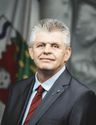
Jay MacDonald Thebacha
Thank you, Mr. Speaker. Mr. Speaker, and I also agree that, you know, it's very troubling to see the wastage of the caribou over the past season. In 2024, we had zero instances of wastage that were reported and in 2025, we currently have 11 investigations on the go. Our strategy is, you know, we put joint communiques out over the winter, engaging with the local Indigenous governments in a collaborative effort to ensure that we were messaging respectful harvesting. We've also recently engaged with Indigenous governments across the region to have meetings throughout the summer to address some of the challenges and concerns with the wastage and disrespectful harvesting on the winter road. Thank you, Mr. Speaker.
Question 674-20(1): Caribou Harvesting and Wastage
Oral Questions
Page 2343

Robert Hawkins Yellowknife Centre
Thank you, Mr. Speaker. Mr. Speaker, I was kind of hoping I'd also hear some information regarding enforcement. Now, I wouldn't be asking for the spy trade techniques from enforcement officers, you know, the James Bond hiding behind a fake tree or something. But the truth be told is there must be some fundamental issues with meat wastage. In other words, why? Is there any time spent on trying to diagnose why is this such a problem or why are people choosing this approach as opposed to treating the animal with respect or, you know, finding a way to deal with it better, I guess is what I'm trying to say, Mr. Speaker. Thank you.
Question 674-20(1): Caribou Harvesting and Wastage
Oral Questions
Page 2343
Jay MacDonald Thebacha
Yes, thank you, Mr. Speaker. And thank you to the Member for the question. You know, recently, in some meetings that I've been involved, a big part of our conversation with the Indigenous leaders was about respectful harvesting and ensuring that that traditional knowledge is passed down from generation to generation and that our elders are being recognized for that valuable information and that they're passing it down to the younger hunters and, you know, using the tools within their community to communicate the importance of the caribou, how it is part of our traditions and our heritage and really focus on the importance of that message. And certainly that is also happening through the engagements out on the -- in the land, you know, as part of how our officers interact with hunters as well as ensuring that we're recognizing that traditional knowledge is a big part of how we communicate. Thank you, Mr. Speaker.
Question 674-20(1): Caribou Harvesting and Wastage
Oral Questions
Page 2343
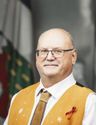
The Speaker Shane Thompson
Thank you, Minister of Environment and Natural Resources. Member from Yellowknife Centre.
Question 674-20(1): Caribou Harvesting and Wastage
Oral Questions
Page 2343
Robert Hawkins Yellowknife Centre
Thank you, Mr. Speaker. Not to sound silly in in any way -- it's serious -- which is we're not born with a gun in our hand nor with the knowledge how to use it. It's a learnt skill, whether you'd call it that or not. You're not born with a knife in your hand. Again, similar. So when you look at caribou dressing and those types of things, can the department maybe look at holding community clinics, in other words, in regions and over the summer or in the fall, of saying this is how you do these types of things, and this is -- you know, more engagement in the sense of hands on showing people because, you know, maybe folks -- I'm not here to answer all the questions; that's your job. But I can't answer all the questions in the sense of my assumption is sometimes people just don't know what to do, and some people don't care. And it's the people we want to enforce on that don't care, but some people just don't have the skills. Is there a better way to get hands on through community clinics, engaging elders, engaging wildlife officers for a better relationship? Thank you.
Question 674-20(1): Caribou Harvesting and Wastage
Oral Questions
Page 2343
Jay MacDonald Thebacha
Yes, thank you, Mr. Speaker. And, Mr. Speaker, I agree very much with what the Member said. I think that that engagement with the communities and ensuring that, you know, those traditional practices, how to properly use a gun to hunt safely, to respect the animals, how to properly, you know, deal with the -- all of the useable parts of the animal, ensuring that that -- if you're -- as a harvester aren't using those particular components that, you know, you're sharing with other members of your communities and, you know, ensuring that that's happening. And a big part of that learning effort is also there are many programs that ECC has - Take a Family on the Land, Take a Kid Trapping. There's other different programs that support community hunts, etcetera, that are resources that the community and Indigenous governments can access to provide these opportunities across the NWT. Thank you, Mr. Speaker.
Question 674-20(1): Caribou Harvesting and Wastage
Oral Questions
Page 2343
The Speaker Shane Thompson
Thank you, Minister of Environment and Natural Resources.
Colleagues, our time for oral questions is up. Mr. Clerk.
Follow-up To Oral Questions
Follow-up To Oral Questions
Page 2344
Clerk Of The House Mr. Glen Rutland
Thank you, Mr. Speaker. Pursuant to Rule 7.27, I received follow-up information for the following oral questions from the first session of the 20th Assembly:
Oral Questions 428, 432, 433, 440, 449, 453, 466, 479, 485, 513, 514, 522, 526, 540, 541, 546, 549, 562, 567, 569, 571, 575, 576, 578, 612, 658, and 659.
Mr. Speaker, these follow-ups will be printed in full in today's Hansard. Thank you, Mr. Speaker.
Follow-up to Oral Question 428-20(1): Improving Access to Primary Care
Follow-up To Oral Questions
Page 2344
Clerk Of The House Mr. Glen Rutland
Mr. Rutland: Further to the response provided to the Member for Yellowknife North on February 5, 2025, the following additional information is provided:
The Department of Health and Social Services, or DHSS, Business Plan 2024-25 to 2027-28 identifies actions to support the mandate commitment: Access to health care- Deliver equitable access to sustainable primary care in all NWT communities. As part of this commitment, action is being taken to develop an integrated primary and community care framework with performance measures by December 2025.
Within DHSS, a dedicated team is leading Primary Health Care Reform, or PHCR, efforts and the development of the framework with performance measures. This builds on the work of the Caring for Our People: Cultural Safety Action Plan (2018-2020). The team is comprised of a majority Indigenous staff who have been working to facilitate system transformation through co-design and collaboration across the health and social services authorities, with staff, clients and other shareholders since 2019.
In 2020, the DHSS partnered with Hotıì ts'eeda: NWT SPOR Support Unit and the Institute of Health Economics to develop a research and evaluation plan to understand if the team-based approach to PHCR in Fort Smith and Yellowknife regions was working for patients; to understand if patients experience respect for Indigenous culture when they receive care; and to conduct an economic evaluation of the Integrated Primary Care Team model in the Northwest Territories. The findings of this research are published.
As part of PHCR, standard indicators for service access and use are available including median time to the next available appointment, number of booked appointments, number of attended appointments, number of no-show appointments, number of self-cancelled appointments, which can be disaggregated by practitioner and by team. Other indicators, including chronic and communicable disease indicators such as number screened for sexually transmitted and blood-borne infections and congenital syphilis during pregnancy, and number of diabetic patients screened as per Diabetes Canada guidelines, are also available to inform our reform efforts.
In 2024-25, as part of the changes to the structure of integrated primary care teams in the Yellowknife Region, additional evaluation tools are being piloted to understand patient experience and the impact on collaborative practice, including:
- Patient Reported Experience/Outcome Measures: A patient feedback survey has been developed and is being implemented in Yellowknife region and is expected to provide real-time data to inform improvement efforts. Additionally, the DHSS administers the Patient Experience Questionnaire every two to three years to better understand the quality of inpatient and outpatient care provided across the NWT health system.
- Queen's Collaborative Practice Assessment Tool: This tool provides an assessment for members of collaborative practice teams within health care settings to understand strengths, limitations, and to guide improvement and education efforts.
In alignment with the mandate commitment, the performance measurement plan for PHCR will be updated to reflect best practice in measuring both process and outcomes related to team-based primary and community care to get us closer to the vision reform: A territory where Indigenous peoples, 2SLGBTQIPA+, enjoy optimal physical, mental, emotional, and spiritual health and wellness. This will include a comprehensive and holistic approach to monitoring, evaluation and continuous quality improvement, including measures for patient experience, health system performance, health and wellness outcomes, staff well-being and team-based function, and health equity and cultural safety.
The DHSS seeks to inform the development of the framework and updated performance measures through staff engagement and consultation with professional associations, public engagement, and administration of the Our Care, www.ourcare.ca, survey within the territory.
The team leading this work at the DHSS continues to participate in national forums, including the Canadian Institute for Health Information and Canadian Primary Care Research Network Best Brains Exchange, tasked with developing indicators for team-based care and an evaluation framework, respectively. Additionally, members of the team also participate in a national committee with other Indigenous leaders to define indicators for cultural safety and anti-racism within health systems in a Canadian context.
Follow-up to Oral Question 432-20(1): Naming of Government of the Northwest Territories Buildings
Follow-up To Oral Questions
Page 2344
Clerk Of The House Mr. Glen Rutland
Further to the response provided to the Member for Yellowknife Centre on Wednesday, February 5, 2025, the following additional information is provided:
Housing NWT will continue to have discussions and examine the naming of new and renewed buildings throughout the Northwest Territories.
Housing NWT will need to work through the appropriate Government of the Northwest Territories processes, including receiving support from the potential honoree's family, discussions with Indigenous Governments, and ensuring that Housing NWT follows the GNWT's operational guidelines for selecting names for Government of the Northwest Territories' buildings. If and when the GNWT elects to name a GNWT owned building, they will follow Guidelines for Selecting Names for Government of the Northwest Territories Owned Office Buildings from page 142 of the Executive Council Submission Handbook. In alignment with these guidelines, the promotion of the Northwest Territories heritage and culture will be a primary consideration. These guidelines also require a cabinet submission to seek approval to name a GNWT owned building. Cabinet will consider whether the proposed name reflects the historical, cultural, and geographic significance of the Northwest Territories. Cabinet may also approve a public engagement process to solicit naming ideas for GNWT owned buildings.
These procedures have been developed to ensure fairness and appropriateness in the naming of any building. Housing NWT will commit to bring forward a decision before the end of the 20th Assembly.
Follow-up to Oral Question 433-20(1): Government of the Northwest Territories Employment Satisfaction Survey and Action Plan
Follow-up To Oral Questions
Page 2344
Clerk Of The House Mr. Glen Rutland
Further to the response provided to the Member for Yellowknife North on
February 5, 2025, the following additional information is provided:
The Employee Engagement and Satisfaction Survey, or EESS, provides the Government of the Northwest Territories with valuable insight into employee engagement levels and overall satisfaction in the workplace. Departments and agencies received individualized guides that provide in-depth analysis of the 2023 EESS results, designed to support them in interpreting their individual survey results and effectively using this information to improve employee engagement and satisfaction within their department.
Additionally, each department and agency are required to develop Human Resources Implementation Plans to set performance measures and milestones and to track progress relating to action items developed based on their specific EESS results.
I am pleased to confirm that a technical briefing to the Standing Committee of Government Operations on the 2023 EESS results is scheduled for June 10, 2025.
Follow-up to Oral Question 440-20(1): Sahtu Winter Road Resupply
Follow-up To Oral Questions
Page 2344
Clerk Of The House Mr. Glen Rutland
Further to the response provided to the Member for Sahtu on February 6, 2025, the following additional information is provided:
The previous Minister of Infrastructure committed to providing the Member for Sahtuu and the public advance notice on when modular classrooms would be transported on the Mackenzie Valley Winter Road to Colville Lake. Due to the restructuring of the Department of Infrastructure announced on March 31, 2025, I am now the Minister responsible for this project, and I am following up on this commitment.
The modular classrooms for Colville Lake were not able to be transported on the winter road in 2025. These three units - two that will serve as classrooms and a third that will house a washroom and mechanical room - are large and complex to move and significant permitting and planning is required.
The Alberta-based contractor responsible for supplying these modular classrooms informed the Government of the Northwest Territories on February 20, 2025 that its subcontracted hauling company, which had been working on permits for the transportation of the modular buildings, did not have the capacity to deliver them to Colville Lake during the 2025 winter road season.
The GNWT continued to have dialogue with the contractor on potential options to complete this work during the 2025 winter road season. The contractor contacted other heavy haulers, but none were able or available to arrange the necessary logistics and permits and complete the haul before the end of the winter road season. Due to the height, width and weight of these portable units, specialty equipment and significant logistical arrangements and experience are required to safely transport the portables to Colville Lake.
The GNWT recognizes the impact this delay has on students, staff and the community and we appreciate the patience being shown as we work through these challenges. The Department of Infrastructure, in partnership with the Department of Education, Culture and Employment, is currently working toward a timeline and a plan to ensure safe delivery of the modular classrooms on the Mackenzie Valley Winter Road in 2026.
Follow-up to Oral Question 449-20(1): Home Insurance Costs
Follow-up To Oral Questions
Page 2344
Clerk Of The House Mr. Glen Rutland
Further to the response provided to the Member for Great Slave on February 7, 2025, the following additional information is provided:
During our exchange, I committed to exploring whether best practices from other jurisdictions could help inform potential legislative changes to the Insurance Act.
The Department of Finance participates in several national regulatory forums, including the Canadian Council of Insurance Regulators and the General Insurance Statistical Agency, which provide opportunities to monitor developments in other jurisdictions. Learning about best practices from other jurisdictions will be an important part of the legislative review of the Insurance Act. I would be happy to share any relevant information that emerges from this research as the review progresses.
Follow-up to Oral Question 453-20(1): Sensitivity and Costs Related to Funeral Preparation
Follow-up To Oral Questions
Page 2344
Clerk Of The House Mr. Glen Rutland
Further to the response provided to the Member for Tu Nedhé - Wiilideh on February 7, 2025, the following additional information is provided:
The Funeral, Burial and Cremation Program Guidelines are in place to assist with the costs of cremation, funeral and burial for deceased NWT residents who are verified of having no income or assets to pay for these services at the time of death.
Adult Services Case Managers within the Health and Social Services Authorities , or HSSAs, provide assistance to next-of-kin in accessing the funds in accordance with the Funeral, Burial and Cremation Program Guidelines, dated July 17, 2014 available online at https://www.hss.gov.nt.ca/sites/hss/files/resources/md-funeral-burial-cremation-program-guidelines.pdf
There seems to be a gap in communication to the public as currently, most families are referred to a HSSA Case Manager by a private funeral services business, which has resulted in some challenges and concerns for next-of-kin. Families are not required to use the services of the funeral home business, and the policy does allow eligible families to be reimbursed for purchasing their own caskets locally and to provide for a more traditional or culturally appropriate burial of their family member. DHSS will consider ways to improve communication in this area and the NTHSSA has developed guidelines to support increased flexibility.
The total budget for the Funeral, Burial and Cremation Program for the Health and Social Services System, which includes all three HSSAs, is $880,000 for 2024-25, having been increased this year to address a shortfall. $880,000 is the budget for 2025-26 as well.
The Funeral, Burial and Cremation Services Contract was awarded to the sole proponent, McKenna Funeral Services Ltd. on January 6, 2024, and is in effect until October 31, 2026, with the option of two additional one-year extensions. Further, the department intends to review the Funeral, Burial and Cremation Program policy before the next RFP process goes out to competition.
Follow-up to Oral Question 466-20(1): Aurora College Closure of Community Learning Centres
Follow-up To Oral Questions
Page 2344
Clerk Of The House Mr. Glen Rutland
Further to the response provided to the Member for Mackenzie Delta on February 10, 2025, the following additional information is provided:
As highlighted by Aurora College leadership during the public briefing with the Standing Committee on Accountability and Oversight, Aurora College will reduce the number of indeterminate and term positions by a final total of 31 employees. Aurora College continues to collaborate with Human Resources to advance the Staff Retention Policy to ensure one-on-one support for all affected employees in order to increase the number of staff who may possibly be retained in the public service.
Under the Aurora College Act, the Board of Governors is responsible for operational decisions of the College, including proceeding with the decision to close Community Learning Centres. The legislation also provides direction to the Minister around “non-interference”, which supports the arm's length relationship between the College and Government of the Northwest Territories.
I recognize the impact that this decision is having on potentially affected staff that support the delivery and operations of Community Learning Centres. The significant strain that this decision places on individuals, families and communities is acknowledged.
Follow-up to Oral Question 549-20(1): Elder Abuse in the Northwest Territories
Follow-up To Oral Questions
Page 2344
Clerk Of The House Mr. Glen Rutland
Further to the response provided to the Member for Monfwi on February 26, 2025, the following additional information is provided:
The Seniors and Continuing Care Services Division within the Department of Health and Social Services maintains a dedicated Elder Abuse and Neglect website which offers supports and services available to residents if they are experiencing or witnessing abuse of older adults.
Webpages with general information, links and resources that can be downloaded:
Protecting Elders from Abuse and Neglect: www.hss.gov.nt.ca/en/services/protecting-elders-abuse-neglect
Getting help for Elder Abuse: www.hss.gov.nt.ca/en/services/protecting-elders-abuse-and-neglect/getting-help-elder-abuse
This webpage identifies specific help resources, such at the Family Violence Helpline, 811, or RCMP with phone numbers and/or links to websites such as the NWT Community Counselling Program.
Further, residents can also phone the NWT Seniors' Society Information Line for relevant information at 1-800-661-0878.
Follow-up to Oral Question 479-20(1): Multi-Year Funding Agreement with Dechinta Centre for Research and Learning
Follow-up To Oral Questions
Page 2344
Clerk Of The House Mr. Glen Rutland
Further to the response provided to the Member for Yellowknife North on February 11, 2025, the following additional information is provided:
The Post-Secondary Education Act outlines the required steps for establishing a private college in the Northwest Territories. The Act establishes the framework to recognize post-secondary education institutions in the NWT, including universities, colleges and private training institutions. It also formalizes a quality assurance system for the accreditation of certificate, diploma, degree programs, and institutions.
The establishment of a college includes the need to engage in a quality assurance process. This process includes a self-evaluation, which is to be conducted by the institution and is meant to provide the necessary information to the Quality Review Advisory Committee to assess and make a recommendation on the institution's readiness to operate sustainably within the NWT post-secondary education system. Self-evaluation seeks details in several different areas including, but not limited to, institutional governance and administration, academic policies and support for academic freedom, appropriate financial management procedures, and human resource capacity. The Dechinta Centre for Research and Learning has been meeting with the Department of Education, Culture and Employment about this process, and is currently developing their self-evaluation.
If the prospective institution meets the requirements of the self-evaluation and receives approval, the Act then requires the development of legislation in order to be recognized as a private college. As members are aware, this begins with a legislative proposal and concludes when a Bill receives assent in the Legislative Assembly.
As the first potential private college in the NWT, the necessary self-evaluation and quality assurance process and subsequent legislative process would take considerable time. It is anticipated that this process could take up to two years, which may land outside the life of the 20th Legislative Assembly.
Follow-up to Oral Question 485-20(1): Mental Health Supports for the Dehcho REgion
Follow-up To Oral Questions
Page 2344
Clerk Of The House Mr. Glen Rutland
Further to the response provided to the Member for Dehcho on February 11, 2025, the following additional information is provided:
How many residents from Fort Providence, Enterprise, and Kakisa currently access community counselling services.
Data for the Community Counselling Program, or CCP, does not allow for unique identifiers, so it is not possible to identify the number of unique residents from Fort Providence, Enterprise, and Kakisa as well as Kátł'odeeche First Nation, or KFN, currently accessing CCP services. Statistics for communities within the region are also rolled up into one data set due to system capabilities, capacity, and service user confidentiality. We can report that from April 2024 to December 2024, there were 288 visits to the CCP in the Dehcho region.
We also know that residents from KFN, Enterprise, and other communities sometimes travel to Hay River and access the CCP, in which case their visit would be captured in the Hay River data. From April 2024 to December 2024 there were 654 visits to the Hay River CCP.
Because the CCP is meant to reduce access barriers, people are not required to show proof of residency to access services and do not have to advise counsellors or CCP staff where their home community is. The CCP is also still a paper-based program without the technological support to capture data more comprehensively, for example data that shows where a person received services and where that individual's home community is etc.
Do residents leave their home community to access community counselling services or is there a counsellor who travels into the Dehcho communities.
There is a counsellor based in the Dehcho region that travels to Kakisa, Enterprise, and KFN as well as other communities where counsellors are not located. Residents are also able to connect with the CCP in their region through telephone and/or virtual services. Statistics for these virtual or distance-based services are captured regionally. Travel to access community counselling services is not covered through the GNWT Medical Travel Policy.
The Hay River CCP travelled to Enterprise twice in November 2024 to meet with Child and Family Services and Community Wellness staff as well as to attend a town council meeting to discuss the different ways they could provide support to the community recognizing the close distance between the two communities. Plans are being finalized in consultation with the community for regular visits throughout 2025 to provide more in-person support.
Follow-up to Oral Question 513-20(1): Effectiveness of Indigenous Employment Programs in the Public Service
Follow-up To Oral Questions
Page 2344
Clerk Of The House Mr. Glen Rutland
Further to the response provided to the Member for Dehcho on February 12, 2025, the following additional information is provided:
During our exchange, I committed to providing a breakdown of Indigenous employees hired through the Career Gateway Program, or ICGP, in the Dehcho region, confirm the availability of data tracking their career progression, and to provide an update on the Indigenous Recruitment and Retention Framework, or IRRF.
In response to the question regarding the number of employees hired through the ICGP in the 2024-25 fiscal year the Department of Finance can confirm that there were eight new hires with five carried over that were also funded during the 2024-2025 fiscal year.
Additionally, the Department of Finance can confirm that over the lifespan of the ICGP there have been 81 hires that have reached conclusion since the launch of the program. Of the 81 ICGP concluded hires, 41 hires, or 50.6 per cent are still active with the GNWT as of March 31, 2025. Of the 41 active employees, 38 or 92.7 per cent are indeterminate.
The Report on the Indigenous Employment Plans Results 2023-2024 will be tabled during the May 2025 Sitting of the Legislative Assembly. The Report provides a high-level overview of the results of all departments within the Government of the Northwest Territories with respect to their Indigenous Employment Plans goals, as well as provides an update on the action items and deliverables within the Indigenous Recruitment Retention Framework and Action Plan. The Report can be found on the Department of Finance website at https://www.fin.gov.nt.ca/en/services/diversity-and-inclusion/indigenous-recruitment-and-retention-framework once it is tabled.
Follow-up to Oral Question 514-20(1): Child and Family Services Plan of Care Agreements
Follow-up To Oral Questions
Page 2344
Clerk Of The House Mr. Glen Rutland
Further to the response provided to the Member for Yellowknife North on February 13, 2025, the following additional information is provided:
United Nations' Convention on the Rights of the Child
The importance of embedding United Nations' Convention on the Rights of the Child, or UNCRC, within child and family services has long been recognized through its legislation, standards and training.
Section 2 of the Northwest Territories' Child and Family Services Act, or CFSA outlines the 14 principles to follow in the administration and interpretation of the Act. These principles align with articles in the UNCRC, and specifically includes “consistent with the United Nations Convention on the Rights of the Child.”
Article 3 of the UNCRC states that the “best interests of the child shall be a primary consideration.” The “best interest of the child” clause is embedded in the NWT CFSA and Federal Act respecting First Nations, Inuit and Métis children, youth and families. Section 3 of the CFSA outlines the factors to consider for the “Best Interest of the Child,” which align with the applicable articles within the UNCRC. Article 12 “Children's Right to be Heard” is embedded in legislation, standards and training, requiring the views of children/youth be incorporated throughout various agreements and court processes. Applicable sections within CFSA include Section 3(i); 3.1; 5(2)a; 12.3(1)b; 14(1)a; 14(2); 15(2)b; 18(1); 19(5); 25(1)d; 27(2)a(v); 28(5.1); 31(7); 34(1)d; 49(1); and 84(2).
Neglect
The term “maltreatment” is an overarching term that covers both “abuse” and “neglect.” Based on the NWT CFSA (Section 7(3)), harm to a child/youth is categorized into five main areas: Physical abuse, Emotional abuse, Sexual abuse, Exposure to family violence, and Neglect.
The Structured Decision Making, or SDM, Policy and Procedures Manual defines neglect as “the lack of action by a parent/caregiver in providing for the adequate care and attention of the child's needs, resulting in harm or substantial risk of harm to the child.” The Manual also provides definitions of subcategories of neglect found on pages 16 to 21, and assessment tools. Prior to receiving their appointment, Child Protection Workers are trained in the SDM® Manual assessment tools to support their decision making if a report meets the threshold to investigate and/or substantiate a report of abuse and/or neglect. The SDM® Manual and Statutory Child Protection Worker Core Training distinguishes that neglect is different than a parent/care provider/caregiver of the child/youth being unable to provide basic needs due to socio-economic conditions, such as poverty or lack of adequate housing. The SDM Policy and Procedures Manual will be tabled.
To align with the SDM® Manual and national best practices, the Child and Family Services Act Proposed Amendments Discussion Paper published in April 2022 proposes new amendments to assist in the distinction within Child and Family Services to assess child/youth protection concerns due to neglect versus the inability of a family to meet the basic needs of a child/youth due to socio-economic conditions.
Follow-up to Oral Question 522-20(1): Funding of the Northwest Territories Society for the Prevention of Cruelty to Animals
Follow-up To Oral Questions
Page 2344
Clerk Of The House Mr. Glen Rutland
Further to the response provided to the Member for Range Lake on February 25, 2025, the following additional information is provided:
The Department of Executive and Indigenous Affairs is conducting a review of two distinct funding programs: the Anti-Poverty Fund and the Non-Governmental Organizations, or NGO, Stabilization Fund.
The Anti-Poverty Fund supports initiatives across the Northwest Territories that demonstrate tangible efforts to reduce poverty. Recognizing the vital role NGOs play in delivering essential services aligned with Government of the Northwest Territories', or GNWT, policy objectives, the NGO Stabilization Fund was established to help stabilize or strengthen the capacity of NGOs that provide critical GNWT-funded programs and services to Northwest Territories residents, including, but not limited to, those related to homelessness, addiction support, and shelters for individuals and families.
As part of this program review, engagement with stakeholders is scheduled to take place between now and the end of June 2025. Engagement will be an integral part of the program review process to determine how both funds align effectively with broader service integration goals and mandate commitments of the GNWT. Indigenous governments and NGOs, including the
Northwest Territories Society for the Prevention of Cruelty to Animal, or SPCA, will be contacted directly to provide their input.
Follow-up to Oral Question 526-20(1): Enforcement of Dog Act
Follow-up To Oral Questions
Page 2344
Clerk Of The House Mr. Glen Rutland
Further to the response provided to the Member for Range Lake on February 25 regarding enforcement of the Dog Act, the following additional information is provided:
The Department of Municipal and Community Affairs fields questions from community government staff, such as Senior Administrative Officer, Bylaw Officer and/or Dog Officer, if there is a situation where bylaw officers are unsure of their authorities under the Dog Act. There is no official training course for officers with authorities to enforce the Dog Act; however, there are references in the Bylaw Officer course offered by MACA that provide guidance to a bylaw officer on actions that may be taken under the Dog Act related to incidents involving a dog.
The Dog Act has several provisions to support bylaw officers in addressing dogs in distress, running at large or abandoned dogs. Members of the Royal Canadian Mounted Police and bylaw officers appointed under the Charter Communities Act, the Hamlets Act, the Cities, Towns and Villages Act, and the Tłı̨chǫ Community Government Act are officers under the Dog Act by virtue of their office.
The Dog Act provides that an officer has the ability to relieve the distress, as defined in the Act, of a dog. An officer, in certain circumstances, has the authority to take any action he or she considers necessary to locate a dog and relieve its distress, which includes the authority to arrange for the necessary transportation, food, water, shelter and veterinary care.
For this purpose, an officer who has reasonable grounds to believe that a dog is in distress in any place, premises or vehicle may obtain a warrant to enter that place, premises or vehicle for the purpose of relieving the distress of a dog. An officer may also take any action to enter a place, other than a dwelling-house, to relieve a dog's distress if the conditions to obtain a warrant exist but, by reason of exigent circumstances, it would not be practical to obtain a warrant.
The Dog Act provides for the ability to deal with dogs that are abandoned. If the conditions for an abandoned dog are met, then an officer is able to take the dog into custody and may act as a caretaker or may deliver the dog to a caretaker.
There are several other enforcement mechanisms set out in the Dog Act that allow officers, in certain circumstances, to take actions such as taking custody of dogs running at large or, if unable to capture them, to destroy the dog; to sell or gift a dog to any person if unable to locate an owner or to destroy the dog if the officer is unable to sell or give it away; to inspect any place or premises other than a dwelling-house where dogs are kept for sale, hire or exhibition and to stop vehicles for the purpose of this inspection; to make a complaint on oath before a justice of the peace that a dog while running at large has pursued, attacked, injured, damaged, killed or destroyed a person, another tethered dog, a food cache, or certain other animals for the purpose of seeking an order for the destruction of the dog.
In addition, officers may lay charges against any person who contravenes a provision of the Dog Act for which, if prosecuted and convicted, punishment may include fines, imprisonment, destruction of a dog for humane reasons or protection of the public, and/or an order restraining the owner from having or continuing to have dogs for such a period of time as specified by the court.
Follow-up to Oral Question 540-20(1): Healthcare Coverage for Territorial Nominee Program Participants
Follow-up To Oral Questions
Page 2344
Clerk Of The House Mr. Glen Rutland
Further to the response provided to the Member for Great Slave on
February 26, 2025, the following additional information is provided, which is intended to provide guidance for new applicants for healthcare coverage as participants in the Territorial Nominee Program and those who require renewals:
For new applications the process is as follows:
New applicants must complete the Application for Health Care, provide their “Legal Right to Be in Canada” document for each person applying, such as a Work Permit, Study Permit, front and back of a Permanent Residency Card, Canadian birth certificate or Passport, Canadian Citizenship Certificate, and two Proof of Residency documents.
A Work Permit or Study Permit must be for a period of 12 months or longer and the location must be Open or for a location, employer or school in the NWT.
Convention Refugees are eligible for NWT health care and must provide whatever Immigration documents they have as well as the Application for Health Care and two proof of residency documents.
Refugee Claimants are not eligible for NWT health care as they have coverage through the Interim Federal Health Program, or IFHP. If they receive a ‘Notice of Decision' confirming they have been deemed a Protected Person or Convention Refugee, they may be eligible for NWT health care and may apply. They are provided with 90 days of IFHP coverage once a Notice of Decision is received. If they are eligible for NWT health care, it will begin after the 90 days.
For those who wish to renew their coverage the process is as follows:
Visa clients who have been registered with NWT health care will receive a health care card with the same expiry date as their Work Permit, Study Permit or Visitor Record. Please note Visitor Records are only accepted for minors whose parents have valid Work Permits or Study Permits.
Individuals with a Permanent Residency or PR card will have their health care card expire on their birthday every three years.
Prior to their health care card expiring, they must submit a Health Care Card Renewal form with a copy of their new Immigration document, such as a Work Permit, Study Permit, front and back of a PR Card or Confirmation of Permanent Residency document.
If they do not have their new Immigration documents prior to the expiry date, they may request an extension. They must complete a Health Care Card Renewal Form and provide a copy of the letter from Immigration Canada confirming their application has been received as well as a brief explanation that they are still waiting for their new documents. The application will be reviewed, and a 90-day extension may be granted. If the applicant still has not received their new documents after the 90 days, another 90-day extension may be granted; another Health Care Card Renewal form and copy of their letter will need to be provided.
I trust this information will be helpful and recommend that all applicants be proactive with applications to ensure continuity of coverage.
Follow-up to Oral Question 541-20(1): Funding for Increased Costs for Yellowknife Drinking Water Supply
Follow-up To Oral Questions
Page 2344
Clerk Of The House Mr. Glen Rutland
Further to the response provided to the Member for Range Lake on February 26, 2025, the following additional information is provided:
I committed to working with the Minister of Municipal and Community Affairs, or MACA, to identify federal funding opportunities, and to keep the mayor of Yellowknife apprised of these efforts.
MACA distributes all of its budget for community infrastructure directly to community governments and does not have an extraordinary funding budget.
MACA is aware that the City of Yellowknife has been approved for $26 million under the Federal Disaster Mitigation and Adaptation Fund. Housing, Infrastructure and Communities Canada has another program currently open for applications, the Canada Housing Infrastructure Fund, or CHIF. This program has a budget of up to $1 billion over eight years for municipalities and Indigenous communities to address pressing infrastructure needs and enable more housing. CHIF will fund either capital or planning projects aimed at building new, or expanding or rehabilitating existing, drinking water, wastewater, stormwater or solid waste infrastructure to enable more housing. Information on this program is available on the Canada Housing Infrastructure Fund websitehttps://housinginfrastructure.canada.ca/housing-logement/chif-fcil/index-eng.html