
Thank you, Mr. Dent. Oral questions. The honourable Member for Great Slave, Mr. Braden.
Debates of Feb. 2nd, 2006
This is page numbers 679 - 700 of the Hansard for the 15th Assembly, 4th Session. The original version can be accessed on the Legislative Assembly's website or by contacting the Legislative Assembly Library. The word of the day was budget.
Topics
Further Return To Question 319-15(4): Aboriginal Languages And Cultural Program
Question 319-15(4): Aboriginal Languages And Cultural Program
Item 8: Oral Questions
Page 691
Question 320-15(4): Reflections On Budget Address
Item 8: Oral Questions
February 1st, 2006
Page 691

Bill Braden Great Slave
Thank you, Mr. Speaker. My questions are for the Minister of Finance and they relate to the introduction of the budget, the 2006-2007 budget. I'm trying to focus on one area, Mr. Speaker, and that's the area of long-term debt. As the Minister described, one of our priority initiatives with Ottawa is to get a new fiscal financing deal, and part of that is a modernized way of handling our debt. But we need to work with what we know right now, which is that $300 million limit, Mr. Speaker. With the forecast that is provided in the budget document, we see that we are going to be pushing our debt limit to about three-quarters of our credit line this year, Mr. Speaker. It'll be almost totally used up by the end of the coming fiscal year if we don't turn this around. So my question was, what is our plan for managing this medium-term debt situation, Mr. Speaker? Thank you.
Question 320-15(4): Reflections On Budget Address
Item 8: Oral Questions
Page 691
Return To Question 320-15(4): Reflections On Budget Address
Question 320-15(4): Reflections On Budget Address
Item 8: Oral Questions
Page 691

Floyd Roland Inuvik Boot Lake
Thank you, Mr. Speaker. Mr. Speaker, the debt situation that we face is a serious one and a critical one for the Northwest Territories. It's an issue that we've raised before. The reason why we developed our fiscal responsibility policy is to show our counterparts in Ottawa, with federal Finance, that we can deal with the issues given the right tools. So we need to continue to work with the federal government and push it, and push hard, to have them remove that debt limit
because, ultimately, when you look at what's before us, the repayment of the 2002 corporate tax overpayment from the federal government is going to push us very close to the debt limit that we are facing through the federal government. It's a fairly straightforward deal, as we see it. We've shown that we can live with what we have, and need the federal government to recognize it has to be changed. If the federal government is not willing to change that, then trying to invest in the future and infrastructure and enhancing our programs, dealing with development that's already happening around us, we won't be able to put the necessary resources to it. We'll instead have to continue to work with a shrinking budget as things around us continue to, I guess, boom. Thank you.
Return To Question 320-15(4): Reflections On Budget Address
Question 320-15(4): Reflections On Budget Address
Item 8: Oral Questions
Page 692
Supplementary To Question 320-15(4): Reflections On Budget Address
Question 320-15(4): Reflections On Budget Address
Item 8: Oral Questions
Page 692
Bill Braden Great Slave
Mr. Speaker, I thank the Minister for that context, but we're looking to a situation where we may be handing off to the 16th Assembly, after the election in the fall of 2007, a situation where there will be no credit line, a big debt or cost of servicing that debt, and in fact the fiscal situation they inherit for the coming year will be that they're over $460 million in debt. Way over the line. So I guess let's ask this another way. Is there a plan B? How can we avoid passing on this kind of a gloomy situation? Thank you.
Supplementary To Question 320-15(4): Reflections On Budget Address
Question 320-15(4): Reflections On Budget Address
Item 8: Oral Questions
Page 692
Further Return To Question 320-15(4): Reflections On Budget Address
Question 320-15(4): Reflections On Budget Address
Item 8: Oral Questions
Page 692
Floyd Roland Inuvik Boot Lake
Thank you, Mr. Speaker. Mr. Speaker, I think our goal, first and foremost, is to have the federal government remove the debt limit that they have placed on us. That would be the first goal and we would have to work hard to achieve that. We have one year to make that happen, because we'll still be in government and still be in control of the purse strings as we start into the year 2007. As things sit right now, if we look that far down the road, we'll have no room for a borrowing limit at that point. So we have to make some decisions and this is what's going to change our approach, is how aggressively are we going to pursue the federal government to have that recognized and changed that they have to remove that debt limit. Because we have the fiscal responsibility policy in place and we can manage with the revenues that will come in to invest in the things that are critical for the Northwest Territories. Going beyond that and saying that the picture doesn't change and to live within the means that we have there will be a significant change in our fiscal strategy, and we'll have to sit down as to what we see the passing off to the next Assembly. So it's something we have to do, is focus on the federal government, get the debt limit removed. Thank you.
Further Return To Question 320-15(4): Reflections On Budget Address
Question 320-15(4): Reflections On Budget Address
Item 8: Oral Questions
Page 692
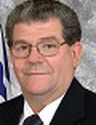
The Speaker Paul Delorey
Thank you, Mr. Roland. Oral questions. The honourable Member for Sahtu. Sorry; the honourable Member for Kam Lake, Mr. Ramsay.
Question 321-15(4): Mackenzie Gas Project
Item 8: Oral Questions
Page 692

David Ramsay Kam Lake
Thank you, Mr. Speaker. Mr. Speaker, my questions today, after having listened to the Premier take on Mr. Braden yesterday, I think I'm going to keep my questions to the Finance Minister today.
---Laughter
I learned something yesterday, Mr. Speaker.
---Laughter
A touchy subject, and that is the government's participation in the Mackenzie gas project. I know the Finance Minister spoke of the project on page 6 of his budget address today and I wanted to ask him a few specific questions on one sentence in particular, Mr. Speaker. That sentence was, "We will participate fully and actively in the Mackenzie gas project to ensure that if the project proceeds, the needs and concerns of our residents will be addressed." With the proposed $500 million socio-economic fund that was announced and is pending, it's for the communities along the pipeline route. I'm just wondering if the Finance Minister can let me know, and the rest of the residents in the Northwest Territories, how the Government of the Northwest Territories proposes to address the needs and concerns of all the residents of the Northwest Territories? We call ourselves a public government. How are we going to address all the needs in all the communities? Thank you, Mr. Speaker.
Question 321-15(4): Mackenzie Gas Project
Item 8: Oral Questions
Page 692
Return To Question 321-15(4): Mackenzie Gas Project
Question 321-15(4): Mackenzie Gas Project
Item 8: Oral Questions
Page 692
Floyd Roland Inuvik Boot Lake
Thank you, Mr. Speaker. Mr. Speaker, as we proceed the next few weeks through the budget process, we'll be able to show how already the money that we received from Canada and our own sources, that we are spending it across the board to deal with all individuals in the Northwest Territories. More importantly, on the work that's going ahead now on the Mackenzie gas project, our involvement from the broad perspective of all the residents of the Northwest Territories is going to go through our representations of the JRP, or Joint Review Panel, as well as NEB, the National Energy Board, and what we feel we can achieve through a socio-economic agreement with the proponent to the project. That's going to be where we will look at all pieces and how we fit from the Northwest Territories in taking advantage of this type of development. Thank you.
Return To Question 321-15(4): Mackenzie Gas Project
Question 321-15(4): Mackenzie Gas Project
Item 8: Oral Questions
Page 692
Supplementary To Question 321-15(4): Mackenzie Gas Project
Question 321-15(4): Mackenzie Gas Project
Item 8: Oral Questions
Page 692
David Ramsay Kam Lake
Yes, thank you, Mr. Speaker. Mr. Speaker, I just wanted to state, for the record, that I am a big proponent of the Mackenzie gas project and I wish the communities well along the pipeline route that are hopefully going to be able to access this $500 million socio-economic fund. My concern, Mr. Speaker, is the fact that 80 percent, 75 to 80 percent of our residents live in communities that aren't going to be able to access any of this $500 million. I want to ask the Minister of Finance what evidence there is that the Government of the Northwest Territories has the wherewithal and the ability to address socio-economic concerns in a community like Yellowknife, in a community like Hay River, or in a
community like Fort Smith. What evidence is there? Thank you, Mr. Speaker.
Supplementary To Question 321-15(4): Mackenzie Gas Project
Question 321-15(4): Mackenzie Gas Project
Item 8: Oral Questions
Page 693
Further Return To Question 321-15(4): Mackenzie Gas Project
Question 321-15(4): Mackenzie Gas Project
Item 8: Oral Questions
Page 693
Floyd Roland Inuvik Boot Lake
Thank you, Mr. Speaker. Mr. Speaker, I think again as we go through the budget process and lay out the details of that budget in each department, we'll be able to show what we can deal with with the tools we have right now. That is one of our concerns, we need more resources to be able to deal with those things and ultimately that will be through a better fiscal arrangement with Ottawa and a royalty revenue sharing agreement that would see a net fiscal benefit to the Northwest Territories, which then we can take those funds and share with the rest of the people in the territory. If this project is to proceed, the corporate tax, the payroll tax, and the property taxes from that development will come to this government and we'll be able to, through that process, distribute it through all parts of the territory. Thank you.
Further Return To Question 321-15(4): Mackenzie Gas Project
Question 321-15(4): Mackenzie Gas Project
Item 8: Oral Questions
Page 693
The Speaker Paul Delorey
Thank you, Mr. Roland. Oral questions. The honourable Member for Range Lake, Ms. Lee.
Question 322-15(4): Reflections On Budget Address
Item 8: Oral Questions
Page 693

Sandy Lee Range Lake
Thank you, Mr. Speaker. Mr. Speaker, I'd like to ask some questions on the budget to the Minister of Finance as well. It's in regards to the tax rate, corporate tax rate reduction that he's announcing in the budget, Mr. Speaker. One of the perverse elements of our funding formula with the federal government is that when we have windfalls in our corporate tax revenue, we get penalized. The Minister of Finance has sat with me in committees where we've been dealing with this for the last four or five years. We also know, and those in the know, and one of the good things today about having a reception is that we have very well-educated people among our public telling us all sorts of things and the ideas for questions. Too bad we don't have them every day. But anyway, one of the questions is with respect to extra money we hope to get by reducing the corporate tax rate and whether or not most of it, if not all of it, will be taken back by the federal government by their claw-back arrangement. I believe the Minister has told us about how this might work differently and I'm wondering if the Minister could explain that for us for the benefit of the public. Thank you.
Question 322-15(4): Reflections On Budget Address
Item 8: Oral Questions
Page 693
Return To Question 322-15(4): Reflections On Budget Address
Question 322-15(4): Reflections On Budget Address
Item 8: Oral Questions
Page 693
Floyd Roland Inuvik Boot Lake
Thank you, Mr. Speaker. Mr. Speaker, I guess we should provide a little bit of background because as we sat down initially as Members of the 15th Legislative Assembly, our fiscal picture was significantly different, as well as our arrangement with Ottawa on the formula financing, which had attached to it the tax effort adjustment factor. In that case, we would be penalized. As we look at transfer payments across Canada, there's a measurement done on tax across jurisdictions. We were deemed to not be taxing our residents and businesses comparable to the rest of Canada in some areas. If we had set a low tax rate, we would take a penalty on any income and transfer payments from Ottawa. Since then, Mr. Speaker, the feel that we have put together our fiscal strategy on has changed significantly. Ottawa has put that all in abeyance. An expert panel has been established and a three-year agreement with the potential for expansion to future years was put in place. What happens in this case, and what we are feeling the effects of in this fiscal year, is the fact that if we were to gain more money in revenues, we wouldn't be able to keep 100 percent of it. If we lose revenues, we lose 100 percent. That's what we found ourselves in, and I had to make an announcement in October that our corporate income tax revenue had dropped because we are now under this new fiscal arrangement that allows us to take all the risk or all the rewards. Unfortunately, because of our corporate tax rate, we took the risk and we've lost out on that end.
So we've had to look at our fiscal picture and say in this environment we are operating now, it is better to start being competitive with other jurisdictions and we will be able to keep, in the interim, all of the revenue that's filed in the North. Part of our problem is because our rate was so much higher than our neighbours to the South, that large companies were starting to look at moving tax filings to other jurisdictions. We all know when our revenues drop, so we had to take some decisive action in some area and move to be competitive.
Return To Question 322-15(4): Reflections On Budget Address
Question 322-15(4): Reflections On Budget Address
Item 8: Oral Questions
Page 693
Supplementary To Question 322-15(4): Reflections On Budget Address
Question 322-15(4): Reflections On Budget Address
Item 8: Oral Questions
Page 693
Sandy Lee Range Lake
Thank you, Mr. Speaker. There are a number of questions that arise out of that answer. The first thing might be why didn't we know about this arrangement, but I am not going to ask that question. The Minister mentioned that the regime is in abeyance for the three years. I think that's the time limit he mentioned. Could the Minister assure us that the abeyance is something that he knows to be permanent in that we are not going to be told a year or two later that we made a mistake? It was in abeyance temporarily, but you are going to have to pay back whatever you have gained. What kind of assurance can the Minister give that he knows, with certainty, that we can do this now without any concern for penalty in the years to come? Thank you.
Supplementary To Question 322-15(4): Reflections On Budget Address
Question 322-15(4): Reflections On Budget Address
Item 8: Oral Questions
Page 693
Further Return To Question 322-15(4): Reflections On Budget Address
Question 322-15(4): Reflections On Budget Address
Item 8: Oral Questions
Page 693
Floyd Roland Inuvik Boot Lake
Thank you, Mr. Speaker. We know that in the upcoming fiscal year, the year we've announced, July 1st, in that fiscal year, it is in abeyance. It's a three-year agreement that could go to five years, as some of the indications that we've received. Ultimately, if a new arrangement is made with Ottawa and federal Finance about the fiscal arrangements in place or that will be put in place as a result of the expert panel report and the Council of Federation work, we'll have some discussions about that risk and reward sides. Right now it is punitive. If it were to come back with the existing arrangement, we would then have to look again at our fiscal strategy and decide if we are going to still proceed to try to win on the other side of having more revenues filed in the North. Thank you.
Further Return To Question 322-15(4): Reflections On Budget Address
Question 322-15(4): Reflections On Budget Address
Item 8: Oral Questions
Page 694