
Thank you, Mr. Minister. We’re on general comments. Mr. Bromley.
Debates of Feb. 24th, 2009
This is page numbers 2513 - 2558 of the Hansard for the 16th Assembly, 3rd Session. The original version can be accessed on the Legislative Assembly's website or by contacting the Legislative Assembly Library. The word of the day was work.
Topics
Consideration in Committee of the Whole of Bills and Other Matters
Consideration in Committee of the Whole of Bills and Other Matters
Consideration in Committee of the Whole of Bills and Other Matters
Consideration in Committee of the Whole of Bills and Other Matters
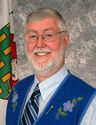
Bob Bromley Weledeh
Thank you, Mr. Chair. I appreciate this opportunity and I just have a few comments I’d like to put forward. I’m sure the Minister was referring to commercial use of polar bears but, sadly, I have to report Nunakput is no longer the only riding that does have polar bears. We have a record of polar bears in the Sahtu now and, of course, in the Mackenzie Delta. Both rather sad cases but indicative of the sorts of things that we’re starting to see more and more as polar bears turn carnivorous and start interbreeding and so on.
There are lots of good things happening in ITI that I’d like to make mention of, but first I have to wonder about the 10 percent increase over the previous year. I can’t recall now what last year’s budget trend was. I know we were seeking significant reductions in all departments last year, but it strikes me that ITI may not have made that. Perhaps the Minister can clarify that.
I certainly support the four priorities that the Minister mentioned in his remarks: economic development, traditional economy, agriculture and energy initiatives. I think that does, indeed, reflect many of the comments from this side of the House and I appreciate that. The SEED program is a good
program that seems to be well-subscribed and I’m looking forward to learning, as time goes by, how that works out.
The Minister mentioned a number of organizations that contributed to the budget and they’re all, of course, business organizations. Business, it’s well known by now, I hope, with this particular recession, needs some guidance by civil society in order to stay on the tracks and I don’t see anything other than business-oriented agencies on his list here. I’m hoping that he seeks much broader input to what our approach is in developing our economy and the proper way of doing business. I certainly agree that the current economic crisis is typically cyclical in nature and, once again, highlights the extremely important role that our small businesses play. We tend sometimes, I think, to lose sight of that when a big player rolls into town and takes much of the attention. I think a steadier and consistent approach in support of the small business sector would be useful. I think even, I’ve been told by some in that sector, that we’re missing our young entrepreneurs, and perhaps that’s something that could be looked at by this department, particularly when large industry pulls away, such as what happened a number of times in the Mackenzie Delta over the decades. This is why you’ll often hear me spouting about the need to support small and particularly local business, because those are the ones that are not ever going to run away.
I didn’t see a mention in the entire page of remarks to tourism and the...Good aggressive approach there and innovative attempt to get things going. A little more on that front is good to see. But I didn’t see anything mentioned on the protected areas and the role of this department. I know there’s interest by aboriginal groups in having this department sponsor a protected area or two, so it would be good to see that happening.
On the traditional economy and so on, I was disappointed that there was only very brief mentions of industries that involve our food. To me, individuals operate around their stomach, and communities do, and often whole economies do. I think we cannot underrate the importance of providing our own food for ourselves, both symbolically and, of course, in terms of invigorating our economy and strengthening it in a way that lasts through the ups and downs of the economic financial cycles. I’m hoping that the brief mentions of local wildlife harvesting, of fish and agriculture are not indicative of the amount of effort that’s going into those programs, because they are areas where, particularly on the fisheries side of things and the agriculture side of things, I think we’ve fallen quite a bit behind the times and there are big opportunities.
This department is playing a significant role on the energy front and I know they’re contributing greatly to the energy initiatives and so on, which I totally support. Lots of good things happening there. Mr. Chair, I’m going to leave it at that and thank you for this opportunity.
Consideration in Committee of the Whole of Bills and Other Matters
Consideration in Committee of the Whole of Bills and Other Matters
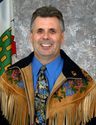
The Chair David Krutko
At this time I’ll allow the Minister to respond to the general comments. Mr. Minister.
Consideration in Committee of the Whole of Bills and Other Matters
Consideration in Committee of the Whole of Bills and Other Matters
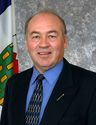
Bob McLeod Yellowknife South
Thank you, Mr. Chair. Just to clarify with regard to some of the Member’s questions. Over the two years the Department of ITI has provided for budget reductions as per the main estimates, we provided for 8.1 percent decrease in operations over two years for a total decrease of $3 million. The 10 percent increase that we referred to in opening comments reflects strategic investments in energy and our business support programs. The downturn in the economy is something that is of concern to us and is something that we’ll be working closely...We do have a Ministerial Advisory Panel on the Economy which will be meeting tomorrow and we have invited and included, per the Member’s recommendation, a representative from Alternatives North.
With regard to young entrepreneurs, this is something that we have tried to develop over the years and we will continue to do it. We have set aside funding for youth as part of the BDIC programs.
On protected areas, we’ve been approached on a number of occasions this year. We are looking at sponsoring one protected area and we’re looking at two proposals that have been put forward and whichever one has the best potential for success, we’ll be supporting.
With regard to industries involving food, we do know that the traditional economy and the use of country foods provides for a significant amount of the food that’s consumed in the communities, and at one time was estimated as high as $50 million. I don’t know if, with the decrease in the caribou populations, that number would still be as high. But certainly we’re working very closely with the Inuvialuit in promoting their muskox harvesting. We’re working with ENR who have developed a Bison Strategy and certainly whatever we can do with other species that are consumed, we would want to work with ENR who is the lead department on it.
As well, our budget that’s being reviewed now also reflects an increase of $3.5 million in contribution increases which directly go to businesses and individuals. Thank you, Mr. Chairman.
Consideration in Committee of the Whole of Bills and Other Matters
Consideration in Committee of the Whole of Bills and Other Matters
The Chair David Krutko
Thank you, Mr. Minister. Next on the list I have Mrs. Groenewegen and Ms. Bisaro. Mrs. Groenewegen.
Consideration in Committee of the Whole of Bills and Other Matters
Consideration in Committee of the Whole of Bills and Other Matters
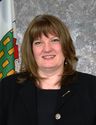
Jane Groenewegen Hay River South
Thank you, Mr. Chairman. This is a department that is a very interesting one and I think has been brought into sharp focus during this time of economic uncertainty. The role of this department and our government, I think, is elevated at a time like this and the expectations are that through the Department of Industry, Tourism and Investment, initiatives will be enhanced or come forward that will instil some confidence in the business community in the Northwest Territories. Certainly those large, mega projects associated with our non-renewable resources are very important in some regions.
I think that an exercise that I have wanted to see happen for a long time, and I’m not really sure if it has ever really been done, was to look at the Northwest Territories. There is economic potential in every region of the Northwest Territories. Not everybody has a pipeline with natural gas flowing through it. Not every community is on the shores of a lake like Great Slave or Great Bear. Not every community is in the backyard of a diamond mine. But every community in the Northwest Territories has some ability for sustainable economic activity. I think it is important that our government recognizes that. I am sure that they do, but I always thought it would be an interesting exercise to try and articulate that more and identify what we can support in every region in every community in the Northwest Territories that is viable for that area to increase economic activity. I think the strength of our economy is the diversity. That is why I think we can’t put all of our eggs in one basket.
Speaking of eggs in a basket, people have mentioned agriculture. There was a conference in Hay River this weekend on the production of eggs in the Northwest Territories. I am not really sure where that initiative is going, but I understand and thought maybe to try and take that activity outside of just one region like Hay River and actually spread that around and have some means of creating viable egg production centres in other communities around the Northwest Territories. That will be interesting to see what comes of that.
The folks with the Territorial Farmers Association have been tenacious in their undertaking of promoting the benefits of agriculture in the Northwest Territories and the prospects of agriculture. I feel that, although there is a paragraph in the opening remarks about agriculture, I still think that to some extent it isn’t something the government really believes in, that to a certain extent it is just lip service. Because there is this clutch of people that are so tenacious they won’t let the idea go away or die, but I sense that the
government goes through the motions with the federal programs and so on. I think that the government really doesn’t believe that this is a viable source of economic activity and source of food and substitute for importing of food in the Northwest Territories, but I could be proven wrong yet. But I have been here a long time and I haven’t really seen the kind of commitment to that economic activity that I would like.
The commercial fishing is something that has gone down so low now that it is almost unbelievable. It seems like it should be pretty straightforward. Fishing is really hard work. I am not really sure how you encourage young people to be involved in the commercial fishing industry, but when you look at a lake like Great Slave Lake, the renewable, sustainable, available harvest of fish in the range of 1.2 million pounds per year, the quality of fish that can be harvested from that lake and the relatively few people involved in that industry and a really very small dent that we put in that quota in any given year is sad considering the very good quality food fish is, the markets that are hungry for that good nutritious food, and yet we can’t seem to figure out a way to create a viable industry out of commercial fishing in the Northwest Territories. I think part of the problem is our alliance with the Freshwater Fish Marketing Corporation. I was saying that for years, but it is up to our government to take the initiative and look at other ways of marketing NWT fish outside of that federally regulated monopoly. We can’t sit back and wait for someone else to do that.
I think the fish that we have available, fresh fish in the Northwest Territories, could be marketed to a relatively small geographic, densely populated area. And quite apart from that, I think that even here in the Northwest Territories a lot of people could enjoy more fish if that industry were organized. It is on our doorstep. It is renewable. It’s somewhat challenging to find people who want to work that hard to be involved in that industry, but there still are people who want to. There are still people who are willing. I think we have a role to play as a government in helping to organize and encourage that industry. It is one that, in the past, has been very important to the community I represent and hopefully in the future will be again.
I think I will just leave my opening comments at that. Thank you.
Consideration in Committee of the Whole of Bills and Other Matters
Consideration in Committee of the Whole of Bills and Other Matters
The Chair David Krutko
Thank you, Mrs. Groenewegen. Minister of Industry, Tourism and Investment, Mr. McLeod.
Consideration in Committee of the Whole of Bills and Other Matters
Consideration in Committee of the Whole of Bills and Other Matters
Bob McLeod Yellowknife South
Thank you, Mr. Chairman. I agree with the Member about the economic potential in every region. Certainly we have challenged the department and the BDIC to provide
for development in every community in the Northwest Territories. This is something that we are working towards.
With regards to the diversity in our economy, this is a top priority of our department, is to provide for diversification beyond the non-renewable resource development. We have put a lot of effort and investment into tourism, traditional support in community and local businesses.
On eggs, I don’t think the meeting this weekend was premised on trying to expand it elsewhere in the Territories. I think all we are trying to do is get back into the production of eggs in the Northwest Territories. This is something that we want to find a way to do so.
With regard to NWT farmers, I think we are trying to do more than lip service. We have been working with the Territorial Farmers’ Association and federal government on going forward. We have been promoting small scale agriculture in every community. I think we are now up to 28 communities are growing their own food. I think what the Member is referring to is the need for access to land for larger scale agricultural production. We have found a way to move forward. We directed the Farmers’ Association to approach the municipality of Hay River. The municipality has the power and the authority to designate land as agricultural land. There needs to be a will to do so. I’m not sure what is holding it up, but as far as other lands outside the municipality, it is being held up by land claims negotiations and the land lease-only policies that are in place. Certainly it can be done through the municipality.
On commercial fisheries, it is something that has been a big disappointment to us. We have continued to fund the corporation. We have been looking at a number of different ways to try to go forward. I think a large part of the problem seems to be with the NWT freshwater fisheries organization. We tried to get a winter fishery going this winter. It was held up for very obscure reasons and it would have helped a great deal. Similarly, for the summer fisheries, there are no pick-up points for the fishermen. I think we need to find a way, working with the NWT fishermen, to revive the industry. I know that Freshwater Fish Marketing Corporation advertises for people to take on licences to fish, but I don’t think that is met with much success. I think it would be better served to have home-grown industry developed. I think that we will continue to work with the communities, with the Northwest Territories fishermen to find a way to go forward. Thank you, Mr. Chairman.
Consideration in Committee of the Whole of Bills and Other Matters
Consideration in Committee of the Whole of Bills and Other Matters
Consideration in Committee of the Whole of Bills and Other Matters
Consideration in Committee of the Whole of Bills and Other Matters
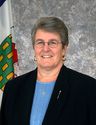
Wendy Bisaro Frame Lake
Thank you, Mr. Chairman. Thank you for the opportunity to provide a few comments. I don’t really have any questions at this point. I just want to make some comments on the Minister’s opening remarks. Like Mr. Bromley, I, too, am a little concerned about the increase in the budget for this department this year over last year. I believe last year’s budget was higher than the previous year’s budget, so I’m concerned that this department’s budget is going up year after year in a climate in which we are supposed to be trying to save money.
I am also a little concerned, and maybe there is a good explanation, but when 46 percent or more than 46 percent of this department’s budget is in grants and contributions, it makes me wonder why. Are we really getting the value for money by grants and contributions?
I am very supportive of the program in terms of Tourism 2010 and the money we are putting into tourism. I think it is probably long overdue. For too long a time tourism didn’t get the support from this government that it should have. I think that the direction we are going in now is a good one. I think we are starting to see some results within the tourism industry.
I do have difficulties with the amount of money that the government, and this department in particular, is spending on the 2010 Olympics. I believe that we should be at the Olympics, that we should have a presence there, but I think our total expense is something like almost $3 million or $2.5 million and that is far too much money, in my estimation. This $1.4 million from ITI for the 2010 Olympics and Paralympics is hard to know if that is too much money, but I will certainly have questions when we come to that section of the budget. I am pleased to see that it is being done in conjunction with a marketing program. That is a good thing. Kudos to that, but don’t spend so much money I guess is where I’m coming from.
I also wonder about the emphasis on the traditional economy, or lack of emphasis. I think that there are some areas in which we are doing well on the traditional economy. I think the fur industry is probably well represented by the department, but I think there are some other areas. Again, I reference fishing and agriculture as two areas where I don’t really know whether or not we are doing as much as we could. If the Minister’s remarks are correct, we are spending $250,000 on fishing or on the fisheries in the 2009-10 budget year. That is a pittance, in my estimation. If we are going to try and revive the fishery, I think we need a heck of a lot more investment than that.
I believe that the Community Gardens Initiative is a good thing. I think it is encouraging people within
communities to look at growing their own food, but I also have concerns similar to my colleague, Mrs. Groenewegen, about the help, the incentives or the assistance that has been given to farmers as opposed to gardeners. The farmers, I think, need some more assistance. I hear the Minister saying that they are working on that and that there has been some progress. That is a good thing. I would have hoped that it would go further than that.
The part that the department played in the MOU with the Territory’s diamond mines is a good thing. I was pleased to see that that has come to fruition and that the mines are working with the department to try and encourage their people to live here so that we will get some benefit, or more benefit, I should say, out of the diamond mines. That was another positive for me.
I am concerned in general with the investment that this government and this department in particular are putting into the Mackenzie Gas Project. I know that we are coming at some point in the next year, hopefully, to a decision by the Joint Review Panel, but we have spent an awful lot of money up to this date and it seems somewhat premature to me. We have been preparing for this project for probably close to 10 years now. I wonder how much more preparation we can do. The Minister stated the estimates extend the contribution to the Aboriginal Pipeline Group to support their work or an equitable share in the Mackenzie Valley Pipeline. I don’t have any problem with that, but I do want to say that I’m a little concerned that we, as a government, are not working for our own equity share in the pipeline and we don’t have a policy to do that. We don’t have a policy to get an equity stake in other large projects as well. That is something that I think we probably should be considering. If this project is going to be as huge and as beneficial as it is presumed to be, I don’t know why this government wouldn’t want to have an equity stake in it. We have to try to get our own-source revenues somehow.
I think that is all I have, Mr. Chairman. Thank you.
Consideration in Committee of the Whole of Bills and Other Matters
Consideration in Committee of the Whole of Bills and Other Matters
The Chair Bob Bromley
Thank you, Ms. Bisaro. With the support of committee, I would like to continue with the general comments before getting a roll-up response from the Minister, as prior protocol. So we are going to Mr. Krutko.
Consideration in Committee of the Whole of Bills and Other Matters
Consideration in Committee of the Whole of Bills and Other Matters
David Krutko Mackenzie Delta
Thank you, Mr. Chairman. I, too, have concerns in regard to certain areas, realizing that we do have a pretty sensitive economy, especially in the downturn of what we are seeing today and especially if we are putting too much focus in one area such as the mining industry and even, for this case, the oil and gas industry and not realizing that we have to seriously work on the home-grown industries in the Northwest Territories.
One of the areas that I think we really have to focus on is in the area of the crafts industry. I think that we have probably one of the few places left in North America or even in Canada that a lot of our beading work and work that is done, a lot of local women basically still use the old traditional style of sewing. I think that alone is a value by way of the crafts in the Northwest Territories. I had an opportunity to speak to a lady who basically spends most of her time sewing, but she goes to different craft shows in Whitehorse or even in Inuvik and also over in Alaska. The people in Alaska are just amazed at the craftwork that is done on this side of the border. I think that it is something that we should really try to market and promote and, if anything, find a way to support these craftspeople to enhance that industry, because a lot of women in our communities depend on the craftwork to bring income into the family. I think that is something that is still pretty specialized in a lot of our aboriginal communities. A lot of people are still doing that. If anything, we should find ways of promoting that by way of offering bursaries to the craftspeople to attend these craft shows and also to have bursaries there to provide them with the materials that they need to continue on this craft. And yet, there are challenges in that, especially trying to find moose hide and stuff like that. I think also it is important that we look at what is going on in other parts of the… especially in Nunavut in regards to the Eastern Arctic, how they are enhancing their promotion of seal products by way of clothing and by way of hats and coats and even vests that we see people wearing in the House. I think it is that type of promotion of the tradition and the economy of that Territory that really enhances the basic cultural values that we talk so highly about. I think we also have to find ways of how they are able to do it and what are we doing wrong that we are not doing that in the Northwest Territories, yet they are doing that over in Nunavut. I think that is where we have to learn from our partners in the East especially, also looking at dealing with the food products that they are basically marketing.
They do have a pretty firm fishery in Nunavut by way of the char fishery. You look at the muskox products that they are promoting and look at jerky and caribou jerky, muskox jerky. They have developed pretty unique promotional packaging of that industry. I think it is something that this Northwest Territories, if we can learn from our friends from the East and pick up on some of the stuff they are doing there in which basically is helping small Inuit communities in the East. I think they are no different than our aboriginal communities over here in the West. I think we have to do more to promote that industry.
I think it is important that we, as government, also look at the oil and gas industry in regards to the
secondary industry. I am serious when I talk about the Norman Wells refinery, which was an agreement that was made back in the 1940s when they opened up the Norman Wells oilfield. One of the agreements was that they had to establish a refinery in the Northwest Territories and allow for that product to be refined in the North and provided to our communities in the Northwest Territories. Going back some 10 years where they shut down the refinery because we made a decision to purchase our fuel products from Alberta and bring it up by rail and barge it down the valley I think was a mistake. I think if there’s any development in the North by way of oil or gas or minerals, if there are any significant discoveries made in the Northwest Territories this government should have some sort of plan in place of how we can force the hands of the federal government on the industry so that they do develop a secondary industry in the Northwest Territories by dealing with the area of refining those products in the Northwest Territories using areas such as Cameron Hills or even that Pointed Mountain in Fort Liard, or looking at that gas potential around Colville Lake or even up around Inuvik. I know for a fact in Eagle Plains they are developing that gas field there in which they’re looking to put it into production, a small scale production, and trucking that product down the Dempster Highway down to Whitehorse and processing it there. I think those things can be done in the Northwest Territories and we have to start thinking outside the box when it comes to those programs.
In regard to the SEED program, I’m glad that you’ve laid it out. I think there are still some hiccups in the program and I think one of the things I’d like to see, if possible, is whether we can allow the economic development officers in our communities to have the ability to approve certain small scale loans, say up to $5,000 or $10,000, for things such as the SEED money to get a business started or for a businessperson to get a small piece of equipment so it does not have to go all the way up the ladder and wait. These things could be dealt with on the spot, knowing they have the ability to evaluate rather than having to go to the regional level and having the board of the region sit down and assess the application. I can see a big application, say up to $20,000 to $50,000 or $100,000 go to a regional board and make that decision, but there should be some of those decisions made at the local level where you don’t have to go all the way to the top. Again, it’s a matter of having the ability to move on some of these applications which aren’t really that big and can support small business, without having to go through all the red tape.
The other area I think this government has to seriously consider looking at is that of commercial fishing. I know Mrs. Groenewegen has touched on
it, but I think there are other regions in the Northwest Territories that have for years been trying to develop a commercial industry. In order to sell any products you have to have a commercial licence, regardless if it’s caribou meat, muskox, fish. I think we have to find a made-in-the-North solution to this problem like we did with the Fur Marketing Strategy that we have, which is a northern product stamped as a northern product. I think we have to start developing some of our commercial businesses in the North, made in the North, getting the authority to develop that in the North so that we can have other areas in the Northwest Territories developing that industry. I think it’s important to realize that those individuals can maintain a small mom-and-pop or Asian business by way of selling fish or caribou meat or dry meat or dry fish or those types of products. But most of those individuals sell it know it more as trade and barter, where you trade something and sell it. Technically you don’t have a commercial licence to sell it, but you still do using the trade and barter method where you trade something off for dry meat or dry fish. I think it’s something we have to really work on similar to how we’ve been able to market the Fur Marketing Strategy.
With regard to forest products, that’s something I think we do need to seriously look at as a government and look at developing that industry like we do with oil, gas, tourism, whatever. I think that we have to start looking at the potential that is in the Northwest Territories. I know there is no real viable commercial business today, but there’s nothing saying there’s the potential of small-scale businesses in the Northwest Territories, such as small portable sawmills and whatnot, that could work at a community level versus at a regional or territorial level.
My last comment is in regard to the comments around looking at the oil and gas in regard to the pipeline. I know a lot of people raised again about how the government is out there in front of the final decision of the regulatory boards. I think we should allow the regulatory boards to do their jobs, come back with the report, and whatever their findings are, give them the light of day to say okay, we’ll hold off until we see the final report. I think a lot of people in our communities put a lot of faith and trust into these boards and made the presentations to them on issues that we might not think are important. But for our communities, the problems with alcohol and drugs, substance abuse, the effect it could have on our communities with the pipeline is real. I think we’ve learned that from the previous expansions, especially Norman Wells. I think we have to allow for them to do their work, but we shouldn’t be seen to be out in front of everybody else saying get on with it and get going. I think we have to allow that process to take its time.
Also, thank you. That’s it for my comments.
Consideration in Committee of the Whole of Bills and Other Matters
Consideration in Committee of the Whole of Bills and Other Matters
Consideration in Committee of the Whole of Bills and Other Matters
Consideration in Committee of the Whole of Bills and Other Matters

David Ramsay Kam Lake
Thank you, Mr. Chairman. A lot of ground has been covered there; a number of items under the mandate of the department that one could talk for days and days on. There are a lot of interesting things that have happened inside of the department. I just wanted to touch on a few things.
The first one is -- and I guess it’s interesting that we have ITI before us today -- earlier today my Member’s statement and line of questioning was for the Minister on the future of the BDIC. The more I think about it, the more I think we really need to make a decision as a government on the BDIC and what its future is going to be. Because if they are not allowed to operate at arm’s length from government, then they are part of government. Even though we call it Business Development Investment Corporation, ITI still has the strings attached firmly into the BDIC and delivers the programs there. That’s an issue for me and I think we really need to address that.
Some of the other things I was glad to hear another Member talk about the fact that the government needs to look at an investment in the pipeline. I’ve been saying this for years. We spend close to $5 million a year as a government on a pipeline that we have no stake in. I 100 percent support our involvement with the APG and I think our support should be there for the APG, but I also believe that the Government of the Northwest Territories shouldn’t sit idly by and watch the development of a pipeline and hopefully the construction of a pipeline and not have a stake in it for all residents in the Northwest Territories. I would concur with those sentiments. I think Ms. Bisaro was talking about that earlier.
Of course, I think in tough economic times we need to put more of an emphasis on the diversification of our economy. Many Members have spoken about forestry, the need to establish, perhaps, a wood pellet industry. Fishing, agriculture. I support more work being done in this area. I don’t believe a lot of emphasis has been put in these areas and I believe more should be done there.
Tourism, there’s been some success stories in tourism and I know the department’s done a good deal in trying to come up with some funding for tourism businesses. That’s been helpful.
We need to take a look at industrial initiatives and more manufacturing. We need to build our economy here in the Northwest Territories and I don’t think the department and the government pay enough attention to those things. We seem focused
on oil, gas, diamonds. Sometimes I don’t think we put enough emphasis on the other things that are out there. The Northwest Territories is a perfect location for cold weather testing, a centre for excellence in cold weather testing. There are a number of companies that come north to test their equipment and we should be doing more in working with those folks. Even recently this phenomenon of the Ice Road Truckers. I don’t believe the government’s taken an initiative. This is an opportunity. That Ice Road Truckers series is huge in the United States and is now going to be available in Canada. That put the Northwest Territories on the map in North America big time. Yellowknife and the ice road. Tourism at ITI and the Northwest Territories Tourism Association should grasp onto something like the Ice Road Truckers, get as much mileage out of that as they possibly can, because it’s something that sells. There are people that come to Yellowknife and they want to speak to Mr. Debogorski. He’s an icon in the United States because of that TV show. We need to be taking every opportunity to promote ourselves and if it’s through vehicles like that, then that needs to happen.
Also, I’m looking forward to the Diamond Policy that’s being worked on by the department. I appreciate all their efforts there. That’s going to be helpful. It’s going to be a difficult time here in the near term because the economy is in such a shaky state right now that we are going to have to look at policies and maybe modifying some policies to fit unique circumstances. That includes diamonds, support to small businesses. In the Minister’s opening comments he actually states that our economy is relying on the economic stimulus and diversification that is provided by the small business centre. They are the backbone of our northern economy. I couldn’t agree with that statement more. But where is the proof that statement is going to be supported by the government? Look at the SEED program. And I’ve spoken about this before. The SEED program, although it’s a little bit more money and it’s the BDF just dressed up a little bit more, but that $2.5 million can be taken and spread all around. But unless we’re going to actually get into communities...And that’s where the business start-ups have to happen is in the small communities. We have to get in there and realize that there is a cost of doing business in the small communities. There are utilities and personnel costs that a business in a regional centre here in Yellowknife is not going to experience. Until we can get around trying to find support for small businesses in communities that is going to address those additional costs, I’m not sure how businesses would survive in small communities, to be honest with you.
I think those things have to be met head on and we have to come up with a plan to address the high costs of doing business. We can have all the money in the world and hand it out in every community, but if the businesses that do get the funding can’t operate because of the high cost, we’re setting them up to not succeed. I think as a government we have a responsibility to the people in the small communities to make sure that we are providing support not only to get businesses up and running, but on an ongoing basis to look at personnel costs, to look at utility costs that are prohibitive to businesses succeeding in small communities. There are going to be a lot of discussions in that area as we go forward. Like I said, things are going to get very interesting here with what’s happening with the diamond industry and our resource-based economy. It’s really taking a hit. We’re going to need to come up with a game plan.
On one thing -- I have a couple minutes left -- on hydro. I think the department and the government is doing a good job in developing the Hydro Strategy. I think we’re finally coming to an understanding that we need to have a strategy, we need to have a vision going forward on hydro, and I’m happy to see that. I’ve always been a big supporter of the Taltson expansion and I remain a supporter of the Taltson expansion. But I’ve been a Member of the House for five years and we’ve spent millions of dollars trying to get ready for this Taltson expansion. There is another $2.5 million here. In five years we’ve yet to get a power purchase agreement on our investment. So when are we going to get a power purchase agreement? If the economy continues to slump, the mines aren’t going to be interested in signing off on a purchase power agreement. Maybe we need to look elsewhere on that Taltson expansion. Maybe we need to look at running lines into communities. Maybe we need to look at selling that power south into Alberta. Something else has to happen here, because right now we’re just spending money on a whim. The business case for this is the mines. I’m telling you right now the way things are looking in the immediate future here, maybe it’s going to take a year or 18 months, these guys aren’t going to be in any position to sign a power purchase agreement with anybody. They’re doing the best they can to stay afloat. Times are tough. Should we be spending another $2.5 million on the Taltson expansion? I think that’s a discussion we should be having.
With that, I’ll leave some of the other questions until we get to the detail. Thank you for your time.
Consideration in Committee of the Whole of Bills and Other Matters
Consideration in Committee of the Whole of Bills and Other Matters
The Chair Bob Bromley
Thank you, Mr. Ramsay. Seeing no other colleagues looking for general comments here, I’ll call on Mr. McLeod for a response.
Consideration in Committee of the Whole of Bills and Other Matters
Consideration in Committee of the Whole of Bills and Other Matters
Bob McLeod Yellowknife South
Thank you, Mr. Chairman. I’ve responded to most of the comments except for the last few speakers. With regard to the grants and contributions, we thought we were doing good by making 46 percent of it available to businesses out in the sector. We think it’s a good thing and I’m not sure what the concern would be for that to be happening.
Tourism, we’re putting a lot of emphasis on the 2010 Olympics. We think this is a very good opportunity to expose the Northwest Territories and to market the Northwest Territories along with our sister territories. I think it’s very good not only to market the North, but also to expose our artists and northern performers to all the people in the world so that they’ll see what a great place it is to live and be exposed to our way of life and culture.
With regard to the traditional economy, you’ve talked about the fishing. The responsibility for fishing is a federal responsibility. Our department becomes involved with the marketing of fish. We would also become involved with marketing of fish at the local level.
Agriculture is something we agree and have put a lot of effort into.
With regard to the diamond mines, I think that the MOU is a good thing as well. The Mackenzie Gas Project, the federal government has seen fit to invest $32.6 million in getting ready for the pipeline. I think we should be doing the same thing to get ready for it.
On the equities share, I guess the proof is in the pudding. I support equity shares. When I come forward with a proposal, I hope other Members would be supportive. Again, that costs a lot of money and we’re a small government. So how much money are we prepared to put into getting an equity share? I guess, I think that’s something I agree with and I’ll support.
With regard to home grown, I think a home-grown economy, like most of the Members here, is very important. We’ve been promoting and supporting arts and crafts. We have a brand. We’re supporting Buy North. Certainly, Nunavut, we’ve tried a lot of the things that Nunavut has done, but people in the Northwest Territories have a bit of a different perspective with regard to the commercial use of wildlife and so on.
Oil and gas secondary industry, we’ve done some studies. We are looking at ways to promote that. We think the best opportunity to do so is to convert natural gas for community use when and if the Mackenzie Valley Pipeline goes ahead.
The SEED program is something that we’re focusing a lot on the small communities.
With regard to having local EDOs having the loan authority, well, this is something that I’ll approach BDIC. BDIC is the one that sets the loan authorities. BDIC decides who gets a loan authority. So I’ll approach them to consider doing so.
Again, commercial fishery. If you need a licence you need to have a quota and Fisheries and Oceans sets quotas. So generally at the community level the quota is based on what you catch. Generally that’s been their approach. If we set up the SEED program that would be an excellent opportunity to support small business to sell fish products.
Forestry is the responsibility of ENR, but we’re quite prepared to help through our business programs to look at setting up wood pellet development, and I think we have pilot projects that have been set up through the Energy Fund.
Oil and gas, I guess what we’re trying to do is to make sure that a framework is in place in that when the regulatory approval comes through, that there will be no reason for the pipeline to be held and that it could go right ahead.
With regards to the BDIC, we’ve had a discussion earlier. I guess the Member has a different view than I do. I think that BDIC right now is a stand-alone board. They get their authority from the board and they make all their own decisions. The authority I have over them is to appoint members and to give them written direction. Other than that, they make all their own decisions. If all of our programs are handled on that basis, then we would have very little flexibility to provide for dealing with community development.
Investment in the pipeline equity, we talked about that already. Industrial initiatives, manufacturing, cold weather testing, I think that’s an excellent area to get into. We haven’t done as much as we could there. I think that some of the municipalities have done a lot of work on it, so we’d be willing to work on that.
On Ice Road Truckers, I think that’s an opportunity and something we should revisit. We’ll approach the diamond mines and oil and gas to see what we can do.
The Diamond Policy, I think the Member is correct; it’s something we really have to look at. Tough times call for some innovation and creativity. We’ll have to look at what we can do to preserve our secondary industry.
The SEED program, in the small communities it’s very different to pick out the winners from the losers, but we try to help as many businesses as we can.
The Hydro Strategy, there are some more briefings that will be set up. I think that it’s very important to look at the business case and I think that the diamond mines, with the downturn in the economy, this is probably the best opportunity to promote the hydro to the diamond mines. I think that as we go through our presentations, the numbers will show that. Right now 70 percent of the population is serviced by hydro, but the population has been very static. Were there need for more hydro I guess that would have to be examined more closely. Thank you, Mr. Chair.
Consideration in Committee of the Whole of Bills and Other Matters
Consideration in Committee of the Whole of Bills and Other Matters
The Chair Bob Bromley
Thank you, Minister McLeod. That concludes general remarks. Does committee agree that we should go on to detail? Mr. Krutko.
Consideration in Committee of the Whole of Bills and Other Matters
Consideration in Committee of the Whole of Bills and Other Matters
David Krutko Mackenzie Delta
I’d just like to have a few more general comments. I missed something before.
In regard to your subsidiaries, using the Fort McPherson Canvas Shop, I know it’s an issue in my community. I meant the canvas shop has been in McPherson over 30 years but there’s not one aboriginal person or Gwich’in member on that committee which oversees the canvas shop. I think, as a community, that basically undermines the initiative putting up these types of subsidiaries in the communities and allow for community input.
I know I’ve, over the years, tried to find a way to either sell a portion of that subsidiary to a community or to a development corporation and allow community ownership, but when even the community aboriginal individuals are not even party to that board and it’s all non-aboriginal people, I think it really sends a bad message. I know for a fact that we did have aboriginal people on the board before and for some reason they were a little too long and they got rid of them. For me, it sends a bad message. I think that as a government, if anything, you should be working with communities to take ownership of these subsidiaries than to simply run them as a business venture from Yellowknife. I don’t think that’s what we should be doing when we start up these subsidiaries. If anything, we should be trying to get community buy-in, community participation and also community know-how of how they’re going to eventually take it over.
I think, for me, that issue is still out there. It’s an issue that did come up when we had the board up in McPherson and this issue was raised. Again, it was a decision made by...
Also, what really gets me is the way the appointments were made. An individual who already works on the Business Investment and Development Corporation Board went to McPherson and went and picked the people he
wanted to have on that board. To me, that person should not have even done that. If anything, you should have advertised in the local paper or on the local radio station, than have an individual who’s already a board member for the Business Development Investment Corporation go into Fort McPherson on his own and pick people that he wanted to have on the board who were non-aboriginal people. I think that it’s important that we, as government, find ways to work with community but not have the old attitude, well, sorry, you aboriginal people don’t know how to run businesses so we have to depend on everybody else to do it for you. I think those days are gone and they shouldn’t even be discussed, but they still are. Again, I’d just like to raise that. I forgot that in my comments earlier.
I just have a question in regard to the mention of the SINED agreement being extended. Also, there was some announcement by way of an Economic Development Diversification Agreement with the northern territories. Maybe I could get clarification on that, and also possibly set up a northern office for this new arm similar to what they have in the Western Diversification Fund and the Atlantic Accord types of frameworks. Maybe you could just elaborate a little bit on that. I know it’s been a while since I’ve heard about it, but I’d just like to know where that is. Thank you.
Consideration in Committee of the Whole of Bills and Other Matters
Consideration in Committee of the Whole of Bills and Other Matters
Consideration in Committee of the Whole of Bills and Other Matters
Consideration in Committee of the Whole of Bills and Other Matters
Bob McLeod Yellowknife South
Thank you, Mr. Chair. First of all, with regard to the Fort McPherson Tent and Canvas Shop, I fully agree that board members for the different subsidiaries should be composed of community representatives and I’ll communicate that concern to the board of the BDIC; I’ll communicate it to the chairperson.
With regard to SINED, this is an extension of the existing program. It’s a five-year program for $90 million split between three territories. That would be an extension. The Northern Economic Development Agency was announced with the federal budget and there will be $10 million a year associated with the Northern Economic Development Agency for a period of five years. There has been no indication where this agency would be located. There’s been some speculation on Nunavut. When the federal Indian Affairs Minister was in Nunavut recently, there was some talk about there would be a satellite office in Ottawa and there would be offices in each territory, Yukon, NWT and Nunavut, but other than that we’ve been working with our Department of Aboriginal Affairs and Intergovernmental Affairs to try to get more information in that regard. Of course, we’ll be pushing for this agency to be located in the Northwest Territories. Thank you, Mr. Chair.
Consideration in Committee of the Whole of Bills and Other Matters
Consideration in Committee of the Whole of Bills and Other Matters
The Chair Bob Bromley
Thank you, Minister McLeod. Does committee agree that this concludes general remarks?
Consideration in Committee of the Whole of Bills and Other Matters
Consideration in Committee of the Whole of Bills and Other Matters
Some Hon. Members
Agreed.
Consideration in Committee of the Whole of Bills and Other Matters
Consideration in Committee of the Whole of Bills and Other Matters
Consideration in Committee of the Whole of Bills and Other Matters
Consideration in Committee of the Whole of Bills and Other Matters
Some Hon. Members
Agreed.
Consideration in Committee of the Whole of Bills and Other Matters
Consideration in Committee of the Whole of Bills and Other Matters
The Chair Bob Bromley
The summary listed on page 12-7, department summary, operations expenditure summary, $50.870 million, we will defer until the end of our detail. We’ll start with page 12-8, information item, infrastructure investment summary. Agreed?