
Thank you, Mr. Speaker. Mr. Speaker, as the Member stated, you know, vacancy rate in the Northwest Territories in the RCMP, we are unfortunately number one in the country with the 22.9 percent unfilled position rate currently. And, you know, this has certainly posed a huge challenge for many of our detachments across the NWT. Fortunately, we have been able to address this challenge through the -- we've managed to get 18 relief members from across Canada have been brought in to provide temporary support to our communities, which has been very much appreciated, and we are working on the recruitment and retention as one of our key priorities, and the department continues to work closely with the RCMP to support solutions for sustainability and service delivery. And we have dedicated $200,000 in funding toward recruitment in the upcoming budget. Thank you, Mr. Speaker.
Debates of Oct. 23rd, 2025
This is page numbers of the Hansard for the 20th Assembly, 1st Session. The original version can be accessed on the Legislative Assembly's website or by contacting the Legislative Assembly Library. The word of the day was know.
Topics
Oral Questions
Oral Questions
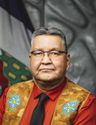
Richard Edjericon Tu Nedhe-Wiilideh
Thank you, Mr. Speaker. Our communities are in the best position to identify how to enhance public safety with the RCMP. Will the Minister work with the RCMP and federal Government of Canada to ensure consultation with Indigenous leadership before renewing or modifying any RCMP contracts? Thank you, Mr. Speaker.
Oral Questions
Oral Questions
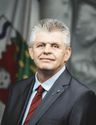
Jay MacDonald Thebacha
Thank you, Mr. Speaker. Yes, Mr. Speaker, we currently -- G-division and the commander currently has an Indigenous advisory committee that he meets with twice annually and part of that meeting and consultation process is to receive advice from those Indigenous leaders and participants from across the territory which are recommended and appointed by regional Indigenous governments and organizations across the NWT. Thank you, Mr. Speaker.
Oral Questions
Oral Questions
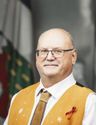
The Speaker Shane Thompson
Thank you, Minister of Justice. Final supplementary. Member from Tu Nedhe-Wiilideh.
Oral Questions
Oral Questions
Richard Edjericon Tu Nedhe-Wiilideh
Thank you, Mr. Speaker. The TRC and MMIWG Calls for Justice call for Indigenous people to have greater authority over policing in their communities, and these principles are reinforced by UNDRIP. Can the Minister update this House on what steps the GNWT's taking to integrate these rights and Calls to Action into policing, especially when Indigenous governments pointed out gaps in the public safety? Thank you, Mr. Speaker.
Oral Questions
Oral Questions
Jay MacDonald Thebacha
Thank you, Mr. Speaker. Mr. Speaker, this question is a little bit more involved and detailed and will require some additional work. So what I am prepared to do today is commit to the Member that I will reach out to the other departments, EIA and other departments, etcetera, have my department do that, and provide a response back to the Member on this question. Thank you, Mr. Speaker.
Oral Questions
Oral Questions
The Speaker Shane Thompson
Thank you, Minister of Justice. Oral questions. Member from Mackenzie Delta.
Oral Questions
Oral Questions
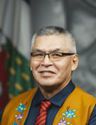
George Nerysoo Mackenzie Delta
Thank you, Mr. Speaker. My questions will be directed to MACA, Minister of MACA. Can the Minister inform this House as to how many of our schools within the NWT have backup generators to serve as muster points within our smaller communities? Thank you, Mr. Speaker.
Oral Questions
Oral Questions
The Speaker Shane Thompson
Thank you. I think that question may go to ECE. I think that's -- if we're talking about schools and backup generators, so Minister of ECE.
Oral Questions
Oral Questions

Caitlin Cleveland Kam Lake
Thank you very much, Mr. Speaker. Mr. Speaker, I'd have to go and look and see which schools are designated as muster points and which one of those have backup generators. But I can confirm that two of the schools the Member was discussing in his Member's statement do not have backup generators. Thank you.
Oral Questions
Oral Questions
George Nerysoo Mackenzie Delta
Thank you, Mr. Speaker. Will the Minister look at equipping the schools that are not equipped with backup generators to have them installed within the schools? With the recent power outage in Fort McPherson, it shut the whole community down, even the schools and recent years before the school burnt down, we were able to attend the school because they had a backup generator but the new school doesn't. So will the Minister look at equipping schools within the NWT with backup generators in the future? Thank you, Mr. Speaker.
Oral Questions
Oral Questions
Caitlin Cleveland Kam Lake
Thank you, Mr. Speaker. Mr. Speaker, I can look at the capital standards to see if new school builds that are designated as muster points in the community for emergency purposes do have the requirement that they have backup generators. And then I can also commit to getting a comprehensive list of the status of existing school infrastructure for the Member as well. Thank you.
Oral Questions
Oral Questions
The Speaker Shane Thompson
Thank you, Minister of Education, Culture and Employment. Final supplementary. Member from Mackenzie Delta.
Oral Questions
Oral Questions
George Nerysoo Mackenzie Delta
Thank you, Mr. Speaker. Thank you to the Minister. They have these sea cans now that can be adjusted to fit these buildings. Will the Minister look at consulting with the two communities in my riding to look at the process of obtaining backup generators for these schools in the immediate future so they could be utilized as muster points? Thank you, Mr. Speaker.
Oral Questions
Oral Questions
Caitlin Cleveland Kam Lake
Thank you very much, Mr. Speaker. Mr. Speaker, any kind of investment of that size would have to go through our capital planning process, and so I can certainly look into what the cost would be and make sure that the Member is aware and commit to bringing that back to the Member. Thank you.
Oral Questions
Oral Questions
The Speaker Shane Thompson
Thank you, Minister of Education, Culture and Employment. Oral questions. Member from Yellowknife North.
Oral Questions
Oral Questions

Shauna Morgan Yellowknife North
Thank you, Mr. Speaker. So my first set of questions are for the Minister of Education, Culture and Employment.
So since the child and youth counsellors from HSS were shifted out of schools just over two years ago, ECE has given funds directly to the schools and education authorities for in-school mental health and wellness programs; however, many parents are still not clear what specific programs or activities are now available for their children. I understand the Minister has given considerable leeway to the schools to decide how the mental health and wellness funding is spent. Can she commit, though, to ensuring that the schools publish information and inform parents as to what programs and activities are now being offered in terms of mental health? Thank you, Mr. Speaker.
Oral Questions
Oral Questions
The Speaker Shane Thompson
Thank you, Member from Yellowknife North. Minister of Education, Culture and Employment.
Oral Questions
Oral Questions
Caitlin Cleveland Kam Lake
Thank you very much, Mr. Speaker. So, Mr. Speaker, just to acknowledge the Member is correct. So while health and social services provides services that are clinically based, education, culture and employment acquired funding to focus more on the prevention side. And I can confirm for the Member, yes, I agree with the Member, there needs to be a transparency and public awareness component to this. And as it exists right now education bodies are expected to report annually on the school-based mental health and wellness programming through their planning and accountability frameworks. This information is tabled annually, which is used to inform the public, but also to inform policy changes going forward to inform funding requirements, etcetera. And I can also commit to the Member that I can bring this forward as well as far as making this information potentially more digestible for parents from an education -- by education body // case. Thank you.
Oral Questions
Oral Questions
Shauna Morgan Yellowknife North
Thank you, Mr. Speaker. And I'd appreciate if the Minister could also direct us to where those annual reports are found. I'm wondering does ECE have any requirements in terms of what the school-based programs must include in terms of parameters? For example, does it need to include some service to be able to respond to a mental health crisis by a student or options for one-on-one support in addition to group activities? Thank you, Mr. Speaker.
Oral Questions
Oral Questions
Caitlin Cleveland Kam Lake
Thank you very much, Mr. Speaker. So, Mr. Speaker, there are guidelines for this program and also policy direction on how education bodies provide access to mental wellness services, and that's divided up by a whole-school approach, classroom-based approach, small group, and also one on one. It's important to note that it is not expected by the school-based mental health and wellness program from the education side that educators also be clinicians or that the peer support workers be clinicians. And so what they've identified is through a tiered-approach to supporting students at the end of the day, Mr. Speaker, so that there is both a proactive and prevention focus on the mental health supports that schools are providing. And it's incredibly important that this program can be flexible to the needs of the school itself because our educators are best placed to understand the needs of the students, what they're going through. Our kids are talking to one another. They're talking to the adults in the school. And that is how educators are able to be responsive to what students need. That doesn't replace, though, the clinician approach from health and social services. Thank you.
Oral Questions
Oral Questions
The Speaker Shane Thompson
Thank you, Minister of Education, Culture and Employment. Final supplementary. Member from Yellowknife North.
Oral Questions
Oral Questions
Shauna Morgan Yellowknife North
Thank you, Mr. Speaker. So just finally can the Minister tell us how she's monitoring the success of these programs to make sure it's accomplishing what it's meant to accomplish? Thank you, Mr. Speaker.
Oral Questions
Oral Questions
Caitlin Cleveland Kam Lake
Thank you very much, Mr. Speaker. Mr. Speaker, I meet twice a year with our education body leaders, and we do that in the spring and then again in the fall. That meeting is happening in mid November. And that's an opportunity to have really candid frank conversations with all the leaders, superintendents, and chairs, about how the program is going, and I'm very clear at every single meeting that I expect and ask for updates on everybody's programs and how it's rolling out because the mental health of our students is incredibly important.
In addition, Mr. Speaker, we also have our education accountability framework. This includes annual operating plans, budgets, performance measures, and monthly data submissions from education bodies.
We also have our early development instrument and middle years development instrument, and this is success monitoring over time.
And then we also have that data that I spoke to earlier with the Member that informs policy development, funding decisions, and service improvements. But that, again, is over time. Thank you.
Oral Questions
Oral Questions
The Speaker Shane Thompson
Thank you, Minister of Education, Culture and Employment. Oral questions. Member from Yellowknife Centre.