
Thank you very much, Mr. Speaker. Mr. Speaker, within my jurisdiction as Minister, I provide authority for the college to open campuses in certain communities in the Northwest Territories. So through my role, there is a designation of Yellowknife as a campus location. The board of governors is working on further details as to where and what and when that work happens as far as a North Slave campus. I can report to the House, as has been reported in multiple media outlets as well, that the board of governors is currently very hard at work on a North Slave campus and what those options might be. Thank you.
Debates of Feb. 13th, 2026
This is page numbers 3487 - 3250 of the Hansard for the 20th Assembly, 1st Session. The original version can be accessed on the Legislative Assembly's website or by contacting the Legislative Assembly Library. The word of the day was communities.
Topics
Question 1033-20(1): Polytechnic University Update
Oral Questions
Page 3498
Question 1033-20(1): Polytechnic University Update
Oral Questions
Page 3498

The Speaker Shane Thompson
Thank you, Minister of Education, Culture and Employment. Oral questions. Member from Tu Nedhe-Wiilideh.
Question 1034-20(1): Transboundary Water Agreements
Oral Questions
Page 3498
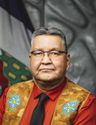
Richard Edjericon Tu Nedhe-Wiilideh
Thank you, Mr. Speaker. Again, my question would be for the Minister of ECC.
I just want to just quickly highlight one thing here. In Alberta, the tar sands, it flows into Lake Athabasca, and they also have a uranium mine in Saskatchewan that also flows into the same lake and flows north. But my question would be to the Minister of ECC, is in the event of the Alberta government failing to include or consult or accommodate Indigenous governments in the Northwest Territories, what can we do to work with Government of Canada to come up with new legislation so we could hold Alberta to account on downstream-user effects? Thank you, Mr. Speaker.
Question 1034-20(1): Transboundary Water Agreements
Oral Questions
Page 3498
The Speaker Shane Thompson
Thank you, Member from Tu Nedhe-Wiilideh. Minister of Environment and Climate Change.
Question 1034-20(1): Transboundary Water Agreements
Oral Questions
Page 3498
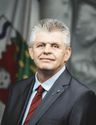
Jay MacDonald Thebacha
Thank you, Mr. Speaker. Mr. Speaker, it's hard to speak to a question that's hypothetical like that one, so I just don't have a response for that. Thank you, Mr. Speaker.
Question 1034-20(1): Transboundary Water Agreements
Oral Questions
Page 3498
Richard Edjericon Tu Nedhe-Wiilideh
Okay, thank you, I appreciate that. But, Mr. Speaker, also the effects of downstream in Lake Athabasca and Saskatchewan, the Saskatchewan government has taken the approach to clean up that project but there's still no consultation with the Indigenous governments in the Northwest Territories. Has this Minister been able to work with the Government of Saskatchewan to figure out why we're not included in that remediation project on the abandoned mines in that northern Saskatchewan? Thank you.
Question 1034-20(1): Transboundary Water Agreements
Oral Questions
Page 3498
Jay MacDonald Thebacha
Thank you, Mr. Speaker. Mr. Speaker, at a staff level we are engaged with the Province of Saskatchewan through our bilateral agreements. We currently don't have a transboundary water agreement with Saskatchewan. We are in the process of having conversations. As these issues are raised, certainly something I will take back to the staff and get a further update. Thank you, Mr. Speaker.
Question 1034-20(1): Transboundary Water Agreements
Oral Questions
Page 3498
The Speaker Shane Thompson
Thank you, Minister of Environment and Climate Change. Final supplementary. Member from Tu Nedhe-Wiilideh.
Question 1034-20(1): Transboundary Water Agreements
Oral Questions
Page 3498
Richard Edjericon Tu Nedhe-Wiilideh
Thank you, Mr. Speaker. Right now, as it is, it's really concerning because in my riding in Tu Nedhe-Wiilideh riding, I've been to so many funerals, and we are feeling the effects from these downstream users. I guess my question, Mr. Speaker, is that has this government had any discussions with the Government of Canada on creating new legislation so that downstream users in the Northwest Territories are protected? Thank you.
Question 1034-20(1): Transboundary Water Agreements
Oral Questions
Page 3498
Jay MacDonald Thebacha
Thank you, Mr. Speaker. Mr. Speaker, we work very closely with the federal government, with the environment and climate change. We have had multiple conversations around the treat and release issue that has been raised in Alberta. And we also have, through bilateral meetings, conversations about water quality and quantity in the Northwest Territories. We have many funding opportunities that we share -- receive from the federal government that helps to inform our quality and quantity of water within the Northwest Territories and supports Indigenous governments in many monitoring programs throughout the Mackenzie Basin. This work is ongoing. And, really, like I said earlier, you know, our transboundary water agreement is really the key tool that allows us to ensure that we have metrics to measure the current quality and quantity of our water and ensuring that our ecosystem health is stable and meeting those measures. So we are constantly working on that. Thank you, Mr. Speaker.
Question 1034-20(1): Transboundary Water Agreements
Oral Questions
Page 3498
The Speaker Shane Thompson
Thank you, Minister of Environment and Climate Change. Oral questions. Member from Range Lake.
Question 1035-20(1): Capacity of North Slave Correctional Facility
Oral Questions
Page 3499

Kieron Testart Range Lake
Thank you, Mr. Speaker. Mr. Speaker -- there we go. Mr. Speaker, I am concerned about the number of inmates at NSCC with respect to its overall capacity. The correctional centre, at its peak in 2013-2014, of 196 inmates. Its current capacity is 173. When we reviewed the Department of Justice in the main estimates, their current numbers are 141. That's 81 percent capacity. We know the Prime Minister is pursuing bail reform. Do we have enough capacity and resources to ensure the successful operating of our correctional facilities in the Northwest Territories? Thank you. Safe. Safe.
Question 1035-20(1): Capacity of North Slave Correctional Facility
Oral Questions
Page 3499
Question 1035-20(1): Capacity of North Slave Correctional Facility
Oral Questions
Page 3499
Jay MacDonald Thebacha
Thank you, Mr. Speaker. Mr. Speaker, we are currently -- as of yesterday, we're at 88 percent, and I am happy to provide a -- or at 80 percent capacity. I am happy to provide an update today. So we've had -- yeah, at this time we feel we have capacity. There are a couple of things that are going on. There is some security changes that are being made to the facility in Hay River which will allow them to take a little bit higher-rated offender which will expand a little bit on the capacity. And as we move forward, currently the capacity load within the North Slave Correctional Centre is still at a manageable state. Thank you, Mr. Speaker.
Question 1035-20(1): Capacity of North Slave Correctional Facility
Oral Questions
Page 3499
Kieron Testart Range Lake
Thank you. My concern is, again, about safety, Mr. Speaker, but it's also about resourcing. If correctional officers are forced to do overtime shifts and things like that, it can drive huge costs. The auditor general has already found this in our facilities, also in Nunavut's facilities, which have similar challenges.
Mr. Speaker, if we're changing SMCC -- that's a therapeutic campus. That's a big part of their operating -- how is that going to impact the therapeutic campus in Hay River -- or in that facility? Thank you.
Question 1035-20(1): Capacity of North Slave Correctional Facility
Oral Questions
Page 3499
Jay MacDonald Thebacha
So the changes to the therapeutic campus in Hay River will just allow another level of offender to be able to participate in the programming that is currently available in that facility. Thank you, Mr. Speaker.
Question 1035-20(1): Capacity of North Slave Correctional Facility
Oral Questions
Page 3499
The Speaker Shane Thompson
Thank you, Minister of Justice. Final supplementary. Member from Range Lake.
Question 1035-20(1): Capacity of North Slave Correctional Facility
Oral Questions
Page 3499
Kieron Testart Range Lake
Thank you, Mr. Speaker. So when those changes are made to the facility, how many more inmates will they be able to take on? There's 14 people there. That was what we heard in the main estimates. So once the changes are made, how many more higher security classified inmates will be able to be housed at SMCC? Thank you.
Question 1035-20(1): Capacity of North Slave Correctional Facility
Oral Questions
Page 3499
Jay MacDonald Thebacha
Thank you, Mr. Speaker. Mr. Speaker, this change to the security will not change the overall capacity of the facility. That number will remain the same. The change will allow a different level of inmate to be housed in the facility and participate in the programming. Thank you, Mr. Speaker.
Question 1035-20(1): Capacity of North Slave Correctional Facility
Oral Questions
Page 3499
The Speaker Shane Thompson
Thank you, Minister of Justice. Oral questions. Member from Yellowknife North.
Question 1036-20(1): Apprenticeship Programs
Oral Questions
Page 3499

Shauna Morgan Yellowknife North
Thank you, Mr. Speaker. So one of our priorities in this Assembly is workforce development. And I know we've spoken a lot about apprenticeships, the need for more apprenticeship opportunities. And we've often heard, including the other day from infrastructure, that one of the barriers is not being able to find enough Red Seals journeypersons to mentor and apprentice people who might be interested. However, I wanted to ask the Minister of education, are there apprenticeship opportunities that don't require a Red Seal? There may be many skills and trades out there that could -- that just need sort of more informal mentorship to learn a certain trade without needing a Red Seal.
Can the Minister comment on whether those kinds of opportunities are available either for SNAP students or other types of apprenticeships. Thank you, Mr. Speaker.
Question 1036-20(1): Apprenticeship Programs
Oral Questions
Page 3499
The Speaker Shane Thompson
Thank you, Member from Yellowknife North. Minister of Education, Culture and Employment.
Question 1036-20(1): Apprenticeship Programs
Oral Questions
Page 3499

Caitlin Cleveland Kam Lake
Thank you, Mr. Speaker. So, Mr. Speaker, there are certainly, you know, things like work experience and certain labour roles, of course, that people don't need to be under a Red Seal person or -- let me start over, Mr. Speaker. Sorry.
So the answer to the Member's question essentially is yes, there are ways that we can do this in the Northwest Territories. So in the Northwest Territories, you don't need to be supervised by a Red Seal tradesperson. You can be supervised by a journeyperson. This is in our regulations.
A journeyperson is someone who has completed at least 72 hours of work experience in that specific trade. And I will wait for the Member's other questions before I try to answer all of them in one response. Thank you.
Question 1036-20(1): Apprenticeship Programs
Oral Questions
Page 3499
Shauna Morgan Yellowknife North
Thank you, Madam Chair. And so to the extent that we're struggling to find placements for SNAP students or those entering into these kinds of programs, have we clearly spread the word, communicated to communities that we're looking for experienced journeypersons of all kinds to be able to mentor people to find more opportunities for those placements? Thank you, Mr. Speaker.
Question 1036-20(1): Apprenticeship Programs
Oral Questions
Page 3499
Caitlin Cleveland Kam Lake
Thank you very much, Mr. Speaker. So, Mr. Speaker, I try to talk about things like SNAP as much as I can in the House to the point where I feel like sometimes I must drive my colleagues a little bit nuts, and I hope they are all well acquainted with SNAP. I've also done things like send out information through email to Members so that they've got the information at their fingertips. And it's also shared with schools through career and education advisors who work directly with our students across the Northwest Territories. But I do agree that I think there is always ways that we can better communicate and better share this information. And I think this is one of those key moments where we also need to say who's our audience. And, you know, I wouldn't say that any of us in this room are well-versed in TikTok, but I think that that might be a better way to share this information. Thank you.