
Thank you, Member from Range Lake. Members' statements. Recognition of Visitors in the Gallery. Member from Range Lake.
Debates of Feb. 17th, 2026
This is page numbers of the Hansard for the 20th Assembly, 1st Session. The original version can be accessed on the Legislative Assembly's website or by contacting the Legislative Assembly Library. The word of the day was know.
Topics
Member's Statement 905-20(1): Notice of Intent to Proceed with Bill 3
Members' Statements
Recognition Of Visitors In The Gallery
Recognition Of Visitors In The Gallery
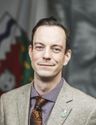
Kieron Testart Range Lake
Thank you, Mr. Speaker. I would like to recognize a hard-working Range Lake page Adam Kamali. Thank you for being here and supporting our proceedings. It's great to have you as part of our democracy today, Adam. Thank you.
Recognition Of Visitors In The Gallery
Recognition Of Visitors In The Gallery
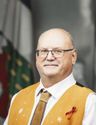
The Speaker Shane Thompson
Thank you, Member from Range Lake. Recognition of visitors in the gallery. Member from Yellowknife South.
Recognition Of Visitors In The Gallery
Recognition Of Visitors In The Gallery

Caroline Wawzonek Yellowknife South
Thank you, Mr. Speaker. Mr. Speaker, I am very pleased today to have a page from Yellowknife South. She also happens to be someone I know very well. This is Ms. Savannah Gostlin who is paging for us here today. Thank you, Mr. Speaker.
Recognition Of Visitors In The Gallery
Recognition Of Visitors In The Gallery
The Speaker Shane Thompson
I like that red colour. Recognition of visitors in the gallery. Member from Frame Lake.
Recognition Of Visitors In The Gallery
Recognition Of Visitors In The Gallery
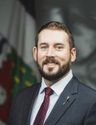
Julian Morse Frame Lake
Thank you, Mr. Speaker. I'd just like to quickly recognize Frame Lake page Charlotte Hilton who is in the House today. Again, thank you so much for your service, and we've really been enjoying having the pages in the House, as always, this week. Thank you.
Recognition Of Visitors In The Gallery
Recognition Of Visitors In The Gallery
The Speaker Shane Thompson
Thank you, Member from Range Lake. Recognition of visitors in the gallery. I'd like to recognize MaryJane Cazon, our translator from Fort Simpson. She is going to head home today. So MaryJane, have a safe trip home and we'll see you next week.
Recognition of visitors in the gallery. If we missed anyone in the gallery, welcome to your chambers. I hope you are enjoying the proceedings. It's always nice to see people in the gallery.
Reports of committees on the review of bills. Reports of standing and special committees. Member from Range Lake.
Report 35-20(1): Report on the Review of the Auditor General's 2025 Audit of Protected and Conserved Areas in the Northwest Territories
Reports Of Standing And Special Committees
Kieron Testart Range Lake
Your Standing Committee on Public Accounts is pleased to provide its Report on the Review of the Auditor General's 2025 Audit of Protected and Conserved Areas in the Northwest Territories and commends it to the House.
INTRODUCTION
The Speaker of the Northwest Territories Legislative Assembly tabled the Report of the Auditor General of Canada to the Northwest Territories Legislative Assembly - Protected and Conserved Areas in the Northwest Territories on May 23, 20251 ("the audit" or "the report").
The Office of the Auditor General's report provided detailed findings on the GNWT's readiness and capacity to deliver on the Healthy Land, Healthy People: GNWT Priorities for the Northwest Territories Conservation Network 2023-2028 (HLHP) work plan's objectives related to conservation. The audit focused on three outcomes: establishing new protected areas, supporting the effective and equitable management of existing protected and conserved areas, and securing long-term funding for conservation activities.
Protected areas in the NWT operate within a complex inter-governmental landscape, involving Indigenous governments, the federal government, and regional co-management systems. The GNWT's role is shaped by statutory duties under the Protected Areas Act (PAA), its intergovernmental commitments under land claim and self-government agreements, the broader national biodiversity commitments associated with Canada's 2030 targets, and other relevant territorial and federal legislation.
The PAA establishes the territorial framework for creating permanent protected areas through establishment agreements that specify roles, responsibilities, governance structures, and management expectations. Territorial protected areas (TPA) must be co-developed with Indigenous governments, with decisions made through collaborative processes that reflect Indigenous law, knowledge systems, and stewardship principles. Beyond the PAA, land and resource management in the NWT is also influenced by settled land claim agreements and ongoing negotiations in unsettled areas like the Dehcho. These agreements establish co-management boards, planning processes, consultation obligations, and shared roles in stewardship. The HLHP plan provides a strategic policy framework emphasizing Indigenous-led conservation, long-term sustainability, biodiversity protection, and recognition of cultural continuity.
Committee completed an extensive review of the OAG's report, including holding a public briefing on October 29th, 2025. This is Committee's report on that review with recommendations for the GNWT.
ACKNOWLEDGEMENTS
Committee thanks Jerry V. DeMarco, Commissioner of the Environment and Sustainable Development; Carey Agnew, Principal; and Stephanie Moores, Director, for their work on the audit and their briefing. Committee also thanks Karen Hogan, Auditor General of Canada.
Committee also thanks John MacDonald, Secretary to Cabinet and Deputy Minister of Executive and Indigenous Affairs; Robert Jenkins, Deputy Minister of Environment and Climate Change; and Pamela Strand, Deputy Minister of Industry, Tourism and Investment, and their teams for information supporting this review.
REPORT ON THE REVIEW OF THE auditor general's 2025 AUDIT OF PROTECTED AND CONSERVED AREAS IN THE NORTHWEST TERRITORIES
Progress Made on Commitments Under Healthy Land, Healthy People
Committee recognizes that the GNWT has made meaningful progress toward ensuring that the territory is on track to achieve outcomes related to protecting biodiversity and ecological integrity while sustaining cultural practices and economic development for current and future generations through its network of protected and conserved areas under the PAA.
The audit confirmed that GNWT has advanced key priorities under the HLHP work plan, including securing long-term financing for Indigenous-led conservation under the Project Finance for Permanence (PFP) agreement, and working to expand and manage the conservation network. While challenges remain in planning, governance, and operational capacity, committee acknowledges that these efforts represent a significant step forward in building a strong and sustainable framework for land protection and stewardship and advancing reconciliation with Indigenous governments.
To that end, committee acknowledges the significant efforts made by the departments and urges continued collaboration and innovation to strengthen conservation outcomes for future generations through a whole-of-government approach together with Indigenous governments.
Funding and Capacity Constraints
A central finding of the OAG audit was the GNWT's unsustainable reliance on short-term federal funding, which accounted for approximately 41 percent of conservation network expenditures in 2023-2024. Short-term funding creates operational instability, contributing to high turnover rates, unfilled positions, and challenges in meeting timelines for regulatory development, management plans, and monitoring programs.
The PFP agreement represents a major positive step in securing up to $375 million in long-term financing for Indigenous-led conservation activities. However, the PFP specifically funds Indigenous governments, not the GNWT, and does not replace the GNWT's own operational responsibilities under the PAA or its intergovernmental obligations. As Indigenous governments begin accessing PFP funds, the GNWT must ensure its own capacity keeps pace to avoid delays or gaps in fulfilling its statutory and partnership obligations.
Committee concludes that the GNWT may benefit from increased funding as well as a scaled funding model that reflects the distinct stages of conservation work under the PAA, including Cabinet approval of a candidate area, negotiation of an establishment agreement, regulatory development, and management planning. These stages require coordinated, multi-year departmental effort. Committee therefore makes the following two recommendations:
Recommendation 1: The Standing Committee on Public Accounts recommends that the Government of the Northwest Territories create a program line item for Conservation Planning and Implementation in the 2027-2028 Main Estimates and adopt staged funding triggers tied to milestones under the Protected Areas Act. And
Recommendation 2: The Standing Committee on Public Accounts recommends that the Government of the Northwest Territories stabilize its operational capacity for Territorial Protected Areas by increasing capacity funding to support management boards and by fully funding the staffing of positions identified in establishment agreements. The government should allocate sufficient resources in the 2027-2028 Main Estimates to close capacity gaps and ensure the effective delivery of management plans, monitoring programs, and Guardians initiatives.
Committee observes that conservation initiatives outside the PAA may follow different processes and funding pathways, and the GNWT's financial responsibilities for this work are not always clearly defined or predictable. Committee observes that a clearer understanding of these obligations is needed, along with a coordinated approach to securing federal support for non-PAA conservation activities. Committee consequently recommends:
Recommendation 3: The Standing Committee on Public Accounts recommends that the Government of the Northwest Territories identify its financial obligations and resource requirements for conservation initiatives outside the Protected Areas Act and provide the necessary funding, including working with the federal government to secure appropriate long-term resources for these activities within one year and report back to committee on progress.
Committee's study highlighted that conservation planning occurs over several years, and key activities cannot be completed within a single fiscal cycle. Reliance on annual funding creates uncertainty and slows progress on protected area establishment, management planning, and monitoring. Committee notes that flexible multi-year funding would provide greater predictability and allow resources to align with the timing of conservation work. Committee also recognizes that implementing multi-year funding is challenging under the current constraints of the Financial Administration Act, which limits the GNWT's ability to commit funds across fiscal years. Furthermore, while the financial administration manual (IB 805.02) allows for multi-year ongoing contribution agreements, any uncommitted surplus at the end of a fiscal year is clawed back. Committee is concerned that the existing financial tools for flexible, stable, long-term funding is not adequate for the scope and scale of conservation work and would therefore recommend:
Recommendation 4: The Standing Committee on Public Accounts recommends that the Government of the Northwest Territories establish more flexible multi-year financing tools by amending the Financial Administration Act and related policy instruments to enable funding mechanisms suitable for inter-generational conservation commitments, and to complete this work in time for it to be reflected in the 2027-28 Main Estimates.
Committee is aware that many Indigenous governments face capacity constraints that limit meaningful participation in conservation planning and the implementation of establishment agreements under the PAA. While PFP will provide substantial funding for Indigenous-led conservation work, it is uncertain if Indigenous governments and organizations will have capacity to engage in PAA-related activities. Limited staff, competing priorities, and increasingly complex conservation tables can restrict full participation and slow progress on shared objectives. Committee consequently recommends:
Recommendation 5: The Standing Committee on Public Accounts recommends that the Government of the Northwest Territories provide new capacity funding, including funding new grants and contributions, to provide dedicated new budget and resources to Indigenous governments to support their participation in conservation work under the Protected Areas Act that would not otherwise be covered by Project Finance for Permanence funds.
Candidate Areas Action Plan
The audit found that progress on advancing Dinaga Wek'ehodi and the four Dehcho candidate protected areas has been limited, despite their combined potential to add 23,521 square kilometers of protection, which is significant for meeting territorial and national conservation targets. Decision-making on these sites is complex and requires consensus among multiple Indigenous governments, coordination with ongoing land claim negotiations in the Dehcho, and substantial technical, ecological, cultural, and socio-economic analysis. The Nature Agreement identifies 2028 as the target for completing several of these candidate areas and commits the GNWT to leading annual public reporting on progress beginning in 2025. Committee notes that no structured approach for meeting these obligations has been outlined and that the first annual report has not yet been published. Without a clear action plan, defined milestones, and identified resourcing, the GNWT risks falling behind the 2028 targets and weakening transparency and accountability in the establishment process.
To support the advancement of Dinaga Wek'ehodi and the four Dehcho candidate protected areas, committee recommends the following:
Recommendation 6: The Standing Committee on Public Accounts recommends that the Government of the Northwest Territories table, by the end of the May-June 2026 sitting, a comprehensive action plan for advancing Dinaga Wek'ehodi and the four Dehcho candidate protected areas. The plan should set clear timelines, milestones, and accountability measures aligned with the 2028 Nature Agreement targets and include a strategy for resourcing and capacity support.
Recommendation 7: The Standing Committee on Public Accounts recommends that the Government of the Northwest Territories table information, by the end of the May-June 2026 sitting, on how its strategy for advancing candidate protected areas in the Dehcho is coordinated with ongoing land claim negotiations in the region. And.
Recommendation 8: The Standing Committee on Public Accounts recommends that the Government of the Northwest Territories publish the annual report committed to in the Nature Agreement including progress on commitments scheduled for the previous fiscal year and anticipated timelines for establishing the candidate protected areas under the Healthy Lands, Healthy People work plan.
Indigenous Hiring and Collaboration with Management Boards
Mr. Speaker, would like to share a quote from the Deputy Minister of Environment and Climate Change who shared with the committee at the public briefing: co-management only works if relationships are healthy.
We emphatically agree.
The audit found that Indigenous representation in hiring for positions associated with TPAs was limited. For the first five years after establishment, management boards were rarely involved in planning or carrying out hiring for roles identified in establishment agreements. Committee finds that this lack of involvement fell short of co-management commitments and has limited opportunities for Indigenous communities to participate directly in stewardship roles.
Although improvements were noted in 2023, participation by management boards remained inconsistent. The audit recommended that the GNWT ensure meaningful board involvement, and the GNWT agreed. At the public briefing on October 29, 2025, officials identified several improvements, including adding board members to hiring committees, limiting competitions to nearby communities, and seeking board input on job descriptions and recruitment. Committee notes these are positive steps but remains concerned that the GNWT has not identified indicators to measure whether these changes improve Indigenous representation or retention.
The audit also found that the GNWT lacked structured monitoring of progress in implementing establishment agreements. Although agreements require a formal five-year review, work had not begun and no critical path or milestones were in place. Committee agrees this gap risks delays in management planning, monitoring programs, and Guardians initiatives. While GNWT officials have accepted the recommendation and pointed to existing mechanisms such as meetings with management boards, the OAG questioned whether these are sufficient. In the public hearing, the Principal advised that interim check-ins may be needed to complement the five-year review cycle. To support those comments, committee recommends:
Recommendation 9: The Standing Committee on Public Accounts recommends that the Government of the Northwest Territories demonstrate how current measures to involve management boards in hiring are improving Indigenous representation and how these measures will be sustained and strengthened. Committee further recommends that the government establish timelines, metrics, and clear indicators of success to show how these actions ensure meaningful community representation in hiring for positions associated with territorial protected areas. And.
Recommendation 10: The Standing Committee on Public Accounts recommends that the Government of the Northwest Territories table, by the end of the May-June 2026 sitting, a detailed update, including an implementation framework for territorial protected area agreements, that responds fully to the auditor general's recommendation at paragraph 56 of the audit report.
Activities and Permitting within Protected and Conserved Areas
The audit confirms that the core instruments for TPAs remain unfinished or only partially in place. Draft regulations for Thaidene Nene were co-developed but not finalized, related policies remain interim or in draft, and management plans for both Thaidene Nene and Ts'ude Niline Tuyeta were not completed within five years of their establishment agreements. These gaps delay dependent work such as monitoring programs and create uncertainty for decision makers and proponents.
Committee finds that the lack of finalized regulations, approved management plans, and consolidated permitting guidance has left boards and proponents relying on interim tools and ad hoc coordination. This slows implementation of establishment agreements and undermines confidence in the permitting system. The audit's "partially completed" status for regulations and policies, combined with missed plan timelines, demonstrates the need for permanent rules and a clear pathway for activities within TPAs. As such, committee recommends:
Recommendation 11: The Standing Committee on Public Accounts recommends that the Government of the Northwest Territories finalize the regulations for Thaidene Nene and bring forward any outstanding policy instruments required for Thaidene Nene and Ts'ude Niline Tuyeta, sequenced with the approval of management plans and supported by publicly shared target dates within one year. And
Recommendation 12: The Standing Committee on Public Accounts recommends that the Government of the Northwest Territories update the regulatory, legislative, and policy framework so that it works coherently with territorial protected areas under the Protected Areas Act and resolves existing gaps. The GNWT should begin the required policy work to identify and assess options for legislative amendments and bring forward recommended changes for decision. Timelines for this work should be expedited, with milestones for delivery within the lifetime of the 20th Legislative Assembly.
Government Leadership
Leadership in conservation requires GNWT to coordinate across departments, anticipate pressures from increased Indigenous-led conservation initiatives, and ensure its processes are transparent, timely, and well resourced. The audit's Exhibit 4 identified key factors that enabled the successful negotiation of the PFP agreement, including stable representation, shared work planning, sufficient capacity, cultural practices, and strong facilitation. Applying these practices to TPA establishment and implementation could strengthen GNWT's leadership and improve outcomes across the conservation network.
Committee affirms that GNWT must respect Indigenous governments' right to lead conservation in their regions, and at the same time provide clear direction and ensure territorial commitments are met. GNWT cannot defer leadership by suggesting that progress depends solely on Indigenous capacity or availability. It must set a coordinated plan for protected and conserved areas, align targets across departments, and resource delivery.
Committee believes a strong approach requires the GNWT to convene partners through established intergovernmental forums like the Northwest Territories Council of Leaders and the Intergovernmental Council of the Northwest Territories, set timelines, remove policy and regulatory barriers, and ensure coordinated, timely decision-making across the government. Lessons from the successful PFP negotiations show the value of stable representation, shared work plans, cultural practices, and effective facilitation, and the GNWT should apply these practices to protected and conserved area establishment and implementation.
Recommendation 13: The Standing Committee on Public Accounts recommends that the Government of the Northwest Territories table, in the May-June 2026 sitting, a plan that sets out how the government will lead conservation planning in collaboration with partners through the Northwest Territories Council of Leaders and the Intergovernmental Council of the Northwest Territories without overriding Indigenous authorities; outlines the sequence of Government of the Northwest Territories decisions required to advance each protected area; and commits to a public, milestone-based update each November, as part of the reporting obligations under the Nature Agreement, to summarize progress and any variance from plan.
Recommendation 14: The Standing Committee on Public Accounts recommends that the Government of the Northwest Territories establish a process to obtain independent reviews, including legal or analytical reviews conducted through an Indigenous lens, when co-management partners encounter an impasse. Committee notes that progress on implementing accepted audit recommendations is not always timely and that the GNWT lacks clear mechanisms to hold senior leadership accountable for delivery. Establishing a link between deputy minister performance management and the implementation of accepted recommendations would strengthen accountability and help ensure sustained, on-schedule action on conservation commitments.
Recommendation 15: The Standing Committee on Public Accounts recommends that the Government of the Northwest Territories establish an audit performance plan for deputy ministers. The plan should link performance pay to timely implementation of Office of the auditor general of Canada audit recommendations that have been accepted by the Government of the Northwest Territories.
Reconciliation
Historic harms and systemic exclusion of Indigenous peoples from land stewardship and governance have left legacies that continue to affect trust and relationships. Some of these harms are recent, making rebuilding trust more challenging. These unresolved issues can impede efforts to work together on shared priorities such as conservation, even when frameworks for collaboration exist. Moving forward requires acknowledging these harms, issuing public apologies where appropriate, and actively creating space for Indigenous leadership while ensuring governments fulfill their responsibilities as partners.
Committee acknowledges that the GNWT enacted the UNDRIP Implementation Act, (UNDRIPIA) which commits the GNWT to harmonizing its laws and policies with the United Nations Declaration on the Rights of Indigenous Peoples. UNDRIPIA came into force on October 6, 2023, and requires the Minister, in collaboration and cooperation with Indigenous governments or organizations of the NWT and the executive council, co-develop an action plan to achieve the objectives of the Declaration within two years of coming into force. Committee notes that this legislative timeline has passed. The action plan was not tabled during the October 2025 sitting, and the required public engagement has not occurred.
To give full effect to these commitments and demonstrate progress, committee recommends that GNWT take immediate steps to operationalize the Act and embed UNDRIP principles into conservation policy and practice. Conservation is an area where reconciliation must be visible and measurable. Committee further recommends that GNWT engage Indigenous leadership meaningfully by using the Council of Leaders and other fora with Indigenous governments and organizations to guide this work and creating forums for dialogue that build trust, consensus, and shared decision-making.
Recommendation 16: The Standing Committee on Public Accounts recommends that the Government of the Northwest Territories examine specific historical harms that have been raised by Indigenous governments and communities, identify those that warrant a formal apology and compensation, and take timely action to deliver those apologies along with appropriate reparations.
Recommendation 17: The Standing Committee on Public Accounts recommends that the Government of the Northwest Territories provide an update on the status of the action plan required by section 10 of the United Nations Declaration on the Rights of Indigenous People Implementation Act. And
Recommendation 18: The Standing Committee on Public Accounts recommends that the Government of the Northwest Territories provide sufficient funding in the 2026-2027 Main Estimates and establish ongoing multi-year implementation funding, including capacity funding for Indigenous governments and organizations, to support and sustain participation in the implementation of the United Nations Declaration on the Rights of Indigenous People Implementation Act until implementation is fully achieved.
CONCLUSION
This concludes the Standing Committee on Public Accounts' Report on the Review of the Auditor General's 2025 Audit of Protected and Conserved Areas in the Northwest Territories. Committee looks forward to the Government's response, and their provision of details as to how they will implement these recommendations.
Recommendation 19: The Standing Committee on Public Accounts recommends that the Government of the Northwest Territories provide a response to this report within 120 days. Thank you, Mr. Speaker.
Report 35-20(1): Report on the Review of the Auditor General's 2025 Audit of Protected and Conserved Areas in the Northwest Territories
Reports Of Standing And Special Committees
The Speaker Shane Thompson
Thank you, Member from Range Lake. Reports of standing and special committees. Member from Range Lake.
Motion to Receive and Refer Committee Report 35-20(1) to Committee of the Whole, Carried
Reports Of Standing And Special Committees
Kieron Testart Range Lake
Thank you, Mr. Speaker. I move, seconded by the honourable Member for Nunakput, that Committee Report 35-20(1), Standing Committee on Public Accounts Report on the Review of the Auditor General's 2025 Audit of Protected and Conserved Areas in the Northwest Territories, be received by the Assembly and referred to Committee of the Whole. Thank you, Mr. Speaker.
Motion to Receive and Refer Committee Report 35-20(1) to Committee of the Whole, Carried
Reports Of Standing And Special Committees
Motion to Receive and Refer Committee Report 35-20(1) to Committee of the Whole, Carried
Reports Of Standing And Special Committees
Some Hon. Members
Question.
Motion to Receive and Refer Committee Report 35-20(1) to Committee of the Whole, Carried
Reports Of Standing And Special Committees
The Speaker Shane Thompson
Question has been called. All those in favour? All those opposed? Any abstentions? The motion is carried. Committee Report 35-20(1), Standing Committee on Public Accounts Report on the Review of the Auditor general's 2025 Audit of Protected and Conserved Areas in the Northwest Territories, has been received and will be moved into the Committee of the Whole for further consideration.
Reports of standing and special committees. Returns to oral questions. Acknowledgements. Oral Questions. Member from Yellowknife Centre.
Question 1056-20(1): Medical Travel
Oral Questions

Robert Hawkins Yellowknife Centre
Thank you, Mr. Speaker. Mr. Speaker, I will be asking questions of my favourite health Minister today, and it's with respect to wait times.
Mr. Speaker, I was looking at the health and social services dashboard on wait times. Thank you very much for having that very important piece of information. But I don't find that it actually tracks specifics when you tie months to actual wait times. It says wait times by month is not the same in the sense of tracking them in the context of getting results. So in other words, it says we have people on priority, but it doesn't actually say who we actually serve. Does the department actually do an analysis as to how many referrals it has in the context of how many we actually see? Thank you.
Question 1056-20(1): Medical Travel
Oral Questions
The Speaker Shane Thompson
Thank you, Member from Yellowknife Centre. Minister of Health and Social Services.
Question 1056-20(1): Medical Travel
Oral Questions
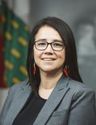
Lesa Semmler Inuvik Twin Lakes
Thank you, Mr. Speaker. Mr. Speaker, I don't have that level of detail.
Question 1056-20(1): Medical Travel
Oral Questions
Robert Hawkins Yellowknife Centre
Yes, thank you very much. I mean, the website is helpful. It's a little on the confusing side where it says referral count and then wait times, but I am not actually seeing where it transposes.
Mr. Speaker, is there any cost analysis ever done by the Department of Health and Social Services that looks into is it cheaper to bring specialists to the Northwest Territories rather than sending them to south using the medical travel process and therein lies the question. Thank you.
Question 1056-20(1): Medical Travel
Oral Questions
Lesa Semmler Inuvik Twin Lakes
Thank you, Mr. Speaker. Mr. Speaker, the health authority's preference is to bring specialists to the Northwest Territories; however, all the specialists are not always available to travel to the Northwest Territories as they service Alberta residents at the same time. So within access to care, we provide them with the travel to Alberta for that care. Thank you, Mr. Speaker.
Question 1056-20(1): Medical Travel
Oral Questions
The Speaker Shane Thompson
Thank you, Minister of Health and Social Services. Final supplementary. Member from Yellowknife Centre.
Question 1056-20(1): Medical Travel
Oral Questions
Robert Hawkins Yellowknife Centre
Thank you, Mr. Speaker. I appreciate the Minister's answer. Yes, there's some specialists that come here. The eye guy, I don't know what his name is, but he sees hundreds of people all at once. Excellent use of resources.
Mr. Speaker, is the Minister able to share what analysis they do on these types of appointments and strategies with me and my colleagues, including the public, because I can't find any analysis or strategy on the website on how we try to find the best way to do this business. Thank you.
Question 1056-20(1): Medical Travel
Oral Questions
Lesa Semmler Inuvik Twin Lakes
Thank you, Mr. Speaker. Mr. Speaker, over the years there's been many different ways to try and analyze this and right now, what this government has done is we have highlighted the medical travel piece, which also includes out-of-territory physician services, which is being analyzed right now by the health sustainability unit. Thank you, Mr. Speaker.
Question 1056-20(1): Medical Travel
Oral Questions
The Speaker Shane Thompson
Thank you, Minister of Health and Social Services. Oral questions. Member from Yellowknife North.
Question 1057-20(1): Public Administrator of the Northwest Territories Health and Social Services Authority
Oral Questions

Shauna Morgan Yellowknife North
Thank you, Mr. Speaker. So my questions are for the Minister of Health and Social Services following up on my Member's statement.
So my understanding was that the public administrator was to be appointed for a one-year term with possibility of extension. As I noted in my Member's statement, the public administrator has so far failed to deliver most of the deliverables laid out in the work plan. So my first question for the Minister, is there a defined end date for the term of the public administrator or is the contract to be extended as long as there continues to be unfinished work? Thank you, Mr. Speaker.
Question 1057-20(1): Public Administrator of the Northwest Territories Health and Social Services Authority
Oral Questions
The Speaker Shane Thompson
Thank you, Member from Yellowknife North. Minister of Health and Social Services.
Question 1057-20(1): Public Administrator of the Northwest Territories Health and Social Services Authority
Oral Questions
Lesa Semmler Inuvik Twin Lakes
Thank you, Mr. Speaker. Mr. Speaker, in December, myself, the public administrator, the deputy minister, we briefed committee on the public -- the Minister's work plan. There, however -- so there are many areas that the public administrator has been directed to work on. There are some things that are -- some deliverables that have had extended timelines due to certain aspects, but I don't agree with the comment that there are many -- there are many of the things that are in progress. There are a lot that have been completed. There is still some work that, you know, is delayed. Thank you, Mr. Speaker.