
Thank you, Member from Sahtu. To the motion. Member from Yellowknife South.
Debates of March 4th, 2026
This is page numbers 3599 - 3646 of the Hansard for the 20th Assembly, 1st Session. The original version can be accessed on the Legislative Assembly's website or by contacting the Legislative Assembly Library. The word of the day was housing.
Topics
Motion 69-20(1): Taking Action on Energy Affordability and Security in the Northwest Territories, Carried
Motions
March 4th
Page 3618
Motion 69-20(1): Taking Action on Energy Affordability and Security in the Northwest Territories, Carried
Motions
March 4th
Page 3618
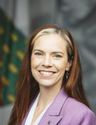
Caroline Wawzonek Yellowknife South
Thank you, Mr. Speaker. Mr. Speaker, in case I forget later, let me just say at the outset, Cabinet, when we are given direction to abstain, we'll be abstaining today.
But, Mr. Speaker, first, I heard the mover of the motion make the point that this is an opportunity for some discussion and debate. I will talk about energy any time someone will let me. So I am mindful of my time, Mr. Speaker, and it's been a long day already, so I won't take the 20 minutes I hope, but I have a lot to say about energy. It is urgent that the entire territory be aware of the challenges of the energy systems that we have here. We, right now, Mr. Speaker, of course, have many communities who are on no grid whatsoever. We have multiple micro grids across this entire territory. We are not on the North American energy system. I think not enough Canadians, frankly, realize that 40 percent of this land mass is not on the North American energy grid. These three territories are isolated. They are isolated. They rely on diesel. Even where we have -- the hydro communities, even where we have the redundancy in the backup of some renewables, our backup is always diesel. So it puts us at such a disadvantage. It puts us at such a disadvantage when costs become volatile, as they will with what's happening in the world right now.
I am deeply concerned when I think about what's going to happen to gas prices. It is going to dramatically affect the three northern territories of Canada in a way that this country is, I suggest, not prepared for and not really thinking about right now. The three territories need to be thinking about it. But what options do we have?
Mr. Speaker, our major facilities, our major energy facilities, were built years ago. Taltson was originally built for Pine Point mine, an industrial consumer that could actually afford to pay for power rates. Snare was built originally for the Yellowknife Giant mine gold mine. And Bluefish was built originally for Miramar. That's who was funding our big energy projects. None of those projects are around today, and we are now left with what's left of that infrastructure. That's what's holding us together for the communities that have the good fortune to be on those systems.
So, Mr. Speaker, 100 percent agree it is a dire situation. I can't go back 20 years. I don't know what discussions were had in this House at that time. I don't know to what discussions -- or to what extent energy was at that time being put forward as a critical and crisis level thing that should have been dealt with. I can say, Mr. Speaker, that some of the energy systems that we have are overdue for being fixed, overdue for being overhauled, overdue for being looked at. And that puts us at a disadvantage because it means that now here we are with so many challenges and so many needs spread across the whole of the territory, and we're having to do everything all at once. But we do have to do everything all at once.
So, Mr. Speaker, with respect to some of the subsidies in the meanwhile that we do have in place, I do want the public to be aware of them. There's a lot that actually does get put into our energy system right now which, Mr. Speaker, that money comes from somewhere. We're either raising taxes, or we're cutting programs, or we're not doing something else. So every time we spend a dollar -- we don't print money in the Northwest Territories. We still have to maintain a budget. If we go into debt, that is still we have to pay for the debt. So there is a fine balance in here somewhere, Mr. Speaker. I can't just say we'll just spend more, just give more. It does not fix it. And I think one of the Members said it's a band-aid solution; it's not a base solution. And I totally agree with that. It is time to get to base solutions. Overdue, but we're doing our best.
So that folks are aware of just how much public dollars are already being spent: The 2030 Energy Strategy, between 2018-2025 invested over $207 million in energy initiatives to support reliability and affordability. Of these, there was about $16 million that went to cost-saving initiatives and -- which is a cumulative $67 million in energy savings for residents. So, again, a lot of the money that Arctic Energy Alliance puts forward, Mr. Speaker, is in areas of affordability, of energy efficiency. A lot of programs are programs to which the public can actually apply and businesses can apply, and I can't encourage people enough to go to that system and go to -- or rather, go to that organization and see if there's opportunities there for people. We have put in about $37 million over six years to support some of those programs. But, again, Mr. Speaker, a theme I want to start coming back to is the role that we can all play as leaders is to really raise, I would say, a collective voice about the urgency of the problem and to be right-headed and honest about the situation we find ourselves in because for a two-year period, we lost $17 million in funding from the federal government to these programs. And it went -- and we were told it went from funding energy efficiency programs over to funding heat pumps, which might work in some parts of the territory although Enercan's website itself says they don't work after minus 25 last time I checked. So, again, we need to be united and consistent and clear as leaders when we are speaking to colleagues in other parliamentary systems, colleagues within the federal government, anyone else we're having the opportunity at the conferences we might attend, at connections we might have, about what is the reality here that we are facing. And that was one of the realities. The work -- that's working because the money got put back in this year, quite relieved to say.
The GHD grant program was $10 million over six years, and public housing provides Housing NWT's energy management strategy to support clients in public housing. We have, of course, the territorial power support program. This means that everyone who is in a thermal community, so residents that are outside of Yellowknife, they have their power rates reduced down just to be at the Yellowknife rate. This was $8.8 million in 2024-2025. There is the GNWT's rate equalization program. This is designed to equalize power rates across the territory for Naka-supplied communities down to those compared in the NTPC-supplied communities. This is a smaller round. There's not as many, obviously, communities that need to come down outside of Yellowknife. It's only $.15 million for 2024-2025. Last but not least, there is the government electricity rates program, Mr. Speaker. And what this means is that the GNWT can in NTPC-supplied communities actually pay higher rates because it helps keep the rates down for residents. And that comes in at $6.9 million for 2024-2025, Mr. Speaker.
On top of that are the shocks that we have seen from low water. This -- and from the attempts to actually change the structures that we have. I know another one of the Members said this accurately, when we're paying for infrastructure, when utility pays for infrastructure, that has to be paid in one of two ways, and it is either the ratepayer themselves, which means they're paying even higher costs, which is simply not tenable for all of the reasons we've said, or it can fall to the government. And so, Mr. Speaker, we do have that when the Inuvik wind project had some capital cost increases. That came at $38 million. In 2024-2025, we announced yet another four-year subsidy program to deal with the low water impacts as well as the inflation coming out of COVID, $48 million over a four-year period, three-year period. And now, Mr. Speaker, again -- and this has already been referenced -- this is another 48 million -- or another $30 million is anticipated likely to continue to support the GRA program that we went through recently and the rising costs that are coming in.
Now, that brings me perhaps briefly to the PUB, Mr. Speaker. Having some sort of oversight and some sort of external oversight to power rates and power costs is standard, and it is a good thing in the sense that it gives everyone in the public some assurance that the rates and the expenditures that are utilized in a utility company are evaluated, are considered, they're tested, so that there's not excess put into that system and that when the expenses are put forward that those expenses are expenses that are justified.
Mr. Speaker, I will also say -- and I really do want to highlight that these are -- these are the subsidy-type programs. These are the monies that are being put in to keep rates down, to keep rates manageable. That's the today solution so that people aren't paying even more higher rates than what they were. The Yukon is facing a 30 percent rate hike coming up right away, and they have some significant challenges in their supply. They are unlikely to be able to supply the power needs over the coming years. So they have a double hit coming to them. Nunavut, I believe just today or recently put out a news article that they are $30 million in the hole because they don't collect all of their accounts owing, and that's after they provide significant subsidies on their fuel costs. So all three territories are in a tough place.
All three, though, Mr. Speaker, are working very hard, in my view, to try to truly change the narrative on power and are often speaking with one voice to the federal government at federal tables that I am at -- finance, infrastructure, energy and mines Ministers -- always and consistently raise with the federal government that they must see the three territories as different.
The history of infrastructure here, as I said, the three major infrastructure investments were built for the mining sector. They were not built as public infrastructure. They were not constructed the way power lines may have been strung across different parts of the country, the way power lines may have been opened up alongside, you know, railway routes and highway routes. We simply don't have that core foundation of infrastructure on which to build here in the North.
The federal government now seems to be changing things a little bit. There is the major projects office now. There is significant talk of investment in the North. The Arctic infrastructure fund is now starting to see itself roll out in a meaningful way, so we can direct some of our applications there. It's all good news, Mr. Speaker, but again, I will come back to what I said earlier. It is urgent that we all stand up as a territory and as a territory say to everyone out there that is listening that we're ready and that we want to be taken seriously, that we need to build this country north and not just east-west.
There is some really exciting work happening between both utilities, Naka and NTPC, working together in terms of the integrated power systems planning. I know one of my colleagues mentioned this one earlier. I want to highlight it. Again, could this have happened 10 years ago? In my view, yes. But we are here today, and we're making sure that it's happening now. This is an opportunity for us to actually get a meaningful handle on what this territory is going to look like going forward; what do we need to make sure that in 10 more years or 20 more years, our kids aren't standing in this room and asking who made what choices and who did what. We're going to keep the rates where we can today so people can manage, not to suggest that the rates aren't high. But we're going to plan for tomorrow, and that work is really exciting work. And it's also exciting because those utilities are working together, Mr. Speaker, coming together and putting out material so that the public can respond. I would encourage people to check this out. It is online now, and they are beginning those engagements. We really must get a handle on where this territory is going into the future and what kinds of ideas and options and opportunities there are and how we're going to find that balance between affordability, reliability, and sustainability. The three things don't always, one to the other, equal out. They can be challenging offsets between those three values.
But there's other things, Mr. Speaker, that have kicked around forever and are now finally being looked at. Community intermittent power renewable generation caps in the thermal communities, they've been capped on the amount of renewable power that they could generate. Those caps are too low. We need to move them up. We need to encourage communities to be using creative solutions. That's what dev is there for, so that they can raise those caps and allow communities to generate power in a renewable fashion. And at the same time, we need to then bring that into the system. So independent power producers and participants on net metering, let's figure out how we're going to manage these systems. If you're making your own power, how much are you going to pay? How much do you put into the system? They're not easy solutions, Mr. Speaker, but we cannot kick these questions down the line. Again, these are the questions we should be asking ourselves and focusing on as leaders of the territory.
And then figuring out to independent power producers, Mr. Speaker. There's not a policy for independent power producers. You can't actually be in a situation where, you know, small communities have to one by one sign on and come to some sort of an agreement when they develop interesting and innovative solutions. We need to make this streamlined. We need to make it easy. So, again, we can look back and I -- we don't typically in consensus government tend to say well, that government didn't do something. So, you know, Mr. Speaker, we can only say today this territorial government can do something.
Obviously the GNWT is the one that responds, Mr. Speaker but these challenges are whole of government challenges. Every elected Member has a constituency that they answer to. We have the public that we answer to. We have contacts. We have connections. We have people that we are in touch with and we have ability to access. We can all raise these issues. We can all speak to these challenges, whether it's with our own residents so that they understand, with businesses, with our community governments.
I will say just a couple more things on the big projects, Mr. Speaker.
Taltson is not a silver bullet but connecting our grids for 70 percent of this territory is huge. Connecting our grids in areas that there are now serious interests from major industry to pay for that is also huge. So it certainly is an important project, Mr. Speaker. But there's also -- we have recently signed the Nailii MOU -- this is with the Tlicho government -- to advance the Lac La Martre micro hydro opportunity there. This has been kicked around since 2009. That should come to this floor of this House, Mr. Speaker. It's important that that advance. Mr. Speaker, there is also -- look Deline at micro hydro. That should come to the floor of the House, and it should advance. There's opportunities for micro hydro in Lutselk'e. I would love to see that advance. It's been years that it's been sat around. We have all an opportunity to bring those issues forward, and I would certainly encourage hearing those ideas and opportunities here. They can make a real meaningful difference.
And beyond that, Mr. Speaker, you know, I think I will just conclude again with my last comment which is around the partnership opportunities. This territory has an ability to show Canada how to build big things better and differently, that we can do it in partnership with Indigenous governments, in partnership with the people whose lands the wires will traverse, who will be -- whose lands the generating capacity is on, and we have a chance here to show Canada, to show the world, that when you build the big things it doesn't have to be the way it was in the 60s or the 70s or even the 80s. So I would implore us all, as the federal government is looking at us, talking big dollars and looking at the MPO or the major projects office, we can all stand up and say that we're ready, that we're ready to be partners, that we're going to figure out how to be partners. And we're not going to fight over the pie, we're going to make the pie bigger, and we're going to make it strong, and we're going to bring it power. Thank you, Mr. Speaker.
Motion 69-20(1): Taking Action on Energy Affordability and Security in the Northwest Territories, Carried
Motions
March 4th
Page 3619
Motion 69-20(1): Taking Action on Energy Affordability and Security in the Northwest Territories, Carried
Motions
March 4th
Page 3619
Some Hon. Members
Question.
Motion 69-20(1): Taking Action on Energy Affordability and Security in the Northwest Territories, Carried
Motions
March 4th
Page 3619
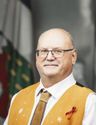
The Speaker Shane Thompson
Question has been called. The Member from Range Lake, do you wish to conclude debate.
Motion 69-20(1): Taking Action on Energy Affordability and Security in the Northwest Territories, Carried
Motions
March 4th
Page 3619
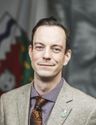
Kieron Testart Range Lake
Yes. Thank you, Mr. Speaker. Thank you to the Members, most of the Members who spoke to the bill, especially those who said they would support it. And I want to give a special mention to the Minister of Finance who gave the response on behalf of the government.
I am not -- this is not a situation -- like, you'll note there's not a whereas clause that says whereas the government is not providing leadership on this file. You know, that's not in the motion because I don't think that's the case. There's areas that we -- of course, we are advocating for that are in the motion that maybe aren't being done right now, but they're suggestions on what could be done. But this is an area where I have confidence the Minister is aware of the problem and has plans to do it. And it is an opportunity to have the debate because that's what we're here to do, Mr. Speaker.
Mr. Speaker, there's also not a whereas clause that says the government has infinite resources and we can spend, like, whatever we want. Quite the contrary. It's about choices and about strategizing and about focusing on the things that matter most, Mr. Speaker. And, you know, we need a proposal before we give something up.
It's we -- in our consensus system, we elect a Cabinet. They're the ones who control the money, they're the ones who come up with the proposals, then we consider them. That's how it works. So we -- it's not our job, on this side, to spend -- to -- we approve the spending but we don't design the spending. So we need to see that come forward before we can have a robust discussion on what we're giving up. For Members who want to do that, that's fine, but first we need to see the spending proposal in the first place.
As to the contingency fund for business, I just want to point out that it does -- the clause specifically mentions establishing verifiable outage-related losses and support for preventative. But the idea is not an insurance policy that every time the power goes out, the government pays your costs. The idea is to have a contingency fund in place -- the Member for Yellowknife Centre spoke about this -- that has clear parameters. So something along the lines of after two hours, then people can make applications to the fund and receive a sum of money to replace lost equipment that has been verified as damaged due to a power outage or a brownout or something like that. That's what's contemplated here, not an insurance policy where the government pays out every time there's an outage. So I just want to clarify that point and hopefully that helps Members find support for it. And, you know, why that's important? We have more than double the rate of power outages in Canada. So, you know, yeah, maybe not everyone does this but that doesn't mean we shouldn't. In fact, we need to be responsive to what's going on in our system today, not responsive to what the trends are in the rest of Canada. Businesses are asking for more support, and that's what the motion is calling for. And, again, it's a reasonable -- it's not an insurance policy. It's a fund that can be tapped into because people are tapped out, and if we can help people where we suffer twice the rate of a national trend, that's a problem we need to solve, Mr. Speaker.
And, you know, on other things, I do agree. And, again, the motion doesn't contemplate infinite money. The motion contemplates a substantial investment in power, just like we have previously called for substantial investments in housing and other things like that. Every government runs on cost of living, on affordability. Every single one of us makes those commitments that we're going to prioritize that but it's so hard to actually deliver on that, and power is one place we can do that. I don't think it's strategic when it comes to motions that we're debating to ignore the concerns of our residents about the thing that contributes most to the challenges they face, which is paying their bills. I mean, it's entirely strategic to show people that we are listening and that we are using this chamber for debate. That is the point of this chamber, and it's the point of our consensus system, to have debates on the issues. And, in this case, I think it's very important to show -- to allow the government to say how they're meeting the moment when it comes to energy affordability and security. Like I said, I have confidence the Minister understands the problem, and many of the steps she's taken and the government's taken are the right steps and what the motion calls for. This is an opportunity to say we're already doing it, and we're going to do it even better. And I think her speech today to the motion was a great way to show that and showcase that for everyone who's listening. So I thank the Minister for that, and I thank this House for allowing motions like this to come forward so we can speak to that.
You know, we've had non-binding motions on foreign conflicts in this chamber as well, right, and that has nothing to do with -- people are passionate about things like that, for sure, but it doesn't change the lives of our constituents. And it certainly wasn't a waste of this House's time. So just on the issue of motions, we're here to debate, Mr. Speaker. We're not here to -- I don't know -- warm seats. Thank you, Mr. Speaker. You know, and I agree 100 percent with the Minister when we said we need to have a united and clear voice, and a motion is the way to do that. And to say we are united in the need to solve this problem, we have a clear resolve to solve it together and in partnership with Indigenous governments, with municipal governments, with the private sector, with both sides of the House, that is what we need. We need to show the public we care. We need to show constituents we are listening. Because going back -- I mean, I've struggled to find a way to go back to people and say well, I heard what you had to say and here's what we're doing about it. Because at the end of the day, they're going to look at me and say so you're doing nothing? Because my bill's not going down. And I still don't have those solutions. But I don't think anyone does, and I don't think anyone could. And this motion isn't proposing magic. This isn't magical thinking. This motion is proposing to build on what we're already doing and maybe tweak it a little to provide more support specifically around these problems like power outages. So it is not pie-in-the-sky thinking. It is not, you know, magical realism. It is a grounded motion that's designed to address the needs that people care about most, which is their pocketbooks, which is, you know, keeping the lights on when they're cooking dinner for their kids, which sadly is interrupted quite frequently in the Northwest Territories.
And, again, I know this Minister cares. I know this Premier cares. I know everyone in this House cares. This is not a gotcha. This is a how do we have that united and clear voice going forward.
With that, Mr. Speaker, I will say thank you to all the Members who are supporting this motion, for supporting this motion, and I encourage the House to stand in solidarity and send a united and clear message that this issue is a problem we are committed to solve, and we are going to solve it together. Because as the Minister said, many people are listening -- the federal government, other parties -- but most importantly Northerners are listening, and they want to hear that we are investing in the solutions that make their lives more affordable. Thank you, Mr. Speaker.
Motion 69-20(1): Taking Action on Energy Affordability and Security in the Northwest Territories, Carried
Motions
March 4th
Page 3620
The Speaker Shane Thompson
Thank you, Member from Range Lake. The Member from Range Lake has asked for a recorded vote. All those in favour, please stand.
Recorded Vote
Motions
March 4th
Page 3620
Clerk Of The House Mr Harjot Sidhu
The Member for Range Lake. The Member for Inuvik Boot Lake. The Member for Monfwi. The Member for Frame Lake. The Member for Mackenzie Delta. The Member for Tu Nedhe-Wiilideh. The Member for Dehcho. The Member for Yellowknife Centre.
Recorded Vote
Motions
March 4th
Page 3620
Recorded Vote
Motions
March 4th
Page 3620
Clerk Of The House Mr Harjot Sidhu
The Member for Great Slave. The Member for Yellowknife North. The Member for Sahtu.
Recorded Vote
Motions
March 4th
Page 3620
Recorded Vote
Motions
March 4th
Page 3620
Clerk Of The House Mr Harjot Sidhu
The Member for Thebacha. The Member for Yellowknife South. The Member for Kam Lake. The Member for Hay River North. The Member for Hay River South. The Member for Inuvik Twin Lakes. The Member for Nunakput.
Recorded Vote
Motions
March 4th
Page 3620
The Speaker Shane Thompson
Thank you. All those in favour, eight. Opposed, three. Abstaining, seven. The motion is carried.
---Carried
Motions. Notices of motion for the first reading of bills. First reading of bills. Minister of Justice.
Bill 45: Civil Forfeiture Act
First Reading Of Bills
March 4th
Page 3620
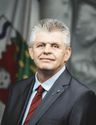
Jay MacDonald Thebacha
Mr. Speaker, I wish to present to the House Bill 45, Civil Forfeiture Act, to be read for the first time. Thank you, Mr. Speaker.
Bill 45: Civil Forfeiture Act
First Reading Of Bills
March 4th
Page 3620
The Speaker Shane Thompson
Pursuant to Rule 8.2(3), Bill 45 is deemed to have first reading and is ready for second reading.
First reading of bills. Second reading of bills. Consideration in Committee of the Whole of bills and other matters, with the Member from the Dehcho in the chair.
Consideration In Committee Of The Whole Of Bills And Other Matters
Consideration In Committee Of The Whole Of Bills And Other Matters
March 4th
Page 3620
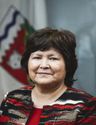
The Chair Sheryl Yakeleya
I now call the Committee of the Whole to order. What is the wish of committee? Member for Inuvik Boot Lake.
Consideration In Committee Of The Whole Of Bills And Other Matters
Consideration In Committee Of The Whole Of Bills And Other Matters
March 4th
Page 3620

Denny Rodgers Inuvik Boot Lake
Thank you, Madam Chair. Madam Chair, committee wishes to consider Tabled Document 448-20(1), 2026-2027 Main Estimates, Department of Finance, with an intent to conclude. Thank you, Madam Chair.
Consideration In Committee Of The Whole Of Bills And Other Matters
Consideration In Committee Of The Whole Of Bills And Other Matters
March 4th
Page 3620
The Chair Sheryl Yakeleya
Does the committee agree? Thank you, committee. We will proceed with a -- we will go on a short break and then proceed with the first item. Thank you.
---SHORT BREAK
Consideration In Committee Of The Whole Of Bills And Other Matters
Consideration In Committee Of The Whole Of Bills And Other Matters
March 4th
Page 3620
The Chair Sheryl Yakeleya
Welcome back, committee. Committee, we have agreed to consider Tabled Document 448-20(1), 2026-2027 Main Estimates. We will consider the departmental totals for the Department of Finance which were previously deferred. We will then consider the borrowing plan for the government reporting entity and established borrowing limits for the Government of the Northwest Territories.
Does the Minister of Finance have any opening remarks.
Consideration In Committee Of The Whole Of Bills And Other Matters
Consideration In Committee Of The Whole Of Bills And Other Matters
March 4th
Page 3620
Caroline Wawzonek Yellowknife South
Thank you, Madam Chair. I do have opening remarks today, Madam Chair, to support some of the discussions that we've been having over the last several weeks and want to thank Members for their thoughtful scrutiny and approach, as always, to this process.
The questions and the insights that we hear during the Committee of the Whole review of the budget is helpful not only in terms of how we discuss and negotiate ways to improve it but also as we go forward knowing where priorities lie into the next year.
Madam Chair, this year, one of the -- I do have a number of -- I have fairly lengthy remarks, Madam Chair. They are a number of things that have been discussed over the last while. So with that, this year in particular, Madam Chair, one of the consistent themes that was raised by Members is that Northerners expect real improvements in the services that they rely on. This includes, in particular health care, education, justice, and land administration. And so with the support of the MLAs, we are in a position now to respond even better to some of those priorities with measured but significant steps forward.
At present, the table of main estimates propose an increased investment in services of over $135 million, but in the course of deliberations with Members, the 2026 Main Estimates now will see additional investments of approximately $40 million that will help enhance vital services to programs for residents.
Firstly, we are strengthening supports for students with diverse learning needs. The GNWT is committing likely $30 million to implementing enhancements that will be identified through the inclusive schooling review. These dollars will support the expansion of specialized clinical services, including speech-language pathology and territorial-wide JK to 12 transition protocols which includes improved early literacy screening.
Funding will be brought forward through the 2026-2027 supplementary appropriation process to ensure that schools can begin these enhancements immediately. This is one of the largest single new investments in this -- that we are seeing now in this budget.
We also recognize the importance Members have placed on maintaining stability in early childhood programming, particularly at a time when the federal government's funding decisions remain uncertain in this space. So to ensure continuity for families and operators, the government is committing to maintaining programming and access even as we are still awaiting final federal funding decisions. We are still waiting for those decisions to conclude; however, we know and we are prepared to commit that this will require a significant funding commitment. Final adjustments will be brought forward either in Budget 2027 or, if necessary, through supplementary appropriation in order that early learning and child care programs remain reliable, sustainable, and responsive to Northerners.
Across health and social services systems, Madam Chair, we are advancing major reform work. Members have raised significant concerns through this last session about the transparency, the timeliness, the coordination of all of this work. It is clear we want to strengthen primary care across this territory. This is a shared commitment, Madam Chair, and I am pleased to say that several commitments are being made here to ensure that our system sees significant deliverables over the coming year.
By December of 2026, all primary care panels here in Yellowknife will be fully established to ensure that every resident has consistent team-based care supported by the release of the integrated primary and community health care framework and a roadmap by May-June of 2026. The implementation of that framework will be guided by regional implementation toolkits, and those toolkits will ensure that communities can adapt the model to their local needs and maintain consistent standards of care.
Further, health care practitioners assigned to these teams will be supported through a primary care workforce plan. This will ensure that we are showing what types of practitioners are required to support teams and what their roles will be within those teams to ensure cohesion and clarity as team-based care becomes the standard for primary care.
To support this transformation, the GNWT will work to fill all nurse practitioner vacancies within primary care teams in the next fiscal year. Moreover, GNWT will create additional nurse practitioner and community health care nurse positions in regions where chronic physician vacancies have left gaps. This will ensure that residents can depend on stable and well-staffed care teams. A supplementary appropriation will be brought forward in the May-June session to ensure that we have the financial resources for this initiative.
Investments in biomedical equipment and digital health tools that will strengthen access to small and remote communities and ensure functional telehealth connections in all health centres as well as enhanced diagnostic capacity and increased training for community wellness workers are also now being committed. These improvements will support real-time clinical advice to frontline teams and reduce unnecessary medical travel.
The medical travel case management initiative is already showing operational improvements. It is expected that this initiative will now move with presumptive permanency. This will be an adjustment that we will see in Budget 2027, and this reflects the importance of improving scheduling consistency, case management, and reducing avoidable repeat travel. These initiatives result from our budgeting negotiation process and one that allows us to build on the investments that were being proposed to even better strengthen our healthcare services, support patient navigation, modernize service delivery, and modernize service delivery in small and remote communities.
Members have also emphasized the need to prepare Northerners for the labour market and, again, we are pleased to respond. Work is underway to modernize adult education pathways, strengthen early literacy screening, and expand community-based training opportunities, as well as ensuring post-secondary programming aligns with workforce needs. We are committed to providing financial support to ensure that Aurora College launches both a bachelor of social work program and a bachelor of education program in the fall of 2027 with final cost estimates to be provided in the May-June session.
We will also ensure that all former CLC facilities are available to be transferred to Indigenous or community governments for the delivery of education and training programs at a subsidized rate with additional GNWT coverage of the associated O&M costs. This is a two-year program at present, but we have also committed to support these providers so that they can establish more sustainable financial plans.
We also understand the need to ensure economic certainty and regulatory clarity as key priorities and, again, have made commitments under the ongoing work to ensure that the Mineral Resources Act is brought into force and to improve tenure processes to encourage and coordinate federal engagement that reflects practical and action-oriented approach on all of our major projects that are coming up.
On that, Madam Chair, advancing strategic infrastructure, in partnership with Indigenous governments, is a central priority. Planning for the Mackenzie Valley Highway continues in collaboration with Indigenous partners with updated timelines that will be provided as project planning, environmental assessment work, and federal engagement progresses. Financial resources remain still at this time contingent on federal funding for the project, but we will bring forward a timeline in December that sets out a path for construction of the full route to begin by 2030. That includes phase 2.
At the same time, work is underway to finalize the routing decisions for both the Taltson transmission line and the Arctic economic security corridor. These will be informed by technical analysis and regulatory requirements as well as engagement ongoing with Indigenous governments. As this advances, the GNWT will provide committee with clear timelines, proposed routing options that reflect both environmental, cultural, and economic considerations.
The GNWT is also committed to supporting Indigenous-led economic development in the Beaufort Delta. To that end, ITI will work closely with the Inuvialuit Regional Corporation in order to support their interests in advancing the Mackenzie Delta LNG project from pre-feasibility towards full feasibility. Whether the project proceeds to further stages of course, or not, will involve potentially applications to the major projects office and depend very much on the IRC's direction, but we're committed to support them.
Housing and land administration continue to be critical issues for residents, and the Department of Environment and Climate Change and Housing Northwest Territories are taking steps to accelerate land tenure processing and support Indigenous-led housing initiatives as well as advancing collaborative approaches that will improve community access to land for housing and development. We will be taking specific measures to improve and make available housing options for seniors in Enterprise.
As well, Madam Chair, and with special mention for the advocacy towards this initiative, we will work with the Tlicho government to the establishment of a standalone Tlicho administrative region. We will do this in a manner that allows better reporting structures to reflect the services delivered in Tlicho communities. And, Madam Chair, I do want to emphasize that we will be working in partnership with the Tlicho government on this initiative and that -- and it's only for that reason, Madam Chair, that while I am hopeful that this will happen in the life of the Assembly. It is one that will be guided by that relationship.
In parallel, ECC will be creating a regional assessment coordinator position in Behchoko on a two-year term to support increased activity related to the Frank Channel Bridge, and Housing NWT will ensure that they have a services officer in Behchoko for at least two days a week every two day -- or at least two days of every two weeks so that even as we work towards an administrative region, we are ensuring that territorial services for residents in the Tlicho region are improving.
Finally, Members provided important feedback on strengthening community safety and justice services. The GNWT is advancing the evidence-based crisis response work within justice and health and social services but also by supporting improved RCMP presence in smaller communities and exploring ways to increase access to justice across the territory. And to that end, Madam Chair, we will provide overnight RCMP accommodations in both Gameti and Tsiigehtchic within this fiscal year and improve access to justice by ensuring that GSO are available for duty counsel coordination and telecommunications access for regional court days when the court party is not in all of our small communities.
Madam Chair, while not every request can necessarily be fully addressed in one fiscal cycle, these main estimates do reflect substantial progress on the priorities Members have identified as the 20th Assembly and for which we've all committed. The $30 million commitment to inclusive schooling is, indeed, one particular example of how Members' concerns have translated directly into an improved service. It is a commitment we make proudly and one we intend to implement collaboratively and transparently.
Madam Chair, the list of commitments is rather lengthy. As I indicated, we are prepared also to table a list, consolidated list, of the budget commitments to ensure clarity and transparency and accountability for the commitments made.
I want to again finish by thanking Members for their engagement, for their advocacy, and for their dedication. This consensus process does make our budgets better. As each of us focus on our departments and on the work done as Cabinet, it is a great assistance to sit and to hear the questions given in the Committee of the Whole and through session to ensure that our budgets best reflect the needs of all communities and regions. Thank you, Madam Chair.
Consideration In Committee Of The Whole Of Bills And Other Matters
Consideration In Committee Of The Whole Of Bills And Other Matters
March 4th
Page 3621
Consideration In Committee Of The Whole Of Bills And Other Matters
Consideration In Committee Of The Whole Of Bills And Other Matters
March 4th
Page 3621
Consideration In Committee Of The Whole Of Bills And Other Matters
Consideration In Committee Of The Whole Of Bills And Other Matters
March 4th
Page 3621
The Chair Sheryl Yakeleya
Okay. Can the Minister go to the witness table. Does the committee agree to proceed to the detail contained in the tabled document?
Consideration In Committee Of The Whole Of Bills And Other Matters
Consideration In Committee Of The Whole Of Bills And Other Matters
March 4th
Page 3621
Some Hon. Members
Agreed.
Consideration In Committee Of The Whole Of Bills And Other Matters
Consideration In Committee Of The Whole Of Bills And Other Matters
March 4th
Page 3621
The Chair Sheryl Yakeleya
Committee, we will now consider the Department of Finance. Please turn to the departmental summary found on page 157, with information items on page 158 to 159. Are there any questions? Seeing no further questions, committee, I will now call the departmental summary.
Finance, operations expenditures, total 2026-2027 Main Estimates, $354,984,000. Does the committee agree?