
Thank you, Mr. Speaker. So this all sounds promising. But can the Minister identify any estimated timeline for when we might actually be able to move ahead with establishing MRI services in the territory. Thank you.
Debates of May 29th, 2026
This is page numbers of the Hansard for the 20th Assembly, 1st Session. The original version can be accessed on the Legislative Assembly's website or by contacting the Legislative Assembly Library. The word of the day was know.
Topics
Question 1229-20(1): Magnetic Resonance Imaging Services
Oral Questions
Question 1229-20(1): Magnetic Resonance Imaging Services
Oral Questions

Shauna Morgan Yellowknife North
Thank you, Mr. Speaker. Mr. Speaker, I know that the initiative, it has been put forward and so we are just waiting on approvals, for approvals from the federal government and our processes that we have internally. And once those approvals have been completed, we'll be able to announce when that is moving forward publicly. Thank you.
Question 1229-20(1): Magnetic Resonance Imaging Services
Oral Questions
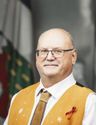
The Speaker Shane Thompson
Thank you, Minister of Health and Social Services. Oral questions. Member from Inuvik Boot Lake.
Question 1230-20(1): Income Thresholds
Oral Questions
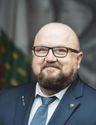
Denny Rodgers Inuvik Boot Lake
Thank you, Mr. Speaker. Mr. Speaker, I'd like to follow up on my Member's statement from yesterday, and I spoke about my concerns around income thresholds, around access to programs for seniors, particularly seniors in the smaller communities where costs are higher who actually oftentimes are looking after other family members. So today, Mr. Speaker, I want to focus more on the housing side because this also pertains to actually accessing housing and the core need of housing. Oftentimes seniors, again, are just over that threshold to get access for housing as well, which is a concern. So my question is for the Minister of housing.
I guess my first question would be, Mr. Speaker, is what is the core needs income threshold and how is that calculated in housing, Mr. Speaker.
Question 1230-20(1): Income Thresholds
Oral Questions
The Speaker Shane Thompson
Thank you, Member from Inuvik Boot Lake. Minister responsible for Housing NWT.
Question 1230-20(1): Income Thresholds
Oral Questions
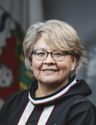
Lucy Kuptana Nunakput
Thank you, Mr. Speaker, and thank you to the Member for the question. Seniors across the Northwest Territories, they're trying to make ends meet and I understand the MLA's concern. I've heard this as Minister of housing for the last couple of years, is how do people make ends meet, especially with the rental scale and the core need income threshold.
Just a bit of information about the core need income threshold. It's based on the principle that households should not spend more than 30 percent of their income on shelter costs. So with that, the core need income threshold levels are community-specific. So Inuvik would have a specific threshold number versus Yellowknife or Tuktoyaktuk for example, and these reflect local housing costs. So if it's like a market community, like Inuvik is, versus a community that's more remote and isolated like Uluhaktok which would have higher costs and less of a market housing available.
All applicants, including seniors, are assessed based on income, with no exceptions, at the eligibility stage. For seniors in social housing, we do have a $1,000 monthly income exemption, and it's applied when they're calculating their rent. The defined age for seniors under the Housing NWT programs is 60 years and older. Thank you, Mr. Speaker.
Question 1230-20(1): Income Thresholds
Oral Questions
Denny Rodgers Inuvik Boot Lake
Thank you, Mr. Speaker, and thank the Minister. And I know the Minister's aware of this. We've had conversations, and I know I am sure the Minister has had conversations with constituents as well.
Mr. Speaker, I note that the core needs threshold hasn't been updated, I think, since 2021. So, you know, is the assessment -- the assessment that's been done to produce these thresholds, are they -- do they keep up with the current costs; is it a reality? Given what's happening now in costs, certainly in the last five years, certainly in the North, and I can speak to Inuvik and the cost for all things, power, fuel, and groceries up there. So would the Minister commit to reviewing those -- that income threshold again and kind of see if it does still line up with where it was in 2021. Thank you.
Question 1230-20(1): Income Thresholds
Oral Questions
Lucy Kuptana Nunakput
Thank you, Mr. Speaker. Currently, we are reviewing the core need income threshold and updating it. Costs have significantly increased since 2021 so undertaking this review is important, but also undertaking it not only with the financial or corporate lens, but the social lens as well. So we've incorporated that discussion along with the Housing NWT overall discussion of increasing income thresholds and increasing rental scales. We also want to add a social lens to it, so we're doing that work right now. Thank you, Mr. Speaker.
Question 1230-20(1): Income Thresholds
Oral Questions
The Speaker Shane Thompson
Thank you, Minister of responsible for Housing NWT. Final supplementary. Member from Inuvik, Boot Lake.
Question 1230-20(1): Income Thresholds
Oral Questions
Denny Rodgers Inuvik Boot Lake
Thank you, Mr. Speaker. And it's good to hear that, social and a cultural lens as well. I think it's very important when we look at all these. And I know I had a quasi-commitment from the Minister of Education, Culture and Employment yesterday about looking at doing income thresholds that are equal among all programs across the board and have departments kind of get together on that as well. So, you know, the core need is also there for the actual houses themselves. Yes, it's fine to get the programs in but can the Minister speak to what the department is doing for the actual core needs. So what are we doing for actual houses to put people in right now to address also the need for the actual housing themselves? Thank you.
Question 1230-20(1): Income Thresholds
Oral Questions
Lucy Kuptana Nunakput
Thank you, Mr. Speaker. And, Mr. Speaker, this is the work that Housing NWT is doing currently right now. This is a priority of the Legislative Assembly, a mandate of this government that we work and deliver on housing and housing affordability, suitability, across the Northwest Territories. And I think that our territorial housing needs assessment gives us that base that we need to work towards, and it gives us an indicator so when we make the case to Build Canada Homes to the federal government, this is our need and this is our need for the next 20 years. I think that we have a 20-year infrastructure assessment that Housing NWT has done internally but much of the work that we do moving forward, we have to align with the different departments of Government of the Northwest Territories because right now we're -- you know, with ECE, they have a net basket measure and Housing NWT follows that net basket measure but also health and social services has extended health benefits program. So we need to align these so residents are not confused by the different levels in government. Thank you, Mr. Speaker.
Question 1230-20(1): Income Thresholds
Oral Questions
The Speaker Shane Thompson
Thank you, Minister responsible for Housing NWT. Oral questions. Member from Range Lake.
Question 1231-20(1): 2026 Report of the Auditor General of Canada to the Northwest Territories Legislative Assembly on Child and Family Services in the Northwest Territories
Oral Questions
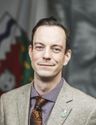
Kieron Testart Range Lake
Thank you, Mr. Speaker. Mr. Speaker, I just want to be clear, I support social workers. In fact, social workers have been talking to me and asking why every time there's one of these audits, the solutions start at the top and don't support people at the bottom. Why, they're asking, are 75 percent of front line caseworkers carrying caseloads that exceed department safety standards, 49 percent -- that's half -- have double caseloads, and 23 percent carry triples. When the Minister says she's all about the staff, why are we seeing these statistics, Mr. Speaker?
Mr. Speaker, when three quarters of your staff are legally overworked, the system is broken. Will the Minister take immediate measures today to deploy additional resources to the front line to help our social workers succeed in their tasks and keep kids safe. Thank you.
Question 1231-20(1): 2026 Report of the Auditor General of Canada to the Northwest Territories Legislative Assembly on Child and Family Services in the Northwest Territories
Oral Questions
The Speaker Shane Thompson
Thank you, Member from Range Lake. Minister of Health and Social Services.
Question 1231-20(1): 2026 Report of the Auditor General of Canada to the Northwest Territories Legislative Assembly on Child and Family Services in the Northwest Territories
Oral Questions
Lesa Semmler Inuvik Twin Lakes
Thank you, Mr. Speaker. Mr. Speaker, as the Department of Child and Family Services, they continue to support the front line services and, you know, I think there are many supervisors who are working in the front line area because due to the vacancies and, you know, it's not of the lack of recruitment. You know, we've been working with the Aurora College to try and get the social work program up and running. We've been looking at different models of staffing levels and, you know, we've been increasing the family preservation workers since the previous report. I think there was an increase of 56 family preservation workers to work to support families and communities. This is why we're doing the analysis now so that way we can look at what's going on.
Just within this last year alone, you know, just with the drug crisis alone, it has exacerbated the system. You know, I've talked to my colleagues from the different communities. I've had a meeting last week after the Council of Leaders with a chief and, you know, it's just, like within the last year, the more pressure and more pressure on the social workers in some of these smaller communities. So that's what we're focusing on, and we are doing the work. Thank you, Mr. Speaker.
Question 1231-20(1): 2026 Report of the Auditor General of Canada to the Northwest Territories Legislative Assembly on Child and Family Services in the Northwest Territories
Oral Questions
Kieron Testart Range Lake
Mr. Speaker, we're bringing back the social work program because this previous government's cut it. We've never done an assessment of what the actual need is for social workers, and we haven't invested in them in seven years. That was the last time there was a significant investment. We're finding money for nurses. Why has the Minister never brought forward this need to bring forward more social workers to help our social workers from drowning in this system, this broken system that is overloading them and putting kids in harm's way? Thank you, Mr. Speaker.
Question 1231-20(1): 2026 Report of the Auditor General of Canada to the Northwest Territories Legislative Assembly on Child and Family Services in the Northwest Territories
Oral Questions
May 29th, 2026
Lesa Semmler Inuvik Twin Lakes
Thank you, Mr. Speaker. Mr. Speaker, as I previously stated, that we have the positions there. There are positions there. They're vacant. We are recruiting. We continue to recruit. We're bringing back social workers that have been here before on term contracts. We're filling in short-term contracts. You know, we're -- the child and family services departments are reaching out to whomever they can and that they know that are in child and family services social workers to bring back to try and fill some of these gaps so that way, you know, that takes the burden off of our front line workers that are doing -- you know, that are having double the caseloads and triple the caseloads than what we want them to do. But without being able to fill these positions, then, you know, they are filling those gaps and, you know, and I think that's why we're -- where there's managers that are going down and doing some of this work and different levels of staff that are trying to support the front line and doing some of the front line work. Thank you, Mr. Speaker.
Question 1231-20(1): 2026 Report of the Auditor General of Canada to the Northwest Territories Legislative Assembly on Child and Family Services in the Northwest Territories
Oral Questions
Kieron Testart Range Lake
Mr. Speaker, vacancy has climbed to 34 percent but it's different across the regions. It's -- or across the authorities. It's not all the same.
Mr. Speaker, the Minister has stood on the floor of this House in a different role and called incremental, toothless solutions lip service. I am calling these solutions that today. And if she's not willing to take real action to provide real solutions, will she resign.
Question 1231-20(1): 2026 Report of the Auditor General of Canada to the Northwest Territories Legislative Assembly on Child and Family Services in the Northwest Territories
Oral Questions
Lesa Semmler Inuvik Twin Lakes
Thank you, Mr. Speaker. No, I will not resign, Mr. Speaker. Mr. Speaker, every single community that I have travelled to and every single social worker that I have spoken to and Indigenous people that I have talked to know that we've been struggling in this system. I know that I've been struggling. The only time I've ever had contact with social services was when my own mother was murdered, so I know this system and I know that we need to have more social workers in our system. We need more families, we need our communities like we used to do, to raise a child. You know, we used to always say that it takes a community to raise a child, you know, so that's where we are. We're so divided. Every community -- I've talked to leaders, I've talked to community members, I've talked to MLAs. Our own leaders in our communities are so divided, they're so polarized. And who's at the end of this? Children, families that are struggling. So this is why we need to all be working together, and I am working for children of the Northwest Territories, and I take my oath seriously to all of the children and families in the Northwest Territories. And I know that, you know, with the work that we are doing and the work that we're doing with Indigenous partners that we will succeed in this work. Thank you, Mr. Speaker.
Question 1231-20(1): 2026 Report of the Auditor General of Canada to the Northwest Territories Legislative Assembly on Child and Family Services in the Northwest Territories
Oral Questions
The Speaker Shane Thompson
Thank you, Minister of Health and Social Services. Oral questions. Member from Yellowknife Centre.
Question 1232-20(1): 2026 Report of the Auditor General of Canada to the Northwest Territories Legislative Assembly on Child and Family Services in the Northwest Territories
Oral Questions

Robert Hawkins Yellowknife Centre
Thank you, Mr. Speaker. As my colleague said, it's true, social workers have been telling us that they've identified this problem for years. Even the auditor general, if that matters, has been pointing it out from 2014, 2018, and again, déjà vu, 2026, Mr. Speaker.
So given the continuous fact that children are being put at risk, how can the Minister argue that this ongoing failure to protect vulnerable youth is merely an operational challenge rather than an actionable, systemic, institutional negligence. Mr. Speaker, who is going to take responsibility for this negligence?
Question 1232-20(1): 2026 Report of the Auditor General of Canada to the Northwest Territories Legislative Assembly on Child and Family Services in the Northwest Territories
Oral Questions
The Speaker Shane Thompson
Thank you, Member from from Yellowknife Centre. Minister of Health and Social Services.
Question 1232-20(1): 2026 Report of the Auditor General of Canada to the Northwest Territories Legislative Assembly on Child and Family Services in the Northwest Territories
Oral Questions
Lesa Semmler Inuvik Twin Lakes
Thank you, Mr. Speaker. Mr. Speaker, as I mentioned earlier, you know, the department and myself, we will continue to support children of the Northwest Territories, children and families of the Northwest Territories, and we will continue to make improvements in the system and we will continue to bring forward legislation and, you know, within our business process, we will continue to make improvements to the system. At the heart of it, you know, we will -- our centre of it all is to ensure that, you know, we're protecting these children. And at the end of the day, you know, sometimes and as talking to child and family services, we -- you know, one of the things that came up during this is that, yeah, we don't have time to fill in the matrix because we're with families, we're with kids, and so sometimes that gets missed. I am sorry that I am human and I miss that. And then so this is one of the things that we are trying to support them and we are trying to make improvements in the system so that we can make it easier for our staff so that way when audits like this come, it doesn't look like the work that's not being done is being done because they don't have the time to do the computer work. And so this whole system needs support from this government. It needs support from all of us and our Indigenous governments as well. And I think that's where we need to look at where our families are right now in our territory. Thank you, Mr. Speaker.
Question 1232-20(1): 2026 Report of the Auditor General of Canada to the Northwest Territories Legislative Assembly on Child and Family Services in the Northwest Territories
Oral Questions
Robert Hawkins Yellowknife Centre
Mr. Speaker, you can't brush it off as an oops or a computer problem, Mr. Speaker, because the data shows a complete collapse of mandatory safety timelines, Mr. Speaker. 33 percent of immediate safety assessments were abandoned, Mr. Speaker, past the 24-hour regulated limit window.
Mr. Speaker, the question really comes down to by what legal metric does the Minister justify leaving at-risk children -- whether it's days, weeks, months -- where they could be at further risk, past the legally mandated investigation deadlines? How can she brush that off as oh, I was too busy or too tired. Thank you.
Question 1232-20(1): 2026 Report of the Auditor General of Canada to the Northwest Territories Legislative Assembly on Child and Family Services in the Northwest Territories
Oral Questions
Lesa Semmler Inuvik Twin Lakes
Thank you, Mr. Speaker. Mr. Speaker, nobody said that it was -- I didn't say that it wasn't done. And sometimes it isn't done, and sometimes we have small communities, like Colville Lake or Somba Ké, where they don't have a child and family social worker. And so when an investigation needs to be done, then there's a deployment time to go into those communities. Yes, the system is not perfect. We found this out through the Deh Cho journey in health, and we focused on some of the areas in that. This is the same work that we are doing in our smallest of small communities where we know that we don't have the capacity or the staff in those small communities and complaints still come from those communities. So that is the work that we are working on. Thank you, Mr. Speaker.