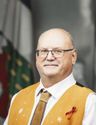
Colleagues, I had the opportunity to witness Enbridge Line 21 full-scale emergency response exercise last year at N'dulee Crossing, Fort Simpson and Fort McMurray, underscoring the critical importance of robust emergency preparedness on the Norman Wells Line 21 pipeline system and demonstrated the high standard of training delivered by private industry in partnership with northern and Indigenous communities. This multi-day exercise showed how detailed planning, realistic field deployment, and genuine collaboration can reduce risk to land, water, and communities along the pipeline corridor.
At its core, the full-scale exercise was designed to test how Enbridge and its partners could respond to a potential incident on Line 21 from early notification and command decision-making through on-the-ground containment and recovery actions. By the activity and evaluation, evaluating the company's emergency response plan in real time, the exercise provided an opportunity to verify that internal procedures, communication, and logistics are not only complementary with regulatory expectations but also practical and effective in the unique condition of the Deh Cho and Sahtu region.
This kind of scenario-based training is essential to ensuring that if an incident occurred, responders are acting from practical experience rather than theory.
Equally important, the exercise highlighted the growing role of Indigenous governments and local leadership in shaping and delivering emergency response. Collaboration with Liiklii Kue First Nation, the communities of Wrigley, Fort Simpson, Jean Marie, Sambaa K'e, Norman Wells, Tulita, and one Alberta community, was not a symbolic gesture but a recognition that these who live along the line bring critical knowledge of the land, river system, and community needs. Their participation helped ensure that response strategies respected community priorities, traditional use areas, and culture value while also building mutual confidence that local perspectives are embedded in emergency planning. This approach reflected a broader shift towards partnership-based emergency management and that support reconciliation and shared partnership.
The Deh Cho focused activities during the FSE showcased the scale and professionalism of the private sector response capabilities. Establishing an incident command centre in Fort McMurray to oversee field operations at N'dulee Crossing and Fort Simpson demonstrated Enbridge is prepared to coordinate complex multi-site responses using recognized incident command structures and integrated planning.
Recognizing the time, I would like the rest of the statement be deemed as read and printed in Hansard.
In closing, I would like to thank Enbridge for including me in the exercise. It was an eye-opener, and I feel comfortable they are prepared for the future.
The participation of representatives from Norman Wells, Tulita, Wrigley, Fort Simpson, Jean Marie River, Sambaa K'e, and Chateh ensured that decision-makers could see first-hand how an incident would be managed and how information would flow between the IMC, field teams, and affected communities.
On the ground, the exercise mobilized approximately 111 Enbridge personnel, 34 local contractors, 8 on-site observers, 14 observers at the IMC, and 4 regulatory representatives, supported by 3 helicopters and 6 Enbridge boats. This level of deployment reflects a significant private-sector investment in equipment, training, and logistics capacity dedicated to environmental protection and public safety. Involving local contractors not only builds regional economic benefits but also ensures that people with direct knowledge of local rivers, currents, and access routes are fully integrated into response teams.
The Emergency Response (ER) Day and community feast in Fort Simpson, which drew an estimated 200300 community members, were equally important components of the exercise. By making response equipment visible and explaining how it would be used during a real incident, Enbridge and its partners helped demystify emergency operations and provided residents with a clearer sense of what to expect and how to engage if something goes wrong. Public-facing events like this build transparency and trust, giving community members a chance to ask questions, share concerns, and see that safety is supported by real, tested capability rather than assurances alone.
Taken together, the 2025 Line 21 Full-Scale Exercise demonstrates that high-quality training led by private industry, when done in partnership with Indigenous governments, local contractors, and regulators, is a cornerstone of responsible resource development in the North. It strengthens technical readiness, deepens relationships with communities along the pipeline, and helps ensure that, if an emergency occurs, responders are equipped both professionally and culturally to protect people, lands, and waters.