Thank you, Mr. Yakeleya. Mr. Ramsay, to the motion.
Debates of June 4th, 2015
This is page numbers 6419 - 6480 of the Hansard for the 17th Assembly, 5th Session. The original version can be accessed on the Legislative Assembly's website or by contacting the Legislative Assembly Library. The word of the day was public.
Topics
MOTION 44-17(5): COMPREHENSIVE PUBLIC REVIEW OF HORIZONTAL HYDRAULIC FRACTURING, defeatED
Motions
Page 6457
MOTION 44-17(5): COMPREHENSIVE PUBLIC REVIEW OF HORIZONTAL HYDRAULIC FRACTURING, defeatED
Motions
Page 6457
David Ramsay Kam Lake
Thank you, Mr. Speaker. Our government has already made a commitment to the people of the Northwest Territories to take the time that we need to ensure that we get this right and that we intend to do just that. There is no oil and gas activity in the Northwest Territories today and we don't expect to see any for at least the next couple of years. This pause gives us the opportunity to look at the science, to look at best practices from around the world and to design a world-class approach to managing it. Time is on our side and we should use that time to our advantage.
Last week I committed publicly to take the time that is necessary to ensure that Northerners understand this important issue. I remain committed to that and this government remains committed to that. We've already initiated a public dialogue on hydraulic fracturing, and it is important for that process to play out so that Northerners can better understand what this is all about and what is at stake. As a government, we want to see that dialogue with Northerners continue so that together we can understand the issue and decide how best to manage it.
Just over a year ago we gained responsibility of our regulatory system through devolution. We took up that responsibility and we told NWT residents that we could serve them well. We said that Northerners would be in charge, that we would be in charge and we are in charge. We promised to maintain the fundamental aspects of the regulatory system that have been established through the land claims and territorial and federal legislation. The system reviews every project multiple times, making sure projects are in the public interest. Land and water boards regulate the use of land and water in our territory. The departments of ITI, Lands and ENR have important roles in the system. Other public agencies are involved in inspections and in management.
That system works. We can trust the system and we can strengthen the system. We can design made-in-the-North rules that benefit the territory and its people. Working to build that system with the people of the North is our primary focus. We've already started to do that, and we already know we have the time that we need to get the work done. We need to keep moving forward with our work to build a strong, robust system here in the Northwest Territories.
These are the reasons why the government will not be supporting this motion. Thank you.
MOTION 44-17(5): COMPREHENSIVE PUBLIC REVIEW OF HORIZONTAL HYDRAULIC FRACTURING, defeatED
Motions
Page 6458
The Speaker Jackie Jacobson
Thank you, Mr. Ramsay. To the motion. I'm going to allow the mover of the motion to have closing remarks. Mr. Bromley.
MOTION 44-17(5): COMPREHENSIVE PUBLIC REVIEW OF HORIZONTAL HYDRAULIC FRACTURING, defeatED
Motions
Page 6458
Bob Bromley Weledeh
Thank you, Mr. Speaker. First of all I want to thank all of my colleagues for their participation in the debate today and of raising their various perspectives.
First of all I'd like everybody to realize, in the Northwest Territories, that we're talking about very big dollars here, very, very big dollars, and when we are doing that you can get a real distortion and move away from objectivity into distorted views and so on and a lot of biases.
So, I know it's frustrating for the public, but that's not unusual and it's something we have to deal with. The public's voice will be prevailing, but I think it's important to know that we are talking about very big dollars here and that's causing many people to have the views that they do have. I would say we need to listen to our elders, and our elders, when they were in this House, spoke with a unanimous voice very clearly on fracking and what they thought.
This gets back to what my seconder said very clearly: The concern is about our future. It's about our water. Will it be safe? It's about our land. Will it look and feel and actually be the same into the future for our children and our coming generations?
We've heard that people have called for a formalized opportunity. My colleagues have called for a formalized opportunity for a thorough conversation on the risks of fracking. The government is clearly refusing to do that. They will talk about how to get fracking done, but they are refusing to have that conversation.
I've heard my colleagues call for a real opportunity to get information out on the table for discussion from all angles, an example of the data. That's what is being refused here today.
I guess we heard that informing the public, we need to educate our residents. This is so incredibly arrogant. One of the biggest difficulties for me, serving the public, is to hear this sort of arrogance. I am continually impressed with the knowledge of the public that I interact with. There may be an education needed, for sure, but from what I see and hear, it's not only outside of this House where education is needed.
I think somebody mentioned it is a moot point. We do have a quiet period of time and that's certainly true. But consider two things: The government is on record of permitting fracking without environmental review already. This is not an unknown situation, so the public is reacting to that, of course. Secondly, the public is calling for the moratorium. This is not something we've come up with ourselves. The public are the ones who have signed the petitions by the thousands. You've heard from them in many different ways. That moot point is a bit of a moot point there.
Social programs need dollars. I hope my colleagues realize I pushed very hard for spending in the social area. It is the reason why I always push for the triple bottom line. We cannot do these things in isolation. To allow and even support the damage to our environment and reducing the ability of our environment to support life in order to try to support the social side of things is biting ourselves in the butt. That's why I always encourage people to try to get to both meetings - the social, environment and economic discussions - so we can have that rounded picture.
The point about deciding to put a moratorium in place when all information is collected, unfortunately the government is on record for permitting fracking without an environmental review and they are saying they will not have this comprehensive discussion this motion calls for. That's the important part, not the moratorium. The important part of the motion is it calls for a comprehensive, transparent and public discussion and review of the risks and a public decision on whether or not those risks are acceptable. That is not clearly on the government's agenda, as we've heard today.
I think it would have been great to learn more about the ConocoPhillips wells, and I have attempted to do that through written questions, as suggested by my colleague for the Sahtu. But, of course, that information is proprietary and confidential. I was told I can't have that for a couple of years.
Finally, I would agree that this will certainly be an election issue no matter what we do, and that will be appropriate. Many people wanted to seek a ban and I have been a proponent of a moratorium as opposed to a ban. They wanted a ban based on some pretty good information, very convincing.
Again, I encourage consideration of a moratorium. I guess I now would encourage the public to go for a ban. We know that fracking is not healthy for people and our future. I again encourage people to look at the committee research report on the draft fracking regulations that were tabled today.
Speaking to my colleagues, I wanted to thank the researcher for the extraordinary work that she did, Megan Welsh, on producing that report.
I guess I would just like to finalize by letting the public know their voice certainly will prevail ultimately. Mahsi.
Recorded Vote
Motions
Page 6459
The Speaker Jackie Jacobson
Thank you, Mr. Bromley. The Member is seeking a recorded vote. All Members in favour of the motion, please stand.
Recorded Vote
Motions
Page 6459
Principal Clerk, Committees And Public Affairs Mr. Ball
Mr. Bromley, Mr. Blake, Mr. Nadli, Mr. Hawkins, Ms. Bisaro.
Recorded Vote
Motions
Page 6459
Principal Clerk, Committees And Public Affairs Mr. Ball
Mr. Yakeleya; Mr. Beaulieu; Mr. Abernethy; Mr. Miltenberger; Mr. McLeod - Yellowknife South; Mr. Lafferty; Mr. Ramsay; Mr. McLeod - Inuvik Twin Lakes; Mr. Dolynny; Mr. Bouchard; Mr. Moses.
Recorded Vote
Motions
Page 6459
The Speaker Jackie Jacobson
All those abstaining, please stand. Five in favour, 11 opposed. The motion is defeated.
---Defeated
By the authority given to me as Speaker by Motion 10-17(5), I hereby authorize the House to sit beyond the daily hour of adjournment to consider business before the House.
Mr. Hawkins.
Motion 45-17(5): Plebiscite On Hydraulic Fracturing In The Northwest Territories, Defeated
Motions
Page 6459
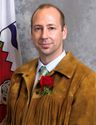
Robert Hawkins Yellowknife Centre
WHEREAS the Elections and Plebiscites Act provides that the Commissioner may, on the recommendation of the Legislative Assembly, direct that a plebiscite be held on any question that is of importance to the people of the Northwest Territories;
AND WHEREAS discussion and debate of hydraulic fracturing in the Northwest Territories has entered public discourse;
AND WHEREAS the government has recognized the significance of public engagement in this area and announced that engagement on proposed hydraulic fracturing regulations will continue until at least August 2015;
AND WHEREAS, to date, this engagement has shown hydraulic fracturing to be an issue of great importance to the people of the Northwest Territories;
AND WHEREAS the people of the Northwest Territories should take part in any decision on whether to undertake hydraulic fracturing in the Northwest Territories as well as how to regulate any such activity;
AND WHEREAS the Polling Day of the Northwest Territories General Election will be held on Monday, November 23, 2015;
NOW THEREFORE I MOVE, seconded by the honourable Member for Weledeh, that this Legislative Assembly recommends to the Commissioner that a plebiscite be held in the Northwest Territories on Monday, November 23, 2015, with the following question: “Should hydraulic fracturing be permitted in the Northwest Territories?” Thank you, Mr. Speaker.
Motion 45-17(5): Plebiscite On Hydraulic Fracturing In The Northwest Territories, Defeated
Motions
Page 6459
The Speaker Jackie Jacobson
Thank you, Mr. Hawkins. The motion is in order. To the motion. Mr. Hawkins.
Motion 45-17(5): Plebiscite On Hydraulic Fracturing In The Northwest Territories, Defeated
Motions
Page 6459
Robert Hawkins Yellowknife Centre
Mr. Speaker, today's motion is a plebiscite. It's a motion calling for clear guidance from the public to the Legislature. This motion is something that none of us can lose on if we vote in favour of it. Imagine, Mr. Speaker, this is our opportunity to get the opinion of the public.
Fracking is defined as the topic of today. You see this question all over the place, not just here, not in the Northwest Territories, not in Canada, but all over the world. This is an important question for our time. So, it's not just about what we think we know about fracking, it's also about what we want to know from the public, which is how do they feel.
This motion is simply asking about the authority to frack, nothing more. It doesn't go along and ask the people how to frack, it asks the question, simply, “Should we be allowed fracking in the Northwest Territories?”
We have polls out there, like the old Nik Nanos that reach out by calling people and they all have margin of errors. But a plebiscite would come forward and it would be clear. It would be in black and white, of the public's opinion.
Now, some will say, and they will be right about this, that the Northwest Territories government is out there getting people's opinions on hydraulic fracturing under the regulations process, and what's at play here is it's not about should fracking happen, it's about how to frack. It's quite a bit different. They're not the same issue.
Should we not ask the permission of the people on such an important issue? It may be correct that they should ask how to frack, but I think that's one step ahead of where we should be today. We need to realize this before we continue too far down that path, before we forget to look back.
Let me stress, Mr. Speaker, this is a plebiscite. The plebiscite asks for clear direction, a public opinion, and a plebiscite motion is non-binding. Under Section 48 of the Elections and Plebiscites Act, it clearly spells out that it isn't binding on the Legislative Assembly, on its Executive Council, or any other person under that purview. So, if it's non-binding, there's nothing for us to be afraid of. If anything, it shows great courage that we were willing to go out to the people and ask them their opinion. Leadership sometimes thinks that. It's not about making decisions in isolation and there's certainly no shame in asking the public what they want. If anything, we should feel enormously proud that we've used our democracy in a way that works. We've gone to the public saying, “What do you think?” We have the ability to make these choices. Let us use that courage to deal with this issue in that manner.
Now, there will be those in favour of fracking, and let me assure them, by supporting this motion it shows leadership, as well, because it is the direction from the masses. We should not be hiding behind maybe a few people making this decision. Let's involve everyone as part of it.
This is an ideological question. It's an environmental question. If anything, this is a question about the future. So let us gain power from the strength of ourselves reaching out to the strength of our people and stand strong and tall. This is certainly the lifetime opportunity we've been looking for by being willing to ask this type of question.
To be clear, this government technically doesn't have a mandate from its people; and the style of government that we run, which is consensus government, never gets one. But wouldn't it be neat if this was a way we could break ranks and allow our Ministers a free vote? Wouldn't this be a neat way to get a mandate from the people of the Northwest Territories on one clear issue? A mandate could say, one way or the other, if the Territories supports fracking or not. It would be definitive; it would be clear; it would be black and white. We would be able to go forward as a government, as a people.
Now, some would say, “Well, let's wait. We could do this in September.” Well, you know, there is no technical sweet spot of when we do these things. You either do them or you don't. So we can wait and we can do an information campaign now; we can wait and do it later; or we could probably not do it at all. But we have to ask ourselves, when would be the right time, and now is it. I trust the public, I really do, and I think the public deserves the opportunity to have their voice heard on this one.
This is not a trivial issue and I wish people would not try to pretend that everything's perfect. We all know that there has been, and I'll be fair, there have been experiences where fracking has not been done well - and there should be no denial of that - and at the same time there have been places where fracking has been done very safely and we know that. But this is an ideological question. This is not a question about has it been done right or has it not been done right. This is a question about what type of northern development do we want here. This issue, honestly, will define a generation, like climate change. I link it to that. How many issues do we have the world talking about? Not many. Let us not miss this opportunity to rise to the occasion.
Now, some don't think this is important and, you know, making a decision, I hope they do see this is important. But people will ask, “Where were you when this decision was made, this incredible decision was made?” People will also ask you, “Where were you and how did you decide as part of this very important decision?” The opportunity to make this decision - empower the people, get them involved, let them be clear - would only cost us $17,500 if it ran during the next General Election, which is about six months away. Without trying to sound critical, of course, I've seen this government spend millions of dollars on profoundly less important issues over and over again. That's an opinion. I'm not trying to say that it's critical, but we all know spending could be done better in various ways. But I'll tell you, what an amazing amount of investment and public opinion and mandate that would be clear and definitive for such an affordable price.
Now, if you're for fracking, I honestly say this actually helps your argument. If the public votes for it, there you go. And if you're against fracking, well, that helps your argument too. I really don't see a lot of losers in this situation by asking the people what they want. Let the people play a role in this, because they deserve it. So, this is not about how to frack, this is solely left, should we frack. By the way, to date, to frack or not to frack is left solely in the hands of the seven people on Cabinet. It's not the 19 of us.
So, back to timing. There's the old Goldilocks theory and it's all based on timing. Either too soon, too late, or when it is just right. So, again, some people will say, “Well, let's wait and leave this motion until September. Let's put it off until later.” The fact is September is just, frankly, too late. The government or anyone else couldn't get the right information. The government or anyone else couldn't get information out in time. That wouldn't be fair to the issue. That wouldn't be fair to anyone.
Now, some would have said, “Well, we should have done this last session or maybe even last year.” Mr. Speaker, that wouldn't have been right either because it would have been so far in advance people would probably not care, not organize properly. So, when is the right time? Now is the right time to make a decision. It's relevant, and with the regulation discussion going on, the timing doesn't get better. The public barometer is there. They're tuning in with their finely tuned antenna, asking themselves, what's happening? They want a role in this particular situation. They want to know. They want to be involved. They want a say.
This does not interfere with the regulation discussion going on. It could go on at the same time and there's nothing to be afraid of. It doesn't debunk that process and, actually, could run concurrently. And there's no worry, Mr. Speaker, we could do it.
The public is asking for an opinion on this one. I'm asking Members to vote to allow them to have an opinion. Should it succeed, I think we've done a monumental thing; that is the motion, that is. We should never be afraid to give the public an opportunity to engage on important issues like this, and frankly, as I said at the beginning, if the plebiscite came forward and whatever the results were, they're non-binding. The government could use them as good advice on how to do business better, or how to do it differently.
As I come to the end of my opening comments I will say this: What better way to have a mandate from the people of the Northwest Territories? There is no clear method to do this through a public plebiscite. This would give any future government the authority to act and how to act. No one could deny that.
The plebiscite question is about all of those communities and all of those peoples and all of those assemblies talking about one thing - their future - and they want to be part of it. It takes courage amongst all of us to make that type of decision. If this motion fails, I will tell you, the public will never be given another chance to have input in such a similar way as they could today. It's true they can write letters and they can send e-mails and they can demonstrate until the cows come home outside of the Assembly, but the fact is, this is really the sweet spot for them to have a chance to be part of the process and today is their day. So I ask everyone to think about that when they choose to rise about their comments. When they choose their comments, I ask them, let us give the public the chance to weigh in on this very important issue. Mr. Speaker, absolutely, of course, I'll want a recorded vote. Thank you.
Motion 45-17(5): Plebiscite On Hydraulic Fracturing In The Northwest Territories, Defeated
Motions
Page 6461
Motion 45-17(5): Plebiscite On Hydraulic Fracturing In The Northwest Territories, Defeated
Motions
Page 6461
Bob Bromley Weledeh
Thank you, Mr. Speaker. Devolution was supposed to give the people of the Northwest Territories a voice in matters previously decided from afar by faceless bureaucrats with no skin in the game. It has become apparent, as illustrated by the issue of whether we should pursue fracking in the NWT or not, that our public's voice continues to fall on deaf ears and that the government's platitudes about decisions being made by the people of the North were just lip service. The people continue to be unheard when they speak.
That is why when presented with an initiative to give the people an opportunity to speak clearly and directly to the government on a matter of importance to them, I will always be in full support of it. A plebiscite on this contentious issue held in conjunction with our territorial election this fall will provide clear, if narrow, direction to the next Assembly on the issue of whether we should allow the use of hydraulic fracturing in the Northwest Territories or not.
Obviously, it would be much better for this government to hear the people put in place a cost-free moratorium, given the unlikelihood of any industry interest for years, and conduct a comprehensive, transparent and public review of the risks that accompany fracking and whether or not they are acceptable.
Given their apparent deafness and based on their record, my expectations of government to act as requested by the public are low at this point. They have done nothing in response to the clarion call of public: “Why would the government respond to MLAs trying to bring the public voice forward.” But we leave no tool untried.
I am confident this will be an issue in the upcoming election one way or another, but for this moment, this is a straightforward, low-cost motion to seek the public's view on fracking. I will support this motion.
Motion 45-17(5): Plebiscite On Hydraulic Fracturing In The Northwest Territories, Defeated
Motions
Page 6461
Motion 45-17(5): Plebiscite On Hydraulic Fracturing In The Northwest Territories, Defeated
Motions
Page 6462

Alfred Moses Inuvik Boot Lake
Thank you, Mr. Speaker. I want to thank Mr. Hawkins for bringing the motion forward. He makes some really good points, some pretty clear points there, and once again, we're trying to make a decision here on something that's not even happening in the Northwest Territories. The economy is so bad right now worldwide, we don't even know what's going to happen in the next government. There's going to be a cost effect to it, no matter how low it is. We're still going to make a decision, throw money at it, and we don't even know what's happening.
The main problem that I have with this plebiscite is the population disparity. We're going to get thousands of people here in Yellowknife who are going to vote against the small community of Norman Wells, the small region of the Sahtu, the small region of the Beaufort-Delta. Every time, regions are going to lose. Small communities are going to lose when we put a plebiscite out like that, and it's not fair to the small communities and it's not fair to the small regions. I think that when we do bring a motion like this into the House, you've got to think about the small communities that we're here to serve. Right there, it's unfair. I can't support this motion on that alone. Especially, like I mentioned, you've got the transportation, the report on the response to the Energy Charrette coming through. We haven't even looked at those yet. We haven't even heard from the public engagement.
Like I said, we're making a decision on something that's not happening right now, and in terms of population disparity, small communities, regions are going to lose. I came here to represent the small communities, the regions, even Yellowknife, but in this case, for such a controversial issue, we know where it's going to go, so I'm not going to vote in favour of this motion. I think it's very unfair to the people of the Sahtu, the Gwich'in, the Inuvialuit, the Deh Cho where all the shale potential is. I don't think it's fair to them and I think it's almost... I won't even say anything on that yet, but I will leave it at that and I won't be voting in favour of the motion.
Motion 45-17(5): Plebiscite On Hydraulic Fracturing In The Northwest Territories, Defeated
Motions
Page 6462
Motion 45-17(5): Plebiscite On Hydraulic Fracturing In The Northwest Territories, Defeated
Motions
Page 6462
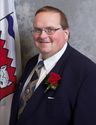
Robert Bouchard Hay River North
Thank you, Mr. Speaker. As I indicated with the last motion, I think some of this stuff is very premature. This motion is even worse. We talked about taking a couple of years in the last motion, taking a couple of years to get information out to the public, get informed. Now we're going to rush it over six months, and now six months from now the public has to make a decision on whether we're going to have a plebiscite or not.
Honestly, our committee didn't even hear about this until a couple days ago. This decision to do a plebiscite, we're going to take this to the people right now? We haven't even completed the process of talking to the people. I mean, my colleagues say they support the fact that we should be listening to the people. I have no problem with that. That's what I've indicated. We need to keep consultation going. A plebiscite to force them to make a decision on that now or over a period over the next three months when we're in the summer session, how do we get that information out to them to make that decision?
I understand. This is the perfect timing for it if we're going to do it, but I don't think we've gotten all that information out there. We haven't had all that discussion. My colleague Mr. Moses hit it on the head. I mean, with a population of anywhere from 45 to 48 percent sitting in Yellowknife that don't have anything to do with hydraulic fracturing, there's a disparity there.
At this time, we need to stay the course. We need to keep pressure on our government to make sure regulations are as strong as we can have them in this territory, as anywhere else in the world. I will not be supporting this motion.
Motion 45-17(5): Plebiscite On Hydraulic Fracturing In The Northwest Territories, Defeated
Motions
Page 6462
Motion 45-17(5): Plebiscite On Hydraulic Fracturing In The Northwest Territories, Defeated
Motions
Page 6462
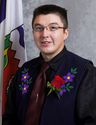
Frederick Blake Jr. Mackenzie Delta
Thank you, Mr. Speaker. Even though I did support the last motion, I will have to abstain on this motion. The reason being is the reason I supported the last motion. As I said, people need more time. As the Member from Hay River mentioned, six months is not enough time. That's why we asked for up to two years for a moratorium here so people can get that information.
We would have had a couple more votes on our last motion if we didn't go ahead with this one, and I was hoping that we didn't. But just with that, I'm abstaining on this one.
Motion 45-17(5): Plebiscite On Hydraulic Fracturing In The Northwest Territories, Defeated
Motions
Page 6462
Motion 45-17(5): Plebiscite On Hydraulic Fracturing In The Northwest Territories, Defeated
Motions
Page 6462

Wendy Bisaro Frame Lake
Thank you, Mr. Speaker. My stated goal is that we have a comprehensive public review of fracking, and that is what I wish for. I don't believe that this motion will give enough time for that to happen. I support, certainly, the wish of my colleagues to hear the voice of the people, and I am always open to the voice of the people.
At this point, I don't feel that I can make a decision on this motion. I haven't had time to canvass my constituents. As mentioned, we saw this quite late in the week this week. I've been considering it ever since I first saw the motion and I really don't know how I should vote. I am going to abstain. I don't feel that I can vote against it, because it is the wish of my colleagues that this motion go forward, but I can't vote for it in this particular instance.
I have to comment on a couple of the statements that have been made earlier by my colleagues. It has been stated that we - and I'm presuming by “we” it's talking about us in the House - are making a decision with this plebiscite. I have to disagree. We are not making any decision in terms of fracking. We are simply giving an opportunity to the public to express their view.
There have been comments about the fact that if there is a plebiscite that the majority of people in Yellowknife will override the people in the regions. What it doesn't do, if there is no plebiscite, is it doesn't allow the people in the regions who are against fracking - and there are a lot of them - to express their voice. I wish we would not pit region against region. I think you will find that there are a lot of people in Yellowknife who probably would support fracking.
However, that said, I want to keep my comments short and that's all that I have at this point.
Motion 45-17(5): Plebiscite On Hydraulic Fracturing In The Northwest Territories, Defeated
Motions
Page 6463
Motion 45-17(5): Plebiscite On Hydraulic Fracturing In The Northwest Territories, Defeated
Motions
Page 6463
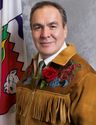
Norman Yakeleya Sahtu
Thank you, Mr. Speaker. I, too, am going to not support this motion. I find it puzzling. I don't know if it's the appetite of the day or the week, because this motion coming in here and asking us to take a plebiscite to the people in November, and on any question that's important to the people of the Northwest Territories, as MLAs, every Assembly we have questions of importance. I could add on to the plebiscite a number of questions to the people to vote on. It's just a natural process in November when we go to the polling stations, people there vote on the candidacy, on their records, on where they stand on certain positions. You don't need to ask them. They know where you stand. They know what you're saying in the House. You go in the grocery store and they tell you. You go on Facebook and they'll tell you, really tell you. So, you don't need to spend $17,000. Put that towards an education or youth program. Put it somewhere where it's best to use.
So there are lots of discussions, lots of debates of hydraulic fracking. It's in the public; it's in the bars; it's in the restaurants; it's in the conference rooms; it's in the House. There are lots of discussions, lots of debates, depending on where you sit on the table; depending on what information you get; depending who you believe, who you don't believe. There are lots, even in Yellowknife here. Even for me going down, people talk about fracking. They don't talk about the community or how about fracking is really going on. Let's not kid ourselves here.
Feedback into the regulations, that's happening now. We all have different roles in the Assembly. We all play different roles. We're given these roles to take them on with high integrity and regard and very seriously. We have members on Social Programs, Government Operations and EDI. I see you having a role with EDI asking this question. So I wonder sometimes, is that committee tainted because they're asking these questions? They haven't finished their work yet. That clearly, clearly, if anything, is putting the cart before the horse. Let's do our work. Let's not pull our potatoes before the first seeds have sprouted and grown up, okay? That, for me, is serious.
However, we all justify our own means of putting things forward and working on them. I respect the members from EDI. I'd respect them more if they went to Norman Wells and did a tour of the Conoco sites.
I want to say something again clear and loud. Read my lips: The Sahtu people have a land claim. They are the ones who said, ‘Yes, open the lands for exploration.” The people of the Northwest Territories, Sahtu, through their jurisdictions, institutions, constitution, protected rights said yes, not the people of the Northwest Territories. That's a clear fact that we're not looking at. We have a land and water board. Look at the Water Board: tight, tight, tight in regard to regulations. Yes, we can learn some more. Look at our Sahtu Land Use Plan. If you were to look at the regulations, you would have four decks of binders of regulations. You go to Alberta there are two decks. You go to Russia, there are no decks. It's pretty rough over there on environmental issues.
So, we've got to put things in perspective. We're in the driver's seat and, like driving a vehicle, it's a privilege. You follow the rules. You obey signs and regulations. There's a good chance that you won't get in an accident, but you never know. Slippery roads, blowout tires, other drivers. That's part of life. There are no guarantees.
I want to say that, again, it's not up to the people. Mr. Hawkins thinks it's up to the people of the Northwest Territories. Very, very clear, even though we do have impacts, it's no different than the diamond mines here in Yellowknife. Have you read their report? They drained five lakes, millions and billions of litres. Does that compare to hydraulic fracturing? It's more like a little teaspoon of water in their buckets of water that they use. Its chemicals are crazy. Thousands of trucks, tens of thousands of trucks that pass through Yellowknife. If our exploration ever hits peak, it's about 2,500 at the most.
We in the Sahtu never interfered because, you know, these benefits down here, we have never said, “Should they have a plebiscite on should they be mining here?” You ever see those pictures of the mines? I have it right here. I don't want to table it because it's a public document already. Drained lakes, 10, 11, 12 hundred fish taken out of the lake. It's just mind-boggling.
So I just wanted to say that Canada asked the people in the Sahtu, and Canada is working with the people in the Sahtu because we have a land claim, and our land claim allows us to participate in the Northwest Territories. It's a sovereign state. It's a sovereign nation, jurisdiction, institution, self-government provisions. It's totally different from the 1920s, ‘30s and ‘40s. That's what people of the Northwest Territories outside the region need to understand. We have our own work inside our own region to do and that's what we're basing our decisions on.
So, in short, I will not support the motion.
---Laughter
Motion 45-17(5): Plebiscite On Hydraulic Fracturing In The Northwest Territories, Defeated
Motions
Page 6464