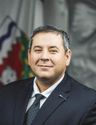

Thank you, Mr. Speaker. I think it goes without saying that any of these bylaw officers would do anything to help these animals in distress, and most community members would. But MACA is prepared to assist by sharing information and connecting interested community governments with organizations such as Vets Without Borders. I will ensure that communities seeking these resources have access to the information and connections they need to explore solutions that best meet the needs for the local circumstances. Thank you, Mr. Speaker.
Debates of Feb. 24th, 2026
This is page numbers 3345 - 3406 of the Hansard for the 20th Assembly, 1st Session. The original version can be accessed on the Legislative Assembly's website or by contacting the Legislative Assembly Library. The word of the day was know.
Topics
Question 1075-20(1): Veterinarians Without Borders
Oral Questions
Page 3352
Question 1075-20(1): Veterinarians Without Borders
Oral Questions
Page 3352
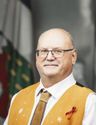
The Speaker Shane Thompson
Thank you, Minister of Municipal and Community Affairs. Oral questions. Member from Yellowknife North.
Question 1076-20(1): Contracted Private Paramedics
Oral Questions
Page 3353

Shauna Morgan Yellowknife North
Thank you, Mr. Speaker. So in follow up to my statement today, I want to ask questions of the Minister of Health and Social Services. And so I understand that currently there's already some use of contracted private paramedics in small community health centres, and the department is looking to expand that or put more of a framework around it but there's clearly sort of a reason in mind or what the purpose would be for this.
So my first question is are paramedics operating in community health centres meant to do simply all the same tasks that community health nurses currently can do, or are they meant to do additional tasks or different things than is currently within the scope of practice of a community health nurse? For example, treating patients outside community health centres in stabilizing or transporting. Thank you, Mr. Speaker.
Question 1076-20(1): Contracted Private Paramedics
Oral Questions
Page 3353
The Speaker Shane Thompson
Thank you, Member from Yellowknife North. Minister of Health and Social Services.
Question 1076-20(1): Contracted Private Paramedics
Oral Questions
Page 3353
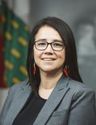
Lesa Semmler Inuvik Twin Lakes
Thank you, Mr. Speaker. Mr. Speaker, I want to be very, very clear so that -- the paramedics that we have used in the health centres are a contract that we are obligated to hold when it's fire season. So we contract paramedics so that way if a community is evacuated, that we send the health -- like, the community health nurse and all of the staff in the community leave the community; however, we need to send in paramedics into that health centre to support the emergency responders working in that community. So what we have done is we've been paying for them, and so over the summer months is also a time when it's challenging to ensure that our community health centres remain open because nurses do work -- do not -- like, we have casual nurses that are coming in and some are on their time off, so the primary objective right now is for them to maintain operations at a minimum, avoiding closures during those months. Paramedics have different scopes than CHNs, and they only work within their scope. Thank you, Mr. Speaker.
Question 1076-20(1): Contracted Private Paramedics
Oral Questions
Page 3353
Shauna Morgan Yellowknife North
Thank you, Mr. Speaker. So can the Minister clarify whether paramedics that are operating in community health centres, are they required to be supervised by a health authority employee such as the nurse in charge at all times, or are they permitted to work shifts alone? Thank you, Mr. Speaker.
Question 1076-20(1): Contracted Private Paramedics
Oral Questions
Page 3353
Lesa Semmler Inuvik Twin Lakes
Thank you, Mr. Speaker. Paramedics that are operating in the health centres are overseen at all times and are part of the collaborative team. When they are the only resource in a health centre due to being an emergency service, paramedics will consult with physicians on physician orders, and community health nurses do have the ability to initiate some treatment under the protocols that they have without physician orders. Thank you, Mr. Speaker.
Question 1076-20(1): Contracted Private Paramedics
Oral Questions
Page 3353
The Speaker Shane Thompson
Thank you, Minister of Health and Social Services. Final supplementary. Member from Yellowknife North.
Question 1076-20(1): Contracted Private Paramedics
Oral Questions
Page 3353
Shauna Morgan Yellowknife North
Thank you, Mr. Speaker. So the Minister has mentioned in the past in this House that part of the idea of having a paramedic there to help is to be able to take the night shift so a community health nurse can have more rest. So if that was occurring and the paramedic was answering phones at night -- and yet we've just heard they're required to be overseen at all times by the nurse in charge. If a paramedic made a decision about a patient, say, in the middle of the night that had serious negative consequences for that patient, who would then be responsible; is it the nurse in charge or the paramedic? Thank you, Mr. Speaker.
Question 1076-20(1): Contracted Private Paramedics
Oral Questions
Page 3353
Lesa Semmler Inuvik Twin Lakes
Thank you, Mr. Speaker. Mr. Speaker, the paramedic scope of practice, you know, to be clear, is when those conversations happen, the nurse is within -- is in on the call. The part of it is that once the assessment is done, many of the health centres -- so people who live in small communities and health centres know that if there is a callback that there needs to be an eight-hour rest. And if there's only two other nurses and one nurse is assigned some other duties and the nurse that gets called back, usually what ends up happening is all of the clinics get cancelled for the next day. So what this is, is to enhance the support in the health centre to take the call then to -- you know, because a lot of times when the health centre gets phone calls and things like that, you know, they can refer them to 8-1-1, you know, and they can triage the call, call the nurse down, and be there to start the assessment, which might limit the time that the CHN actually has to be called back. So there's -- and as I am saying, this is something that's not set in stone. As the Member has stated, that there's a position that is in the proposed budget that we did a high-level analysis that we know that the health centre model of care hasn't changed -- my entire career, you know, anybody who's worked in this system has known that we need to make changes, we need to make sure that it's flexible. We know that the CHN model of care is the best model; however, what we want to do is we want to enhance that model. We want to look at investigating how LPNs could fit into that model. How can we fit in paramedics into that model to support those communities and to support those nurses. Thank you, Mr. Speaker.
Question 1076-20(1): Contracted Private Paramedics
Oral Questions
Page 3353
The Speaker Shane Thompson
Thank you, Minister of Health and Social Services. Oral Questions. Member from the Sahtu.
Question 1077-20(1): Inernal Trade Barriers
Oral Questions
February 24th, 2026
Page 3353

Daniel McNeely Sahtu
Thank you, Mr. Speaker. Following up on my statement, my question today is to the Minister of Industry, Tourism and Investment on trade barriers.
First, given that the healthcare services face barriers equivalent to a 40 percent tariff, what concrete cost savings can the GNWT or Members of the Northwest Territories expect to realize from eliminating these trade barriers? Mahsi.
Question 1077-20(1): Inernal Trade Barriers
Oral Questions
Page 3353
Question 1077-20(1): Inernal Trade Barriers
Oral Questions
Page 3353

Caitlin Cleveland Kam Lake
Thank you very much, Mr. Speaker. And thank you to the Member for continuing to keep the conversation around internal trade barriers alive and well in this House. Much appreciated.
So, Mr. Speaker, last year we had really an unprecedented year as far as focus on internal trade barriers across this country. That included health care, of course. And often really what we saw was due to duplication in licensing and regulatory requirements of different supplies. That's where those real cost increases were coming. Last year we ended up with a 30 percent reduction in party-specific exceptions across the country. We signed the Canadian Mutual Recognition Agreement on goods excluding food and also mutual recognition initiatives in sectors like trucking as well. And so all of these play an impact on the cost of goods here in the Northwest Territories. Whether that's through nursing staff and being able to access people from across the country as we sometimes do. Whether that is trucking supplies across the country or even things like first aid kits, if first aid kits have to be different in one jurisdiction to the next. So at this point we're not ready yet as a country to say what the specific dollar figure is at this stage, but this work continues. Thank you, Mr. Speaker.
Question 1077-20(1): Inernal Trade Barriers
Oral Questions
Page 3353
Daniel McNeely Sahtu
Thank you, Mr. Speaker. And thanks to the Minister for that reply. We're really trying to get down to the cost savings to residents and capitalize on this opportunity.
My second question, Mr. Speaker, is what measurable progress and specific outcomes, benefits, can we expect from the committee on internal trades 2025 negotiations as we move into 2026 particularly regarding services liberation? Thank you.
Question 1077-20(1): Inernal Trade Barriers
Oral Questions
Page 3353
Caitlin Cleveland Kam Lake
Thank you, Mr. Speaker. So, Mr. Speaker, my previous response I alluded to some of those. So that was the reduction in the party-specific exceptions, the Canada Mutual Recognition Agreement that was signed across the country on goods. There was also the labour mobility laws that were imposed in other jurisdictions. And that has an impact here in the Northwest Territories because a lot of times we are relying on the capacities of other jurisdictions to do some of our regulating of professions here in the Northwest Territories.
We also saw the successful conclusion of the financial services negotiation under the Canada Free Trade Agreement, Mr. Speaker, and this has an impact of allowing financial institutions across the country to work more seamlessly across Canada, reducing duplicative regulatory requirements, access to insurance, or increasing and improving access to insurance, as well as financing options for northern businesses, as well as increasing competition, which we know ultimately brings costs down across the country. Thank you, Mr. Speaker.
Question 1077-20(1): Inernal Trade Barriers
Oral Questions
Page 3353
Question 1077-20(1): Inernal Trade Barriers
Oral Questions
Page 3353
Daniel McNeely Sahtu
Thank you, Mr. Speaker. Before I approach my last question, I want to compliment our Minister on the chairing of this national committee.
What is the GNWT's timeline for implementing the labour mobility action plan's 30-day services standard and which sectors will be prioritized for barrier reduction to maximize economic benefits for the residents and businesses of the Northwest Territories? Mahsi.
Question 1077-20(1): Inernal Trade Barriers
Oral Questions
Page 3353
Caitlin Cleveland Kam Lake
Thank you, Mr. Speaker. And thank you to the Member for his kindness.
So, Mr. Speaker, we did have the chair position for 2025. We have happily passed it along to Nunavut for 2026. But we are ensuring that that momentum continues as a national team. We are going to see, as far as the 30-day service standard, work continue on that one here in the Northwest Territories as I alluded to previously as well. We rely on other jurisdictions in order to see some of those realized, but we also do have some regulatory bodies here in the Northwest Territories so we as a government are working closely with them. And that includes processes for -- standardizing processes for applications, including standardized documentation requirement and faster verification tools as well and making sure that we're aligning with the entire country on that through our regulatory bodies.
In addition, our federation of FMM -- first Ministers meeting. Thank you very much, Mr. Premier. We speak a little bit sometimes too much in acronyms, and I -- anyway, so we are still being directed by FMM, first Ministers, as far as maintaining the momentum at that table and ensuring that we're focused on things that do make a difference to Canadians. And with 2026, we're focusing and narrowing in on what services we can provide some consistency and standardization to across the country. Thank you.
Question 1077-20(1): Inernal Trade Barriers
Oral Questions
Page 3354
Question 1078-20(1): Peer Group Placement in Schools
Oral Questions
Page 3354
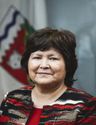
Sheryl Yakeleya Deh Cho
Mahsi, Mr. Speaker. Mr. Speaker, my questions are for the Minister of ECE.
Given that peer group placement is used only from junior kindergarten to grade 9, what steps is the department taking to ensure that students who are advanced with an education program plan are actually developing the foundational skills they need before entering grade 10 where peer group placement is no longer an option. Thank you, Mr. Speaker.
Question 1078-20(1): Peer Group Placement in Schools
Oral Questions
Page 3354
Question 1078-20(1): Peer Group Placement in Schools
Oral Questions
Page 3354
Caitlin Cleveland Kam Lake
Thank you very much, Mr. Speaker. Mr. Speaker, over the course of this term and the previous term, this was an issue and a concern that Members have consistently raised, and so I want to thank Members of the 19th and 20th Assembly for continuing to raise this concern.
We've introduced a standardized grade transition process. It's territory-wide so that there is a standard process that's followed with teachers across the territory in how grade transitions occur. And this is critical in ensuring that we're also not only treating those grade transitions the same way but also making sure that we're providing supports in the same way to the students that need them. So that's number one.
Number two is ensuring that the teachers and school-based support team are working with parents.
And then the third one, I would say, is that review on inclusive schooling that we're doing right now because that is ultimately where the rubber hits the road is those supports that our students need in the classroom to ensure that their individualized education plan can be followed. Thank you.
Question 1078-20(1): Peer Group Placement in Schools
Oral Questions
Page 3354
Sheryl Yakeleya Deh Cho
Mahsi, Mr. Speaker. When students do not meet the most grade-level expectations, a school-based support team must review evidence of learning and identify supports. What additional interventions or instructional strategies is the department putting in place to ensure these supports are delivered consistently across the territory so learning gaps do not follow students from grade to grade and -- yeah. Thank you, Mr. Speaker.
Question 1078-20(1): Peer Group Placement in Schools
Oral Questions
Page 3354
Caitlin Cleveland Kam Lake
Thank you very much, Mr. Speaker. So, Mr. Speaker, ensuring that we have a standard process across the territory so that we can support teachers in this work as well as supporting students. So step one is that standardized process that I was talking about for teachers. And then step two is adjusting our inclusive schooling directive to really meet students with where they're at right now. We know that that directive is a decade old and our students have changed tremendously in the last decade, including the supports that they need across the Northwest Territories. And making sure that that directive is current and that the supports that go along with it are properly funded is going to be key for ensuring that students have the supports they need in our classrooms. Thank you.