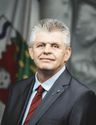
Thank you, Education, Culture and Employment. Final supplementary. Member from the Dehcho.
Debates of Feb. 24th, 2026
This is page numbers 3345 - 3406 of the Hansard for the 20th Assembly, 1st Session. The original version can be accessed on the Legislative Assembly's website or by contacting the Legislative Assembly Library. The word of the day was know.
Topics
Question 1078-20(1): Peer Group Placement in Schools
Oral Questions
Page 3354
Question 1078-20(1): Peer Group Placement in Schools
Oral Questions
Page 3354
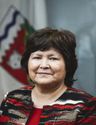
Sheryl Yakeleya Deh Cho
Mahsi, Mr. Speaker. The peer group placement process requires families to be informed and involved in decisions about their child's learning needs. How is the department improving communication with parents and guardians to ensure they fully understand the implications of peer group placement and the programming their child will receive in the next grade? Thank you.
Question 1078-20(1): Peer Group Placement in Schools
Oral Questions
Page 3354

Caitlin Cleveland Kam Lake
Thank you, Mr. Speaker. So, Mr. Speaker, the Member is right. In the previous Assembly, there was a change made in regulation that made it a requirement that parents were involved in this decision-making. And that's a relationship and a conversation that happens right from the child's school to the family. And so it's the teacher and the school-based support team that participate together with the family to ensure that they have all of the decisions and all of the options in front of them as well as the details of the child's individualized education plan so that together those decisions can be made. But it's critically important that families are involved in that decision-making and can continue to support their child at home as well. Thank you.
Question 1078-20(1): Peer Group Placement in Schools
Oral Questions
Page 3354
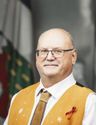
The Speaker Shane Thompson
Thank you, Minister of Education, Culture and Employment. Oral questions. Member from Tu Nedhe-Wiilideh.
Question 1079-20(1): United Nations Declaration on the Rights of Indigenous Peoples Implementation Act Action Plan
Oral Questions
Page 3354
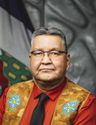
Richard Edjericon Tu Nedhe-Wiilideh
Thank you, Mr. Speaker. Mr. Speaker, in my Member's statement, I talked about the auditor general's report and audit also talked about the UNDRIPIA and also the council supposed to work in collaboration with Indigenous governments to create an action plan.
Mr. Speaker, my question to the Premier is who in this government is responsible for the failure to implement the UNDRIPIA action plan and where is the accountability within this government for missing this obligation and what are the consequences? Thank you, Mr. Speaker.
Question 1079-20(1): United Nations Declaration on the Rights of Indigenous Peoples Implementation Act Action Plan
Oral Questions
Page 3354
Question 1079-20(1): United Nations Declaration on the Rights of Indigenous Peoples Implementation Act Action Plan
Oral Questions
Page 3354

R.J. Simpson Hay River North
Thank you, Mr. Speaker. That's a good question, and all of those answers are actually found in the legislation. So the United Nations Declaration on the Rights of Indigenous Peoples Implementation Act was passed at the end of the last government. It may have been our last sitting actually. Because there was a no coming into force clause, the legislation actually came into force immediately, which I believe was last October 6th -- perhaps -- 2023. I am looking at the clerks to see if they're nodding their heads but they are stone-faced so no support there. Which meant the clock started ticking during the election period, really. And so it wasn't until April of the following year that the action plan committee got together, and then I was -- just like everyone else, I was expecting that report two years after the law came into force in last October. I wrote to the action plan committee noting to them that I expected to receive the report as required by the legislation. But as it goes, when you collaborate and, as I've said since day one, it takes longer to do things when you do things together but we have to do things together, and this is an area where we are actually mandated to do this together, and it's a requirement that the Government of the Northwest Territories and Indigenous governments collectively work on this action plan.
The action plan committee let me know that they are still continuing their work; they're not prepared to put something forward. And so that is the way things are going. I am not the boss of the action plan committee. I am not the boss of the Indigenous governments who are on the action plan committee. And so I don't have the ability to compel them to bring it forward.
In the Act, there are no provisions for violations of the Act. There's no fines. There's no imprisonment specified. And so like much of our legislation it's essentially the honour system, and it is Members standing up in the House and bringing this to our attention and holding us accountable is how accountability works. Thank you, Mr. Speaker.
Question 1079-20(1): United Nations Declaration on the Rights of Indigenous Peoples Implementation Act Action Plan
Oral Questions
Page 3354
Richard Edjericon Tu Nedhe-Wiilideh
Thank you, Mr. Speaker. Mr. Speaker, in the 19th Assembly, I was part of Bill 85 when we created that document. But, Mr. Speaker, my question is that a lot of the resources and time went into this -- and energy went into this bill -- my question again is to the Premier what did this government allow the legislated timeline under UNDRIP to pass without tabling the required action plan? Thank you, Mr. Speaker.
Question 1079-20(1): United Nations Declaration on the Rights of Indigenous Peoples Implementation Act Action Plan
Oral Questions
Page 3354
R.J. Simpson Hay River North
Thank you, Mr. Speaker. I am required as the Minister under the legislation to table the action plan in the House, and I failed to do that. It's because I didn't have an action plan to table. And so once again the action plan committee is comprised of officials from the Government of the Northwest Territories as well as a number of Indigenous governments. I was not in a position to go to one of their meetings and take the papers off the desk and say this is what you have at this date, this is what I am tabling. And so I am still waiting for the action plan committee to submit an action plan, and once that's done I will happily table it in the House and there will be the public comment period as prescribed by the legislation. Thank you, Mr. Speaker.
Question 1079-20(1): United Nations Declaration on the Rights of Indigenous Peoples Implementation Act Action Plan
Oral Questions
Page 3354
Question 1079-20(1): United Nations Declaration on the Rights of Indigenous Peoples Implementation Act Action Plan
Oral Questions
Page 3354
Richard Edjericon Tu Nedhe-Wiilideh
Mr. Speaker, we are going into our third year of our mandate. My question is to the Premier. How does the Premier intend to honour treaty/Metis rights when his government has failed to honour its own UNDRIP legislation? So what assurances can the Premier do to get this action plan started and done? Thank you, Mr. Speaker.
Question 1079-20(1): United Nations Declaration on the Rights of Indigenous Peoples Implementation Act Action Plan
Oral Questions
Page 3355
R.J. Simpson Hay River North
Thank you, Mr. Speaker. I am a little confused. I think I heard two questions. One was about Metis rights, which is maybe from a different statement; I am not sure. But the other is what we're going to do to get the action plan going. There's an action plan committee. They first met in April of 2024, I believe. They have been working on the action plan for a number of years since then. I have written to them. I said I expect it to be presented by the date as required under the legislation. I was informed they were not in a position to share that. We are continuing to press to have it completed. We're doing our part, and I know the Indigenous governments are doing their part as well. So we look forward to receiving that when we receive it and tabling it in this House sometime later this year. Thank you, Mr. Speaker.
Question 1079-20(1): United Nations Declaration on the Rights of Indigenous Peoples Implementation Act Action Plan
Oral Questions
Page 3355
Question 1080-20(1): Child and Family Services
Oral Questions
Page 3355

Jane Weyallon Armstrong Monfwi
Thank you, Mr. Speaker. Mr. Speaker, my questions are for the Minister of Health and Social Services.
Mr. Speaker, can the Minister explain what steps the department is taking to ensure children who enter care are able to remain in their home communities whenever possible? Thank you.
Question 1080-20(1): Child and Family Services
Oral Questions
Page 3355
Question 1080-20(1): Child and Family Services
Oral Questions
Page 3355
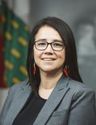
Lesa Semmler Inuvik Twin Lakes
Thank you, Mr. Speaker. Mr. Speaker, as per the process for when children, you know, are accessing child and family services, when families come into contact with child and family services, it's when there is either a child protection issue or the family themselves are coming and requesting assistance to support them. When there is a child protection issue, the child protection issue is investigated and the child protection worker -- the child and family services does everything in their power to try to work with the family to provide supports for the child to stay within their family or, you know, to stay within their community if there is supports in the community to support that family or that child. And the next best thing is to -- you know, to remain with an Indigenous family within the community. And then the last would be in the foster family. Thank you, Mr. Speaker.
Question 1080-20(1): Child and Family Services
Oral Questions
Page 3355
Jane Weyallon Armstrong Monfwi
Thank you. Thank you, Mr. Speaker. I asked for what steps.
Mr. Speaker, what is the department doing to strengthen prevention supports for families so that fewer children need to be removed from their parents in the first place? Thank you.
Question 1080-20(1): Child and Family Services
Oral Questions
Page 3355
Lesa Semmler Inuvik Twin Lakes
Thank you, Mr. Speaker. Mr. Speaker, within child and family services, there has been a bigger shift in foster care placement. I believe that there is around 1,000 kids that are actually utilizing -- families that are utilizing the service of child and family services; however, I believe there's only 154 at this time that are in placements out of that. Many of them -- 75 percent of them, I believe, are remaining in their home, and those that aren't remaining in their home are with extended family or family -- community members known to the child. So everything that child and family services does is they try to keep the child within the home using family preservation, with connecting them with services. You know, if the family needs to access family treatment, you know, child and family services goes and arranges that for them. Thank you, Mr. Speaker.
Question 1080-20(1): Child and Family Services
Oral Questions
Page 3355
The Speaker Shane Thompson
Thank you, Minister of Health and Social Services. Final supplementary. Member for Monfwi.
Question 1080-20(1): Child and Family Services
Oral Questions
Page 3355
Jane Weyallon Armstrong Monfwi
Mr. Speaker, what is the department doing to better support children in care in maintaining their culture, language, and sense of community? Thank you.
Question 1080-20(1): Child and Family Services
Oral Questions
Page 3355
Lesa Semmler Inuvik Twin Lakes
Thank you, Mr. Speaker. Mr. Speaker, that's a really important part of the work that the child and family services has shifted to. I think within that area that's the importance of -- the 75 percent of the kids remaining with their family, that is where they're going to get their culture. That's where they remain with their family. The next part is extended family. If it's a child protection issue within their immediate family, it's extended family and they work to support children. And that's why they now have the family volunteer agreements with family members. And this was something that we heard loud and clear, that family members that were able to take care of these kids sometimes didn't have the means of the financial piece to take care of them so there was a shift in that so that, you know, we heard from many grandparents that, you know, took care of their grandchildren but couldn't be a foster family so weren't being financially supported. These things are now happening. And so, as I said before, everything that they try to do is keep the child with the family, with extended family, and within the community, before ever going outside of that. Thank you, Mr. Speaker.
Question 1080-20(1): Child and Family Services
Oral Questions
Page 3355
The Speaker Shane Thompson
Thank you, Minister of Health and Social Services. Oral questions. The Member from Yellowknife Centre.
Question 1081-20(1): Supreme Court Justices
Oral Questions
Page 3355

Robert Hawkins Yellowknife Centre
Thank you, Mr. Speaker. Mr. Speaker, continuing on the cost-of-living theme on Northerners, and certainly steps the government could do, my questions are now targeted to the Minister of Justice.
Mr. Speaker, is the Minister familiar with the study and assessment that has been done at the Department of Justice with respect to territorial judges being elevated to the Supreme Court bench which would be a direct cost savings to the territorial taxpayer where the federal government would pick up that cost. In other words, eliminate territorial judges and make them all Supreme Court judges. Thank you.
Question 1081-20(1): Supreme Court Justices
Oral Questions
Page 3355
Question 1081-20(1): Supreme Court Justices
Oral Questions
Page 3355