
Thank you, Mr. Speaker. I move, second by the Honourable Member from Hay River North, that Bill 50, Transportation Corporation Act, be read for the second time. The proposed Marine Transportation Act will transition marine transportation services from a public service to a newly created Crown Corporation. Thank you, Mr. Speaker.
Debates of June 3rd, 2026
This is page numbers of the Hansard for the 20th Assembly, 1st Session. The original version can be accessed on the Legislative Assembly's website or by contacting the Legislative Assembly Library. The word of the day was know.
Topics
Bill 50: Transportation Corporation Act, referred to committee
Second Reading Of Bills
Bill 50: Transportation Corporation Act, referred to committee
Second Reading Of Bills
Bill 50: Transportation Corporation Act, referred to committee
Second Reading Of Bills
Some Hon. Members
Question.
Bill 50: Transportation Corporation Act, referred to committee
Second Reading Of Bills
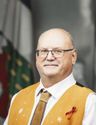
The Speaker Shane Thompson
Question has been called. All those in favour? All those opposed? All those abstaining? Motion carried. Bill 50 has been read a second time and is referred to the standing committee of the Assembly for further consideration.
Second reading of the bill. Consideration of the Committee of the Whole of bills and other matters, Bill 3, Tabled Document 445-20(1), Tabled Document 483-20(1) with the Member from Tu Nedhe-Wiilideh in the chair.
Consideration In Committee Of The Whole Of Bills And Other Matters
Consideration In Committee Of The Whole Of Bills And Other Matters

The Chair Richard Edjericon
Thank you. I will now call the committee to order. What is the wish of committee? I am going to go to the Member from Inuvik Boot Lake.
Consideration In Committee Of The Whole Of Bills And Other Matters
Consideration In Committee Of The Whole Of Bills And Other Matters

Denny Rodgers Inuvik Boot Lake
Thank you, Mr. Chair. Mr. Chair, I move the chair rise and report progress.
Consideration In Committee Of The Whole Of Bills And Other Matters
Consideration In Committee Of The Whole Of Bills And Other Matters
June 3rd, 2026
The Chair Richard Edjericon
There's a motion on the floor to report progress. The motion is in order and non-debatable. All those in favour? All those opposed? Motion carried.
---Carried
Thank you. I will rise to report progress. Thank you.
Report Of Committee Of The Whole
Report Of Committee Of The Whole
Report Of Committee Of The Whole
Report Of Committee Of The Whole
Richard Edjericon Tu Nedhe-Wiilideh
Thank you, Mr. Speaker. Mr. Speaker, your committee has been considering Bill 3, Tabled Document 445-20(1), Tabled Document 483-20() and would like to report progress. And, Mr. Speaker, I move that the report of the Committee of the Whole be concurred with. Thank you, Mr. Speaker.
Report Of Committee Of The Whole
Report Of Committee Of The Whole
The Speaker Shane Thompson
Thank you. Member from Tu Nedhe-Wiilideh. Can I have a seconder? I think it's my buddy from Frame Lake today. All those in favour? All those opposed? All those abstaining? Motion carried unanimously.
---Carried
Report of Committee of the Whole. Third reading of bills. Minister of Finance.
Bill 32: An Act to Amend the Public Service Act, No. 2, Carried
Third Reading Of Bills

Caroline Wawzonek Yellowknife South
Mr. Speaker, I move, seconded by the Honourable Member for Hay River North, with Bill 32, An Act to Amend the Public Service Act, No. 2, be read for the third time. Mr. Speaker, I request a recorded vote. Thank you, Mr. Speaker.
Bill 32: An Act to Amend the Public Service Act, No. 2, Carried
Third Reading Of Bills
The Speaker Shane Thompson
Thank you, Minister of Finance. Motion is in order. To the motion. Member from Range Lake.
Bill 32: An Act to Amend the Public Service Act, No. 2, Carried
Third Reading Of Bills

Kieron Testart Range Lake
Thank you, Mr. Speaker. Mr. Speaker, it has been some time since we have formally dealt with this bill but you may recall that at second reading I did not support it going forward for some concerns, and I will share those concerns now.
The first is the continuing constitutionality issues related to the bill. Since the Saskatchewan Federation of Labour case came out in 2015, it's been fairly clear that locking a group of workers into a bargaining unit, such as currently happening under subsection 41(1.4) of the Public Service Act is arguably contrary to Charter rights, freedom of association, and could be subject to constitutional challenge in the courts.
The question is, what legacy does this legislature want to leave? The question needs to be asked. Does the 20th Assembly wish to leave a pivotal Act such as a new, reformed Public Service Act, vulnerable to a constitutional challenge on grounds that subsection 41(1.4) violates freedom of association rights under the Charter? I prefer to think not, as do many of our constituents.
Legislating a solution to this issue is far better for public servants and the Northerners they serve than an imposition of the courts through litigation. All Members of this Assembly should feel compelled to discharge their responsibilities entrusted to them by their constituency to legislate fixes, such as what's needed to fix the Public Service Act, as opposed to leaving with constituents to litigate themselves.
Public servants are constituents as well, Mr. Speaker, and deserve the same freedom to associate as any other constituent. Public servants are owed the liberty to freely associate, to form bargaining units. They deserve the dignity to choose which bargaining agent will represent them. This issue is ignored in Bill 32.
Legislation to create a labour board that could certify a bargaining unit remains an unfulfilled promise and illusionary. Fixing subsection 41(1.4) of the Public Service Act would unlock the ability of public servants to freely associate and form bargaining units, and that should have been the priority of this legislation. Yet, and further disappointing, the priority in Bill 32 appears to be the normalization of career casual employees within the workplaces of the public service and the creation of a public service disclosure officer role to allow safe disclosure of wrongdoing or misconduct by employees of the public service. This raises another concern of the potential of this bill to sow division within the public service workplaces with career casual employment.
Bill 32 also proposes to normalize the presence of casual employees in these same workplaces as current members of the public service but without those casual employees being part of the public service. Under the proposed bill, contracts for casual employees can be a duration of 12 months, and there appears to be no restriction on the renewal of casual employment contracts. There is no waiting period for a new casual employment contract to be offered to an individual that was previously employed as a casual. There is no limit on the number of casual employment contracts that can be allowed for a given individual.
The coexistence of two types of employees within the same workplace of the public service will create a two-tiered public service - those with security of tenure versus those who will be precariously employed. Those with comprehensive benefits versus those with far fewer benefits.
As drafted as is currently in the bill before us at Clause 9, section 19.4, this significantly narrows the field of what can be negotiated by a bargaining agent. This sets the stage for strenuous and contentious coexistence of casual employees with members of the public service working in the same spaces and providing the same work creating what could be argued is a class system within the public service between the haves, those with job security and full benefits, between the have-nots will inevitably lead to those divisions and conflicts that I have already warned about, potentially tearing workplaces apart.
Further, the lack of security and tenure for employees providing work in the public service will exacerbate issues with recruitment and retention.
Finally, the experience base and corporate memories will fade as these issues persist.
Yet another concern is the clear need for three separate Acts. The current Public Service Act is crumbling under its own weight, dying by a thousand stabs, handed down by serial and ongoing amendments. We already have two amending bills on the Public Service Act in this Assembly with a government commitment to bring forward a third amending bill on the same Act. This leaves our constituents with the impression of improvisation.
Mr. Speaker, no Act can be a silver bullet to all problems or address all issues in the NWT's labour landscape. The current Public Service Act, and its two amending bills, must arguably be very challenging for government lawyers and legislative drafters to maintain and manage as evidenced by the sheer number of motions and successive amending bills. If it is difficult for the lawyers to follow, then I can only imagine what a challenge it must be, even for Members of this House serving multiple terms in the Legislative Assembly to understand, both today and historically. And if it is difficult for both the lawyers and the lawmakers to follow, imagine the constituents who don't do this type of work and aren't trained for this type of work.
For the ordinary person on the street this mandate, and especially how the Public Service Act is being changed, is literally a very tough Act to follow.
The current Public Service Act should be split into three separate Acts as follows:
- A new Public Service Act solely to manage the public service and its employees;
- A labour Relations Board Act to create a labour relations board that can certify bargaining units; and.
- A Public Interest Disclosure Act for the creation of the public interest disclosure officer role.
This brings me to my fourth concern, that the public interest disclosure legislation should be on its own and brought in to protect disclosure by contractors, suppliers, and also members of the public who interact with the public service. It has already been emphasized that the public interest disclosure legislation is a nice-to-have and should have yielded to labour board legislation as a priority. These are two very different projects.
From the perspective of concerned constituents, priorities are being handled in the wrong order. I see constitutionality of legislation as a priority of a public interest disclosure officer role. That said, if the role of the public interest disclosure officer is to be created by this legislation, not only should it be under its own Act but also the scope of this role should be expanded beyond employees of the public service.
Contractors, suppliers, and members of the public interacting with the public service see things. If they see things, they should say things. When declaring what they see, they should benefit from the protections under public interest disclosure legislation. Public service employees do not hold a monopoly on information that can assist the public interest disclosure officer in their role. The more sets of eyes, the more information will be available to the officer and more effective the role will be to make the public service more responsible and transparent to the Northerners it serves.
Mr. Speaker, I also have some comments on the amendments that were brought forward to Bill 32. The first is on committee Motion 16 regarding proposed Section 38.72. This is judicial review.
The courts, namely the Supreme Court of the Northwest Territories, should be trusted to exercise oversight powers over the decisions of the public interest disclosure officer. The oversight powers of the Supreme Court should not be stifled. The proposed section 38.72 ties the hands of the courts and significantly narrows down the powers of the court to provide oversight and provide checks and balances on the fairness and reasonableness of decisions made by the public interest disclosure officer.
Section 32.72 should explicitly grant the power of judicial review with no limiting or suppression of the court's oversight powers in judicial review.
No role or function is immune to mistakes, lapses in procedural fairness, acting without jurisdiction, or to decisions that are either unreasonable or incorrect. No public officer is perfect, Mr. Speaker. We know that from experience in this chamber, and the public interest disclosure officer will be no exception. That is why courts are needed to exercise oversight and provide redress when required. Checks and balances are needed on the work of any public officer. Judicial review should not be stifled. Let the courts exercise their critical role, just as the role of legislators should be respected, so should the role of the courts.
Mr. Speaker, for these reasons and, in particular, the continued troublesome lack of rigor towards complying with Section 2 of the Canadian Charter of Rights and Freedoms, I cannot in good faith support Bill 32. While I acknowledge the many hours of work put into the review of this legislation by the standing committee, the fundamental defects of the Public Service Act remain unaddressed as they did at second reading. To further complicate this, there is still no clarity on when the proposed labour relations board amendments will be brought forward. Passing this bill would be committing the NWT public service to a half-baked labour relations scheme that is apparently -- the dispute mechanism of which is apparently going to be repealed and replaced. In what, a few months? It's unclear. But it makes no sense to me, or most reasonable people, to establish an entire new labour relations dispute mechanism and then immediately repeal it with something else.
This is not good lawmaking from this Member's perspective, Mr. Speaker. It continues to speak to a piecemeal approach that continues to support a constitutionally dubious labour regime underpinned by legislation that is, again, overly cumbersome, large, and should, if not must, be split in order to better serve both the public and the public service and all public servants. For that reason, Mr. Speaker, I will not be supporting Bill 32. Thank you.
Bill 32: An Act to Amend the Public Service Act, No. 2, Carried
Third Reading Of Bills
Bill 32: An Act to Amend the Public Service Act, No. 2, Carried
Third Reading Of Bills
Some Hon. Members
Question.
Bill 32: An Act to Amend the Public Service Act, No. 2, Carried
Third Reading Of Bills
The Speaker Shane Thompson
The question has been called. The Member from Yellowknife South has asked for a recorded vote. All those in favour, please stand.
Recorded Vote
Third Reading Of Bills
Clerk Of The House Mr. Glen Rutland
The Member for Yellowknife South. The Member for Kam Lake. The Member for Hay River South. The Member for Inuvik Twin Lakes. The Member for Nunakput. The Member for Sahtu. The Member for Inuvik Boot Lake. The Member for Frame Lake. The Member for Great Slave. The Member for Mackenzie Delta. The Member for Yellowknife North.
Recorded Vote
Third Reading Of Bills
Clerk Of The House Mr. Glen Rutland
The Member for Tu Nedhe-Wiilideh. The Member for Yellowknife Centre. The Member for Range Lake.
Recorded Vote
Third Reading Of Bills
June 3rd
The Speaker Shane Thompson
All those abstaining, please stand.
Colleagues, the results are 11 in favour, three opposed. Motion has been moved. Bill 32 has had third reading. Oh, and zero abstentions.
---Carried
Third reading of bills. Minister responsible for WSCC.
Bill 48: An Act to Amend the Workers' Compensation Act, No. 2, Carried
Third Reading Of Bills
June 3rd

Vince McKay Hay River South
Mr. Speaker, I move, seconded by the Honourable Member for Inuvik Twin Lakes, that Bill 48, An Act to Amend the Workers' Compensation Act, No. 2, be read for the third time. And, Mr. Speaker, I request a recorded vote.
Bill 48: An Act to Amend the Workers' Compensation Act, No. 2, Carried
Third Reading Of Bills
June 3rd
Bill 48: An Act to Amend the Workers' Compensation Act, No. 2, Carried
Third Reading Of Bills
June 3rd
Some Hon. Members
Question.
Bill 48: An Act to Amend the Workers' Compensation Act, No. 2, Carried
Third Reading Of Bills
June 3rd
The Speaker Shane Thompson
Question has been called. The Member from Hay River South has asked for a recorded vote. All those in favour, please stand.
Recorded Vote
Third Reading Of Bills
June 3rd
Clerk Of The House Mr. Glen Rutland
The Member for Hay River South. The Member for Inuvik Twin Lakes. The Member for Nunakput. The Member for Tu Nedhe-Wiilideh. The Member for Sahtu. The Member for Yellowknife Centre. The Member for Range Lake. The Member for Inuvik Boot Lake. The Member for Frame Lake. The Member for Great Slave. The Member for Mackenzie Delta. The Member for Yellowknife North. The Member for Yellowknife South. The Member for Kam Lake. The Member for Hay River North.