This is page numbers of the Hansard for the 20th Assembly, 1st Session. The original version can be accessed on the Legislative Assembly's website or by contacting the Legislative Assembly Library. The word of the day was know.

Topics

Members Present

Hon. Caitlin Cleveland, Mr. Edjericon, Mr. Hawkins, Hon. Lucy Kuptana, Hon. Vince McKay, Mr. McNeely, Ms. Morgan, Mr. Morse, Mr. Nerysoo, Ms. Reid, Mr. Rodgers, Hon. Lesa Semmler, Hon. R.J. Simpson, Mr. Testart, Hon. Shane Thompson, Hon. Caroline Wawzonek, Mrs. Weyallon Armstrong, Mrs. Yakeleya

The House met at 1:31 p.m.

---Prayer or reflection

Prayer Or Reflection

The Speaker

The Speaker Shane Thompson

I'd like to thank Ms. Cleary for opening prayer. Ministers' statements. Minister responsible for Housing NWT.

Minister's Statement 213-20(1): Housing Capital Projects Update
Ministers' Statements

Lucy Kuptana

Lucy Kuptana Nunakput

Mr. Speaker, the lack of adequate housing remains one of the most significant challenges facing the Northwest Territories today. Across our territory, too many residents face barriers to safe, suitable, and affordable housing.

The findings of the territorial housing needs assessment confirm what we are hearing in our communities: That elders, seniors, singles, and vulnerable residents, are disproportionately affected by core housing need and are at increased risk of homelessness.

These challenges are compounded by aging housing stock, where many units are approaching or exceeding their intended service life, and by the unique realities of building and maintaining housing in the North. Simply put, Mr. Speaker, the need is urgent, and the scale of the challenge requires sustained, coordinated action.

Mr. Speaker, this government is taking that action. Through a strategic multi-year investment of $150 million dollars, this government is transforming how housing is delivered across the Northwest Territories. This investment is focused not only on building new homes but on protecting and modernizing our existing housing supply so it continues to serve Northerners for years to come.

Over the life of this Legislative Assembly, Housing NWT is on track to deliver hundreds of new housing units while also advancing repairs and retrofits to extend the life of hundreds more. In the first two years of this government, 96 new homes have already been completed with an additional 264 units at various stages of planning, procurement, and construction.

Mr. Speaker, a central part of this work is a territory-wide modular housing program that is now moving from planning and procurement into full production and delivery. Across nine communities, from Ulukhaktok to Fort Smith, 98 social housing units are being manufactured in the NWT. These homes are designed primarily for single persons, a group that has been identified at the high risk of homelessness. These new homes demonstrate immediate action to address a growing need identified through our housing needs assessment and the pressures we see on singles waiting for social housing in communities across the territory.

Eighty-four of these new modular units are being constructed in Hay River by METCAN Building Solutions with an additional ten units for Behchoko to be manufactured at a Tlicho-owned facility. Four will be manufactured at the new K'ahsho Got'ine Trades Centre in Fort Good Hope. Construction is already well underway on the first of these units expected to be delivered to Fort Simpson later this year. Ten new units for Ulukhaktok are expected to be shipped North from Hay River this season. These deliveries mark a clear shift from planning to visible on-the-ground progress.

Mr. Speaker, this modular approach is helping us deliver housing more efficiently and at greater scale while ensuring homes are built to meet the standards of northern climates. Just as importantly, these homes are being built in the Northwest Territories, supporting local industry, Indigenous partnerships, and jobs in communities across the North.

At the same time, we continue to invest significantly in repair and modernization of our existing housing portfolio. Through this government's three year $150 million investment, more than $30 million will be used to improve the condition of more than 800 homes, helping to improve safety, energy efficiency, and overall living conditions for the families who depend on them.

Mr. Speaker, these efforts are about more than numbers. They are about supporting healthy communities, strengthening our economy, and addressing one of the most pressing social challenges we face. While we know there is more work ahead, we are making meaningful progress. We are turning plans into action for more safe places for Northerners to call home. Quyananni, Mr. Speaker.

Minister's Statement 213-20(1): Housing Capital Projects Update
Ministers' Statements

The Speaker

The Speaker Shane Thompson

Thank you, Minister responsible for Housing NWT. Ministers' statements. Mr. Premier.

Minister's Statement 214-20(1): United Nations Declaration Implementation Action Plan
Ministers' Statements

June 3rd, 2026

R.J. Simpson

R.J. Simpson Hay River North

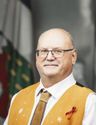
Mr. Speaker, the United Nations Declaration on the Rights of Indigenous peoples establishes the minimum standard for the survival, dignity, and well-being of Indigenous peoples worldwide. First voted on by the UN general assembly in 2007, this vital human rights instrument affirms the rights of Indigenous peoples to self-determination and authority to manage their own affairs. Its implementation in Canada has been a long time coming.

In 2023, the 19th Legislative Assembly made history by passing the United Nations Declaration on the Rights of Indigenous Peoples Implementation Act creating a clear framework for the Government of the Northwest Territories to advance this work in partnership with Indigenous governments.

Mr. Speaker, this was a landmark moment for the Northwest Territories and for Canada. The NWT became only the third jurisdiction in the country to legislate implementation of the UN declaration, following the federal government and British Columbia. But what sets the Northwest Territories apart is not only that we acted; it is how we acted.

Our legislation was developed collaboratively between the Government of the Northwest Territories, Indigenous governments and organizations, and Members of the Legislative Assembly. That cooperative approach is groundbreaking in Canada and reflects the unique government-to-government relationships that exist here in the territory. We are demonstrating that meaningful partnership is how to advance legislation in a good way.

Mr. Speaker, later today I will table the first action plan developed under the Act, another significant milestone. The action plan was co-developed through a special committee that brings together the GNWT and participating Indigenous governments to identify the first concrete steps towards aligning the GNWT laws, policies, programs and practices, with the principles and rights affirmed in the UN declaration. This work affirms the Northwest Territories place at the forefront of reconciliation and Indigenous rights implementation in Canada.

The action plan identifies priority areas where this work will advance, including decision-making, lands and resources, and social and economic well-being. It establishes a clear and practical path for implementation while recognizing that this work will evolve over time.

Mr. Speaker, implementing the UN declaration is transformative work. It requires governments to examine how decisions are made, how relationships are built, and how Indigenous rights are reflected in laws, policies, and institutions.

This work will happen in phases. In some areas, the focus will be on immediate improvements to engagement, collaboration, transparency, and information sharing. In others, the work will involve longer-term efforts to review and modernize legislation, policies, and systems.

This action plan also reflects a commitment to accountability and transparency, outlining what work has already begun, what is planned, and how progress will be tracked and publicly reported.

Last month, the draft action plan was released for public comment to help residents better understand this work and how implementation will proceed. Residents raised important questions about timelines, engagement, and what implementation will mean in practice. That feedback reinforced the importance of clear and consistent communication as this work moves forward.

Mr. Speaker, the implementation of the UN declaration in the Northwest Territories will not happen overnight. It will require a long-term commitment from all of us. But today's tabling of the first action plan marks an important step forward, demonstrating leadership not only within the Northwest Territories and across Canada but also in the broader global efforts to advance the rights of Indigenous peoples.

I want to thank the Indigenous governments and organizations that have contributed their knowledge, leadership, and partnership to this work. The progress we are making together reflects the strength of collaboration and a shared commitment to a future grounded in respect for rights, recognition of Indigenous knowledge, and meaningful partnership.Thank you, Mr. Speaker.
Minister's Statement 214-20(1): United Nations Declaration Implementation Action Plan
Ministers' Statements

The Speaker

The Speaker Shane Thompson

Thank you, Mr. Premier. Ministers' Statements. Minister of Health and Social Services.

Minister's Statement 215-20(1): Improving Access to Dental Services in Northwest Territories Communities
Ministers' Statements

Lesa Semmler

Lesa Semmler Inuvik Twin Lakes

Mr. Speaker, oral health is an important part of overall health. Yet for too many residents of the Northwest Territories, especially in small and remote communities, getting dental care has meant long waits, cancelled clinics, or costly travel outside their home.

Today, I am pleased to update Members on the concrete steps I have taken as Minister to fix the long-standing barriers and bring dental care back into communities where people want and deserve to receive care.

First, I am proud to say that our government has secured a new agreement with Health Canada through the Oral Health Access Fund. This agreement brings approximately $3 million over three years into the Northwest Territories to repair, replace, and modernize dental equipment in community health centres across the territory.

This is a significant achievement. For years, outdated and broken dental equipment has been one of the biggest reasons dental services could not be delivered consistently in small communities. Even when dental professionals were ready and willing to travel, there was no dedicated funding to maintain or replace this equipment and as a result residents could not receive dental care close to home. By negotiating this agreement with Health Canada, we are fixing the foundation that dental services depend on.

In the first year of the agreement, funding will be used to hire a technology planner to assess the condition of dental rooms and equipment in community health centres and develop standard, safe dental room layouts, and put standing agreements in place to support installation, training, and the removal of old equipment. In year two and three, the focus will be to shift and getting equipment repaired or replaced in communities, starting in the Beaufort Delta and Sahtu regions, and then expanding to the Deh Cho, Fort Smith, and Yellowknife regions. This work will be carried out with the Northwest Territories Health and Social Services Authority, which manages our community health centres where dental services are delivered.

Mr. Speaker, this agreement is a key step toward our government's mandate priority of providing care closer to home. When dental spaces are safe and reliable, fewer residents will need to travel for routine dental care reducing stress for families and lowering travel pressures on the health system.

Second, I am also pleased to confirm that we have signed a contract with Adam Dental Clinic to restore visiting dental services in communities where equipment has already been assessed as safe for use. Dental services are expected to resume this summer in Fort Simpson, Fort Resolution, Fort Providence, and Norman Wells, with additional communities coming online as readiness work is completed.

Mr. Speaker, while dental treatment is not an insured under the Northwest Territories health care plan, it is often delivered through federal programs such as non-insured health benefits. Our government remains committed to ensuring residents can access timely, reliable dental care as close to home as possible. This work is about removing barriers, improving safety, and restoring quality service where people live. For residents, this means more reliable dental clinics, fewer cancelled appointments due to equipment failures, and fewer trips out of the community for basic dental care.

There is still more work ahead but these actions represent a real, measurable progress. By securing new federal funding and rebuilding the infrastructure that dental services rely on, we are bringing care back into communities and improving access for residents across the Northwest Territories, especially in small and remote communities. Thank you, Mr. Speaker.

Minister's Statement 215-20(1): Improving Access to Dental Services in Northwest Territories Communities
Ministers' Statements

The Speaker

The Speaker Shane Thompson

Thank you, Minister of Health and Social Services. Ministers' Statements. Mr. Premier.

Minister's Statement 216-20(1): Minister Absent from the House
Ministers' Statements

R.J. Simpson

R.J. Simpson Hay River North

Mr. Speaker, I wish to advise the House that the Honourable Member for Thebacha, Minister of Environment and Climate Change, will be absent from the House today and tomorrow to attend the Canadian Council of Ministers of Forestry in Langford, British Columbia. Thank you, Mr. Speaker.

Minister's Statement 216-20(1): Minister Absent from the House
Ministers' Statements

The Speaker

The Speaker Shane Thompson

Thank you, Mr. Premier. Ministers' Statements. Members' statements. Member from Tu Nedhe-Wiilideh.

Member's Statement 1059-20(1): Retirement of Juanita Sangris from the Yellowknives Dene First Nation
Members' Statements

Richard Edjericon

Richard Edjericon Tu Nedhe-Wiilideh

Mr. Speaker, I rise today to congratulate my Tu Nedhe-Wiilideh constituent Juanita Sangris who last month retired after an extraordinary 5-year career serving the Yellowknives Dene First Nation. Who knew back then that what began as an opportunity to work in her home community would become a 45-year career of outstanding services. But it was a natural fit. Juanita's skills and dedication meant she quickly became an essential part of the building of the Yellowknives Dene First Nation government into what it is today. That is no overstatement. This is the true magnitude of her 45-year service.

When Juanita first started, she was essentially a one-person operation in a small band office in Dettah, with very little structure and just a few colleagues along her side. But what the Yellowknives Dene First Nation did have was a vision at the time when the relationship between Indigenous governments and First Nations was evolving, and they had Juanita who dutifully managed the band office, the financial day-to-day operation day in and day out. As well, we all know vision alone is not enough. It has to be matched with sound financial management to build something that lasts. I am sure all Members in this House can appreciate just how important sound financial management are to the long-term success of any government or institution.

But beyond organization and administration, Juanita's dedication to her work with the Yellowknives Dene First Nation was deeply personal. As the YKDFN grew in capacity, she trained and mentored the staff and over time helped build a culture of diligence and professionalism and steady service.

I would also like to recognize that Juanita is here today in the gallery, joined by her husband former Chief Jonas Sangris who served 12 years, who also has dedicated much of his life to the Yellowknives Dene First Nation as well. As well, their children Derek Sangris, Lisa Pellissey, Sheena Green, and they have a huge family and a lot of grandchildren that I can't mention here right now, but I just want to mention that.

This Assembly thanks her for her extraordinary services. There are so many who look to her example, who hope to contribute as much as she has. I wish her and her family all the best in the new chapter in their retirement. And I want to say thank you for your services, and I ask my colleagues to join me in recognizing them in the gallery here today. Thank you.

Member's Statement 1059-20(1): Retirement of Juanita Sangris from the Yellowknives Dene First Nation
Members' Statements

The Speaker

The Speaker Shane Thompson

Members' statements. Member from the Sahtu.

Member's Statement 1060-20(1): Housing Supply in Colville Lake
Members' Statements

Daniel McNeely

Daniel McNeely Sahtu

Thank you, Mr. Speaker. As we conclude our spring sitting and releasing information to our constituents, it is as critical as home security. Mr. Speaker, a stable home environment is the pillar of family growth, security, stability, and environment to eliminate mental health stress.

Mr. Speaker, the community of Tulita has allocated ten homes during this upcoming seasons. I say seasons, Mr. Speaker, because we rely on two seasons. Hopefully there's a barging season and a dependable shortening winter road season. So later I will have questions there to the appropriate Minister.

But focusing on the home itself, Mr. Speaker, is just as important as community growth. A stable home really provides security for the children. The children can focus on their studies after having come out of their nice home. And we have the abilities here in the North in recognizing the emerging industry in the community of Fort Good Hope with the NDL, or Ne'rahten Developments Limited facility. Now we can design our own home to the applications of our climate change. So we have all the resources here. And I am glad to hear the Minister's statement earlier. It really emphasizes the need, and it really tells the audience that we are drafting solutions. And I am in total confidence if we have more homes going to our communities, we'll have healthy communities. People are secure, people are happy, and the children can focus, as said, on their studies.

So I look forward to supporting this initiative and, as I mentioned, I will have questions to the appropriate Minister later on. Thank you.

Member's Statement 1060-20(1): Housing Supply in Colville Lake
Members' Statements

The Speaker

The Speaker Shane Thompson

Thank you, Member from the Sahtu. Members' statements. Member from Great Slave.

Member's Statement 1061-20(1): Electronic Health Records System
Members' Statements

Kate Reid

Kate Reid Great Slave

Mr. Speaker. Mr. Speaker, as the Minister of Health and Social Services is well aware, I have a strong interest in what health data we can and should collect to make better informed decisions, as well as the interoperability of health records between our jurisdictions and ones residents must go to for medical travel.

Much of that dialogue has focused on the upcoming planned electronic health records system replacement. It's of little wonder, then, that I have been reviewing some of the RFP documents for said replacements records system. The RFP package is quite extensive and detailed. I don't pretend to be a proponent that would be able to accurately assess the requirements and provide a financial estimate. I think, however, that this is a key topic that the Assembly should keep tabs on as this process moves forward to modernizing our system and ideally reaching the end of limping along and modifying our current one with endless customizations that have made it unwieldy, Mr. Speaker.

There's one line that stood out to me in the RFP. Quote, ultimately the goal of the EHR project is a single comprehensive electronic health record which is accessible by NWT residents and authorized custodians to health information collected across NWT's entire health continuum of care. End quote.

I commend this vision. In short, I am pro-EHRS replacement; however, I am still curious about how we got here and how the replacement system will be steered into the future. As such, I will have questions for the Minister of Health and Social Services later today. Thank you, Mr. Speaker.

Member's Statement 1061-20(1): Electronic Health Records System
Members' Statements

The Speaker

The Speaker Shane Thompson

Thank you, Member from Great Slave. Members' statements. Member from Mackenzie Delta.

Member's Statement 1062-20(1): 2026 Gwich'in Gathering
Members' Statements

George Nerysoo

George Nerysoo Mackenzie Delta

Thank you, Mr. Speaker. Mr. Speaker, today I rise to formally invite my colleagues of this Assembly to attend the upcoming Gwich'in Gathering in Fort McPherson. The dates for the Gwich'in Gathering is scheduled for July 17th to the 21st, 2026.

The Gwich'in Gathering represents an important occasion for communities, families, and visitors to come together in recognition and celebration of Gwich'in culture. It serves as an opportunity to honour the knowledge of elders, acknowledge the role of the youth, and strengthen the cultural connection that continues to sustain our communities.

Mr. Speaker, events such as this are significant not only to the Gwich'in people but to Northwest Territories as a whole. They contribute to the preservation and revitalization of Indigenous languages and traditions while fostering understanding and collaboration among people and communities. The community of Fort McPherson is pleased to host this important gathering and look forward to welcoming participants from across the territory and beyond.

Mr. Speaker, I encourage my colleagues to consider attending this gathering as an opportunity to demonstrate support for Indigenous culture and the ongoing work of cultural preservation and revitalization in the Northwest Territories.

I would also like to acknowledge and commend the organizers, volunteers, and community members whose efforts and commitment will make this gathering possible. Delegates from Alaska, Yukon, and the Northwest Territories will be among the thousands of people gathering in Fort McPherson during this time.

Mr. Speaker, I look forward to welcoming colleagues to Fort McPherson for this important event. Thank you, Mr. Speaker.

Member's Statement 1062-20(1): 2026 Gwich'in Gathering
Members' Statements

The Speaker

The Speaker Shane Thompson

Thank you, Member from Mackenzie Delta. Members' statements. Member from Inuvik Boot Lake.

Member's Statement 1063-20(1): Long-Term Care Program Review
Members' Statements

Denny Rodgers

Denny Rodgers Inuvik Boot Lake

Thank you, Mr. Speaker. Mr. Speaker, once again today I'd like to talk about the long-term care program review that was completed in 2015 for the Northwest Territories. And at the time, it was said that there was 115 beds per 1,000 people aged 70 or older required.

Mr. Speaker, I know I've done Members' statements on this in the past, we went through that; that equated for Inuvik at the time 43 beds. There was then a proposal brought forward to this government for a 48-bed long-term care facility built and designed -- either built and owned by, built and operated by, a partnership between both the Indigenous development corps in my community.

At the time, Mr. Speaker, in addition the operational plan had been developed based on best practices in long-term residential care and created an alignment with key GNWT documents, including the integrated service delivery model, continuing care framework, and action plan Our Elders, Our Community.

So having said all that, Mr. Speaker, I know those plans have changed. I know that was then, this is now. I know the plan -- and I know the Minister and her department have been working on an updated long-term care projections for Inuvik, for the territory. I know some of that work was done. I can see some of that work has happened in Inuvik as well. What residents of Inuvik now would like to know, Mr. Speaker, is the current status of that work that's been done, the results of the current work on what the needs are, the current status of the expansion, and certainly when they can expect to see this long awaited construction of this facility in the community of Inuvik so we can continue to care for our folks that require long-term care for peace of mind for them and their families, Mr. Speaker. So I will have questions for the Minister of Health and Social Services. Thank you.

Member's Statement 1063-20(1): Long-Term Care Program Review
Members' Statements

The Speaker

The Speaker Shane Thompson

Thank you, Member from Inuvik Boot Lake. Members' statements. Member from Monfwi.

Member's Statement 1064-20(1): Driver and Vehicle Office in Behchoko
Members' Statements

Jane Weyallon Armstrong

Jane Weyallon Armstrong Monfwi

Thank you, Mr. Speaker. Mr. Speaker, Behchoko is one of the fastest growing communities in the Northwest Territories and the regional centre for all Tlicho communities. As the population grows, regional services must keep pace. This includes accessible Class 5 drivers testing.

Access to Class 5 testing matters for everyday life, but it is also crucial for economic development. Many entry level positions, especially in transportation, require a full license before our residents can even apply.

When residents must travel to Yellowknife to obtain that license, Mr. Speaker, Behchoko is left with a service gap that affects both workers and local employers. The rationale for this gap has been that Behchoko is lacking some of the road test condition needed for unrestricted testing. But if certain features are missing from the local road test route, then the route should be improved. We are talking about modest improvement: A designated parking area for manoeuvres, crosswalks, stop lines, and selected lanes marking where the route requires them. As for higher speed testing conditions, Mr. Speaker, Behchoko is located directly off Highway No. 3. There should be no reason that part of the road test cannot be covered through the use of the highway.

Mr. Speaker, for comparison, both Fort Simpson and Behchoko are regional centres. Fort Simpson's population is smaller than Behchoko. The road conditions and transportation infrastructure are comparable yet one community has access to unrestricted testing while the other does not.

Behchoko's proximity to Yellowknife should not become a reason to provide reduced services. The GNWT should establish a designated road test route, make the modest improvements required, and provide unrestricted classified driver testing in Behchoko. I will have questions from the Minister of Infrastructure at the appropriate time.

Member's Statement 1064-20(1): Driver and Vehicle Office in Behchoko
Members' Statements

The Speaker

The Speaker Shane Thompson

Thank you, Member from Monfwi. Member's Statements. Member from Range Lake.

Member's Statement 1065-20(1): Retention of Social Workers in Child and Family Services
Members' Statements

Kieron Testart

Kieron Testart Range Lake

[Translation] insert* [Translation Ends].

Mr. Speaker, the auditor general's devastating report on child and family services is behind many of the failures identified is a growing staffing crisis fueled by frontline worker burnout and turnover leaving vulnerable children to fall through the cracks which widen with each vacancy which is as high as 34 percent. That crisis has been raised in audit after audit, and it points to an inescapable truth. The government's focus on financial incentives as a fix-all for recruitment continues to miss the mark. Three-quarters of frontline staff would not be operating above the department's 11 case cap, and nearly a quarter would not be carrying more than 30 cases if those solutions were working.

This is not just an administrative failure. It is a human resource crisis that has already led to staff missing mandatory monthly wellness checks for 91 percent of children in care.

Last week I raised these concerns, and consistent with the approach of her predecessors, the Minister's response did not address excessive caseloads or workloads standards. Instead, she returned to housing shortages and national recruitment pressures failing to engage with the fact that her department can't even retain workers in the first place.

We know we can address the needs of social workers. In the United Kingdom and Australia, governments are moving beyond rhetoric and taking concrete action with mandatory 20 percent caseload reductions for early career social workers and automated workload tracking introduced to signal when a regional office reaches unsafe capacity. Yet here in the NWT, health and social services has never actually assessed the financial and human resources required to deliver these services despite being called to do so since 2010.

My question to the Minister of Health and Social Services, Mr. Speaker, is clear: When will she stand up for social workers and the families who depend on them and commit to codified caseload caps and structured workload protections for frontline workers? When will she stand up for the social workers? Thank you.

Member's Statement 1065-20(1): Retention of Social Workers in Child and Family Services
Members' Statements

The Speaker

The Speaker Shane Thompson

Thank you, Member from Range Lake. Members' statements. Member from Frame Lake.