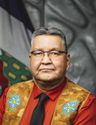

Thank you, Mr. Speaker. I agree with my colleagues as well. We have talked about this for some time, and I think it's important that, you know, we look at how we're going to deal with our first responders in our communities. And back home, I've got some first responders as well that need help, and we need to look at a way to deal with those issues. So this is just the beginning. So I will be supporting this motion. Thank you.
Debates of June 3rd, 2026
This is page numbers of the Hansard for the 20th Assembly, 1st Session. The original version can be accessed on the Legislative Assembly's website or by contacting the Legislative Assembly Library. The word of the day was know.
Topics
Motion 79-20(1): Consulting Paramedics on the Regulation of Paramedicine, Carried
Motions
Motion 79-20(1): Consulting Paramedics on the Regulation of Paramedicine, Carried
Motions
Motion 79-20(1): Consulting Paramedics on the Regulation of Paramedicine, Carried
Motions
Some Hon. Members
Question.
Motion 79-20(1): Consulting Paramedics on the Regulation of Paramedicine, Carried
Motions
Motion 79-20(1): Consulting Paramedics on the Regulation of Paramedicine, Carried
Motions
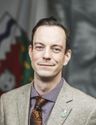
Kieron Testart Range Lake
Thank you, Mr. Speaker. Mr. Speaker, I think it's important when we are able to, to clarify positions and correct misinformation.
So to be clear, volunteer firefighters and medical first responders are not required to be regulated or certified as licensed paramedics anywhere in Canada, and I don't know why we would start to do that in the Northwest Territories. Instead, volunteers operate under a completely different regulatory framework, scope of practice, and oversight system. They're usually trained only to the level of standard first aid, CPR, AED, or specific medical first response technique. Their focus is on rapid intervention, scene assessment, and stabilizing a patient until an ambulance arrives. Paramedics, on the other hand, are regulated professionals trained in advanced pre-hospital care. This ranges from primary care paramedics, or PCPs, to advanced care paramedics, or ACPs. They can start IVs, interpret ECGs, intubate patients, and administer a wide range of controlled medications.
In most Canadian jurisdictions, provinces and territories, paramedic is a protected title. To practice, an individual must graduate from an accredited college program and be registered with a provincial regulatory body or college. They hold individual professional liability and are bound by a strict provincial scope of practice; however, volunteer firefighters and medical first responders are not individually registered with a paramedic college. Instead, they operate under the authority and insurance of their specific host agency such as a municipal fire department, a community government, or an organization like St. John's Ambulance. Their license to practice is tied directly to the agency's medical oversight protocol and local medical directors.
So to be clear, Mr. Speaker, we are not calling for every volunteer to be regulated as a paramedic. That would not make any kind of sense. This is about the trained paramedics who are operating in the Northwest Territories in unregulated environmentd that are -- have -- and from a government that has announced they will become increasingly more part of health care in the Northwest Territories, especially in small communities.
So I have not seen any evidence that the healthcare system is promising volunteer paramedics to be part of primary health care in small communities. I've heard them say they want to use trained paramedics along the lines that I address. So there's a distinction between the two, and it's an important distinction. And I think, again, it's important to correct that so we all know what this motion is about and what it's not about.
Mr. Speaker, I detest the divide and conquer attitude of Yellowknife versus the small communities on anything we do in here. When we bring things forward, we are bringing them forward because they are territorial issues of interest or, and when they're specific to our communities we make them specific to our communities. That is -- and we'll debate motions about that in this sitting, Mr. Speaker. But this one is about the territory. It is not about pitting small communities against large communities. It's about doing -- making smart public policy that where we've recognized a gap, and I thank the Members for speaking to it.
And to my friend from Inuvik Boot Lake, even though these are non-binding debates, let me say, for many of us this is what government should be doing, even if they don't do it at the end of the day. So even if there is not a binding resolution at the end of the day, it still has value because they show constituents and members of the public the direction that their elected leaders want to take and the support for those ideas that are in this chamber. And I think that's an important distinction to make as well. Yes, if it were up to me, I would love to be able to move motions and boss the government around, but that's not how our system works. But it is an important tool as a vehicle to bring policy alternatives to the floor of the House. Because we don't have a lot of opportunities to do that in a consensus government, and motions are the best way to achieve that. And if we're going to present an alternative to the approaches of government that we disagree with, and not because the government is particularly bad or wrong or anything like that but just they're moving in the wrong direction, then a motion is a way to take time to do that.
So -- and by the way, every parliament does this, Mr. Speaker. Motions are an important tool for any legislature. So that being said, I support motions. I support this motion. I support paramedics. I am glad to hear support from my colleagues on this. But I just want to be crystal clear here. This is not trying to bring a Yellowknife issue onto the floor by stealth. This is about the territory. It's about everyone in the territory, and it's motivated by bringing a profession that is regulated everywhere else in the country into small communities practice without the protections that other jurisdictions in Canada enjoy that our small community members should be enjoying as well.
With that, I would ask for a recorded vote. Thank you.
Motion 79-20(1): Consulting Paramedics on the Regulation of Paramedicine, Carried
Motions
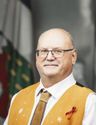
The Speaker Shane Thompson
Thank you, Member from Range Lake. Member from Range Lake has asked for a recorded vote. All those in favour, please stand.
Recorded Vote
Motions
Clerk Of The House Mr. Glen Rutland
The Member for Range Lake. The Member for Inuvik Boot Lake. The Member for Monfwi. The Member for Frame Lake. The Member for Great Slave. The Member for Mackenzie Delta. The Member for Yellowknife North. The Member for Tu Nedhe-Wiilideh. The Member for Sahtu. The Member for Yellowknife Centre.
Recorded Vote
Motions
Recorded Vote
Motions
Clerk Of The House Mr. Glen Rutland
The Member for Yellowknife South. The Member for Kam Lake. The Member for Hay River North. The Member for Hay River South. The Member for Inuvik Twin Lakes. The Member for Nunakput. The Member for Deh Cho.
Recorded Vote
Motions
The Speaker Shane Thompson
Colleagues, ten in favour. Zero opposed. Seven abstaining. The motion is carried.
---Carried
Motions. Notices of motion for the first reading of bills. First reading of bills. Minister of Infrastructure.
Wrong, I just want to throw a curve to the infrastructure Minister.
Bill 53: Supplementary Appropriation Act (Operations Expenditures), No. 1, 2026 2027
First Reading Of Bills
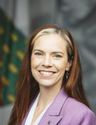
Caroline Wawzonek Yellowknife South
Mr. Speaker, I wish to present to the House Bill 53, Supplementary Appropriation Act (Operations Expenditures), No. 1, 2026-2027, to be read for the first time. Thank you, Mr. Speaker.
Bill 53: Supplementary Appropriation Act (Operations Expenditures), No. 1, 2026 2027
First Reading Of Bills
June 3rd, 2026
The Speaker Shane Thompson
Thank you, Minister. Pursuant to Rule 8.2(3), Bill 53 is deemed to have had first reading and is ready for a second reading.
First reading of bills. Second reading of bills. Member from Frame Lake.
Bill 51: An Act to Amend the Local Authorities Election Act, Carried
Second Reading Of Bills
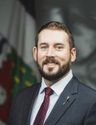
Julian Morse Frame Lake
Thank you, Mr. Speaker. Mr. Speaker, I move, seconded by the Member for Range Lake, that Bill 51, An Act to Amend the Local Authorities Election Act, be read for a second time.
This bill would allow district education authorities to provide for bylaws for voting by mail-in ballot or by casting of ballots at the office of the returning officer and for the counting of ballots at a voting station by means of vote counting machines.
Bill 51: An Act to Amend the Local Authorities Election Act, Carried
Second Reading Of Bills
The Speaker Shane Thompson
Thank you, Member from Frame Lake. The motion is in order. To the principle of the bill. Member from Frame Lake.
Bill 51: An Act to Amend the Local Authorities Election Act, Carried
Second Reading Of Bills
Julian Morse Frame Lake
Thank you, Mr. Speaker. Mr. Speaker, at its core, Bill 51 is about making it easier for people to participate in local decision-making. It is about removing unnecessary barriers to voting and making elections more straightforward, both for voters and for those responsible for running them. This bill gives district education authorities the same options that municipalities already have, facilitating alignment of administration where elections are run together. It does not require DEAs to use these tools, to be clear, but certainly gives them the flexibility to do so where it makes sense. This is especially important in communities where efforts are already underway to coordinate municipal and district education authorities' elections. Ultimately, this bill is about improving access, reducing administrative burden, and supporting voter turnout. So it modernizes the system in a simple and practical way while still allowing each district education authority to choose what works best for their community. So I look forward to working with my colleagues to move this important and simple amendment through the House. This is definitely an opportunity for the Assembly to quickly resolve a legislative barrier standing in the way of our education authorities, and I thank my colleagues for their support in bringing it forward.
And if I may, Mr. Speaker, I just want to put a little shout-out to our unsung heroes of our legislative process, the legislative drafters and the various staff working day and night in the background to help keep our system moving forward. I dearly appreciate their work.
And last but not least, Mr. Speaker, I wanted to thank the school boards for bringing this idea forward and encouraging MLAs to make this change. So thank you, Mr. Speaker.
Bill 51: An Act to Amend the Local Authorities Election Act, Carried
Second Reading Of Bills
Bill 51: An Act to Amend the Local Authorities Election Act, Carried
Second Reading Of Bills
Some Hon. Members
Question.
Bill 51: An Act to Amend the Local Authorities Election Act, Carried
Second Reading Of Bills
The Speaker Shane Thompson
The question has been called. All those in favour? All those opposed? All those abstaining? Motion carried. Bill 51 has been deemed read for a second time.
---Carried
Member from Frame Lake.
Bill 51: An Act to Amend the Local Authorities Election Act, Carried
Second Reading Of Bills
Julian Morse Frame Lake
Thank you, Mr. Speaker. Mr. Speaker, I seek unanimous consent to waive Rule 8.2(7) and have Bill 51 move to third reading later today. Thank you, Mr. Speaker.
Bill 51: An Act to Amend the Local Authorities Election Act, Carried
Second Reading Of Bills
The Speaker Shane Thompson
Thank you, Member from Frame Lake. Member from Frame Lake is seeking unanimous consent to move to third reading. Any nays? Seeing no nays, the bill will be ready for third reading.
Second reading of bills. Minister of Finance.
Bill 53: Supplementary Appropriation Act (Operations Expenditures), No. 1, 2026 2027, Carried
Second Reading Of Bills
Caroline Wawzonek Yellowknife South
Mr. Speaker, I move, seconded by the Honourable Member for Kam Lake, that Bill 53, Supplementary Appropriation Act (Operations Expenditures), No. 1, 2026-2027, be read for the second time.
This bill makes supplementary appropriations for operations expenditure of the Government of the Northwest Territories for the 2026-2027 fiscal year. Thank you, Mr. Speaker.
Bill 53: Supplementary Appropriation Act (Operations Expenditures), No. 1, 2026 2027, Carried
Second Reading Of Bills
Bill 53: Supplementary Appropriation Act (Operations Expenditures), No. 1, 2026 2027, Carried
Second Reading Of Bills
Some Hon. Members
Question.
Bill 53: Supplementary Appropriation Act (Operations Expenditures), No. 1, 2026 2027, Carried
Second Reading Of Bills
The Speaker Shane Thompson
Question has been called. All those in favour? All those opposed? All those abstaining? The motion is carried. Bill 53 has been read a second time and is ready for third reading.
---Carried
Colleagues, we're going to take a brief break.
---SHORT RECESS
Bill 53: Supplementary Appropriation Act (Operations Expenditures), No. 1, 2026 2027, Carried
Second Reading Of Bills
The Speaker Shane Thompson
Colleagues, thanks for indulging me for a brief break. Second reading of the bills. Minister of Infrastructure