

Thank you, Mr. Speaker. I'm really glad to hear the Minister spoke with the Indigenous patient advocates and had a good half day session. That's really positive to hear. And that she's taken the time to review the report herself. Can the Minister tell me if there are any actions in the report that she sees that are not going to be implemented and, if so, why? Thank you, Mr. Speaker.
Debates of Oct. 20th, 2025
This is page numbers of the Hansard for the 20th Assembly, 1st Session. The original version can be accessed on the Legislative Assembly's website or by contacting the Legislative Assembly Library. The word of the day was know.
Topics
Question 796-20(1): Northwest Territories Healthcare Excellence Canada's Cultural Safety Design Collaborative Team Report: “Honouring the Voices of Indigenous Peoples - Actions for Change in the Northwest Territories Health Care System”
Oral Questions
Question 796-20(1): Northwest Territories Healthcare Excellence Canada's Cultural Safety Design Collaborative Team Report: “Honouring the Voices of Indigenous Peoples - Actions for Change in the Northwest Territories Health Care System”
Oral Questions

Lesa Semmler Inuvik Twin Lakes
Thank you, Mr. Speaker. Mr. Speaker, this is a report from their internal division to their executive as they are through the authority. So this report is actually going to -- once they get it to the executive, the NTHSSA, then that's where they will define on where and what their implementation plan is. I haven't seen the implementation. I haven't seen what they're accepting and not accepting or what they're going to continue to work on or where they may need more information. That's usually how those types of plans come. I haven't seen it yet, so I can't speak to any of that yet. However, when I do have the information, you know, I'll be more than willing to have a conversation or share that with the Member. Thank you, Mr. Speaker.
Question 796-20(1): Northwest Territories Healthcare Excellence Canada's Cultural Safety Design Collaborative Team Report: “Honouring the Voices of Indigenous Peoples - Actions for Change in the Northwest Territories Health Care System”
Oral Questions
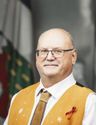
The Speaker Shane Thompson
Thank you, Minister of Health and Social Services. Oral questions. Member from Monfwi.
Question 797-20(1): Impacts of Wildfire on Tlicho Communities
Oral Questions

Jane Weyallon Armstrong Monfwi
Thank you, Mr. Speaker. Mr. Speaker, our people deserve to feel safe in their homes and not live in fear every summer. With that in mind, Mr. Speaker, in 2005 Tlicho Agreement was ratified and came into effect. Since that time, numerous wildfires have burned over Tlicho lands and threatened Tlicho communities. I would like to ask the Minister how many hectares of land -- he might not have the answer, but I'm going to ask him. How many hectares of land have burned within the Tlicho region since 2005? Thank you.
Question 797-20(1): Impacts of Wildfire on Tlicho Communities
Oral Questions
Question 797-20(1): Impacts of Wildfire on Tlicho Communities
Oral Questions
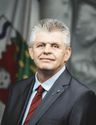
Jay MacDonald Thebacha
Thank you, Mr. Speaker, and thank you to the Member for the question. Not data that I have off the top of my head, but I'm happy to collect that and return a response to the Member. Thank you, Mr. Speaker.
Question 797-20(1): Impacts of Wildfire on Tlicho Communities
Oral Questions
Jane Weyallon Armstrong Monfwi
Thank you. Mr. Speaker, readiness and preparedness are critical to wildfire management; however, the evacuation that occurred this summer suggests that the government's wildfire operations are still too reactive in nature. What specific steps is the government taking to improve early detection and response measures so communities are not forced to evacuate at the last minute? Thank you.
Question 797-20(1): Impacts of Wildfire on Tlicho Communities
Oral Questions
The Speaker Shane Thompson
Member from Monfwi, that there is a new line of questioning so I will move you on -- that's going to a different Minister. So I will put you on the list so you're back on right away. Thank you.
Oral questions. Member from Deh Cho.
Question 798-20(1): Wildfire Response Assessments
Oral Questions
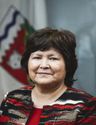
Sheryl Yakeleya Deh Cho
Thank you, Mr. Speaker. My questions are for the Minister of ECC.
What criteria does the Department of Environment and Climate Change use to determine when a wildfire poses sufficient risk to warrant evacuation? Thank you, Mr. Speaker.
Question 798-20(1): Wildfire Response Assessments
Oral Questions
Question 798-20(1): Wildfire Response Assessments
Oral Questions
Jay MacDonald Thebacha
Thank you, Mr. Speaker. Mr. Speaker, within the wildfire management policy, there's a number of criteria that are looked at and every fire that is detected, a new fire gets some form of action. So there's -- some of the factors that come into play are location of the fire, available resources, proximity to values, proximities to communities. So as these fires start on the landscape, the fire experts within the department take a look at the current situation. They go out, a fire assessment is done. That information is then taken and put into an initial action plan which is used to determine whether or not that fire receives an initial response, a sustained action response. And that really depends on, like I said, many of the factors that I recently raised. Thank you, Mr. Speaker.
Question 798-20(1): Wildfire Response Assessments
Oral Questions
Sheryl Yakeleya Deh Cho
Thank you, Mr. Speaker. Okay, how did the department work with the Department of MACA and the community of Fort Providence to determine when to issue the community evacuation order? Thank you, Mr. Speaker.
Question 798-20(1): Wildfire Response Assessments
Oral Questions
Jay MacDonald Thebacha
Thank you, Mr. Speaker. Mr. Speaker, environment and climate change does daily assessments of all fires and specifically ones that are a threat to values or communities. Those daily assessments, that information is gathered. There are multiple joint agency meetings that take place daily where that information is relayed to all invested parties. MACA would work closely with the community in deciding when the actual evacuation event would take place. Thank you, Mr. Speaker.
Question 798-20(1): Wildfire Response Assessments
Oral Questions
Question 798-20(1): Wildfire Response Assessments
Oral Questions
Sheryl Yakeleya Deh Cho
Thank you, Mr. Speaker. Given that information, what improvements is the department making to its wildfire detection assessment and response protocols to prevent delays in evacuation orders and to better protect communities from imminent wildfire threats? Thank you, Mr. Speaker.
Question 798-20(1): Wildfire Response Assessments
Oral Questions
Jay MacDonald Thebacha
Thank you, Mr. Speaker. Mr. Speaker, after the 2023 after-action review, there was 25 recommendations that were received by the department, all of which were accepted in principle. So some of the major points I'd like to raise here, work that's ongoing has increased:
- We've increased the number of fire crews, aircraft equipment available across the NWT.
- We're mobilizing crews and aircraft earlier in the season to complete training ahead of the earlier start to the wildfire season.
- We're conducting aerial surveys and thermal imaging to detect and address holdover fires at the beginning of the season to ensure we're ahead of those;
- Hiring a dedicated safety officer to ensure that the physical and mental health of our staff is top of mind;
- Installing backup communication networks to ensure that we have operational capability and if we run into a similar incident like we did in 2023 when our internet cable went down.
- We established new qualification and certification standards for wildfire response.
- We're expanding the GNWT's internal capacity to deliver the Incident Command System.
- We're cross-training between structural and ECC firefighters to enhance coordination of the wildland urban interface; and,
- We've significantly improved our communication with community leadership and with other departments within our government and others.
Thank you, Mr. Speaker.
Question 798-20(1): Wildfire Response Assessments
Oral Questions
The Speaker Shane Thompson
Thank you, Minister of ECC. Oral questions. Member from Inuvik Boot Lake.
Question 799-20(1): Sport Funding in the Northwest Territories
Oral Questions
October 20th, 2025

Denny Rodgers Inuvik Boot Lake
Thank you, Mr. Speaker. Mr. Speaker, following up on my Member's statement, I have questions for the Minister of MACA.
As I mentioned in my Member's statement, Mr. Speaker, I know my colleague, the Member from Range Lake, had brought to the House many times the issue of iGaming and the potential for revenue around that. I'd like to ask the Minister, can we get an update on the status of the work on the legislative framework around iGaming. Thank you, Mr. Speaker.
Question 799-20(1): Sport Funding in the Northwest Territories
Oral Questions
The Speaker Shane Thompson
Thank you, Member from Inuvik Boot Lake. Minister of Municipal and Community Affairs.
Question 799-20(1): Sport Funding in the Northwest Territories
Oral Questions
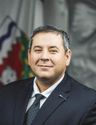
Vince McKay Hay River South
Thank you, Mr. Speaker. We're in continued talks about the iGaming topic. I think there's more to the iGaming than just iGaming. I think we have a lot of things going on with even land-based gaming type stuff. So there's a lot going on with that. We haven't reached the legislative proposal stuff yet, but there is a lot of internal workings right now on how to pursue and move this concept forward. Thank you, Mr. Speaker.
Question 799-20(1): Sport Funding in the Northwest Territories
Oral Questions
Denny Rodgers Inuvik Boot Lake
Thank you, Mr. Speaker. So from what I'm hearing is we're not super close to that, having that work prepared yet. Something, certainly, we'd like to see in this Assembly.
Mr. Speaker, then if the Minister doesn't feel that we may get iGaming and get that revenue stream flowing, does he have a proposal, or will he be bringing forward other opportunities to ensure that we're funding the physical activity, sport, and recreation fund appropriately? Thank you, Mr. Speaker.
Question 799-20(1): Sport Funding in the Northwest Territories
Oral Questions
Vince McKay Hay River South
Thank you, Mr. Speaker. We have a few plans bringing forward to cover that fund off. One of them is obviously submitting to the government for more funding to help support that. However, we also need to fine tune what we're doing, you know, looking at expenses, looking at what we're paying for in order to contribute to the actual fund itself to make sure that the funds are actually getting to the athletes and their abilities to participate in sports and games. Thank you, Mr. Speaker.
Question 799-20(1): Sport Funding in the Northwest Territories
Oral Questions
The Speaker Shane Thompson
Thank you, Minister of Municipal and Community Affairs. Final supplementary. Member from Inuvik Boot Lake.
Question 799-20(1): Sport Funding in the Northwest Territories
Oral Questions
Denny Rodgers Inuvik Boot Lake
Thank you, Mr. Speaker. And certainly, yes, I mean, that is the goal is to ensure that funding gets to the athletes, particularly the athletes in the smaller communities. And I spoke in my Member's statement about the spirit of the Arctic Winter Games. I appreciate we have a lot of high-level athletes in this territory. They do have other venues to go through and other options if they want to pursue a career or pursue, you know, that avenue for their sport. But participation is important, Mr. Speaker. So I know we have a seat on the international committee, the Arctic Winter Games international committee. Would the Minister commit to ensuring that that spirit and that we are creating sports that open up doors for athletes in all our communities so they can participate and take advantage of this oftentimes once in a lifetime opportunity for those youth. Thank you.
Question 799-20(1): Sport Funding in the Northwest Territories
Oral Questions
Vince McKay Hay River South
Thank you, Mr. Speaker. Yes, rest assured to the Member I've been echoing his statement quite a bit to the international games committee. Most recently in Alaska when I was there during a meeting, you know, I've requested -- or I encouraged them to look at how we do the Arctic Winter Games, participation-wise, how often the games are held. You know, these are important things to help ensure that the Arctic Winter Games are -- first of all, the ability to afford them is there but that we're able to hold them in other communities throughout the Northwest Territories. You know, it's not only us as a territorial government; it's also the International Games Committee that has to make some tough decisions and I hope that these decisions, you know, reflect the need of getting communities and small communities to the Arctic Winter Games to participate. I myself have been very passionate about having small communities participate in the Arctic Winter Games. I know there's been some question about it, but rest assured that when I'm talking about Arctic Winter Games and participation, I do that with the communities in mind. Thank you, Mr. Speaker.