
Thank you, Mr. Speaker. Mr. Speaker, the scope of practice of paramedics is unlikely to be changed without legislation to guide it. Is the department planning on bringing forward a legislative proposal or legislative changes that would bring paramedics into the Health Professions Act? Thank you.
Debates of Oct. 20th, 2025
This is page numbers of the Hansard for the 20th Assembly, 1st Session. The original version can be accessed on the Legislative Assembly's website or by contacting the Legislative Assembly Library. The word of the day was know.
Topics
Question 802-20(1): Regulation of Paramedics
Oral Questions
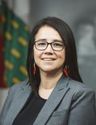
Lesa Semmler Inuvik Twin Lakes
Thank you, Mr. Speaker. That would be part of this work. Thank you, Mr. Speaker.
Question 802-20(1): Regulation of Paramedics
Oral Questions
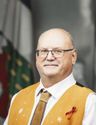
The Speaker Shane Thompson
Thank you, Minister of Health and Social Services. Final supplementary. Member from Range Lake.
Question 802-20(1): Regulation of Paramedics
Oral Questions

Kieron Testart Range Lake
Thank you, Mr. Speaker. Well, one of the reasons I'm interested is I've been speaking with paramedics and they'd like to be regulated and they'd like to see an Act. So lest a Member bring it forward in the Private Member's bill, which probably isn't what the Minister wants to hear, when can we get assurances that there will be a bill in this House to review, to vote on, that will regulate paramedics and allow them to do the jobs that are so crucial for our communities, especially our small communities? Thank you.
Question 802-20(1): Regulation of Paramedics
Oral Questions
Lesa Semmler Inuvik Twin Lakes
Thank you, Mr. Speaker. Mr. Speaker, and I think this is a -- this is why we're looking at how can we implement paramedics into the small communities because currently right now, you know, they work in larger regional centres and not necessarily -- what has happened is over the summer months, we do contract paramedics that are on standby to be deployed to the health centres if needed, an evacuation in a community. And so since we have them -- and usually summertime is when we have our reduced services -- they've been in the clinics doing triaging and helping the CHN, working alongside the CHN. I cannot commit to saying that that -- there's going to be legislation. You know, I'm looking at the legislation and the regs that we want to have to be able to work towards and implement in this government. The department is a small department to try and implement things. It's one thing to pass legislation and then it's to implement it, then it sits there. So what I would like to do is get the current legislative list through this House before the end of this government so that way we can have the implementation plan ready to go with them as well. Thank you, Mr. Speaker.
Question 802-20(1): Regulation of Paramedics
Oral Questions
The Speaker Shane Thompson
Thank you, Minister of Health and Social Services. Oral questions. Member from Monfwi.
Question 803-20(1): Wildlife Management Strategy
Oral Questions

Jane Weyallon Armstrong Monfwi
Thank you, Mr. Speaker. I still had one more question for the ECC. But I do have three questions, two for MACA and one for ECC. So I can get it back on the list again for MACA.
One is for ECC, given the increasing frequency of evacuations and climate-driven wildfire threats, what is the GNWT timeline for implementing a fully proactive wildfire management strategies that prioritize prevention over response? Thank you.
Question 803-20(1): Wildlife Management Strategy
Oral Questions
Question 803-20(1): Wildlife Management Strategy
Oral Questions
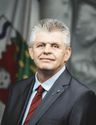
Jay MacDonald Thebacha
Thank you, Mr. Speaker. Mr. Speaker, happy to stand here and say that we've already started implementing that, and that has been certainly part of the work that we have done over the last number of years as the threat and the impact of climate change, you know, is affecting us as a territory. I think one thing that's really clear here is that we are a vast territory in land mass but we are small in population, and the remoteness of our communities certainly is one of the very challenging barriers that we face when it comes to, you know, being responsive to wildland fire. We have small resources stretched over a vast area. You know, we've got a lot of programs on the go through collaboration and funding arrangements with the federal government for FireSmart initiatives, with community governments, with Indigenous governments, with the population general, and ensuring that as we move forward with our programming that we're communicating with all of our Indigenous government partners, Indigenous organizations, and communities to maximize those resources to ensure that we are very proactive in our response to wildfire prevention in the territory. Thank you, Mr. Speaker.
Question 803-20(1): Wildlife Management Strategy
Oral Questions
The Speaker Shane Thompson
Thank you Minister of ECC. Do you have another question for ECC, Member from Monfwi?
Question 803-20(1): Wildlife Management Strategy
Oral Questions
Question 803-20(1): Wildlife Management Strategy
Oral Questions
Question 804-20(1): Supports for Community Health Nurse
Oral Questions
October 20th, 2025

Shauna Morgan Yellowknife North
Thank you, Mr. Speaker. I wanted to ask further questions of the Minister of Health and Social Services, this time about supports available for community health centre nurses. So, first, how is either HSS or the health authority working to rebuild the successful model of continuous physician care that was being practiced five years ago, for example, in Behchoko and Fort Good Hope where a designated physician would be on call to support the community health nurse for non-emergent matters seven days a week? Thank you, Mr. Speaker.
Question 804-20(1): Supports for Community Health Nurse
Oral Questions
The Speaker Shane Thompson
Thank you, Member from Yellowknife North. Minister of Health and Social Services.
Question 804-20(1): Supports for Community Health Nurse
Oral Questions
Lesa Semmler Inuvik Twin Lakes
Thank you, Mr. Speaker. And thank you to the Member for this question. You know, I know that right now Fort Good Hope, the physician model is currently being under evaluation now. The pilot has been ongoing. And when I was into the community and I even met with the physician that was the lead on that, they are hopefully to have the review completed by April 2026, and that work is actually going to be helping us to form, you know, when we do our -- with our model of care for small communities. As I said, improving the model of care in our small communities is and always the priority. And so as for the on call, I know I did raise it to ask questions just to -- because it was the first time, I've heard of it. I can follow up into it more to see when it stopped, why it stopped, or those kinds of information and behind that. Thank you, Mr. Speaker.
Question 804-20(1): Supports for Community Health Nurse
Oral Questions
Shauna Morgan Yellowknife North
Thank you, Mr. Speaker. So next, what options have been examined to take the pressure off community health nurses being on call after hours? For example, to have 8-1-1 or 9-1-1 or MED response field direct calls to what's now going to the on-call phone instead of community health nurses being the first point of contact after hours. So this could, for example, screen whether the call is actually an emergency, and it could help protect community health nurses if there are harassing phone calls that are coming. So what options are being examined to change the way on-call/after-hours calls are being fielded in small communities? Thank you, Mr. Speaker.
Question 804-20(1): Supports for Community Health Nurse
Oral Questions
Lesa Semmler Inuvik Twin Lakes
Thank you, Mr. Speaker. Mr. Speaker, at this point, there is no capacity to remove the responsibility from the CHN; however, you know, the CHN is still the most responsible and only provider able to handle this service within the current model of our -- the community model of care. But there are many different things that are going on right now, including primary care reform, Deh Cho's journey mapping, the work on small community model of care, which I spoke about in my statement today. We are improving continuity of core services delivering by both how other professions, like we just said, paramedics and LPNs can be implemented into the system. That is one of the areas where we are thinking that could be shared amongst, you know, the different health care providers because what is happening is, is the CHN is the one that's usually having to see them all hours of the night and then it closes the clinics the next day, and then they all get cancelled. So if we can have the paramedics being on call at night or somebody else, recognizing that community health nurses essentially cannot be replaced so we have to find better ways to support them. Thank you, Mr. Speaker.
Question 804-20(1): Supports for Community Health Nurse
Oral Questions
The Speaker Shane Thompson
Thank you, Minister of Health and Social Services. Final supplementary. Member from Yellowknife North.
Question 804-20(1): Supports for Community Health Nurse
Oral Questions
Shauna Morgan Yellowknife North
Thank you, Mr. Speaker. But to get clarification there, so obviously the community health nurse would have to be the one in a small community to offer the assistance or the care if they're the one in-charge. But when I'm wondering is whether the call could go through, for example, a 9-1-1 or an 8-1-1 just as, you know, people could call 9-1-1 in emergency and then that dispatcher would determine the nature of the emergency and then activate the appropriate emergency responder or person in-charge, such as the community health nurse, but having that extra screening could field out calls that are, you know, simply harassment or calls that are not an emergency to -- that the community health nurse would not have to respond to anyway but would avoid them having to be woken up in the middle of the night multiple times. Thank you, Mr. Speaker.
Question 804-20(1): Supports for Community Health Nurse
Oral Questions
Lesa Semmler Inuvik Twin Lakes
Thank you, Mr. Speaker. Mr. Speaker, we encourage all residents in the Northwest Territories to call 8-1-1 for non-emergent questions on their health or their family's health, and we encourage all Northwest Territories residents to call 9-1-1 first before calling, you know, the health centre. Health centres are generally used when -- and that was -- but the thing is, is the change. The change management in small communities is this has been the model for so long and that's where they're so used to calling that they don't call 8-1-1 and they don't call 9-1-1; they call the health centre. And so the health centre always has a nurse on call for those emergencies as well because when you call 8-1-1 or if you call 9-1-1 and they redirect it to MED response, then MED response will be calling the nurse anyway. So the nurse is always on call. Thank you, Mr. Speaker.
Question 804-20(1): Supports for Community Health Nurse
Oral Questions
The Speaker Shane Thompson
Thank you, Minister of Health and Social Services. Oral questions. Member from Monfwi.
Question 805-20(1): Wildfire Preparedness and Emergency Management
Oral Questions
Jane Weyallon Armstrong Monfwi
Thank you, Mr. Speaker. So my questions are to MACA, to MACA Minister.
So readiness and preparedness -- I'm going to say it again, readiness and preparedness are critical to wildfire management; however, the evacuations that occurred this summer suggest that the government's wildfire operation are still too reactive in nature. What specific step is the department taking to improve early detection and response measures, so communities are not forced to evacuate at the last minute? Thank you.
Question 805-20(1): Wildfire Preparedness and Emergency Management
Oral Questions
Question 805-20(1): Wildfire Preparedness and Emergency Management
Oral Questions
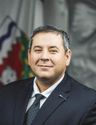
Vince McKay Hay River South
Thank you, Mr. Speaker. Emergencies happen anytime, anywhere, not just with wildfires. It is important that the territorial government supports local governments in being prepared for emergencies. MACA supports communities in emergency management and developing their community emergency management plans to ensure that they're prepared when an emergency strikes. If there's a flood and they need to evacuate, we need to have those preparedness documents prepared well in advance so that there isn't that instant reaction and place -- things are in place in order to assist a community when they're being evacuated. So this isn't a one-time thing. This is an ongoing thing. We need to make sure communities' emergency plans are up to date and that they're practiced so that when an emergency strikes, we know exactly what to do. And municipal and community affairs is there to support communities every step of the way. The communities are the ones that know their communities, and MACA will be there to support them. Thank you, Mr. Speaker.
Question 805-20(1): Wildfire Preparedness and Emergency Management
Oral Questions
Jane Weyallon Armstrong Monfwi
Thank you, Mr. Speaker. With climate change, wildfire is an issue, and for many of us in small communities and the water level low is a major concern. With that in mind, Mr. Speaker, when the decisions are made that lead to a community evacuation, it seems communities and their residents are caught off guard in most cases. Is the government contemplating changes to wildfire management that allows for more proactive communications to both communities and our residents so that they are more aware of threats of wildfire and the potential for community evacuation? Thank you.