This is page numbers of the Hansard for the 20th Assembly, 1st Session. The original version can be accessed on the Legislative Assembly's website or by contacting the Legislative Assembly Library. The word of the day was know.

Topics

Member's Statement 859-20(1): Celebration of Life of Dolphus “Duffy” Cazon
Members' Statements

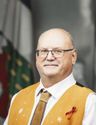
Shane Thompson

Shane Thompson Nahendeh

Colleagues, it is with great regret that I advise the House of the passing of Dolphus Henry (Duffy) Cazon. Today, it is not to mourn his passing but to celebrate a life full of joy, generosity, and simple pleasures that touched us all.

Born on July 30, 1953, in Fort Simpson to Baptiste and Marie Alphonsine Cazon, Duffy was one of 17 children who grew up embracing the land alongside his siblings -- running, laughing, and learning the rhythms of our northern home. From his young days, Duffy's love for music lit up the room. He'd practice that accordion with such passion and later in life nothing made him happier than rock n' roll tunes or a good kung fu movie. Give him a T-shirt from his favourite band or a DVD of Bruce Lee and his eyes would sparkle. Kathy Tsetso reminded us of his quirky love for chocolate-covered cherries, a mystery until we learned these were his mother's favorite. This story captures Duffy's loyalty, sentimental, and full of heart.

Duffy was generosity itself. If you needed something and he had it, it was yours - no questions asked. Much of his adult life brought physical challenges confining him to a motorized wheelchair but did that slow him down? Never. We'd spot him zipping through Fort Simpson, that big smile on his face, often on the hunt for his favourite snuff. Despite it all he stayed happy, positive, a familiar and beloved presence who lifted spirits wherever he went.

In his later years at the Fort Simpson long-term care facility, Duffy found a second family in the staff and residents who adored his humour and warmth. To them, we say thank you from the bottom of our hearts for your kindness and care. After a long battle with health issues, Duffy passed peacefully on December 17, 2025, at the age of 72 years young.

Duffy leaves a legacy of smiles, music, and open-hearted giving. He reminds us to find joy in the small things, to share freely, and to keep smiles through trials. Rest easy, Duffy, your spirit rolls on in our stories, our songs, and our community.

The family extends heartfelt thanks to the dedicated staff for their kindness and unwavering support during his time there. We know he is with his siblings and parents that predeceased him. He will be sadly missed.

Members' statements. Recognition of visitors in the gallery. For the people who are here, thank you very much for being present. We enjoy having -- oh, sorry. Member from Deh Cho.

Recognition Of Visitors In The Gallery

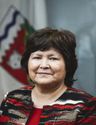
Sheryl Yakeleya

Sheryl Yakeleya Deh Cho

Thank you, Mr. Speaker. I'd like to recognize two pages from Kakisa. They're from a constituency, and they're Chloe Chicot and Leah Simba. Welcome to the Legislative Assembly.

Recognition Of Visitors In The Gallery

The Speaker

The Speaker Shane Thompson

Thank you. Recognition of visitors in the gallery.

Again, for those ones up in the gallery, thank you very much for attending. We appreciate you giving us the honour of representing the people of the Northwest Territories for the 20th Assembly. I hope you enjoy the proceedings, and it is always nice to see people in the gallery.

Recognition of visitors in the gallery. Replies to the budget address, day 4 of 7. Reports of committees on the review of bills. Reports of standing and special committees. Returns to oral questions. Acknowledgements. Oral questions. Member from Inuvik Boot Lake.

Question 978-20(1): Community Engagement on Makenzie Valley Highway
Oral Questions

Denny Rodgers

Denny Rodgers Inuvik Boot Lake

Thank you, Mr. Speaker. Following up to my Member's statement, I have questions for the Minister of Strategic Infrastructure, Energy, and Supply Chains.

Mr. Speaker, can the Minister provide an update on the community engagement sessions and what the department's hearing from the residents as they engage with the community. Thank you.

Question 978-20(1): Community Engagement on Makenzie Valley Highway
Oral Questions

The Speaker

The Speaker Shane Thompson

Thank you, Member from Inuvik Boot Lake. Minister responsible for Strategic Infrastructure, Energy, and Supply Chains.

Question 978-20(1): Community Engagement on Makenzie Valley Highway
Oral Questions

Caroline Wawzonek

Caroline Wawzonek Yellowknife South

Thank you, Mr. Speaker. I had to practice to get it right myself. So, Mr. Speaker, I am happy to have the chance to speak to this. There's been a lot of engagements over 30 years on this particular stretch of highway, but we are at a different stage now. Over the last few years now, we've heard communities say they wanted to have community readiness. They don't want to just have the road get built. They want to be ready, they want to participate, they want to be ready when it is built. So we are accelerating the work for community readiness. The team is there all week. They had two days in Norman Wells. I would encourage anyone in the Sahtu -- it's all over social media, I don't have it in front of me here, to check out the engagements happening in the evenings. Because we are looking to really meet with the communities to figure out what needs to happen so they can participate more fully and to be ready. Again, community readiness is a different stage. It usually happens towards the end of a project. We're moving it forward. We're confident enough to know that we need to get this done, and that's what they're there laying the foundation for, for community readiness, participate, and to be ready when that road gets built. Thank you.

Question 978-20(1): Community Engagement on Makenzie Valley Highway
Oral Questions

Denny Rodgers

Denny Rodgers Inuvik Boot Lake

Thank you, Mr. Speaker. Thank you for that. So around that, I guess that same theme of being involved, what opportunities, Mr. Speaker, will there be for Indigenous governments and local communities to stay involved as this project moves forward?

Question 978-20(1): Community Engagement on Makenzie Valley Highway
Oral Questions

Caroline Wawzonek

Caroline Wawzonek Yellowknife South

Thank you, Mr. Speaker. Mr. Speaker, there's already work underway in partnership with Indigenous governments. We had, in the fall, signed a work plan with the Pehdzeh Ki First Nation out of Wrigley and met just last week there. We're going back again to design the final routing. The final design of the routing will be done together so that we're making best use of traditional knowledge as well as with more western traditional science-based design. They're putting those two things together so we have the best possible route. But meanwhile, Mr. Speaker, again, looking to work on a traditional knowledge studies throughout the area to make so that the final design has best use but also that -- again, the community readiness is about making sure that there are corporations in those communities, corporations and individuals who might need further training, who know what's coming, who are ready when the project come forward, that they're there to participate, that they can make best use of different opportunities, and to work with the Indigenous governments who are land holders and traditional land users that, again, when this project moves forward that they are there to participate in those contracts, that their members are there to participate in those contracts, and, really, so that this -- the work starting from today and going forward is seamless, that everyone knows the timeline and everyone's ready to bid on contracts, to participate in contracts, and have whatever training is necessary to do so. Thank you.

Question 978-20(1): Community Engagement on Makenzie Valley Highway
Oral Questions

The Speaker

The Speaker Shane Thompson

Thank you, Minister responsible for Strategic Infrastructure, Energy, and Supply Chains. Final supplementary. Member from Inuvik Boot Lake.

Question 978-20(1): Community Engagement on Makenzie Valley Highway
Oral Questions

Denny Rodgers

Denny Rodgers Inuvik Boot Lake

Thank you, Mr. Speaker. And thank you for that. Mr. Speaker, my final question is when the residents of Inuvik head south with their commerce to head into the Yukon and head into possibly Alberta, Mr. Speaker, when can the Minister anticipate that they can put their left signal light on and take a left turn and head all the way down to Yellowknife instead, Mr. Speaker?

Question 978-20(1): Community Engagement on Makenzie Valley Highway
Oral Questions

Caroline Wawzonek

Caroline Wawzonek Yellowknife South

Thank you, Mr. Speaker. Mr. Speaker, I share this dream. Mr. Speaker, and I believe a lot of people in this territory share this dream. Mr. Speaker, I want to first emphasize we will be complying very much as proponents with the guidance of the board, the Mackenzie Valley Resource Management Board. They are the arbiters right now of making sure we go through an environmental process that provides mitigation steps as necessary for the road project right now to Norman Wells. We will continue to work with them on phase 2, which is that section that gets us all the rest of the way up to Inuvik. But we started those conversations. We want to work to ensure that we are making best use of available information. There was data gathered back in 2013. There's more work happening right now on a winter road routing as I understand from some of the Indigenous governments in the region. We can marshal all of that, and we can accelerate this project so that we are not waiting another 30 years or even another 10 years. If we can start construction on the southern portion in possibly as early as 2028-2029, then we can certainly be, I think, accelerating the northern portion similarly as well. Thank you.

Question 978-20(1): Community Engagement on Makenzie Valley Highway
Oral Questions

The Speaker

The Speaker Shane Thompson

Thank you, Minister responsible for Strategic Infrastructure, Energy, and Supply Chains. Oral questions. Member from Yellowknife North.

Question 979-20(1): Cultural Safety and Stabilizing Workforce in Healthcare System
Oral Questions

Shauna Morgan

Shauna Morgan Yellowknife North

Thank you, Mr. Speaker. I have questions for the Minister of Health and Social Services.

So the equitable access report that HSS released in November 2025, which the Minister's staff referred to as our roadmap for primary care moving forward, identified as one of its seven overarching goals, strong and lasting workforce, yet out of the list of 17 actions in the report none relate to stabilizing the health care workforce or recruitment and retention.

So my first question for the Minister: Is it possible to achieve culturally safe care with the current level and ever increasing portion of our health care workforce made up of temporary workers? Thank you, Mr. Speaker.

Question 979-20(1): Cultural Safety and Stabilizing Workforce in Healthcare System
Oral Questions

The Speaker

The Speaker Shane Thompson

Thank you, Member from Yellowknife North. Minister of Health and Social Services.

Question 979-20(1): Cultural Safety and Stabilizing Workforce in Healthcare System
Oral Questions

Lesa Semmler

Lesa Semmler Inuvik Twin Lakes

Thank you, Mr. Speaker. Mr. Speaker, a culturally safe healthcare system does not only rely on culturally safe training. Workforce instability affects continuity in care of patients, and hiring people alone doesn't guarantee cultural safe care. Cultural safety must be built in to the whole system so everybody provider can deliver it, even temporary staff. Our new primary and community care framework puts cultural safety and anti-racism at the centre of the framework and a culturally safe system that will attract staff who share those values which will boost morale, which will reduce burnout, which will improve long-term retention, Mr. Speaker.

Question 979-20(1): Cultural Safety and Stabilizing Workforce in Healthcare System
Oral Questions

Shauna Morgan

Shauna Morgan Yellowknife North

Thank you, Mr. Speaker. So if that equitable access report published last year is seen to be the primary care roadmap, why doesn't it include any specific actions related to health care workforce stabilization, recruitment, or retention? Thank you, Mr. Speaker.

Question 979-20(1): Cultural Safety and Stabilizing Workforce in Healthcare System
Oral Questions

Lesa Semmler

Lesa Semmler Inuvik Twin Lakes

Thank you, Mr. Speaker. Mr. Speaker, the roadmap was released -- and this is the -- as it is, it's a roadmap for the framework. And so we wanted to release the direction that we're going in prior to -- as the work is going on with the framework. So this report was meant to show work done to build the new primary care framework, and it doesn't list every action. The new framework, which will include the strategies to improve staff well-being, recruitment, retention, long-term workforce, key components include valuing Indigenous roles and Indigenous leadership on care teams, increasing Indigenous representation in the health care workforce, and this is essential for stabilizing the workforce supporting local Indigenous use and delivering culturally safe care. Thank you, Mr. Speaker.

Question 979-20(1): Cultural Safety and Stabilizing Workforce in Healthcare System
Oral Questions

The Speaker

The Speaker Shane Thompson

Thank you, Minister of Health and Social Services. Final supplementary. Member from Yellowknife North.

Question 979-20(1): Cultural Safety and Stabilizing Workforce in Healthcare System
Oral Questions

Shauna Morgan

Shauna Morgan Yellowknife North

Thank you, Mr. Speaker. Has the Indigenous patient advocate office, or the Office of Client Experience, been gathering any data on what percentage of complaints regarding patients being treated disrespectfully or insensitively by practitioners involve temporary staff who have been brought in to plug holes within the healthcare system? Thank you, Mr. Speaker.

Question 979-20(1): Cultural Safety and Stabilizing Workforce in Healthcare System
Oral Questions

Lesa Semmler

Lesa Semmler Inuvik Twin Lakes

Thank you, Mr. Speaker. Mr. Speaker, we do receive these complaints but don't track the complaints specifically about which staff are -- through the office, like if it's temporary or permanent. They do record general complaints related to discrimination, but they don't identify, as I mentioned, whether they're temporary or permanent staff. Thank you, Mr. Speaker.

Question 979-20(1): Cultural Safety and Stabilizing Workforce in Healthcare System
Oral Questions

The Speaker

The Speaker Shane Thompson

Thank you, Minister of Health and Social Services. Oral questions. Member from Yellowknife Centre.

Question 980-20(1): Accelerating Resource Development in the Northwest Territories
Oral Questions

February 10th, 2026

Robert Hawkins

Robert Hawkins Yellowknife Centre

Thank you, Mr. Speaker. I know the Premier, who I am going to direct my questions to, is going to say we're marshaling all resources and doing everything we can, but when we see Gahcho Kue do their announcement, we've seen that people accelerate the mining industry is shrinking and certainly the economy is on its rails, Mr. Speaker. I am asking the Premier what can he do to help fast track the relationships and the approval process we have with Indigenous governments and not give the old saying, we're doing what we can, we're doing this stuff now, because we need to see true results that are not clear and transparent to Northerners; we're truly doing everything we can. Thank you.

Question 980-20(1): Accelerating Resource Development in the Northwest Territories
Oral Questions

The Speaker

The Speaker Shane Thompson

Thank you, Member from Yellowknife Centre. Mr. Premier.

Question 980-20(1): Accelerating Resource Development in the Northwest Territories
Oral Questions

R.J. Simpson

R.J. Simpson Hay River North

Thank you, Mr. Speaker. So I believe the question is what are we doing to fast track these projects by working with Indigenous governments. And so to that I will say that we have put a lot of time and energy into improving the relationships with Indigenous governments. And as I travel around the territory, that's what I hear from many Indigenous governments, that we have improved those relationships, we've done that work, we've built that trust. And by doing so, we're able to combine forces and work together on different projects. Of course, we have the Arctic Economic and Security Corridor. We signed an MOU with the Yellowknives Dene and the Tlicho. We have good relationships with all of the Indigenous groups up and down the Mackenzie Valley when we're talking about the Mackenzie Valley Highway. We are -- we've increased the funding to help Indigenous governments participate in the regulatory process and to engage with exploration companies. And so there's been a lot of work. There's been a lot of trust built. And it's paying dividends. I would also have to mention, of course, that the NWT Council of Leaders travels together down to Ottawa, Indigenous leaders and the GNWT Cabinet, with a common message. So the work that we've done with Indigenous governments has been very important. It's one of the highlights of my time here in this term. It's one of the things I will look back on with a sense of pride. And so I can tell the Member that we are working hard on that aspect of ensuring that we have everything in place that we need to to advance the economy and bring new projects online. Thank you, Mr. Speaker.

Question 980-20(1): Accelerating Resource Development in the Northwest Territories
Oral Questions

Robert Hawkins

Robert Hawkins Yellowknife Centre

Mr. Speaker, it's difficult to feed your kids with trust, and it's hard to heat your home on hope, Mr. Speaker. Mr. Speaker, real tangible items would be to accelerate the MRAs. Mr. Speaker, real tangible ideas would be to accelerate maybe a junior investment program. Mr. Speaker, those are the types of acceleration processes I am asking for. Is there ways to accelerate that type of action to get better results or I should say any results. Thank you.