
Thank you. The motion is in order. To the motion.
Debates of March 5th, 2026
This is page numbers of the Hansard for the 20th Assembly, 1st Session. The original version can be accessed on the Legislative Assembly's website or by contacting the Legislative Assembly Library. The word of the day was know.
Topics
Committee Motion 163-20(1): Committee Report 37-20(1): Standing Committee on Social Development Report on Bill 34: Trespass to Property Act - Policy Guidance on Use of Trespass to Property Act, Carried
Consideration In Committee Of The Whole Of Bills And Other Matters
March 5th
Committee Motion 163-20(1): Committee Report 37-20(1): Standing Committee on Social Development Report on Bill 34: Trespass to Property Act - Policy Guidance on Use of Trespass to Property Act, Carried
Consideration In Committee Of The Whole Of Bills And Other Matters
March 5th
Some Hon. Members
Question.
Committee Motion 163-20(1): Committee Report 37-20(1): Standing Committee on Social Development Report on Bill 34: Trespass to Property Act - Policy Guidance on Use of Trespass to Property Act, Carried
Consideration In Committee Of The Whole Of Bills And Other Matters
March 5th
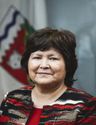
The Chair Sheryl Yakeleya
Question has been called. All those in favour? All those opposed? All those abstaining? The motion is carried.
---Carried
MLA for Monfwi.
Committee Motion 164-20(1): Committee Report 37-20(1): Standing Committee on Social Development Report on Bill 34: Trespass to Property Act - Government Response, Carried
Consideration In Committee Of The Whole Of Bills And Other Matters
March 5th

Jane Weyallon Armstrong Monfwi
Thank you, Madam Chair. Madam Chair, I move that this committee recommends that the Government of the Northwest Territories provide a response to this report within the 120 days.
Thank you, Madam Chair.
Committee Motion 164-20(1): Committee Report 37-20(1): Standing Committee on Social Development Report on Bill 34: Trespass to Property Act - Government Response, Carried
Consideration In Committee Of The Whole Of Bills And Other Matters
March 5th
Committee Motion 164-20(1): Committee Report 37-20(1): Standing Committee on Social Development Report on Bill 34: Trespass to Property Act - Government Response, Carried
Consideration In Committee Of The Whole Of Bills And Other Matters
March 5th
Some Hon. Members
Question.
Committee Motion 164-20(1): Committee Report 37-20(1): Standing Committee on Social Development Report on Bill 34: Trespass to Property Act - Government Response, Carried
Consideration In Committee Of The Whole Of Bills And Other Matters
March 5th
The Chair Sheryl Yakeleya
Question has been called. All those in favour? All those opposed? All those abstaining? The motion is carried.
---Carried
Thank you, committee. Do you agree that you have concluded consideration of Committee Report 37-20(1), Standing Committee on Social Development Report on Bill 34, Trespass to Property Act?
Committee Motion 164-20(1): Committee Report 37-20(1): Standing Committee on Social Development Report on Bill 34: Trespass to Property Act - Government Response, Carried
Consideration In Committee Of The Whole Of Bills And Other Matters
March 5th
Some Hon. Members
Agreed.
Committee Motion 164-20(1): Committee Report 37-20(1): Standing Committee on Social Development Report on Bill 34: Trespass to Property Act - Government Response, Carried
Consideration In Committee Of The Whole Of Bills And Other Matters
March 5th
The Chair Sheryl Yakeleya
Thank you, committee. We have concluded consideration of Committee Report 37-20(1), Standing Committee on Social Development Report on Bill 34, Trespass to Property Act.
What is the wish of the committee? I will go to the Member for Inuvik Boot Lake.
Committee Motion 164-20(1): Committee Report 37-20(1): Standing Committee on Social Development Report on Bill 34: Trespass to Property Act - Government Response, Carried
Consideration In Committee Of The Whole Of Bills And Other Matters
March 5th
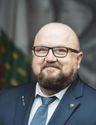
Denny Rodgers Inuvik Boot Lake
Thank you, Madam Chair. Madam Chair, I move the chair rise and report progress.
Committee Motion 164-20(1): Committee Report 37-20(1): Standing Committee on Social Development Report on Bill 34: Trespass to Property Act - Government Response, Carried
Consideration In Committee Of The Whole Of Bills And Other Matters
March 5th
The Chair Sheryl Yakeleya
There is a motion on the floor to report progress. The motion is in order and non-debatable. All those in favour? All those opposed? The motion is carried.
---Carried
I will now rise and report progress.
Report Of Committee Of The Whole
Report Of Committee Of The Whole
March 5th
Report Of Committee Of The Whole
Report Of Committee Of The Whole
March 5th
Sheryl Yakeleya Deh Cho
Thank you. Mr. Speaker, your committee has been considering Bill 34, Trespass to Property Act, Committee Report 37-20(1), Standing Committee on Social Development Report on Bill 34, Trespass to Property Act, and would like to report progress with six motions passed, and that Committee Report 37-20(1) is concluded and that Bill 34 is ready for third reading. And Mr. Speaker, I move that the report of the Committee of the Whole be concurred with. Thank you.
Report Of Committee Of The Whole
Report Of Committee Of The Whole
March 5th
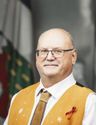
The Speaker Shane Thompson
Thank you, Member from Dehcho. Could I have a seconder? Inuvik Twin Lakes. You're just jumping up and down there so we'll get you there this time. All those in favour? All those opposed? All those abstaining? Motion carried.
Third reading of bills. Minister of Finance.
Bill 47: Appropriation Act (Operations Expenditures) 2026-2027, Carried
Third Reading Of Bills
March 5th
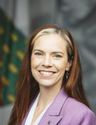
Caroline Wawzonek Yellowknife South
Mr. Speaker, I move, seconded by the honourable Member for Inuvik Twin Lakes, that Bill 47, Appropriations Act (Operations Expenditures), 2026-2027, be read for the third time. Mr. Speaker, I request a recorded vote. Thank you, Mr. Speaker.
Bill 47: Appropriation Act (Operations Expenditures) 2026-2027, Carried
Third Reading Of Bills
March 5th
The Speaker Shane Thompson
Thank you, Minister. The motion is in order. To the motion.
Member from Inuvik Twin Lakes. Or no, Inuvik Boot Lake. Let's try that one. I was going to let the Minister of Finance or Minister of Health and Social Services talk but we'll go with you there, Minister -- or Member. I just promoted you.
Bill 47: Appropriation Act (Operations Expenditures) 2026-2027, Carried
Third Reading Of Bills
March 5th
Denny Rodgers Inuvik Boot Lake
I've got a new lake; I am now a Minister. This is great.
UNIDENTIFIED MEMBER: Man, this budget negotiation has really gone off the rails.
Bill 47: Appropriation Act (Operations Expenditures) 2026-2027, Carried
Third Reading Of Bills
March 5th
Denny Rodgers Inuvik Boot Lake
Thank you, Mr. Speaker. It's definitely been a long day, certainly a long couple of weeks.
Mr. Speaker, I am pleased to speak to Bill 47, the Appropriation Act (Operations Expenditures) 2026-2027 today. As I rise, I want to take a moment to reflect on the work this Assembly has put into this year's budget and the process that got us there.
Our goal throughout this has been straightforward - to push for improvements that matter to Northerners, to ensure Cabinet hears the concerns of Regular Members, and to make sure this budget meets the moment our territory is facing.
Consensus government is collaborative. It is also demanding. It requires honesty, patience, and hard conversations. But when Members put in the work and ask the hard questions and push for better answers and when the government responds, Northerners see the benefit.
In her remarks, the Minister of Finance acknowledged that the work of Members shaped the budget before us and that through this process, the government added roughly $40 million in new investments directly responding to the priorities of the Assembly and for our constituents. Mr. Speaker, that is consensus government doing its job. I want to take a moment to speak to what we achieved together.
Throughout the review of the main estimates, Members pushed hard on the issues Northerners tell us matter most. One of the most significant areas we focused on was primary care reform. We pushed for real timelines, real staffing commitments, and real changes to how people access care. Cabinet agreed to release the integrated primary and community health care framework and roadmap this spring, establish consistent care teams, fill key vacancies, and expand nurse practitioner and community health nurse roles where communities face chronic gaps.
Mr. Speaker, one place where Northerners expect to see real progress is medical travel. Members have been clear. People need a system that is more predictable, coordinated, and easier to navigate. This budget does strengthen that work. The medical travel case management initiative will improve scheduling and reduce repeat trips, and the government plans to move it toward permanency in Budget 2027. Investments in telehealth, diagnostic capacity, and frontline training will also reduce unnecessary travel and support better care in communities. These are practical steps that Northerners will feel directly, and the kind of improvements this budget must continue to deliver.
Mr. Speaker, we also know that inclusive schooling and supports for children are important to Northerners.
We pushed government to strengthen supports in classrooms for students with diverse needs. The Minister committed to major enhancements in clinical services, early literacy screening and supports and transition pathways.
I note that early learning stability remains a huge concern. Members emphasized the need to protect early learning and child care programs despite uncertainty around federal funding. The Minister responded by confirming that continuity for families will be maintained.
Also, adult education and workforce preparation are central to meeting current labour needs and positioning people for emerging opportunities. Strengthening these pathways gives adults the skills, supports, and credentials required to move into work quickly and stay there.
Mr. Speaker, Members were clear that Northerners need real pathways into jobs that we have today. The Cabinet has committed to modernizing adult learning, strengthening early skills, and aligning post-secondary programs with workforce needs. We also heard confirmation that new teaching and social work programs will move ahead and that former CLC spaces, community learning centres, Mr. Speaker, will be available for Indigenous and community governments to deliver training with GNWT support. These are practical steps. Now they need to turn into results.
Major projects rely on the system being ready. Aligning processes, supports, and capacity keeps timelines tight and makes it easier to move from opportunity to action. Members pushed for clarity and timelines on the Mackenzie Highway, the Taltson Line, and the Arctic Economic and Security Corridor.
The Minister committed to clearer timelines, stronger coordination, and meaningful consultation with Indigenous partners and governments.
Mr. Speaker, I want to speak directly about LNG. LNG is a real opportunity for the Beaufort Delta.
The government confirmed it will work with the Inuvialuit Regional Corporation to advance the Mackenzie Delta LNG fault toward full feasibility. LNG is not a side conversation. It is central to economic growth, energy security, and the North's role in a changing world. To fully maximize these opportunities, we need the right people in the right places with the authority to make decisions when they're needed. Capacity isn't just about staffing. It's also having the right systems, funding, and supports aligned so work can move without delay.
Housing and land availability are core foundations for growth. Communities and regional centres need stable housing options, accessible land, and the internal capacity to plan, approve, and deliver projects. We pushed hard on expediting land transfers, improving community capacity, and housing availability. The Minister outlined steps to accelerate land transfers and support Indigenous-led housing. We are pleased to hear that this will include improving housing options for seniors in Enterprise.
Mr. Speaker, for the Tlicho region, work is underway towards a more administrative structure and better on-the-ground access to territorial services in the region.
Community safety remains a priority Members raised throughout the review of these estimates. The message was consistent. Residents need a more reliable safety presence in smaller communities and better access to justice services. Members pressed for improved RCMP presence in communities without detachments. The Minister committed to overnight accommodations in Gameti and Tsiigehtchic and improved access to justice services.
Mr. Speaker, as I have said here before, you cannot build a strong economy on weak health care, education, housing, or without Indigenous partnership. A strong economy requires strong services and strong relationships. If families can't get care, they won't stay. If workers can't find housing, they won't come.
If training doesn't match real jobs, employers remain short staffed. If governments aren't working together, decisions stall and opportunities are lost.
This budget can move us in that right direction but the real test is delivery.
The eyes of the country are on the Arctic. Significant defence spending is coming to the Beaufort Delta and across the NWT. NORAD modernization, Arctic readiness, operational hubs, these developments mean jobs, infrastructure, and long-term presence.
But opportunity does not wait and as I said in my reply to the budget address, if we're slow investment will go elsewhere. The budget work is done, Mr. Speaker, but the delivery work is not.
Mr. Speaker, Members will expect to see primary care improvements this year, supplementary appropriations that match commitments, real timelines for major projects, land moves so housing can be built, training aligned to real jobs and progress reports, not just intentions.
Members will monitor delivery against major project timelines, progress on land transfers, implementation of health care reforms, follow through on inclusive schooling, and action on community safety commitments. We are looking for steady, visible progress, not perfection but movement, and we will continue to work to hold the government to account.
Mr. Speaker, I want to be clear, this budget is just a first step. Now the government must show whether it can meet the moment. The pressures facing Northerners are real, and this budget has to translate into results that people can see and feel.
With this in mind, I want to thank the Minister, her officials, all the Members for the work done through this budget process. It was rigorous, sometimes difficult, but productive. Northerners expect us to make things better, not all at once, but year by year, decision by decision, budget by budget. This budget positions the NWT to move forward. Now government has to get the job done. Thank you, Mr. Speaker.
Bill 47: Appropriation Act (Operations Expenditures) 2026-2027, Carried
Third Reading Of Bills
March 5th
The Speaker Shane Thompson
Thank you, Member from Inuvik Boot Lake. To the motion. Member from Range Lake.
Bill 47: Appropriation Act (Operations Expenditures) 2026-2027, Carried
Third Reading Of Bills
March 5th
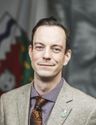
Kieron Testart Range Lake
Thank you, Mr. Speaker. That was a good summary from my colleague from Inuvik Boot Lake. However, the other we had a Member stand up and say they might have to be the unpopular one to bring some truths, and I guess it's my turn that day, Mr. Speaker.
Mr. Speaker, when we set out to -- when I cautioned this Assembly at the beginning of this budget process, it was to settle for low expectations and continue a culture of low expectations.
Unfortunately, we are there again. We need big, ambitious ideas to carry us into an uncertain future and, unfortunately, we are settling for what I would characterize as the bare minimum in many cases, at least when it comes to the concerns raised by Members.
Mr. Speaker, looking through the finance Minister's list of commitments that were given to Regular Members, starting with the -- which is the bulk of it. We have had a lot of words on the overall budget, but I think this is the area that Regular Members really seized on, first to health care. All this work that is being promised is an elaboration and further detail of work that was already underway, work that was underway by the people strategy, by the public administrator's work plan, by the system as it is currently being administered. We are just getting ahead of that by asking more questions, which are important questions to ask, but the results are what Northerners are looking for, and the results are still unclear to me.
I appreciate that there are commitments to staff every position that has been asked for. There are commitments to improve and enhance community wellness, especially in small communities, in health cabin communities which are the most removed from services. It is great that those commitments are there. Why wouldn't you say that if the positions are on the books, we are going to fund them? Of course you do, but we don't see new funding to support these things apart from what was already in the budget. There was new funding in that budget that I have already spoken to and supported. I support seeing more health care dollars. We just need more, Mr. Speaker.
Mr. Speaker, looking to CLCs, which is another live issue, the commitment is to provide, quote, the financial coverage of the associated O&M. It does not include programming dollars. So whilst the government over a two-year period will pay for the power, the fuel, keep the lights on, the actual programming has to come from somewhere else, and that means it's going to come from Indigenous partners who may or may not have access to those dollars. So the CLCs are by no means a done deal and not coming back to life anytime soon without additional investment and support. This is something Members have raised repeatedly. Stabilize the program until we have figured it out, until Indigenous governments and communities are in the position to take them over and operate them so they are effective, effective at providing the education and skills development that we need to support our workforce.
As to the economic pieces, the concerns around the regulatory system are still very live, including around mineral tenure, the Mineral Resources Act, which is still not in force. I've been calling for it to be expedited. The committee called for it to be expedited. We have no real change to that. We're still sticking to the same timelines, which is basically the end of this term. Now, the only commitment made was to bring the MARS system, the online map staking system, into the regulations, which I was under the impression, after asking about this repeatedly since getting elected, that it was going to get done. That was my assumption, and that was the assumption of many Members I've talked to, that it was going to get done. That was the commitment, and now it's just being reinforced. It's not a new commitment. It's a restatement of an old commitment.
And as for the Mackenzie Valley Highway, well the line here is important. Quote, while financial resources remain contingent on external funding. So we still don't have the dollars but we're going to put forward a plan.
And the last time this happened, we had a notional plan for housing and that caused such a frustration on this side of the House that we pushed and pushed and pushed until it got funded. So maybe that will happen again. But notional plans are not firm spending commitments, and they're not moving the economy forward.
It's more planning. It's more aspirations. And we need to set ambitious timelines for these projects, especially around the Arctic Economic and Security Corridor and the Taltson transmission line.
Government can do that. We have to work with Indigenous partners, absolutely. But telling our partners -- we need to move firmly. Our government has made this commitment to these deadlines; how do we work together to get there? That's the kind of leadership I am looking for. That's the kind of leadership many Northerners are looking for as well.
It's not disrespectful or colonial to say we have to meet the moment, and we're going to support every party going there, but this is what we're looking for. And we still don't know what those timelines are. I think perhaps -- oh, and to land tenure for economic development, there's commitments to free up land for housing, and I think that's an important commitment.
But the thing that Yellowknife MLAs have been pushing for years and years and years is access to municipal lands for the city and for all communities, not just Yellowknife, but it's a particularly acute problem in Yellowknife and it's something that we hear about all the time. We don't have commitments to speed up that process. We have commitments to make the processing applications, which is largely a backlog, 15 percent faster. Processing files could mean a no at the end of the day. We don't know whether it's going to speed things up or whether it's going to give certainty that the land will, in fact, be available for development, and that's the number one piece that addresses these defence commitments that we're being promised. The $10 billion of investment, we need land for that investment and it's not all available yet, despite the fact that successive Assemblies have passed motions and called loudly for municipal land transfers to happen across the board so all communities can develop at their own pace and choose how to grow their communities.
And again, this Member, at least, is tired of calling for the same thing and being told we're doing it and yet nothing happens, nothing changes.
Mr. Speaker, the $30 million, because that's the bulk of what's being promised here, the $30 million for the inclusive schooling review. Now, I am a big proponent of inclusive schooling and properly funding it. It's something school education bodies, at least in Yellowknife, have been calling for a very long time and there's been a gap, so I welcome the review. I think it's important. But I haven't read that review. In fact, no one on this side of the House has read that review. So I find it a little confusing that we're being told we push for this. In fact, the quote, the $30 million commitment to inclusive schooling stands as one of the clearest examples of how Member concerns translate directly into approved services for Northerners. But we didn't ask for $30 million.
$30 million was offered when we said please make sure you strengthen inclusive education based on the review you're doing. So why didn't we get the $1 million for the RCMP crisis intervention team? Why didn't we get the $700,000, the Dene Nation to move forward on housing? Other things Members have raised on the floor.
Those are much smaller asks, but we get $30 million, something we didn't ask for that we welcome, but I would suspect these were already plans, planned expenditures that happened to align with an ask, which is a great win for Members if they want to take it. But there's a number of things that weren't addressed. There's a number of things that continue to frustrate my constituents and frustrate Members.
A compassionate medical travel policy. I have publicly said I won't support spending until we see this put in place. There are going to be costs associated with it, but they're costs I am willing to pay and costs the public wants this government to pay. And the fact that we, again, continue to pass motions calling for it. We continue to make statements. There's news coverage on it. There are more stories out there than I've even heard, but I know that they're out there. I know I work closely with my colleagues who have raised this as well, affecting everyone from, you know, people in Yellowknife to people in the smallest remote communities. And now there are questions around treaty rights being raised as well.
So this is -- we desperately need to do this. And having a case management team is important. That's a first step. But the policy piece, which we've clearly articulated, is not being addressed. It continues to be ignored. And the problems continue piling up.
A child and youth advocate. I mean, I was really taken, I thank the House for passing that motion and my colleagues who spoke to it. You know, there was one line that really stuck with me and stuck with me since we had that debate. No is not an option. And I agree wholeheartedly. No is not an option. We need this service. We're the only one who doesn't have it. At a fractional cost of the value it provides, of the value for money it provides to taxpayers and, more importantly, the tremendous value it provides to children and youth in the jurisdictions where it's present. There's many ways we could do this. And again, it is not a $30 million ask. Do we get that? No. Despite it being one of the top asks of the committee.
I will also speak to one other thing that I feel strongly about.
The House also passed a motion calling for a dedicated emergency management agency. This is something that has been recommended by at least two independent reviews of the emergency management system. I know the government's response on this. But again, if I am going to support a budget I want to see the government following the advice of the experts it pays for and the advice that is being given by the House.
And yes, a non-binding motion, but a very clearly articulated motion of what the priorities of this Assembly ought to be with respect to public safety based on the words we're speaking. And that's not being produced in this budget. It is not being produced in any budget and won't be.
So how can we support these motions? How can we read the reviews and support the reviews and see all the work that's important and not expect to see it in budgets coming forward? Why are we paying for these reviews and plans and goals and, you know, timelines that are aspirational if we're not willing to put the money into realizing them? And yes, we don't have infinite dollars. I know that. There needs to be trade-offs. Willing to make them. Willing to make them to meet the priorities. Tell me how you're going to pay for child and youth advocate and I will tell you I am comfortable with it. But that's part of this back and forth. But instead we're getting policy answers to a budget process. It's pretty easy to satisfy policy answers. It's a lot harder to provide the resources that are being requested to make a difference in our communities.
So I've staked out turf here saying I appreciate the work that goes into these back and forths, but there are things that I need to see and my constituents expect me to see because I am tired of saying the same things back to them. I know you're frustrated.
We brought your concerns forward. I bring them in emails. I bring them in text messages.
I bring them to the floor. I bring them to committees. But nothing's getting done. And eventually you have to draw the line and say I am going to stop supporting things until these things are changed. Because these are the most important things in my writing. That's why I am bringing them up constantly again and again and again. So until budgets reflect those values, I don't have confidence that this government's moving in the right direction for Range Lake. This is not an indictment of any person here. It is how the process of parliamentary governance works. And in this case there are clear asks that are coming from my riding, being driven by my constituents, that are continuously ignored.
And I am not alone in this. But some Members are willing to settle for what they can get, and I respect that. Everyone has to pursue this differently. I am just not willing to settle for low expectations anymore and continue that culture that permeates throughout our institutions. It's time to be ambitious. It's time to be bold. And it's time to be honest about what we're getting, which is a lot less than what's being spoken about in speeches from Members about how much we got because we didn't get all that much. And we still have so far to go. Our economy is crumbling.
Our healthcare system is on life support.
There are so many issues that we're struggling to keep pace with. And we're here to help, believe it or not. We're here to help. But we need to be asked, and we need to be listened to. And if we're not listened to, yes, we become a voice of accountability and criticism, because that's what our constituents expect of us.
And that's why I am not supporting this budget, Mr. Speaker. And until these things are done, until these affordable, important things which will change the lives of my constituents and support their needs and aspirations are addressed, I won't be supporting budgets. And I hope that changes, Mr. Speaker, because that's what I am elected to do, and that's what people tell me to do. And until that changes, I can't support this or future budgets. Thank you, Mr. Speaker.
Bill 47: Appropriation Act (Operations Expenditures) 2026-2027, Carried
Third Reading Of Bills
March 5th
The Speaker Shane Thompson
Thank you, Member from Range Lake. To the motion. Member from traditional use Nedhe-Wiilideh.
Bill 47: Appropriation Act (Operations Expenditures) 2026-2027, Carried
Third Reading Of Bills
March 5th
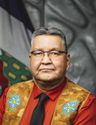
Richard Edjericon Tu Nedhe-Wiilideh
Thank you, Mr. Speaker. Mr. Speaker, the 19th Assembly, when I was elected I brought forward my issues in regards to priorities for my riding.
And what I was told is that put it in the suitcase and try to throw it on the train. I came in through midterm by-election. But, Mr. Speaker, in the 20th Assembly, after we got sworn in I wrote a letter to the Premier on February 13, 2024, outlining the priorities for my riding. And two weeks later, I had received a reply back from the Premier saying that he's going to encourage the Minister to work with me to look at how we could work together on my priorities. And to this day, Mr. Speaker, no Minister has reached out to me to talk about the priorities for traditional use Nedhe-Wiilideh riding. And now we're going to our third year of our mandate. And it's really frustrating because when I look through the budget right now, there's really nothing there, again, for small communities. And I am really, really concerned about that.
But, Mr. Speaker, this is the finance Minister's seventh consecutive budget since she assumed her role at the start of this last Assembly. In this budget, like the rest of her budgets, I haven't seen any real investment in my riding or traditional use Nedhe-Wiilideh.
What I notice, however, is a lot of debt. This Minister has increased our borrowing limit several times. Our debt limit is now projected to reach $2.21 billion. Our budget has ballooned to $2.7 billion now. And what do we get for it? Nothing in my riding.
A lot of public servants, over 1,100 employees added, since her first budget. About a 25 percent increase. Those aren't all doctors and nurses and social workers and teachers. What we have instead are a lot more bureaucrats to ensure that we can make studies, write reports, and develop strategies and business plans. But there are still not enough people to teach our children or keep our health centres open. We debate this every day in this chamber during our legislative session. And yet, for someone who is essentially the Minister of everything, the Minister of Finance rarely addresses the challenges our community faces. Leaving it to her to challenge her colleagues while responsible for their own departments must work with what the Minister of Finance provides. We know we're in a housing crisis.
We know our healthcare services are struggling. With Jordan principal's funding cuts, it's clear education will struggle to provide culturally programs to meet the needs of Indigenous students. And yet, we can't even come together to secure a small amount of funding for offices like Dene Nation to coordinate a community housing proposal to Build Canada Homes.
Since I was elected to the 19th Assembly, I've been keeping detailed lists of my community needs. I compile these lists with community leaders, stakeholders, my constituency, and send them to the Minister every year, only to have them denied. Then, here at budget time, I stand and go through that list, voicing my disappointment while the Minister and her colleagues sit across the chambers busy typing away on their laptops.
This has been a very effective way for me to speak to my constituents by pointing to the practical changes this Assembly can make in the communities I represent. But since that approach hasn't really worked when I speak to this government today, I would like to take a different track. This time, I want to take a step back and make a point in terms of bigger picture and hope that this time my point is carried through in this chamber a little further.
A long time ago, it was this government belief that they should invest in small communities that were struggling to help get people on their feet and their local economies moving, especially during tough times. Well, this isn't that kind of budget. Because my communities are getting nothing, and these hard times aren't due to some uncontrollable economic cycles.
Our communities have been on constant decline because of this government's long-standing inaction. More recently, governments have focused on cutting debts and creating an attractive environment for businesses. This isn't that type of budget either.
We're still waiting for modern regulations. Our debt keeps growing, and the government is still under our treaty. Sorry, our territory is our largest employer.
While other jurisdictions cut royalty rates to foster development, we scare businesses away and end up collecting a grand total of nothing in royalties. So what is this government doing?
It's sinking small communities while giving privileged classes in Yellowknife the biggest slice of shrinking pie. The city isn't an island. My people will keep coming here for services their own communities are losing. The tax base this government relies on will disappear because my people can't get jobs.
Health and social services will keep paying more to treat sicker people, and I fear that all public safety tools we are reaching for will be undermined by growing are not physically sustainable. By the territory this budget is building and the previous budget the finance Minister has tabled, it isn't sustainable either. Not physically sustainable, not economically sustainable, not socially sustainable. It is not sustainable to ignore our rights. It's not sustainable to keep our families in overcrowded homes. It's not sustainable to let our graduation rates drop off a cliff. And it's not sustainable to let our mines close. Taking impact benefit agreements funds with them, with new economic development on the horizon -- with no new economic development on the horizon. They aren't someone else's problem.
The Government of the Northwest Territories may not be a party to the treaties, but they are still having the duty to uphold them. The federal government didn't transfer administration of these services to this government so they could turn around and ask Ottawa to pay for everything.
Back in the day there were some pretty heated debates over establishing a public government for the Northwest Territories, but if anything is harming that idea today is budgets like this. Budgets that march our territory back under the mercy of the federal government.
When our communities aren't self-sufficient, our territory isn't self-sufficient, and it is not our communities who plan to sit around cap in hand waiting for handouts. They're ready for development. Their skills, they're ready for meaningful employment.
They want to own their own homes. It's this government that denies them that opportunity to succeed and then tell them to go to Ottawa for services it is supposed to provide and rights it's supposed to uphold.
So, Mr. Speaker, there is no plan in this budget.
There's no vision. There's no jobs, no education, no improvements to health care, no Indigenous-led housing. This government takes care of itself, consults itself, accommodates itself.
Plain and simple, my communities don't consent to this poor leadership. They want to make their own decisions. They want to create their own destiny. This is what the treaty promises.
I was elected to represent my constituents. I took an oath to uphold our treaties, and I will do so for as long as I have the privilege to sit in this chamber, and that means voting tonight on another bad budget from the Minister. So, Mr. Speaker, I will not be supporting this budget today. Thank you.
Bill 47: Appropriation Act (Operations Expenditures) 2026-2027, Carried
Third Reading Of Bills
March 5th
The Speaker Shane Thompson
Thank you, Member from traditional use Nedhe-Wiilideh. To the motion. Member from the Sahtu.
Bill 47: Appropriation Act (Operations Expenditures) 2026-2027, Carried
Third Reading Of Bills
March 5th

Daniel McNeely Sahtu
Thank you, Mr. Speaker.
When I look back at the last 24 months, Mr. Speaker, this Assembly started off as an approach to restoring balance. Restoring balance gives you the privileges of taking a percentage in your position with the fiscal responsibility policy to design and implement the capital allowance. When I look back at the Sahtu, to a large degree it wasn't the Sahtu that I remember in previous years.
We started off with a colleague from the Mackenzie Delta providing me assistance to look at a chart showing the Sahtu seen 448 medivacs out of the region in three years. It doesn't defy the purpose of the expense of that particular trip, but a large amount is directed to recovery of the addictions that are placing our people in impoverished conditions.
The workforce is not available. Actually, it's being a burden to this government. And look at the delayed projects. However, it wasn't the end of the story. Just last year, this government awoke a capital project to build the Tulita health centre. And showing that recapitalization and energy to finish what we started was flying in 90 DC3 loads of materials so we can get going with the project.
And I highlight the other differences, the other negative impacts that lowering our ability as a region to become a standalone region. Just recently, as we all know, the departure of our Imperial Oil, a legacy oil field that was established by Tommy the Ox. Now when I look back at that legacy oil field, which produced a lot of wealth to the stakeholders, and when I look back at the all government approach to accessing capital for the purpose of economic resilience, we still have in our toolbox those abilities to strengthen what was there. And the floods, the fire conditions, adding costs to our territorial government. And the regulatory reform, it's underway. You have these tools in your toolbox and it's called devolution. Why can't we use devolution to strengthen our regulatory process and maybe even entertain the idea or the concept of approaching it for total control over that resource development management. You have the systems here. You've got the regional agencies, which is a co-management structure to give approvals so projects could efficiently go ahead and start producing royalties.
Government operates on taxes and royalties. In my recent trip to the prospectors' conference in Toronto, I was very surprised. We are not that bad considering the fact that non-renewable resource in the diamond sector is declining. We have three candidates that are on the threshold of moving forward. One of the three companies that we had met, and we met several, but one of the three stands out to me that is near shovel ready. They have secured the financing to move ahead. And as we all know, the benefits coming from a project to ensure that you're going to get benefits is securing financing. And financing has definitely been secured. So the project's going to go ahead.
I have every thought and talks that the coming years, we should be focused on the coming years and preparing ourselves for what's coming. There's an economic tsunami coming. We've already seen that in the procurement phases on *Merck's for the $10 billion that is coming. Commitments from the military spending is going to contribute and escalate beyond expectations of what we've seen already.
So in reality, Mr. Speaker, it's really not as bad as what it is. We need to get our tools identified in the toolbox and get ready to prepare for that wave of opportunity that's coming in all our areas.
And again, Mr. Speaker, when I look back at the Sahtu, which I'll be going home to visit in the coming days, it's not that bad. We as leaders make decisions on this institution that covers 33 communities. Yes, a large portion of our budget comes from our federal counterparts, but we still have the ability to recognize the resource potential you have here. Now let us design a recovery plan to recognize that potential. How can we expedite these projects through the regulatory redesign and at the same time look at devolution?
So I will be supporting this budget, Mr. Speaker. I feel my people that I represent want to move on. They want to know what are the tsunami economic conditions coming so we can prepare for them. And yes, it was a shock to the Northwest Territories as at the same time to the residents and business communities of Norman Wells that the Imperial Oil production is going to shut down, but as some would say, one dying industry supports a merging one. During the PDAC discussions, a mining company is coming to our community of Norman Wells and coming to our community of Tulita to talk about critical mineral potential in the Sahtu. With this government, we supported access for clients in the industry community to access critical mineral infrastructure fund. So by combining and uniting our offices, we can see results. And we just seen that this morning there, Mr. Speaker, by the mobilization of three modular units into the smallest -- one of the smallest communities in the Northwest Territories. The children were overwhelmed with excitement greeting the big trucks that brought in their school. So we have to design our toolbox to implement the tsunami that's coming and prepare the workforce.
Awareness on what's coming is critical and specific to encourage our residents to remain here because we have a bright future ahead of us. You only could imagine what may come and think to yourself, the Banff of the Northwest Territories is in the Sahtu. So much potential. I believe any accountant would love to be analyzing the revenue potential and looking at how much our government could make. Right now we have a budget here that we can design and still balance the budget that supports your fiscal responsibility policy for next fiscal year's preparation for capital planning.
Now, let's look at what we have. In seven years, Mr. Speaker, we talked about restoring balance through increased revenues, reductions by reducing expenditures, layoffs. Meanwhile, in seven years, this government has made approximately close to $50 million from tax revenues and separating the YZF airport. Now, if you look at that, you look at the heritage fund, and you look what's coming in the next seven years, your cash flow predictions are already there. Now you got a huge client coming in, DND with a large footprint and tax revenues and more landing fees. So at times we have to look back and see what we accomplished and look ahead. In the private sector, they do five-year, ten-year plans with anticipation that revenues are going to be there to support that five-year plan.
So in summary, in closing, Mr. Speaker, our chair led off the statement to the budget. I totally agree with that. In ending, thank you, and I will support this budget. Mahsi cho.
Bill 47: Appropriation Act (Operations Expenditures) 2026-2027, Carried
Third Reading Of Bills
March 5th
The Speaker Shane Thompson
Thank you. Thank you, Member from the Sahtu. To the motion. Member from Yellowknife North.