

Mr. Speaker, I wish to table the following two documents: Indigenous Recruitment and Retention Framework and Action Plan Report on the Indigenous Employment Plan Results 2024-2025. And Inter-activity Transfers Exceeding $250,000 (April 1st, 2025 to March 31st, 2026). Thank you, Mr. Speaker.
Debates of June 3rd, 2026
This is page numbers of the Hansard for the 20th Assembly, 1st Session. The original version can be accessed on the Legislative Assembly's website or by contacting the Legislative Assembly Library. The word of the day was know.
Topics
Tabled Document 538-20(1): Indigenous Recruitment and Retention Framework and Action Plan Report on the Indigenous Employment Plan Results 2024-2025
Tabled Document 539-20(1): Inter-Activity transfers Exceeding $250,000 (April 1, 2025 to March 31, 2026)
Tabling Of Documents
Tabled Document 538-20(1): Indigenous Recruitment and Retention Framework and Action Plan Report on the Indigenous Employment Plan Results 2024-2025
Tabled Document 539-20(1): Inter-Activity transfers Exceeding $250,000 (April 1, 2025 to March 31, 2026)
Tabling Of Documents
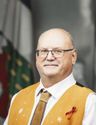
The Speaker Shane Thompson
Thank you, Minister of Finance. Tabling of documents. Member from Yellowknife North.
Tabled Document 540-20(1): Prototyping a Resilient Northern Home: Ongoing Barriers and Alternative Solutions, Phase 1 - Background Research Report
Tabled Document 541-20(1): Prototyping a Resilient Northern Home: Ongoing Barriers and Alternative Solutions, Phase 2 - Final Report
Tabling Of Documents

Shauna Morgan Yellowknife North
Thank you, Mr. Speaker. Mr. Speaker, I wish to table the following documents: Prototyping a Resilient Northern Home: Ongoing Barriers and Alternative Solutions, Phase 1 - Background Research Report. And Prototyping a Resilient Northern Home: Ongoing Barriers and Alternative Solutions, Phase 2 - Final Report. Thank you, Mr. Speaker.
Tabled Document 540-20(1): Prototyping a Resilient Northern Home: Ongoing Barriers and Alternative Solutions, Phase 1 - Background Research Report
Tabled Document 541-20(1): Prototyping a Resilient Northern Home: Ongoing Barriers and Alternative Solutions, Phase 2 - Final Report
Tabling Of Documents
The Speaker Shane Thompson
Thank you, Member from Yellowknife North. Tabling of documents. Member from Yellowknife Centre.
Tabled Document 542-20(1): Canadian Healthcare Technology article: “Alberta Health Services to split into 4 parts”
Tabled Document 542-20(1): CityNews article: “Alberta tables bill to split AHS into different agencies”
Tabling Of Documents

Robert Hawkins Yellowknife Centre
Thank you, Mr. Speaker. I have two documents to table. They're both related to the same subject. The article is really about breaking up a health department so they can make it easier to manage. And the first article is written by Canadian Health Care Technology. And the second article written is Edmonton City News Everywhere. And they're recent documents so they should be relevant to future debates. Thank you.
Tabled Document 542-20(1): Canadian Healthcare Technology article: “Alberta Health Services to split into 4 parts”
Tabled Document 542-20(1): CityNews article: “Alberta tables bill to split AHS into different agencies”
Tabling Of Documents
The Speaker Shane Thompson
Thank you, Member from Yellowknife Centre. Tabling of documents. Notices of motion. Colleagues, the time we need to have the interpreters to give them a break. So we'll have a quick break here.
---SHORT RECESS
Tabled Document 542-20(1): Canadian Healthcare Technology article: “Alberta Health Services to split into 4 parts”
Tabled Document 542-20(1): CityNews article: “Alberta tables bill to split AHS into different agencies”
Tabling Of Documents
Motion 79-20(1): Consulting Paramedics on the Regulation of Paramedicine, Carried
Motions
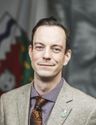
Kieron Testart Range Lake
Thank you, Mr. Speaker.
WHEREAS paramedics provide an essential service to residents across the Northwest Territories through the delivery of emergency medical care and integrating paramedics into small communities is part of the small community model of care review;
AND WHEREAS paramedics practicing in the Northwest Territories are currently regulated through professional regulatory bodies in other Canadian jurisdictions rather than through a Northwest Territories regulatory framework specific to paramedics;
AND WHEREAS in the absence of regulation for paramedics in the Northwest Territories, there is a lack of clear understanding about where complaints of malpractice are directed and who is liable if a mistake or accident occurs;
AND WHEREAS concerns have been raised that paramedics may not be adequately protected or insured under regulatory bodies from other jurisdictions;
AND WHEREAS regulating the profession of paramedicine under the Health and Social Services Professions Act is necessary to ensure public safety, mitigate liability concerns, allow the profession to grow, and support emergency care for residents of the Northwest Territories;
NOW THEREFORE I MOVE, seconded by the Member for Yellowknife North, that this Legislative Assembly calls upon the Government of the Northwest Territories to immediately begin formal consultation with paramedics and paramedic operators practising in the territory on how paramedicine can be most effectively regulated as a profession under the Health and Social Services Professions Act;
AND FURTHER, that this consultation seek input from paramedics on how regulation could protect both residents and paramedics by clarifying professional oversight, complaints of malpractice, liability, and insurance;
AND FURTHER, that it be done in close consultation with provincial paramedic regulators to both ensure a mutual understanding of current jurisdiction of provincially regulated paramedics working in the Northwest Territories and to gain understanding of best practices in paramedicine regulation;
AND FURTHERMORE, that the Government of the Northwest Territories report back on the results of this consultation, including the level of support among paramedics and any recommended next steps for developing regulations under the Health and Social Services Professions Act;
AND FURTHERMORE, that the Government of the Northwest Territories respond to this motion within 120 days. Thank you, Mr. Speaker.
Motion 79-20(1): Consulting Paramedics on the Regulation of Paramedicine, Carried
Motions
The Speaker Shane Thompson
Thank you, Member. The motion is in order. To the motion. Member from Range Lake.
Motion 79-20(1): Consulting Paramedics on the Regulation of Paramedicine, Carried
Motions
Kieron Testart Range Lake
Thank you, Mr. Speaker. Mr. Speaker, this is a longstanding issue for some Members in this House who have looked at the need for the regulation of paramedicine in the Northwest Territories and the need to expand on the role of paramedics in our healthcare system.
Mr. Speaker, this is a live issue at the Standing Committee on Social Development, and certainly something that that committee, and Members of the committee, have spoken to the Minister of Health and Social Services about, expressing our strong desire to see the profession regulated.
Now a full stand-alone paramedics Act is ideal for this kind of complicated medical profession. And that's typically what you see in other jurisdictions, large and small. But given that we have the opportunity to use the Health and Social Services Professions Act to incorporate health professions that are not currently regulated, this is a great opportunity to make do with what we have on hand. And in this case, professionals can petition the department to begin a formal regulatory process and bring them under the Act, or the Minister can initiate that process on her own recognizance.
So what this motion calls for is exactly that, is to begin that process through formal consultations.
I have had informal consultations with paramedics, including the medical director at the Yellowknife fire department, members of -- firefighters who work for the fire department, and private contractors who work in paramedicine. And the consensus from all those conversations has been we need to do something as a government to regulate paramedicine.
We have also, through our work on standing committee and as Members, we've heard from stakeholders that there are significant concerns from the frontline of healthcare professionals regarding the lack of regulation for allied health professionals, including paramedics, in the Northwest Territories and the subsequent concerns about trust in these roles as a result.
The standing committee has heard clearly from stakeholders that the government considered establishing regulation of these allied health professionals but unfortunately that effort, when the Act was passed, was not followed through with because it did become quite complicated due to some labour mobility issues. My understanding is those issues have been cleared so there's nothing standing in the way of this work going forward.
And, Mr. Speaker, this is to provide regulatory oversight for a profession that is interested in improving the knowledge, skill, abilities, of their profession and to uphold a mandate of public safety, which is one of the priorities of this Assembly. And given that safely integrating paramedics into small communities is a goal of the new small community model of care, it is urgent and essential that the GNWT prioritize regulating paramedicine. We can't make use of them as an essential component of that strategy to improve health care in rural and remote communities, the small communities that have some of the highest needs, if we are not -- if we do not have a safely regulated profession.
Paramedics can add to health care teams. They don't take away from the work that nurses and doctors do. They complement it with their skill sets, especially in the areas of acute and emergency care and, of course, medical transportation. Paramedics are often the last line of medical treatment -- or the first and last line in some cases, and we owe so much to paramedics who offer lifesaving care to people in very dire straits. Regulating the paramedic profession is an absolute necessary step to ensure both public safety and also to mitigate liability concerns for the paramedics we want to operate in the North, and that is a key consideration of fire departments including the -- or anyone who wants to operate those, not just private companies but municipalities like the City of Yellowknife that has full-time paramedics through their fire department. There are very significant liability concerns that just kind of go unaddressed, and no one's really -- it's not clear legally who's responsible for those liabilities which creates, of course, a whole bunch of hardship for the community I represent and uncertainty for the firefighters I represent.
So this is not a nice-to-have. It's a necessary step forward in improving our model of care, in particular and specifically, in small communities but also across the entire Northwest Territories. And I haven't heard a single word of complaint or pushback from any paramedics working. They want this. It ensures safety and ensures continuing education and it ensures that a lifesaving profession is under proper regulatory scrutiny. And I think that just makes sense to most people.
If you went to the average Northerner and said hey, did you know paramedics aren't regulated? They would probably say, excuse me, are you serious? Oh, it's not -- they're regulated somewhere else, just not here. I don't think that's satisfactory and certainly that's why we're bringing this motion forward. We've tried letters. We've tried Members' statements. We've tried oral questions. Now we're going to try a motion. I hope it gets through. I hope it becomes -- I hope these consultations begin. And that's all we're asking for, which I think is a very reasonable request. And the department can do its work, and it already has the tools to bring the profession forward. And certainly there are plenty of paramedics, including one of my constituents, who would be more than happy to spearhead this initiative and provide a great deal of detail about how this system could work. That individual and others have been actively involved with regulatory bodies and paramedic regimes in other jurisdictions, and they'd be happy to lend that knowledge to the Government of the Northwest Territories, so.
And I do want to thank the seconder of this motion, the Member for Yellowknife North, as she has been a vocal advocate for this action and bringing paramedicine under regulation. And I also want to thank my colleagues on the Standing Committee for Social Development for adding their voices and leadership to this issue as well. And I hope that the House will adopt this motion and we can move forward on regulations for paramedicine in the NWT. Thank you, Mr. Speaker.
Motion 79-20(1): Consulting Paramedics on the Regulation of Paramedicine, Carried
Motions
The Speaker Shane Thompson
Thank you, Member for Range Lake. To the motion. Member from Yellowknife North.
Motion 79-20(1): Consulting Paramedics on the Regulation of Paramedicine, Carried
Motions
Shauna Morgan Yellowknife North
Thank you, Mr. Speaker. Mr. Speaker, I do support this motion, and I want to be clear first, too, that my concerns about the increasing use of contracted private paramedics in our small community model of care go beyond regulation. And I've spoken about that in the past because I believe there is a danger that we may be creeping towards trying to replace community health nurses with paramedics. But today I want to focus on the need for regulation as well.
And so the purpose of regulation, it's not just, you know, a bureaucratic administrative exercise. The purpose is to protect the public, to protect patients, and it's to protect the paramedics themselves. And it's to protect the nurses, doctors, the other practitioners who are working alongside the paramedics potentially delegating tasks to them. It's to ensure, first, that paramedics have the proper training and skills before they start work and those training -- that training and skills should be appropriate for the particular jurisdiction that they're working in. In this case, northern healthcare settings, which we all know can be quite unique and challenging.
Regulation is to ensure that the paramedics keep up their skills over time and do enough regular professional development. And it's to ensure that whenever a complaint is raised that it's investigated fully and fairly to everyone involved, both for the patient's sake and for the paramedic's sake. If a paramedic did do something wrong that was egregious enough, they would lose their license, you know, in a regulated system and that would be on the public record, both for every other employer and every other jurisdiction in Canada to see. The danger, of course, that in an unregulated system someone could raise a complaint, it goes to the employer, the easiest thing potentially to do is to fire that person. That could be unfair both to the paramedic, the employee, if they didn't get a chance to make their case or if they felt they were accused of something unfairly, but it also means that that doesn't sort of go on a public record. They could be hired again somewhere else and then the public and patients might be in danger of having someone who is not competent or qualified, you know, working somewhere else.
Now, as my colleague from Range Lake mentioned, the Standing Committee on Social Development has been involved in correspondence with the Minister, trying to ask for some progress to be made on this and in, you know, letters that we've been told can be shared publicly, committee expressed concerns, first, that other paramedic regulatory bodies, you know, in other provinces -- because that's who we're apparently relying on to regulate the paramedics working here -- the committee is concerned that those bodies might be unaware, uninformed, that they're supposed to be responsible for regulating the paramedics working here and asked the Minister to reach out to those provincial paramedic regulatory bodies to make sure that, first of all, that they're even aware that they have licensed paramedics that are working up here and asking them, you know, whether they're willing to assume responsibility for them, would they investigate complaints against those staff that are working up here if they were made to those bodies. And we were told by the Minister that essentially that the department was not willing to do that, to do that work, that those provincial bodies should already be aware and essentially it's not our problem, somebody else's problem. Maybe it's the employer -- if it's a private company, it's the employer's problem. It's the provincial body's problem but it's not our problem.
The Minister argued, for example, that regulatory bodies would require applicants to, you know, provide their address or location if they're applying for a license or to renew their license so the provincial bodies should know.
Well, I've looked into this and in some cases, when you're applying for a license for another regulatory body that if you're filling out the form, that line where it says address or location it might be optional. So, first of all, they might not know who the employer is or where that paramedic is operating. But even so, in doing some investigation myself I have heard from some provincial bodies that, in fact, they do not assume responsibility for paramedics working outside their jurisdiction, that their provincial legislation does not allow them to, and that they would not investigate complaints.
So this puts us, in my mind, in a dangerous situation and something that needs to be addressed quickly. And this is not something to put off to the next Assembly, to some later time. This is already a problem that needs to be addressed now -- or, I mean, should have been addressed yesterday or years ago but certainly needs to be addressed now. And given the fact that health and social services continues to push forward with -- towards a small community model of care for primary care that explicitly increases the use of paramedics, I feel that the issue is urgent. It needs to be sorted out. And we can't sort of put our heads in the sand and say it's someone else's problem, not our problem.
The other thing that is concerning to me about the Minister's responses -- let me just pull it up here -- is when asked about what would happen if there was a complaint, the response said that if there was a complaint that arose from an incident involving an employee of a private contractor, which in our case almost all of our paramedics working in the territory work for private contractors, that the contractor would be responsible for conducting the investigation and connecting with that paramedic's registered regulatory body. So that's very concerning to me that we would entrust that responsibility to the employer. It seems like a conflict of interest to me, and I think we need a more robust system in the territory to protect the public and to protect paramedics themselves.
So for those reasons, I support this motion. I believe we need to move forward with this initiative very quickly. Thank you, Mr. Speaker.
Motion 79-20(1): Consulting Paramedics on the Regulation of Paramedicine, Carried
Motions
The Speaker Shane Thompson
Thank you, Member from Yellowknife North. To the motion. Member from Hay River South.
Motion 79-20(1): Consulting Paramedics on the Regulation of Paramedicine, Carried
Motions
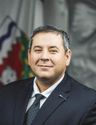
Vince McKay Hay River South
Thank you, Mr. Speaker. I'd like to rise and just speak about a more broader aspect of this. And I appreciate the Member bringing this forward however my initial look at it shows me that it's very Yellowknife focused, and I would say that in the fact that some of the concerns that are already brought up about, you know, using paramedics in communities are a lot driven behind working in a healthcare setting where they will be covered under either their protocols, their scope of practice, or the medical directives, or their -- yeah, or their scope of practice.
I will say I am concerned about with this being a broader aspect of the communities across the Northwest Territories and the impacts to people trying to do good things in the communities. And when I say that, you know, I am going to date myself. I did my EMT training, emergency medical technician, 25-plus years ago which I've never been accredited. I've never done any re-scope of practice. However, I did volunteer in Hay River for many, many years. I've done onboarding, continued training, and about halfway through I did my emergency medical responder training also just for the heck of it to maintain my skills. That was being a volunteer.
If I was required annually to write exams, pay a licensing fee, have all these headaches behind that, I probably wouldn't volunteer. I probably wouldn't commit any of my time to doing that because I know what a headache it's going to be.
We're speaking paramedics. We're speaking a very narrow term. When we have other professions out there, like emergency medical responders, we have primary care paramedics, we have advanced care paramedics, we have flight paramedics, we have paramedics that, you know, work under a medical doctor, physician aide. I just want to highlight the fact that I think we're putting barriers up in communities where we don't need to. And I know this has been driven a long time ago at a fire chiefs conference to have the, you know, paramedics licensed in the Northwest Territories. It'd be detrimental to the Northwest Territories.
If the issue is with the healthcare setting, for sure there's ways to deal with that, there's ways to work around it once you're an employee and all that stuff like that. There's paramedics used in hospital settings across all of Canada.
When we're trying to put volunteers in communities across the Northwest Territories and we're trying, you know, to get a couple communities set up with a medical response and if we start putting these barriers in front of them, it ain't going to work. There's a lot of communities like Behchoko that run EMR services, emergency medical responders, and they -- you know, they work for the health authority. You know, there's all kinds of ways that they're covered under their protocols and how they operate.
I would suggest talking to the fire chiefs association, getting more of a territorial aspect to what these impacts could potentially be. I am not saying this is a full bad thing; however, I am concerned, again, of the impacts. As I stated earlier, with the added costs with your accreditation, your annual fees, your licensing bodies and whatever the case may be, I don't know what small community where you're struggling to get volunteers is going to stick their neck out and have to go through this process of being a volunteer in a small community. As I said earlier, works great in Yellowknife for sure, but it's not going to work in a small community.
Again, just going back to, you know, in today's world where we're working and trying to get volunteers in the communities. For an example in Hay River, they have a medical director, they have procedures, they have standard operating procedures, they have ways of operating in the back of an ambulance and those are set guidelines on how they operate, which are signed off by a medical director. Some scopes vary, and they get approvals to do that. They get approvals from the medical director to do different things.
So, you know, I could go on about the concerns that I have, and I appreciate, you know, what's trying to be done here in trying to license a profession in a larger centre. For 44,000 people, we're a very small territory and the more barriers that we put up for small communities is not going to be good for us. It might work here in Yellowknife. It wouldn't work in the smaller communities across the territories. And that being said, this is not only just from me speaking of the information that's presented. This is also experience in the organizations that I've been involved with and the many discussions with people involved in emergency services across the Northwest Territories. This isn't just, you know, me talking. This is lived experience. So that's all I will say for now. I just think there really needs to be a broader look at this. Thank you, Mr. Speaker. And just letting everybody know that we'll be abstaining from this motion. Thank you.
Motion 79-20(1): Consulting Paramedics on the Regulation of Paramedicine, Carried
Motions
The Speaker Shane Thompson
Thank you, Member from Hay River South. To the motion. Member from Yellowknife Centre.
Motion 79-20(1): Consulting Paramedics on the Regulation of Paramedicine, Carried
Motions
Robert Hawkins Yellowknife Centre
Thank you, Mr. Speaker. I did want to comment on some observations made by the Minister before I get into my overall comments. But, you know, it's funny, we often say about, you know, get them on a wedge issue. That's how you corner somebody. This feels like a wedge issue. Oh, it wouldn't work in the small communities. I say, then, I guess, how do we do anything in the small communities by that attitude? I mean, Mr. Speaker, training's important. I mean, if it's important enough, we will find a way. Could you imagine doing meetings over Zoom and training over Zoom? People take their masters over Zoom. You know, so there's ways to do these things. And if training is in the way of filling jobs, I guess maybe we'll fill absent teacher people with -- we'll just pull somebody off the street and say, hey, you're now a grade 7 science teacher. No, I am being silly, clearly. Training matters, and if it's important, it matters. And we will find a way because it matters, Mr. Speaker. So, I mean, I rebuke the whole craziness in my mind that is that you cannot -- that becomes a barrier? As a matter of fact, I think people like training, and I think they enjoy the opportunity of learning more and growing and strengthening their skill sets and the relationship that comes with those types of things. So, I mean, the Minister can scoff and shake his head and all of these things. I think it's an opportunity, not necessarily a weight to drag people down to the bottom of the water, Mr. Speaker. It is a huge opportunity. But more importantly, interestingly enough, if we think about the opportunity of the individual who has the training, but let's look at the people they're serving of the opportunity. I mean, okay, visually, it doesn't look so good on Hansard but that said, visually, I say, well, I'd want to be served by somebody with training or without training. Hmm, it's a tough, tough thing to communicate. And say oh, it's a barrier? I mean, my goodness. Mr. Speaker, I am going to get back to what I was going to say and I just -- it's important. Training is important. Creating opportunity is important. Growth is important. So I find that very difficult from a government that should be trying to raise people up, not the other way around.
So, Mr. Speaker, in case you didn't know, I will be supporting this motion. And in case that's not -- wasn't clear, I just wanted to make sure that it's on the record.
I mean, ultimately, this motion is fundamentally about safety, accountability, and respect for frontline healthcare heroes in our territory. They are heroes. I mean, sometimes they are the first on the line. They're taking -- they're under fire in different ways. And I don't mean from guns. But I am saying in the sense of stress, whether it's fire, whether it's, you know, dogs, whether it's what -- upset people. It is a difficult job, the stress that they take on. And that has to be recognized.
You know, the fact that -- we need immediate consultation with our paramedics and our teams out there to ensure that their voices are heard in this potential of regulating this industry.
This is a very important one. Every single day, as we know, paramedics are out there doing their thing, sometimes in a more stressful situation than others, no different than doctors or lawyers or firefighters or people who fly planes. But they deserve the respect of their industry, that it's framed up in a way that it could be served properly and professionally. And it's not to take away from the individuals when I say it that way. It's just their system has a system, and it's time we recognize that.
Mr. Speaker, this would become -- this concept is about making sure we roll out into all our communities. So whether our paramedics are delivering services in Yellowknife -- as the Minister had said, yes, it might be easier here. Maybe even in Inuvik and Hay River, it might be easier. But keep in mind, these are the same paramedics that are driving down gravel highways in the back of something trying to help somebody or even flying in the back of a plane as it's making its way on a trip, an emergency trip potentially. These are essential services, Mr. Speaker. So let's be clear what we're talking about.
We have professionals who perform critical roles in our society. We have matured enough to say we need paramedics as a society. We need to mature enough as a government to say we need to support them in structuring them.
So our first responders manage many acute traumatic situations, and part of their process and training helps them get through that, and this structure, this concept of the motion, helps support the fact that we are behind them and we're going to help create a structure, as pointed out. So this is all about the continuum of care in a professional way. So as we look forward, we need to integrate these highly skilled professionals into our communities and in our city and in our regional centres with these types of community models of care review. So despite any immense weight to detract from that, we cannot allow them to operate in any type of regulatory vacuum. We have to recognize their service needs structure. And to understand that, as pointed out in the motion, consultation, they need to be part of that framework.
So first and foremost, let us not forget they fill critical roles, as I've pointed out. And certainly, often they are the switch-off between picking someone up at their worst and getting them to the next level of professional teams. Again, there needs to be work with that.
Mr. Speaker, I just want to plug ahead. And I am almost done by the way. But I want to plug ahead and say this isn't necessarily a perfect model of anything. The North has to adapt to a community-level model of care. It's not going to be easy. So in other words, just like Aurora College, you'll have a campus somewhere and you have learning centres. This may be introduced in different ways which is here's the structure, here's the framework, and it rolls out slightly different throughout the region. But let's not get ahead of ourselves and write this today on the floor of the House. Give it time to create, foster, develop, and find its way into some type of solution that works with these folks.
Mr. Speaker, lastly, this also protects the paramedics as well. So when we talk about how important the structure and training is and reliability, but we need people in the paramedic industry to be supported and recognized that they have risks and need to be protected. So, Mr. Speaker, the important part here is that we must give this a go by regulating paramedics locally and territorially. We will ensure -- I am convinced we will achieve four critical goals.
We'll ensure the public is safe. We'll help mitigate liability. We will allow professions to grow, such as them. And we robustly will support emergency services to our residents in the most safe and practical way. So let us vote together and help support these paramedics, Mr. Speaker. And I urge the government to take this very serious because it is very serious. Thank you, Mr. Speaker.
Motion 79-20(1): Consulting Paramedics on the Regulation of Paramedicine, Carried
Motions
Motion 79-20(1): Consulting Paramedics on the Regulation of Paramedicine, Carried
Motions
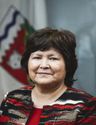
Sheryl Yakeleya Deh Cho
Thank you, Mr. Speaker. I agree with Member for Yellowknife North talking about how this needs to be thoroughly looked at before we -- before I make a decision anyway, so. I know in our territory or in my area, we need medics. You know, we need people that can help if we have accidents on the road. Or we need that type of support so we could have like ambulances in our community. But that's what I -- that's what we need. However, like my colleague said it needs to be thoroughly looked at, not today but yesterday. So, therefore, I am going to have to abstain from this motion. Thank you.
Motion 79-20(1): Consulting Paramedics on the Regulation of Paramedicine, Carried
Motions
The Speaker Shane Thompson
Thank you, Member from Deh Cho. To the motion. Member from Inuvik Boot Lake.
Motion 79-20(1): Consulting Paramedics on the Regulation of Paramedicine, Carried
Motions
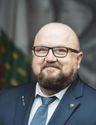
Denny Rodgers Inuvik Boot Lake
Thank you, Mr. Speaker. Mr. Speaker, as I've said to my colleagues in this House many times, I respect the work that any Member puts into putting together the information and the research to make a motion. I've told my colleagues that unless there's a reason, I would support motions that are brought to this House. I think it's important to recognize the amount of work and in this case, I think that the work and the reasoning behind why this motion is brought forward makes sense, and I would support that in any regard however it came forward. And in my opinion, if you would, Mr. Speaker, and again -- and we go back to this oftentimes, that motions that are made from any Member of the House on this side of the House or a Member of the AOC, are non-binding motions. So they're not motions that came from a collaboration with both. So anybody looking -- watching our proceedings here would make the assumption that we're debating something that's going to happen if we get the majority of the House to vote for it. That's not the case. These are non-binding motions. And in my opinion what that basically is essentially, then, a motion that's made gives an opportunity for any Member, as it should, to essentially give a lengthy Member's statement. You get up to 20 minutes, Mr. Speaker, to speak on that issue and to bring that forward, as you should be able to do that. But I think it's important for people to know that because I do think that as that is the process, then the result will likely be garner -- you'll probably garner the same result from what we say here as you would from giving a Member's statement, and I think it's important that people know that.
Again, it is an opportunity to bring important issues forward, either from a Member's riding, from a Member's perspective, or as a collective, as in some cases that does happen, that several Members will agree that, hey, this is something that we'd like to see done.
So, sorry, with your indulgence, I just wanted to say that because it is an important piece of how we actually do work in the House and that these motions are, indeed, non-binding. But having said that, again, respect the work that my colleague has done, and I will be supporting the motion. Thank you, Mr. Speaker.
Motion 79-20(1): Consulting Paramedics on the Regulation of Paramedicine, Carried
Motions
The Speaker Shane Thompson
Thank you, Member from Inuvik Boot Lake. To the motion. Member from Frame Lake.
Motion 79-20(1): Consulting Paramedics on the Regulation of Paramedicine, Carried
Motions
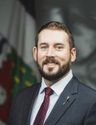
Julian Morse Frame Lake
Thanks, Mr. Speaker. I think the potential merits of this motion have been discussed pretty extensively by the Members, particularly from our committee on social development which I know has been working on this issue. And I do thank the committee for that work and support them in that work and therefore support the motion. And I am looking forward to seeing the government response and analysis that comes with that. Thank you, Mr. Speaker.
Motion 79-20(1): Consulting Paramedics on the Regulation of Paramedicine, Carried
Motions
Motion 79-20(1): Consulting Paramedics on the Regulation of Paramedicine, Carried
Motions

Daniel McNeely Sahtu
Thank you, Mr. Speaker. In short, I agree with the former presenter here from Frame Lake that we've had many -- much time deliberating this motion at committee. So in short, I will be supporting this motion. Mahsi.
Motion 79-20(1): Consulting Paramedics on the Regulation of Paramedicine, Carried
Motions
The Speaker Shane Thompson
Thank you, Member from the Sahtu. To the motion. Member from Tu Nedhe-Wiilideh.