Question has been called. All those in favour? All those opposed? All those abstaining? Motion carried.
---Carried
Motions. Member from Yellowknife North.
This is page numbers of the Hansard for the 20th Assembly, 1st Session. The original version can be accessed on the Legislative Assembly's website or by contacting the Legislative Assembly Library. The word of the day was work.
Motion 82-20(1): Extended Adjournment of the House, Carried
Motions
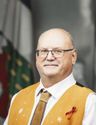
The Speaker Shane Thompson
Question has been called. All those in favour? All those opposed? All those abstaining? Motion carried.
---Carried
Motions. Member from Yellowknife North.
Motion 84-20(1): Establishment of a Special Committee on Transition Matters, Carried
Motions

Shauna Morgan Yellowknife North
Thank you, Mr. Speaker.
WHEREAS the Consensus Government Process Convention on Priority Setting and Reporting calls for the establishment of a Special Committee on Transition Matters;
AND WHEREAS transition to a new Assembly is an appropriate time for reporting on matters of ongoing action, discussion and consideration;
AND WHEREAS Members of the 21st Legislative Assembly may wish to consider how to build on the direction and deliberations of the 20th Legislative Assembly;
NOW THEREFORE I MOVE, seconded by the honourable Member for Hay River North, that pursuant to Rule 9.2(8), the Legislative Assembly hereby establish a Special committee on transition matters;
AND FURTHER, that the following Members be named to the Special committee:
AND FURTHERMORE, that the Special Committee on Transition Matters be established by the terms of reference, identified as Tabled Document 533-20(1).
Thank you, Mr. Speaker.
Motion 84-20(1): Establishment of a Special Committee on Transition Matters, Carried
Motions
The Speaker Shane Thompson
Thank you, a Member from Yellowknife North. The motion is in order. To the motion.
Motion 84-20(1): Establishment of a Special Committee on Transition Matters, Carried
Motions
Some Hon. Members
Question.
Motion 84-20(1): Establishment of a Special Committee on Transition Matters, Carried
Motions
The Speaker Shane Thompson
The question has been called. All those in favour? All those opposed? All those abstained. The motion is carried.
---Carried
Motions. Member from Range Lake.
Motion 80-20(1): Closing the Land Supply Gap in the City of Yellowknife, Carried
Motions
June 4th, 2026

Kieron Testart Range Lake
Thank you, Mr. Speaker.
WHEREAS the City of Yellowknife is located on Chief Drygeese Territory, the traditional land of the Yellowknives Dene First Nation, and respects the histories, languages, and cultures of the North Slave Metis and all Indigenous peoples of this region whose footsteps have marked these lands for generations;
AND WHEREAS the City of Yellowknife is experiencing sustained and accelerating growth, driven by military presence, major remediation and infrastructure projects, mining, tourism, and public administration expansion;
AND WHEREAS the population of the City of Yellowknife is projected to reach 26,659 by 2051, putting pressure on housing and municipal infrastructure systems;
AND WHEREAS the City of Yellowknife has less than 1 percent of developable land within its municipal boundary, restricting the City's ability to deliver sufficient housing, support commercial expansion, and plan and service critical infrastructure;
AND WHEREAS without timely and coordinated land action, these constraints will intensify, limiting employment growth, slowing economic diversification and undermining Arctic Security Readiness;.
AND WHEREAS the Government of the Northwest Territories is actively engaging with the City of Yellowknife to ensure that a transfer of land can occur to support the projected needs of the city and territory;
NOW THEREFORE I MOVE, seconded by the Member for Yellowknife Centre, that the Government of the Northwest Territories designate and transfer priority Commissioner's lands identified by the City of Yellowknife to the municipality to deliver residential and commercial land supply;
AND FURTHER, that the Government of the Northwest Territories establish an accelerated land transfer process that occurs in 12 months or less;
AND FURTHERMORE, that the Government of the Northwest Territories transfer the 41-hectare Frame Lake parcel identified by the City of Yellowknife to the municipality to enable timely planning and development;
AND FURTHERMORE, that the Government of the Northwest Territories ensure major regional initiatives are coordinated through intergovernmental planning with Indigenous governments, local authorities, and the federal government;
AND FURTHERMORE, that any actions or decisions resulting from this motion shall be interpreted and implemented in a manner that does not derogate from, abrogate, or infringe upon the existing aboriginal or treaty rights of the Yellowknives Dene First Nation, the North Slave Metis, or any other Indigenous Peoples of the Northwest Territories, as recognized and affirmed under Section 35 of the Constitution Act, 1982;
AND FURTHERMORE, that the Government of the Northwest Territories respond to this motion in 120 days. Thank you, Mr. Speaker.
Motion 80-20(1): Closing the Land Supply Gap in the City of Yellowknife, Carried
Motions
The Speaker Shane Thompson
Thank you, Member from Range Lake. The motion is in order. To the motion. Member from Range Lake.
Motion 80-20(1): Closing the Land Supply Gap in the City of Yellowknife, Carried
Motions
Kieron Testart Range Lake
Thank you, Mr. Speaker. Once again, this House is debating the Government of the Northwest Territories' land tenure policies for municipalities. And, once again, many find the policies of the GNWT coming up short to meet the moment where there is an opportunity for unprecedented federal investment at our doorstep.
Now unlike other motions, Mr. Speaker, in this sitting this motion is squarely targeted at Yellowknife. Admitted fully. But there is good reason, Mr. Speaker, because Yellowknife has been identified as a forward operating location to receive a massive infrastructure expansion to host the Royal Canadian Air Force's new F-35 stealth fighters. Upgrades include new and repurposed hangars, aprons, taxiways, ammunition compounds, and expanded accommodations.
This investment, along with a $230 million investment to extend and modernize Inuvik's airport main runway, will allow both of the communities of Yellowknife and Inuvik to serve as anchor points for the logistical web of northern operational support hubs.
I want to commend Yellowknife's Mayor Ben Hendrickson and the hardworking city councillors for being such strong advocates for the urgent need to prepare for these investments. And not only that, but also the hard work they've done to collaborate with other governments and communities, like the Yellowknives Dene First Nation, North Slave Metis Alliance, the GNWT's Department of Environment and Climate Change, the Town of Inuvik and, most recently, a trade mission has been announced to the Town of Hay River.
These efforts have stirred me to once again rise to advocate for their collaborative vision of a territorial capital that supports all communities and will play its part to ensure the NWT doesn't miss out on one of the most important economic development programs in the history of our modern territory and certainly in the history of our country.
This government must take action to deliver results on land supply, and fast. Prime Minister Carney has delivered on this Assembly's wish list of major projects, and now we must deliver on the needs of our communities. Unfortunately, Mr. Speaker, I continue to hear excuses for delays in land transfers and just as the Government of the Northwest Territories continues to seemingly find more layers of red tape, our federal counterparts have rolled out solutions to take immediate action on the needs of Canadians, like the One Canada Economy Act and the major projects office. They are not afraid to implement new policy solutions and legislations that move projects forward quicker.
So let's get into that, Mr. Speaker.
We are often told that when it comes to the management, lease, or sale of public lands in the NWT, the government's hands are tied. We are told that every routine decision, every low impact disposition, must enter an indefinite loop of consultation that stretches on for years without end. This is a myth, Mr. Speaker. This is a fundamental misinterpretation of Canadian constitutional law, and it is a disservice to the people of the Northwest Territories who elected us to govern with decisive action.
To be clear, I agree, as do we all, that Indigenous land rights are non-negotiable as is the Section 35 duty to consult. Unfortunately, all too often these legal and moral requirements to meaningfully consult and collaborate with Indigenous governments seem to be used as excuses for bureaucratic inertia and weak decision-making. Indigenous governments ought not to bear the responsibility for the land tenure decisions of this government. While that is not being said directly, the implication cannot be ignored.
Today, in support of this motion, I want to lay out a clear, legally sound, and plain language case for why this government has the absolute jurisdiction to build efficient land policies that can help our friends at Yellowknife City Hall and why the law does not require us to stay trapped in a perpetual application process. This argument relies on three principles: Authority, finality, and certainty.
First, let's be absolutely clear about our jurisdiction. Since the historic milestone of Premier McLeod's devolution deal in 2014, the final administration and control of public lands and resources were transferred directly from the federal government to the Government of the Northwest Territories. Under the NWT Act, this Assembly holds the statutory authority to make laws regarding territorial lands. No longer a mere delicate of the great powers that be in Ottawa, the NWT holds the sole mandate to manage our lands in the interests of all Northerners. The legal authority to write policy, establish rules, and make land dispositions, belongs right here in this chamber.
Second, let's take a look at what the Supreme Court of Canada actually says about Section 35 rights and the duty to consult. In the landmark Haida Nation ruling, the court was explicit, consultation is a process, not a veto. It requires meaningful dialogue and appropriate accommodation, but it does not require absolute consensus. In the Little Salmon Carmacks decision, the Court affirmed that the Crown retains the ultimate right to manage public lands and make final decisions, emphasizing that consultation must be balanced with the public government's democratic mandate to govern. And perhaps most critically, in the Rio Tinto decision, the court clarified that the duty to consult is only triggered when a specific government action threatens a direct, adverse impact on an Indigenous right.
We aren't all lawyers, Mr. Speaker, but what that means is the GNWT has the full legal room to establish clear policy thresholds for land tenure. Routine land decisions, like municipal land transfers and certainly recreational cabin leases for that matter, do not automatically trigger exhaustive multi-year reviews. Northerners have been clear, both Indigenous and non-Indigenous, that land disposition processes must have a defined beginning, middle, and end.
Finally, let's look at a unique advantage here in the NWT. Much of our land is governed by modern treaties, comprehensive land claim agreements that are constitutionally-protected contracts between sovereign Indigenous nations and Canadian governments. The Supreme Court has repeatedly ruled, notably in the Na-Cho Nyak Dun case, that modern treaties like these are intended to bring certainty to who owns the land and how it can be used. They already contain the agreed-upon rules for land management, land use planning, and co-management boards. Where a modern treaty exists, the treaty is the law of the land. If the GNWT follows the explicit consultation steps and timelines written into those agreements, then its Section 35 obligations are legally fulfilled. The GNWT ought not to require a separate, open-ended consultation process outside of the frameworks; the frameworks they themselves signed and agreed to.
Now, Mr. Speaker, this motion reflects a need for land supply in a region of the NWT where final modern treaties are still being negotiated. The government will look to the Akaitcho process, the Yellowknives Dene First Nation, and the North Slave Metis Alliance, and other Indigenous groups, and they will no doubt argue that because these comprehensive claims are not yet finalized, the NWT is paralyzed and must enter an endless consultation loop for every single square inch of unceded land. But our own laws and our own negotiated frameworks say the exact opposite. I am, of course, speaking of interim land withdrawals.
Through negotiations with the Akaitcho and Metis governments, the GNWT has formally withdrawn massive tracts of public land around the city of Yellowknife. Within the municipal boundaries of the city of Yellowknife alone, over 1,000 hectares of Commissioner's land has been frozen. As City Hall has keenly pointed out in their presentation to the Standing Committee on Economic Development and Environment, quote, the City owns less than 1 percent of potentially developable land within its own municipal boundaries.
Mr. Speaker, what is the legal purpose of those withdrawals? Immediate and uncontested certainty. By taking these lands out of play, we have given our Indigenous partners a guarantee that their potential treaty lands are protected and will not be sold off while negotiations take place. Furthermore, with the federal government's recent formal recognition of the North Slave Metis Alliance's Section 35 rights, we have a clear path to bring everyone to the table under the same predictable rules. But here is the crucial policy point for this government.
We must confidently assert that the boundaries go both ways. Interim land withdrawals draw a definitive line in the sand. Inside the withdrawal, land is unavailable for any kind of development or disposition until land claim negotiations are finalized. Outside the withdrawal, on the other hand, regular governance and economic development must continue, whether in the city of Yellowknife or any other community in the Northwest Territories. The Supreme Court of Canada cases I spoke of earlier still hold sway on these public lands. The GNWT, as the Crown, retains its authority to manage them, and the existence of an ongoing negotiation does not strip the GNWT of its statutory authority to do so. The government has already legally protected that space for future claims. Outside of those specific boundaries, however, the GNWT has the full authority to implement streamlined land disposition policies over lands that negotiating parties explicitly chose not to withdraw.
We can and must respect Section 35 rights where direct adverse impacts are proven and provide accommodation when determined, but this government cannot trap the rest of our public land base in a perpetual loop of red tape driven by insecurities around a government exercising its own legally justified authorities.
Mr. Speaker, reconciliation does not mean policy paralysis. It means meaningful nation-to-nation relationship building with Indigenous Peoples and nations who have called the lands of the NWT home since time immemorial. It does a disservice to those bilateral relationships and ongoing project of real reconciliation if this government is reluctant to act decisively when our own very economic future, not to mention the future safety and security of the Arctic, is on the line, and this government points to reconciliation as a reason why we can't move quickly. Through many rulings that have evolved over time, the Supreme Court of Canada has laid out a framework that respects Indigenous rights while protecting the Crown's ability to get things done.
And, Mr. Speaker, it's past time this government got municipal land transfers done. We have the jurisdiction via devolution. We have the procedural finality backed by Supreme Court decisions. And we have the certainty provided by our modern treaties with Indigenous nations, including interim land withdrawal measures, while outstanding land rights agreements are negotiated. It's time for this government to confidently exercise its legal authority. We can, and we should, implement robust, predictable land disposition policies that set firm timelines and clear boundaries. We can fulfill our constitutional duties faithfully without allowing our territory's economic future to be put on hold. It's time to move forward, to invest in our future, and empower local communities to realize their full potential. Let's help the City of Yellowknife close the land supply gap, build new homes, grow new businesses, and create shared benefits for the growth of the entire Northwest Territories. Thank you, Mr. Speaker.
Motion 80-20(1): Closing the Land Supply Gap in the City of Yellowknife, Carried
Motions
Motion 80-20(1): Closing the Land Supply Gap in the City of Yellowknife, Carried
Motions
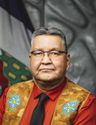
Richard Edjericon Tu Nedhe-Wiilideh
Thank you, Mr. Speaker. We are at a moment where we need to move quickly to take advantage of significant federal investments in the North. I support the principle of economic readiness and better coordination between all levels of governments. I agree that a stronger cooperation is needed, particularly from the territorial government. We have Indigenous governments, municipal governments, and the federal government all working together moving on major investment. The GNWT needs to be a more open and responsive partner if we are going to make the most of this opportunity. The city of Yellowknife is positioned to receive major investment as a key northern supply hub and as a forward operating base for the armed forces. Securing those investments does not happen overnight. It's a lot of work. So when the City of Yellowknife raises concerns, like any community, it's important we listen because they are pointing to real challenges that need to be addressed, especially as we continue on the path to secure investment that will benefit our territory as a whole.
Issues surrounding the land are very complicated. I also acknowledge the work underway between the City of Yellowknife and the Yellowknives Dene First Nation on reconciliation. There's still more work to do, but I believe the City of Yellowknife is committed and that relationship will continue to strengthen. At the same time, however, there is an ongoing land claim process that must be respected. I have spent much of my life working on land claims so when I say matters of land claims are complicated, I know where that is coming from. But I am mindful of my responsibility as a Member of this Assembly while our chiefs work towards a fair and final agreement for their,members. So while I understand this motion does not directly affect interim land withdrawals, it does touch on the land and that matters deeply to my people who are looking to their chiefs and their elders.
For that reason, out of respect for the ongoing negotiation process and my chiefs and the elders, I will be abstaining from this vote.
I want to end by saying that ongoing land claims and self-government negotiations are vital to the future of the territory, the partnership between our communities and our shared prosperity. These are fundamental processes that deserve to be respected in both substance and in tone, and that is the spirit behind my intention to abstain on this vote today. Thank you, Mr. Speaker.
Motion 80-20(1): Closing the Land Supply Gap in the City of Yellowknife, Carried
Motions
The Speaker Shane Thompson
Thank you, Member from Tu Nedhe-Wiilideh. To the motion. Member from Yellowknife Centre.
Motion 80-20(1): Closing the Land Supply Gap in the City of Yellowknife, Carried
Motions

Robert Hawkins Yellowknife Centre
Thank you, Mr. Speaker. I absolutely rise in support of the principles of this motion, and I am pleased to second it. I've also been pleased to work with my colleague of Range Lake in the past of coming forward with other motions of a similar nature, and I am hoping this one gains some traction.
So, first off, let's be clear. I support the larger principle of the land transfer. I have been advocating for timelines to be accelerated to make sure we meet the demands provided by the City of Yellowknife so it can meet the demands of our city. And keep in mind that Yellowknife is one of -- one, not only, but one of the key engines of the territory so we need to ensure that we are firing on all cylinders, as they say, to make sure we can help support our whole territory. And I think as stated earlier, our City of Yellowknife is deeply reaching out into other areas to ensure that they're not just a leader but they're a full partner of other communities.
Mr. Speaker, it isn't known by everyone but in some ways we have to ask ourselves about the challenge of how does the city balance its needs, its recognizing on where it lives.
Well, the city isn't subject to Section 35, the duty to consult, on these particular lands or these initiatives. But what is key and absolute is they spent a lot of time engaging and building full partnerships with their Indigenous partners. So what it does is underscores how important they view these relationships, even though they're not legally bound by them. Because they know where they live, they recognize, you know, their audience. You know, they can see this is a live issue to our community and the territory.
Mr. Speaker, I have strategic support on this particular motion, and I will get to that in a second, because I have a slightly different point of view and I've directed it to the city specifically about where I think we could go with this in recognition of their need.
Now, again, time is of the essence. Where do we start with that?
So I do agree with the principles set out in the capital area commission. And what I want to say here with -- you know, with my short time here today is the fact that it's meant to protect the lands around the legislature for the people of the Northwest Territories, maybe even in perpetuity. But my experience even as a city councillor and as a resident of Yellowknife, I have seen things change over time. We cannot tie the hands of a city council if they so choose. And there's a reason I am laying that out, because they can change their mind on how they deal with some of these things, and this will be critical to why I call it strategic support. But I think what we have to not lose sight on is, as pointed out by my good colleague from Range Lake, and of course I should point out my Tu Nedhe-Wiilideh colleague has pointed out the integral relationship we have with both First Nations and the importance we need to be ready for the demands that the federal government is bringing billions of dollars to the North. Could you imagine if something like this stood in the way of that initiative? Oh my goodness. I mean, Mr. Speaker, we cannot watch the diamond mines shut. The music is starting to end without a plan of the future. Well, the lifeboat or the life raft showed up of the military investment. We must find a way to onramp that opportunity. We must turn the lights on and say hey, we will be full partners. And this land is key for the City of Yellowknife to be a full partner in those types of investments. Again, we don't want to miss out on an eager new dance partner who wants to invest in the North, because those dollars are absolutely critical to the health of our economy.
So, Mr. Speaker, now, I did say strategic support, and I want to describe it a little bit so people can appreciate it. It's sometimes a funny line to walk when you represent one perspective in the Assembly and then you've got to represent another perspective in the community and then you've got to work -- it's sometimes very challenging. So my strategic support is this: First, again, I want to reaffirm, I know the City of Yellowknife needs money -- or sorry, my apologies -- they need money too, lots of it. They need land, and they need the support for that. And to me that is so key to everything that's happening.
Mr. Speaker, furthermore they need a clear timeline. I mean sometimes, not specific to this one, these can take years to see land transfer. But the city doesn't have years to wait and certainly the military investment doesn't have years to wait. They need to move. And they are dealing with pressures that are far beyond anyone in this room's knowledge, and they need to be ready for them. And we can't let them not be ready. That is huge. But where I find -- again, important to stress here is that I do agree with the principles of the capital area commission and the area -- the site overall.
Now, it was intended to set out as a nature area to respect the people of the North, a treasure for the northern people, to be forever. And in essence, I don't know what forever could be but I will say, in my mind, that experiencing when you blast a rock, you scrape it down, you can never return it back to nature as much as you try, you know. So when the city gets land, it has the choice under its rules and processes as to how it finally ends up with it. So if the territorial government gives all the land -- and I am getting to the strategic support in a second -- in essence, it's giving all control away for it. And that would worry me as an MLA, as a citizen, and certainly as a person here in the legislature to say are we giving all the land away around the legislature? I certainly hope not. But what I do think is there's plenty of land to work with. Where I draw the line is saying things like this: I think we need to have a situation, and I've expressed this to the city, that we create a nature zone all throughout around Frame Lake and we have the city ensure it gets transferred back to the Commissioner of the Northwest Territories so we can protect it in perpetuity.
Now, the NWT government typically isn't in the housing or land development business so the likelihood of someone building houses on the edge of Frame Lake will just end there. And we cannot control it if it ends up in the city without our control, because any opinion of the Commissioner or the Speaker or any other Member of this House will just simply be an affected party of the community but not necessarily weighted in a manner they have to follow.
So I think -- I've already explained this to the city, my angle of support, which is we must ensure a swath, a barrier around Frame Lake is protected, so we can ensure that the trails still exist, so the sight lines of the legislature still are principally supported, and the fact is that we have natural space that belong to the people of the Northwest Territories. Because, Mr. Speaker, even when I was a city councillor -- and this is going back a ways -- you know, they even talked about turning public parks into developments. And I remember being approached by one developer -- I won't say their name, but they might be the biggest developer here, individual private developer that has huge apartment buildings, I mean greatest apartment buildings around, but the truth be told is they said, what are they doing? There's no way the public would sit. Well, sure enough, time has moved forward, the City of Yellowknife's been desperate for land, and they've converted park and nature space -- I should say that way -- to development opportunities. And I've seen it. And I wouldn't want this to happen around Frame Lake, around the legislature, and around the piece of public space that Northerners deserve and certainly the intent it was certainly set up for.
Now, Mr. Speaker, overall I am supportive of the whole concept, and my swath, or my barrier, or the track around Frame Lake, should be talked about face to face, and we should get that clearly articulated when it comes down to the time of the transfer. But that said, I've already spoken to the city on how critical that is to me, and I think they understand at least the messaging I have, because they also know that if they have it it's theirs to decide.
And, lastly, I will point out on that piece is, Mr. Speaker, what this council may do by tying their hands -- and this is frustrating but it's true -- they cannot tie the hands of a future council. So if the next council says well, we're going to put trailers or ATCO trailers all along the lake and we're going to do these kind of cool things, and somebody will say, what? But it's well within their power to do that. So we must make sure we can limit that as reasonable as possible. And hence that's why I keep saying that once we identify the right space around the lake, that it gets transferred back. And that's what I've explained to the city, I've taken that position here at the legislature, and I think that's very important.
So at the end of the day, Mr. Speaker, I think it's important that we find a way to support this motion. If it doesn't affect your community, I would certainly appreciate the support you can have for this. This is significant to the city of Yellowknife. And if anything, I can't stress enough this is absolutely critical for the future of the North. Thank you, Mr. Speaker.
Motion 80-20(1): Closing the Land Supply Gap in the City of Yellowknife, Carried
Motions
The Speaker Shane Thompson
Thank you, Member from Yellowknife Centre. To the motion. Member from Yellowknife North.
Motion 80-20(1): Closing the Land Supply Gap in the City of Yellowknife, Carried
Motions
Shauna Morgan Yellowknife North
Thank you, Mr. Speaker. So this motion is somewhat similar to a previous motion brought forward about two years ago. And I want to be clear that I do support timely, efficient, and robust land transfer processes to all municipalities, and I also believe it should be possible to set defined timelines for each stage of that process. I do also believe that timely and efficient land transfer is critical to allow municipalities, and most urgently at this moment Yellowknife and Inuvik due to the imminent Department of Defence investment, to allow those municipalities to do the planning and build the housing needed to ensure that these investments can proceed and that northern residents actually obtain the benefits rather than us falling back on the old fly-in/fly-out labour. However, I want to point out that this motion is different from the previous motion -- and I did support the previous motion -- because this motion names specific applications for land by the City of Yellowknife that are currently being looked at through the department of ECC. And so essentially, we're asked to demand that the GNWT just approve this application regardless of where it's at in the process. And I want to point out that this is not our role in the Legislative Assembly.
Mr. Speaker, I just want us to step back and think what are we doing here? It's not up to us to approve or deny specific applications. It's not up to us to debate sort of the merits of a particular application or try to, you know, on the fly set what the terms of, you know, an approval should be. It is up to us to look at ways to improve policy and processes, things we are in charge of. And I just wanted to note, too, that I find it troubling that instead of focusing on things we do have some control over, we're asking, you know, for a specific application to be approved, whereas in the case of the Frame Lake parcel that is specifically mentioned in this motion, currently the process is stalled with the capital area committee, which Members of this Assembly are involved with via the board of management. So there are tools there that Members do have influence over to help move this process forward in a productive way, and I would just urge us to use the tools and the roles appropriate to us to move these types of things forward.
So because I don't want to be setting a precedent that this Assembly is trying to pick and choose which specific applications we think should be approved or denied, I will be abstaining from this motion. Thank you, Mr. Speaker.
Motion 80-20(1): Closing the Land Supply Gap in the City of Yellowknife, Carried
Motions
The Speaker Shane Thompson
Thank you, Member from Yellowknife North. To the motion. Member from Deh Cho.
Motion 80-20(1): Closing the Land Supply Gap in the City of Yellowknife, Carried
Motions

Sheryl Yakeleya Deh Cho
Mahsi, Mr. Speaker. Due to the ongoing negotiations of the Deh Cho process with the Deh Cho First Nations and the Government of the Northwest Territories and respect for the First Nations and this process, I will be abstaining from this motion as well. Thank you.
Motion 80-20(1): Closing the Land Supply Gap in the City of Yellowknife, Carried
Motions
Motion 80-20(1): Closing the Land Supply Gap in the City of Yellowknife, Carried
Motions

Julian Morse Frame Lake
Thanks, Mr. Speaker. Mr. Speaker, I want to note that, you know, I am and stated during the public briefing that we just had with the city on this matter -- you know, I am very supportive of the city in their application for land. I think that, you know, it's been pointed out, and I want to share a bit of a nuance that I shared with the board of management when this issue first came up and that is just that, you know, as a former city councillor, of course, this is an issue that is quite close to my heart as I advocated very strongly on the city side for land to be handed over, and I want to note that, again, I also seconded and voted in favour of a motion speaking to the general -- speeding up the general process of land. I've spoken to the Minister about it. I've made statements about it. I have brought it up during Committee of the Whole. But a detail that hasn't been brought to the floor that I just want to note is that the perspective I shared with BOM at the time was, in my opinion, the concerns that are being expressed at the capital area committee to the city about what could or could not or should or should not be done with this land is between the city and the capital area committee. It needs to be resolved at the municipal level. I think the municipal government has the ability to govern the lands within their boundary and should be given the ability to do that. And so my hope was that those concerns not get in the way of a land application process, and I continue to hold that position, Mr. Speaker, and certainly encourage my colleagues at BOM to bring this to a quick resolution as much as they can.
As the Member for Yellowknife North noted, you know, in an area where we have the tools and we have the ability and we have certainly the jurisdiction to move aspects of this application forward where we can, let's use those tools and let's do it expediently. And I continue to urge BOM to do that.
Mr. Speaker, I think what gives me a bit of pause here and where I want to be very careful in how I conduct myself as a Member is just, you know, the point made by the Member for Tu Nedhe-Wiilideh, the point that I deeply respect, and want to note that I want to be very careful not to be seen to or inadvertently step on negotiations between rights holders, landholders, and claimants on the land, and I think we need to tread carefully on that matter. And it is up to, you know, the government to complete those negotiations as need be, and it's up to the city to ensure that the rights are upheld. And I know that the city built a very strong working relationship with neighbouring Indigenous governments during my terms on council, and I was very proud of that and continue to be proud of that. And in respect to that position taken by the Member for Tu Nedhe-Wiilideh, I think it is best if I also abstain from the motion in this case and just want to note that, you know, I want to express while doing that strong support for the city's application and strong support and continued encouragement to resolve the issues where there's issues standing in the way of this moving forward, let's certainly get out of the way and move this issue forward decisively for all the various reasons that have been discussed, I think quite publicly and extensively on the public record at the city, in this House, in committee, and otherwise. Thank you, Mr. Speaker.
Motion 80-20(1): Closing the Land Supply Gap in the City of Yellowknife, Carried
Motions
Motion 80-20(1): Closing the Land Supply Gap in the City of Yellowknife, Carried
Motions

Daniel McNeely Sahtu
Thank you, Mr. Speaker. I will be voting in favour of the motion. We did have committee presentations by the mayor of Yellowknife and the town manager. So given the presentation, the information and the exchange back and forth, I am satisfied that this is our capital of the Northwest Territories and the huge opportunities coming in with this large client, the armed forces department. So land is very important in any occasion of development. So all the factors lead -- and I did mention at committee I support that, and again today I will mention I will support this motion there. Thank you very much.
Motion 80-20(1): Closing the Land Supply Gap in the City of Yellowknife, Carried
Motions
The Speaker Shane Thompson
Thank you, Member from the Sahtu. To the motion. Member from Great Slave.
Motion 80-20(1): Closing the Land Supply Gap in the City of Yellowknife, Carried
Motions

Kate Reid Great Slave
Thank you, Mr. Speaker. I won't retread the points made by my colleagues earlier. Just to say that when the similar motion came before us a couple of years ago, I abstained with concerns of treading into areas that I do not feel I can respectfully tread in. This is, again, a regulatory issue between multiple jurisdictions, including Section 35 right holders. Although I do support the transfer in principle and I've said so on the public record in committee, I will be abstaining from this motion. Thank you.
Motion 80-20(1): Closing the Land Supply Gap in the City of Yellowknife, Carried
Motions
The Speaker Shane Thompson
Thank you, Member from Great Slave. To the motion. Member from Inuvik Boot Lake.
Motion 80-20(1): Closing the Land Supply Gap in the City of Yellowknife, Carried
Motions

Denny Rodgers Inuvik Boot Lake
Ever so briefly, Mr. Speaker, thank you. Also an issue that obviously I've brought to this floor as well from the Town of Inuvik albeit in a little different perspective, given that they have two settled land claims in Inuvik, but there is an issue of getting the block transfer of the land within the municipal boundaries transferred to the community as a whole. Having said that, for all the reasons that my colleagues have said here in this House, I will be supporting this motion.
Motion 80-20(1): Closing the Land Supply Gap in the City of Yellowknife, Carried
Motions
Please only include contact information if you would like to hear back.