
Thank you, Member from Great Slave. Minister of ECC.
Debates of Oct. 28th, 2025
This is page numbers of the Hansard for the 20th Assembly, 1st Session. The original version can be accessed on the Legislative Assembly's website or by contacting the Legislative Assembly Library. The word of the day was housing.
Topics
Question 854-20(1): Health of Northwest Territories Boreal Forest
Oral Questions
Question 854-20(1): Health of Northwest Territories Boreal Forest
Oral Questions
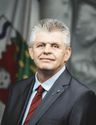
Jay MacDonald Thebacha
Thank you, Mr. Speaker. Mr. Speaker, historically, the Northwest Territories boreal forest has acted as a strong carbon sink, absorbing more carbon dioxide than it releases. Over recent research, combined with the effects of drought, wildfire, and permafrost thaw, it's weakening things and, you know, research was presented recently at the landscape carbon workshop in February of 2025 and, you know, as things move forward the accumulative effects of these recent fire seasons, particularly 2023 as the most severe season in our history, have shifted some areas of the boreal landscape from carbon sink to net carbon source. Thank you, Mr. Speaker.
Question 854-20(1): Health of Northwest Territories Boreal Forest
Oral Questions
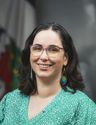
Kate Reid Great Slave
Thank you, Mr. Speaker. So that is a tipping point for us. Does the Minister know how much more greenhouse gases we are emitting annually as compared to prior to our 2023 wildfire season and continued permafrost melt? Thank you, Mr. Speaker.
Question 854-20(1): Health of Northwest Territories Boreal Forest
Oral Questions
Jay MacDonald Thebacha
Thank you, Mr. Speaker. Mr. Speaker, it's very challenging to quantify and compare carbon landscape emissions over time in the NWT and in Canada and worldwide for that matter. Canada and Canadian jurisdictions use methods developed by the United Nations to report on their emissions, and this message does not account for natural variations, carbon levels associated with, for example, wildfires or permafrost thaw. It really only captures the human-made emissions component of that data. And, you know, we also know that there are knowledge gaps in these emissions, and it is currently difficult to tell the difference between natural emission cycles and emissions due to climate change. We're advancing work to better understand and potentially manage the landscape carbon. Thank you, Mr. Speaker.
Question 854-20(1): Health of Northwest Territories Boreal Forest
Oral Questions
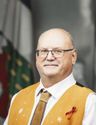
The Speaker Shane Thompson
Thank you, Minister of ECC. Final supplementary. Member from Great Slave.
Question 854-20(1): Health of Northwest Territories Boreal Forest
Oral Questions
Kate Reid Great Slave
Thanks, Mr. Speaker. So in short, two questions, two nos.
Will the Minister direct his staff to allocate additional resources for climate monitoring and especially more community-based monitoring while also incorporating traditional knowledge when it's appropriate? Thank you, Mr. Speaker.
Question 854-20(1): Health of Northwest Territories Boreal Forest
Oral Questions
Jay MacDonald Thebacha
Thank you, Mr. Speaker. Mr. Speaker, currently, there are over a hundred climate stations operated by the GNWT and the federal government, so environment and climate change across the NWT. The GNWT has climate stations in every NWT community. And building from the landscape carbon workshop, the GNWT is coordinating efforts with partners, including Indigenous governments and researchers to develop landscape carbon roadmap for the Northwest Territories, and this roadmap will identify the next steps in research, monitoring, including western science, traditional knowledge, and local knowledge and the potential management related to this landscape carbon. Thank you, Mr. Speaker.
Question 854-20(1): Health of Northwest Territories Boreal Forest
Oral Questions
Question 855-20(1): Crime Prevention in the Northwest Territories
Oral Questions
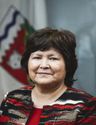
Sheryl Yakeleya Deh Cho
Thank you, Mr. Speaker. Mr. Speaker, my questions are going to be directed to the Minister of Justice.
Can the Minister explain what steps the GNWT is taking to prioritize and support safer communities in the Deh Cho where crime and social issues are reaching crisis levels? Thank you, Mr. Speaker.
Question 855-20(1): Crime Prevention in the Northwest Territories
Oral Questions
Question 855-20(1): Crime Prevention in the Northwest Territories
Oral Questions
Jay MacDonald Thebacha
Thank you, Mr. Speaker. Mr. Speaker, I certainly feel for the Member and the impacts that her community and many communities are facing across the Northwest Territories. You know, our government has taken many steps to date, and we have many steps coming forward as we progress with different pieces of legislation, the Trespass Act, the Civil Forfeiture Act, the SCAN legislation, are tools that are on the landscape that will help support communities. I have been engaging with small communities, getting feedback and response from those communities, to address what their immediate needs are and how we can work together. And I think a lot of the tools that we've put into place through the RCMP, additional staff and, you know, our crime reduction unit, our other key components that we put in place to focus on the drugs and crime-related areas in the territory, are certainly ways we can work together with the community. Thank you, Mr. Speaker.
Question 855-20(1): Crime Prevention in the Northwest Territories
Oral Questions
Sheryl Yakeleya Deh Cho
Thank you, Mr. Speaker. Will the Minister commit to working directly with Deh Cho community governments and local leadership to develop community-led safety and wellness strategy tailored to their unique needs and cultural strengths? Thank you, Mr. Speaker.
Question 855-20(1): Crime Prevention in the Northwest Territories
Oral Questions
Jay MacDonald Thebacha
Thank you, Mr. Speaker. Mr. Speaker, crime reduction and prevention is a key priority of the GNWT and a complex issue requiring community support and involvement. And I really want to emphasize that this is not anything that we can do alone. The GNWT can't solve this problem without working very closely with all of the other agencies across the NWT as well as with the communities, the Indigenous governments, the Indigenous organizations. It needs to be an all hands-on deck approach, Mr. Speaker. As Minister of Justice, you know, I'm responsible for setting the policy and priorities for 2024 to 2027, including building and strengthening those relationships with Indigenous governments and communities and certainly want to continue those conversations that we're all working together to address this severe challenge that is really impacting our communities in a very negative way. Thank you, Mr. Speaker.
Question 855-20(1): Crime Prevention in the Northwest Territories
Oral Questions
The Speaker Shane Thompson
Thank you, Minister of Justice. Final supplementary. Member from the Deh Cho.
Question 855-20(1): Crime Prevention in the Northwest Territories
Oral Questions
Sheryl Yakeleya Deh Cho
Thank you, Mr. Speaker. Can the Minister outline what resources or flexible funding options are available or will be made available to help Deh Cho communities design and implement their own local safety and healing initiatives? Thank you, Mr. Speaker.
Question 855-20(1): Crime Prevention in the Northwest Territories
Oral Questions
Jay MacDonald Thebacha
Thank you, Mr. Speaker. Mr. Speaker, once again, I think this is really an all of government approach required here. Like I said earlier, you know, I've gone to many of the small communities, met with many of the leaders across the Northwest Territories on this exact issue, and I've heard many of the concerns that the Member has also raised around communities, you know, having specific needs. And I think as we look at this holistically and from the big picture, we need to continue that conversation with the communities to help them to identify potential funding sources and certainly optimistic with the new federal budget coming out in early November that there may be some potential pots that we could work together on trying to identify those needs. Thank you, Mr. Speaker.
Question 855-20(1): Crime Prevention in the Northwest Territories
Oral Questions
Question 856-20(1): Supports for Jurors in the Northwest Territories
Oral Questions
October 28th, 2025
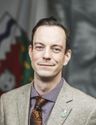
Kieron Testart Range Lake
Thank you, Mr. Speaker. Mr. Speaker, the Department of Justice recently announced a new program to support mental health of jurors who often go through very difficult circumstances in the course of executing their responsibilities through juries. This is relevant to a report put out by the Standing Committee on Justice and Human Rights in May of 2018 called Improving Support for Jurors in Canada. That's a House of Commons committee. That committee are made 11 recommendations, and one of these was to recommend that provinces and territories offer psychological support and counselling programs without predetermined time limits and the number of sessions left to the discretion of a mental health professional.
So I'd like to ask the Minister of Justice today if this new program that's being rolled out to support jurors will conform to those recommendations. Thank you, Mr. Speaker.
Question 856-20(1): Supports for Jurors in the Northwest Territories
Oral Questions
Question 856-20(1): Supports for Jurors in the Northwest Territories
Oral Questions
Jay MacDonald Thebacha
Thank you, Mr. Speaker. Mr. Speaker, currently we are using the Employee Assistance Program as a support for jurors that are currently serving. And I certainly appreciate that jury duty is a -- you know, is an honour but also can be a very traumatic and challenging experience.
We are currently working on a new program that will come out hopefully in 2026. And I don't have the specific answer to that but I'm happy to get that information and provide it to the Member to focus in on the detail of that request. Thank you, Mr. Speaker.
Question 856-20(1): Supports for Jurors in the Northwest Territories
Oral Questions
Kieron Testart Range Lake
Thank you, Mr. Speaker. Thank you to the Minister. As the former jury administrator for the Northwest Territories, this is a deeply-held issue for me because I dealt with so many people in the system who were doing juries. We actually compensate jurors around $80 a day. The same committee report recommends increasing it to $120 a day. Quebec -- sorry, Ontario has already done this. Nunavut pays between $100 to $150 a day. This eases with the time commitments required for a jury. Will the Minister increase fees for jurors to $120 a day? Thank you.
Question 856-20(1): Supports for Jurors in the Northwest Territories
Oral Questions
Jay MacDonald Thebacha
Thank you, Mr. Speaker. And thank you to the Member for the question. Certainly, yeah, I can feel the sentiment that, you know, $80 a day does not seem like an adequate level of compensation for a person to give up their time and, you know, it's a tremendous sacrifice not only from a financial perspective, depending on sort of what your employment opportunities are like. Certainly willing to take that back and have a conversation with the department about what that could potentially look like. Thank you, Mr. Speaker.
Question 856-20(1): Supports for Jurors in the Northwest Territories
Oral Questions
The Speaker Shane Thompson
Thank you, Minister of Justice. Final supplementary. Member from Range Lake.
Question 856-20(1): Supports for Jurors in the Northwest Territories
Oral Questions
Kieron Testart Range Lake
Thank you. That's less than minimum wage so I hope that we see some progress on that.
Finally, the committee has also recommended that interactions between jurors and other participants in the proceedings be minimized outside the courtroom with special parking spaces, access routes, and including secure areas where jurors can be alone to recharge after hearing, you know, difficult evidence and testimony in the courts. Will the Minister make the necessary changes to the Yellowknife Courthouse, and on community circuit as well, to ensure that those kinds of provisions are in place to ensure that jurors are so minimized from any kind of conflicts with individuals in the proceedings? Thank you, Mr. Speaker.
Question 856-20(1): Supports for Jurors in the Northwest Territories
Oral Questions
Jay MacDonald Thebacha
Thank you, Mr. Speaker. Mr. Speaker, I'll speak first primarily to the Yellowknife Courthouse, and we do have plans in the capital plan coming forward that part of that plan is to address a secure -- more secure parking area. I don't know specifically, as I sit here today, if that will include juror parking but certainly happy to take that away as well and look at what that could potentially look like, as well as -- you know, I'm familiar with very few courthouses across the Northwest Territories and what those facilities look like, but, again, I think in -- you know, our rapidly changing world and our increased level of violence that we see on many, many fronts, I'm happy to, again, take that away and have that conversation with the department and see what potential solutions could be looked at. Thank you, Mr. Speaker.