This is page numbers of the Hansard for the 20th Assembly, 1st Session. The original version can be accessed on the Legislative Assembly's website or by contacting the Legislative Assembly Library. The word of the day was housing.

Topics

Members Present

Hon. Caitlin Cleveland, Mr. Edjericon, Mr. Hawkins, Hon. Lucy Kuptana, Hon. Jay MacDonald, Hon. Vince McKay, Mr. McNeely, Ms. Morgan, Mr. Morse, Ms. Reid, Mr. Rodgers, Hon. Lesa Semmler, Hon. R.J. Simpson, Mr. Testart, Hon. Shane Thompson, Hon. Caroline Wawzonek, Mrs. Weyallon Armstong, Mrs. Yakeleya

The House met at 1:32 p.m.

---Prayer or reflection

Prayer Or Reflection

The Speaker

The Speaker Shane Thompson

Please be seated. I'd like to thank Eleanor Mitchell for the opening prayer. Colleagues, before we get going, I'd like to recognize a few honoured guests here in the House today.

First, our former Speaker of the 19th Assembly, former colleague of the 18th Assembly, and he got elected in the 17th Assembly, Mr. Frederick Blake, Sonny, Junior. Welcome to the chamber.

As well, I'd like to recognize a former colleague of mine from the 19th Assembly. I can call her my niece now; she's no longer the Minister anymore, she's now back in the public. Diane Archie. She was the Member from Inuvik Boot Lake in the 19th Assembly. So welcome to our Assembly.

With Mr. Blake, he has his few supporters, his mother Grace Blake from Tsiigehtchic; George Blake, his uncle, from McPherson; Emily Francis from Yellowknife, Annie McNabb from Yellowknife; Catherine Blake from Yellowknife; Lorraine Frost from Inuvik; Priscilla Judas; as well Darrell Chocolate, the artist who did Mr. Blake's portrait, as well as our former clerk Cynthia James. Welcome to the Assembly.

Ministers' statements. Minister of Infrastructure.

Minister's Statement 158-20(1): Successful 2025 Season for Marine Transportation Services
Ministers' Statements

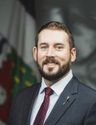
Vince McKay

Vince McKay Hay River South

Mr. Speaker, I would like to provide an update on the 2025 marine transportation services' sailing season. After the 2024 low water challenges that made the Mackenzie River impossible to navigate and forced cancelation of the shipping season, I am happy to report that the 2025 season was a success.

Last spring, I spoke of proactive contingency plans being made in case conditions on the Mackenzie River were unnavigable again. Thanks to favourable conditions and the good work done by marine transportation services and the Department of Infrastructure's fuel services division, we were able to carry out our sailing season and ensured the delivery of all scheduled fuel and cargo to communities along the Mackenzie River, Great Slave Lake, and the Western Arctic. This is the first time in four years that we have been able to ship to all communities on our marine transportation services system.

Mr. Speaker, I would like to share some highlights for you this year.

This season, marine transportation services delivered over 18 million litres of fuel and over 2,000 revenue tonnes of cargo to ten communities. Our vessels made two trips to Norman Wells, Tulita, Lutselk'e, and Fort Good Hope, and serviced communities in the Inuvialuit settlement region coastal communities.

This season was not without its challenges though, as water levels were still below normal and river conditions prompted us to lower the drafts on our barges and reroute around an ice strip in the Amundsen Gulf. Thankfully, the navigation buoys were placed on the Mackenzie River so that we could progress slowly down the river. It is evident that the work done to ensure a successful sailing season is a collaborative effort, that spans across government departments, and external organizations. Staff from marine transportation services worked with hydrologists from the Department of Environment and Climate Change to monitor water and snowpack levels and with the team at fuel services division to manage fuel logistics. Additionally, I would like to note that last week, this very same fuel resupply team was the recipient of a Premier's Award for Team Excellence.

This multidisciplinary team was recognized for coordinating one of the largest winter resupply operations in recent memory, over 230 truckloads of fuel delivered to the Sahtu communities, ensuring reliable and safe access to essential resources despite extreme weather and logistical challenges. I want to say congratulations to the fuel resupply team.

Mr. Speaker, the success of the sailing season will have lasting impacts on communities in the North. Marine transportation services delivers essential goods and services to northern communities that do not have the same ease of access to those connected through our all-season highway system. The success of this summer resupply season relieves pressures on our winter resupply system, which saw a 400 percent increase in road traffic last season, pushing our highway infrastructure to its limits. Though marine transportation services' operations have wrapped up, work to improve services have been and continue to be an ongoing effort.

Since marine transportation services came under new leadership last November, we have seen efficiencies introduced to standardized rate structures as well as streamlined ship schedules. Looking ahead, marine transportation services continues to improve fleet capabilities and is reviewing and refining operations to ensure we are prepared for any challenge that we face.

Mr. Speaker, with the success of this season, we have fulfilled our mandate to provide Northerners with access to essential goods and services, and I am pleased to re-affirm our government's commitment to community resupply in the years ahead. I would like to thank and recognize the flexibility of our residents. I would also like to thank our dedicate staff at marine transportation services and also the marine services division staff. Whether it is our ability to adapt to a changing climate, or our ability to mitigate these obstacles with contingency plans, or our collaboration with our stakeholders and business partners, we are confident in our capacity to help build a strong and resilient North. Thank you, Mr. Speaker.

Minister's Statement 158-20(1): Successful 2025 Season for Marine Transportation Services
Ministers' Statements

The Speaker

The Speaker Shane Thompson

Thank you, Minister of Infrastructure. Ministers' statements. Minister of Health and Social Services.

Minister's Statement 159-20(1): Dehcho Patient Journey Mapping
Ministers' Statements

Lesa Semmler

Lesa Semmler Inuvik Twin Lakes

Mr. Speaker, ensuring that every person in the Northwest Territories has access to safe, reliable, and equitable health care is not just a priority for me and a goal of our health and social services system, it is a promise we are working every day to uphold. Today, I am honoured to share an update on an initiative that represents a turning point for health care in the North; work happening in the Deh Cho region that is helping us understand, in a deeply human way, what care truly looks and feels like for residents in our smallest communities.

Mr. Speaker, this initiative is part of our broader primary health care reform, an effort built on the voices of residents, healthcare workers, and Indigenous governments. It is guided by their experiences, their hopes, and their determination to see care delivered in a way that truly meets people where they are. Together, we are reimagining a health system that is connected, compassionate, and built to last; one that works for people, not just on paper. To build that system, we must begin by listening, really listening, to those who rely on it most.

Over the past several months, teams have been visiting health cabin communities across the Deh Cho region. They have been listening to residents, supporting local staff, and assessing how care flows from community clinics to regional centres and beyond. What we are learning is powerful; we see both the dedication of our staff and communities, and the barriers that stand in the way of the care people deserve. We have heard about the frustrations caused by fragmented care and missed follow-ups, but we have also seen the strength of local teams who go above and beyond, and the resilience of residents who navigate these challenges.

Mr. Speaker, the next step in this journey is what we are calling the Deh Cho Patient Journey Mapping, a process that will follow the real experiences of four residents as they move through our system. Their stories will help us see the full picture: Where care feels seamless and where it breaks down.

These journeys will include an elder seeking regular and routine primary care, a cancer patient who must travel frequently for treatment, a child and caregiver travelling from a small community to a regional centre for care, and a patient receiving specialized care in Edmonton. Each journey will be documented; not as a report or a statistic, but as a story of a person, a family, and a community. Through these stories, we will see the system as our residents live it. Through their courage in sharing, we will be able to see where change is most needed and where it can happen right now.

This work will not just improve services in the Deh Cho; it will help us shape a more responsive and equitable health system across the Northwest Territories. It is about ensuring that people receive the care they need as close to home as possible; surrounded by family, culture, and community. And when travel for care is necessary, it must be delivered with the same compassion, dignity, and respect that every resident deserves, no matter where they live.

Mr. Speaker, this is how real transformation begins: With humility, with curiosity, and with the understanding that every journey through our health system represents someone's story, someone's loved one, someone's life.

I want to extend my heartfelt thanks to the staff, the Indigenous governments, and the residents of the Deh Cho region who are helping guide this work. Your leadership, your insight, and your trust are the foundation of this change. We are not just improving a system; we are building one that reflects who we are as Northerners - resilient, compassionate, and committed to caring for one another. Quyananni, Mr. Speaker.
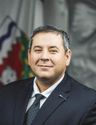
Minister's Statement 159-20(1): Dehcho Patient Journey Mapping
Ministers' Statements

The Speaker

The Speaker Shane Thompson

Thank you, Minister of Health and Social Services. Ministers' statements. Members' statements. Member from Frame Lake.

Member's Statement 766-20(1): Macroeconomic Policy
Members' Statements

Julian Morse

Julian Morse Frame Lake

Thank you, Mr. Speaker. Mr. Speaker, every year when we receive the operations budget, our finance department publishes an economic review which assesses the state of our economy against a framework of macroeconomic indicators. The 2025-2026 review was certainly concerning, speaking to a downturn in the diamond industry, challenges growing our workforce, and little success in achieving growth in other sectors.

We are doing a good job of identifying and summarizing our economic challenges, and it's certainly a depressing read. What's missing, however, and really stands out to me when I read the economic review, is robust and targeted strategy to respond to these challenges. This is something that has been raised as a concern in several iterations of the NWT environmental audit. In 2020, the audit found that there was insufficient evidence that the economic opportunities strategy was effective at achieving its objectives. The GNWT agreed with the recommendation and committed to developing regional economic development plans in response. However, the 2025 audit noted that industry expressed continued frustration in the lack of policy direction and concrete advancement by GNWT noting that the mineral development strategy is yet to be updated. Further, the audit found that the regional economic development plans do not constitute an economic development strategy. They are summaries of opportunities and potential areas of focus as identified participants in the process but do not constitute plans or strategies with specific activities, responsible leads, timelines, or performance measures. They are useful summaries at a regional level but do not constitute an economic development strategy as per the recommendation.

In response to these findings, the GNWT re-emphasized the importance of the regional plans and noted they will help to inform a broader NWT economic vision and strategy the Minister of ITI has a mandate to develop. But we are two years into the mandate of this government and are yet to see this strategy come forward or get an indication of when we can expect to review a draft. I am concerned that what progress is being made may be going in a similar direction as previous strategies which have found us taking a catch-all approach to development, trying to do a little bit of everything rather than taking a strategic and targeted approach which responds directly to the challenges we're facing. I would like to get reassurance that we are not repeating our past mistakes and also that we are going to get an effective strategy on the table as soon as possible. Thank you, Mr. Speaker.

Member's Statement 766-20(1): Macroeconomic Policy
Members' Statements

The Speaker

The Speaker Shane Thompson

Thank you, Member from Frame Lake. Members' statements. Member from Range Lake.

Member's Statement 767-20(1): Late Payments for Student Financial Assistance
Members' Statements

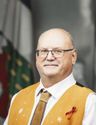
Kieron Testart

Kieron Testart Range Lake

Mr. Speaker, each year Northerners and students head to colleges and universities across Canada where they can proudly tell their peers how the Northwest Territories helps them study without racking up thousands of dollars in student loans thanks to our first-in-class SFA program. At a time when higher education costs are rising, that kind of assistance is truly unique and has become a covenant of growing up in the NWT. Unfortunately, late this summer, Range Lake constituents began contacting my office for help because their SFA payments were late, and they had received no update. Some feared that they had been denied SFA, while others worried that their schools wouldn't accept them for the semester. Eventually, we learned that the department was experiencing serious delays, apparently due to a high volume of applications and limited staff capacity. This not only disrupted payments but vital communication as well as some students were left unaware that they needed to make corrections to complete their applications. Although students eventually received their payments, many were charged late fees during the delay. When I contacted the Minister to ensure that these late fees would be covered, I was disturbed to hear that they were considered the students' responsibility as they should have been prepared for this outcome.

Mr. Speaker, how can we tell someone to be prepared for the department not to process their paperwork? These students did nothing wrong and for many, this was their first experience applying for any kind of government service. For many, their first encounter with our government must have been a tough lesson. What message does this send to the next generation of hardworking Northerners when the government tells them to lower their expectations and assume responsibility for the department's mistakes? The Minister needs to make this right, Mr. Speaker, and pay for these late fees, whether it's $20 or $100. After all, when income assistance misses a power bill, they cover the late fee. When a senior's home heating misses a tank refill, they quickly send out a truck. It's not complicated. It's about fairness and doing the right thing, doing right by our young Northerners and their families. Later today I will be asking the Minister to have a heart for SFA students and do the right thing. Thank you, Mr. Speaker.

Member's Statement 767-20(1): Late Payments for Student Financial Assistance
Members' Statements

The Speaker

The Speaker Shane Thompson

Thank you, Member from Range Lake. Members' statements. Member from Inuvik Boot Lake.

Member's Statement 768-20(1): Extension of Inuvik Runway
Members' Statements

Denny Rodgers

Denny Rodgers Inuvik Boot Lake

Thank you, Mr. Speaker. Mr. Speaker, the town of Inuvik was designated as a northern operational support hub in March 2025 by the Department of National Defence federal minister. The western Arctic location of Inuvik makes it a strategic Arctic security and sovereignty location to monitor and defend Canada's Arctic.

Mr. Speaker, the 3,000-foot extension to the Inuvik runway will make Inuvik the most strategic northern operational support hub for the Royal Canadian Airforce and other NORAD partners. Mr. Speaker, make no mistake, this is a great news story, something we need to celebrate.

Mr. Speaker, I'd also like to congratulate the Inuvialuit Regional Corporation, the Gwich'in Tribal Council, the local Indigenous contractors, and certainly, last but not least, the leadership shown by this government on that project to get it on time, on budget, and to work closely in collaboration with all its partners. But, Mr. Speaker, the work's not done.

DND staff recently met with the town of Inuvik. Department of Infrastructure and GNWT staff were also at that meeting, as well as IRC and ETC, to discuss their latest plans for future upgrades for the existing forward operating location.

Mr. Speaker, over the next five years, Inuvik's northern operational support hub will see two new aircraft hangars, fuel storage tanks, and several operational support and storage buildings. Mr. Speaker, the GNWT needs to be prepared so we are fully involved and committed to ensure Inuvik plays a critical role in Arctic security. The potential jobs and economic development of the DND upgrades in Inuvik are important locally, for the Northwest Territories, and certainly nationally, Mr. Speaker. I'll have questions for the Minister of Infrastructure later. Thank you.

Member's Statement 768-20(1): Extension of Inuvik Runway
Members' Statements

The Speaker

The Speaker Shane Thompson

Thank you, Member from Inuvik Boot Lake. Members' statements. Member from the Sahtu.

Member's Statement 769-20(1): Spur Road from Mackenzie Valley Highway to Support Petroleum Development
Members' Statements

October 28th, 2025

Daniel McNeely

Daniel McNeely Sahtu

Thank you, Mr. Speaker. Mr. Speaker, I share my past several months on periodic talks with Cenovus Energy, an industry company who purchased Husky Energy with assets midway Norman Wells to Tulita west Mackenzie side.

Mr. Speaker, the assets include 17 kilometers of highgrade road, three structural bridges, several laydown pads, for an approximate 300,000 cubic metres of granular materials. This was initially installed to support their further exploration in oil and gas productions.

Mr. Speaker, Cenovus is developing a closure and reclamation plan. First right of refusal of assets opportunity is to the Tulita District Land Corporation. I only share this as a suggestion for an opportunity for the responsible Minister to engage with GDLC on the possibility of accessing a portion of the material for a 7-kilometer permitted Mackenzie Valley Highway section. Mr. Speaker, should the responsible Minister wish, I can share the contact information. I recognize my limited office authority offers; however, this may present benefits of collaboration. Thank you, Mr. Speaker.

Member's Statement 769-20(1): Spur Road from Mackenzie Valley Highway to Support Petroleum Development
Members' Statements

The Speaker

The Speaker Shane Thompson

Thank you, Member from the Sahtu. Members' statements. Member from Great Slave.

Member's Statement 770-20(1): Northwest Territories Actions in Response to Climate Change
Members' Statements

Kate Reid

Kate Reid Great Slave

Thank you, Mr. Speaker. Mr. Speaker, we tend to talk about what we can control, what is in our jurisdiction, and how to be best of service to the residents of the Northwest Territories. Unfortunately, climate change doesn't care about jurisdictional boundaries. Climate change demonstrates that we live in a fragile, interconnected global system that requires all governments, indeed all levels of government, to be thoughtful and strategic with how we manage, mitigate, and adapt to these impacts.

Mr. Speaker, the North of my childhood is very different than the North that we currently live, work, and grow in. I'm pleased to see some snowfall today, but my whole being knows that it should have snowed and stayed on the ground much, much earlier. It's predicted to be another above zero Halloween.

As the GNWT's own What We Heard report on the 2025-2029 draft climate action plan has noted, residents have told government that the time for incrementalism is over and that the GNWT must treat climate action with the same urgency as other emergency and public safety priorities. There are global tipping points that we are hurdling towards or may have already passed, like coral relief die back, melting Antarctic, Arctic, and Greenland ice sheets, or the halting of AMOC, the Atlantic Meridional Overturning Circulation, which is the great hot and cold water circulatory system of the Atlantic Ocean that has massive impacts on global weather patterns and food sources for marine life.

Mr. Speaker, I will continue to point to the fact that everything and everyone in this world is interconnected and how we address globally impactful issues in this House is important. I am anxious to see the newly-merged climate change and energy strategy and how we will move forward with meaningful actions, like reaching net zero by 2050. I also want to specifically state that while we might only admit a small percentage, in fact far less than 1 percent of Canada's total emissions, that doesn't mean that we get to say we're all good here. Every bit we can reduce our emissions and make changes that help our environment, and ideally help save our residents money, is important, Mr. Speaker. Our youth especially are looking to us to act, to take action that is appropriate to our context and is impactful. Thank you.

Member's Statement 770-20(1): Northwest Territories Actions in Response to Climate Change
Members' Statements

The Speaker

The Speaker Shane Thompson

Thank you, Member from Great Slave. Members' statements. Member from Yellowknife North.

Member's Statement 771-20(1): Residential Tenancies Act
Members' Statements

Shauna Morgan

Shauna Morgan Yellowknife North

Thank you, Mr. Speaker. Mr. Speaker, I believe that everyone needs and deserves to have a stable roof over their head, no matter how poor they are, even if, and especially if, they're struggling with addictions. There is a tension, though, between that principle and the reality that housing in Canada is a private commodity, one that we need more of. Lots of people cannot afford to own and maintain their own house so rental options are necessary. If we want more housing to be built and if we want landlords, including Housing NWT to survive, then we cannot afford so much ongoing damage to rental units. The individuals causing damage or serious disturbances need to be held accountable and that includes evictions.

Now, we hear opposing narratives. On the one side, we hear that the problem is big, bad landlords holding all the power, and they're kicking people out unfairly. On the other side, we hear that landlords are helpless to address illegal behaviour, people destroying their units, and evictions are impossible to obtain because the rental office and the RCMP are both hamstrung with too much legal due process. So where's the truth?

First, I think it's fair to say that many tenants and landlords are unaware of their legal rights. Tenants may not know that they can get the rental office to order their landlord to do proper maintenance, pest control, or that they can appeal an eviction that was made without proper cause or notice. Landlords may not know that there is already a process for expedited evictions. They can end a tenancy with only ten days written notice if a tenant is causing serious disturbances or hosting illegal activities.

I should say that eviction orders are happening. There was 102 last year and 169 the year before. But the rental office recommended in its latest annual report that the Act be changed to allow eviction orders to be immediately enforceable. Of course, evictions often create collateral damage, making people homeless who are being taken advantage of by troublemakers, sometimes their own family members, and evictions are never an ultimate solution. People still have to live somewhere, even if it's in a shelter or an encampment. And there we get into even thornier questions of accountability for people's behaviour. Mr. Speaker, I ask for unanimous consent to conclude my statement.

---Unanimous consent granted

Thank you, Mr. Speaker, and to my colleagues. In terms of accountability, I should also note that an occasional fine does not create real accountability for landlords who may be violating tenants' rights over and over.

So in conclusion, Mr. Speaker, I believe that housing is both a right and a responsibility, that tenants and landlords should both be held accountable, and tomorrow I will be continuing by discussing possible ways forward. Thank you, Mr. Speaker.

Member's Statement 771-20(1): Residential Tenancies Act
Members' Statements

The Speaker

The Speaker Shane Thompson

Thank you, Member from Yellowknife North. Members' statements. Member from Monfwi.

Member's Statement 772-20(1): Community Landfills
Members' Statements

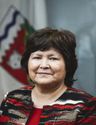
Jane Weyallon Armstrong

Jane Weyallon Armstrong Monfwi

Thank you, Mr. Speaker. Mr. Speaker. In many of our communities in Tlicho region and the rest of the NWT, landfills are not adequately engineered to protect people or the environment. They lack basic safeguards such as contaminant liners, designated waste zones, and proper leachate management. In some cases, waste is deposited directly on the land just a short distance from creeks, lakes, or wetlands, with no barriers to protect against runoff or groundwater contaminations.

Mr. Speaker, this is not just a technical oversight. This is a public health risk.

Improperly managed dumps attract wildlife, contaminate our water, and release harmful substances into the air and soil. Without proper signage, fencing, or management, these sites can be unsafe, especially for children, elders, and community members who live nearby or use the land for hunting, fishing, or gathering.

Mr. Speaker, under best practices and under territorial guidelines, a safe landfill must include environmental protections set back from water bodies, popper containment of hazardous materials, seasonal access controls, and long-term monitoring. Mr. Speaker, this is creating a safe community. I will have questions for the Minister of MACA. Thank you.

Member's Statement 772-20(1): Community Landfills
Members' Statements

The Speaker

The Speaker Shane Thompson

Thank you, Member from Monfwi. Members' statements. Member from Tu Nedhe-Wiilideh.

Member's Statement 773-20(1): Education Supports in Relationship to Jordan's Principle Funding
Members' Statements

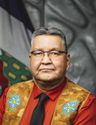
Richard Edjericon

Richard Edjericon Tu Nedhe-Wiilideh

Mr. Speaker, here in the North, education is a treaty right. In our territory where our communities have long faced severe disadvantages, the rights carriers a unique responsibility to reverse generations of inequality. Our schools embrace the responsibility dedicating themselves to equipping Indigenous children with the knowledge they need to succeed and connections to their culture from which they can draw strength. This is how our schools have become, severe hubs for our communities where staff go above and beyond to help families to access the support they need. Indigenous families rely on their schools to guide them in navigating and accessing a wide range of assistance for their children's unique needs, and this is all made possible through the federal government Jordan's Principle program. However, we have long known that the federal government is signalling that they're cutting back.

We don't know what changes are coming but for months, our government has been warned that the school could lose the funding they need for teacher assistants, culture programs, and essential services such as literacy interventions and speech therapy. Over the past few months, the Premier, the finance Minister, and the Minister of ECE all have gone to Ottawa to advocate for this funding to continue but we don't know what, if anything, they achieved. Meanwhile, the $14 million they've offered, roughly a quarter of that lost funding depends on the school drawn for the surplus and surpluses they save for other priorities, such as programs or maintenance of the school. Any day now, we could hear the truth from Ottawa that there are significant cuts to Jordan's Principle funding. Our treaty rights to education would rest solely with our territorial government as they could no longer rely on the federal government to shoulder the responsibility. In that case, the government must take these treaty rights as serious as our schools do and provide adequate funding so schools can continue delivering these vital services.

Right now, there are reviews of inclusive education in the event of that Jordan's Principle is cut. I am calling on that review to ensure meaningful consultation and accommodation with First Nations, Metis, and Inuit communities, and all northern schools so we develop an updated model that ensures territorial funding to these vital programs and services. I will have questions for the Premier at the appropriate time. Thank you, Mr. Speaker.

Member's Statement 773-20(1): Education Supports in Relationship to Jordan's Principle Funding
Members' Statements

The Speaker

The Speaker Shane Thompson

Thank you, Member from Tu Nedhe-Wiilideh. Members' statements. Member from Deh Cho.

Member's Statement 774-20(1): Public Safety and Crime Prevention in Communities
Members' Statements

Sheryl Yakeleya

Sheryl Yakeleya Deh Cho

Thank you, Mr. Speaker. Mr. Speaker, the NWT is facing a growing social crisis. Across our territory in small communities like those in my Deh Cho constituency, we are struggling with violent crimes, intimate partner violence, poverty, addictions, and health issues and housing instability.

Mr. Speaker, our people deserve to feel safe. Families deserve peaceful homes. Youth deserve opportunity. And elders deserve to live in comfort. Safe communities are a priority of this government, and my people must live in hope, not fear.

Safety cannot come from enforcement alone. The RCMP are not going to lower the crime rate or incarceration rates in our communities. The teachers are not going to ensure our children go to school. And overwhelmed and overworked nurses cannot be the only ones ensuring health in our communities. As we know, it takes a whole community to raise a child.

Mr. Speaker, for far too long, people from the outside have come into our communities and told us how to live, work, and think. The solutions we need must come from within our communities. True wellness and healing are community driven. We need prevention and community led action now. Mr. Speaker, the people in my riding have the knowledge, the wisdom, and the cultural strength to build solutions that work, solutions that address root causes of health issues, crime, addictions, and poverty. What they need is the full partnership of this government to empower the people to take ownership of their future well-being.

Today I call on the GNWT to recognize safe communities as our priority in the NWT, to work with community governments, elders, and local organizations to create and build their own community-led responses and solutions to crime, addictions, and poverty.

Mr. Speaker, when communities lead, healing follows. And when healing takes root, safety becomes possible. There's no challenge our communities cannot overcome when we are empowered to shape our own future. I will have questions later for the Minister of health. Thank you, Mr. Speaker.

Member's Statement 774-20(1): Public Safety and Crime Prevention in Communities
Members' Statements

The Speaker

The Speaker Shane Thompson

Thank you, Member from the Deh Cho. Members' statements. Member from Yellowknife Centre.