
The Member for Monfwi. The Member for Frame Lake. The Member for Great Slave. The Member for Mackenzie Delta. The Member for Yellowknife North. The Member for Tu Nedhe-Wiilideh. The Member for Dehcho. The Member for Sahtu. The Member for Yellowknife Centre. The Member for Range Lake. The Member for Inuvik Boot Lake.
Debates of March 5th, 2026
This is page numbers of the Hansard for the 20th Assembly, 1st Session. The original version can be accessed on the Legislative Assembly's website or by contacting the Legislative Assembly Library. The word of the day was know.
Topics
Recorded Vote
Motions
Clerk Of The House Mr. Harjot Sidhu
Recorded Vote
Motions
Recorded Vote
Motions
Clerk Of The House Mr. Harjot Sidhu
The Member for Thebacha. The Member for Yellowknife South. The Member for Kam Lake. The Member for Hay River North. The Member for Hay River South. The Member for Inuvik Twin Lakes. The Member for Nunakput.
Recorded Vote
Motions

The Speaker Shane Thompson
Thank you, colleagues. All in favour, 11. Opposed, zero. Abstentions, seven. Motion has carried.
---Carried
Colleagues, being cognitive of the time and realizing that the next motion is going to take more than 19 minutes, I am going to give us a break. Thank you.
---SHORT RECESS
Motion 73-20(1): Strengthening the Government of the Northwest Territories' Medical Travel Policy, Carried
Motions
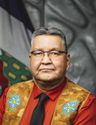
Richard Edjericon Tu Nedhe-Wiilideh
Thank you, Mr. Speaker.
WHEREAS section 35 of the Constitution Act, 1982 recognizes and affirms existing Indigenous and treaty rights, and the Government of the Northwest Territories, as an agent of the Crown, has a fiduciary obligation to respect these rights, including ensuring timely and equitable access to health services and treatment as recognized under constitutionally entrenched treaties, including Treaty 8 and 11;
AND WHEREAS many residents of the Northwest Territories, including treaty beneficiaries, experience limited access to timely appointments, diagnostics, and surgical services for services available in the territory, leading some to seek necessary care outside the territory;
AND WHEREAS residents, including treaty beneficiaries, who travel outside the territory to receive necessary care on time do so without support from medical travel, creating financial barriers that may constitute discrimination in publicly-funded health services, contrary to the treaties that affirm the right of Indigenous peoples to access care irrespective of territorial or provincial borders;
AND WHEREAS current medical travel policies, which administer non-insured health benefits (NIHB) to Status First Nations people, do not provide escorts for residents requiring medical evacuation outside the territory;
AND WHEREAS residents, including treaty beneficiaries, are therefore required, in medical ambulance situations, to pay out-of-pocket to serve as escorts for patients being medically evacuated from the territory to receive care, incurring significant costs despite treaty rights that extend irrespective of territorial boundaries;
AND WHEREAS Status First Nations who rely on non-insured health benefits for transportation benefits apply through medical travel, which must obtain federal approval before travel can be authorized, yet appeals of denials are not processed through medical travel;
AND WHEREAS the requirement for medical travel to obtain federal approval, combined with the fact that appeals of denials are not handled by medical travel, creates additional administrative barriers and slower response times for Status First Nations compared to other residents;
AND WHEREAS the Truth and Reconciliation Commission of Canada Calls to Action 18-24 call upon governments to close gaps in health outcomes for Indigenous peoples and recognize their distinct health rights, and the National Inquiry into Missing and Murdered Indigenous Women and Girls Calls for Justice identify equitable, barrier-free access to health services as essential to the safety, dignity, and human rights of Indigenous women and girls;
AND WHEREAS the United Nations Declaration on the Rights of Indigenous Peoples affirms the right of Indigenous peoples to the highest attainable standard of physical and mental health, and requires governments to take effective measures to ensure access to health services without discrimination;
AND WHEREAS the Government of the Northwest Territories United Nations Declaration on the Rights of Indigenous Peoples Implementation Act requires territorial laws and policies, including health policies, to be developed in collaboration with Indigenous peoples and in a manner consistent with section 35 of the Constitution Act, 1982;
AND WHEREAS the Legislative Assembly adopted Motion 49-20(1) on March 6, 2025, calling on the Government of the Northwest Territories to establish compassionate support for patients transported via emergency ground or air ambulance;
NOW THEREFORE I MOVE, seconded by the Member for Monfwi, that the Legislative Assembly calls upon the Government of the Northwest Territories to strengthen the medical travel policy by establishing a rapid-response emergency support mechanism, including a contingency fund, to provide interim approval and funding for medical travel escorts in extraordinary circumstances while awaiting federal NIHB decisions, where delays risk undermining patient safety, continuity of care, or the exercise of Indigenous peoples' rights to access health services beyond territorial borders as per recognized treaty obligations;
AND FURTHER, that the Government of the Northwest Territories build greater flexibility into medical travel determinations of whether in-territory care is "reasonably available," explicitly considering significant diagnostic, surgical, and treatment wait times;
AND FURTHERMORE, that the Government of the Northwest Territories implement a compassionate medical evacuation policy with all reasonable speed so that medivac supports complement and integrate with the medical travel policy, including guarantees for patient escorts where needed;
AND FURTHERMORE, that the Government of the Northwest Territories ensure that all amendments to the medical travel policy are made in accordance with the United Nations Declaration on the Rights of Indigenous Peoples Implementation Act, consistent with the United Nations Declaration on the Rights of Indigenous peoples, and in a manner that respects and upholds Indigenous and treaty rights recognized and affirmed under section 35 of the Constitution Act, 1982.
AND FURTHERMORE, that the Government of the Northwest Territories respond to this motion within 120 days.
Thank you, Mr. Speaker.
Motion 73-20(1): Strengthening the Government of the Northwest Territories' Medical Travel Policy, Carried
Motions
The Speaker Shane Thompson
Thank you, Member for Tu Nedhe-Wiilideh. To the motion. Member for Monfwi.
Motion 73-20(1): Strengthening the Government of the Northwest Territories' Medical Travel Policy, Carried
Motions

Jane Weyallon Armstrong Monfwi
Thank you, Mr. Speaker. Mr. Speaker, I do support this motion. You know, when we're traveling -- this is what our elders always say. When we are traveling, when we travel or go south or wherever we're going, you know, they always say, pray to have a good, safe travel, you know, that we're all going to come home safely. And that's the advice that elders, they always give us and they give it to the young people. And, you know, when we're traveling, nobody wants to get sick. So this is where medical travel denies people who are already on the road trip. And it's beyond our control. So that even when people are traveling, you know, they're already traveling already but they are limited with cash already. And because it's not going through -- they're there already so they're not going to be eligible for medical travel. So that's why we're asking that the system, to strengthen the systems, to allow people who are already traveling too. Because, you know, medical travel, many families are traumatized by the medical travel funding, especially for escorts. People are having a hard time finding medical escorts in many of the small communities because they are always saying, I don't have any money. We don't have enough money. And it comes down to that. There is funds in place but it's not enough.
You know, finding a medical travel should not be an issue, but it's becoming an issue for many of the smaller communities. But when people are already traveling and they're down south or wherever they're at, you know, and I know I heard the Minister say something about travel insurance. Well, in some cases, you know, on the emergency base, how are some of -- you know, people travel at the last minute. They don't have time to get travel insurance. And where do they go? How do they get the travel insurance?
So all of these things, due to technology, due to lack of services, we don't have access to lots of programming services, especially in small communities, so. Because for all the reasons, I do support the medical travel motion presented by my colleague from Tu Nedhe-Wiilideh. Thank you.
Motion 73-20(1): Strengthening the Government of the Northwest Territories' Medical Travel Policy, Carried
Motions
The Speaker Shane Thompson
Thank you, Member from monfwi. To the motion. Member from Tu Nedhe-Wiilideh.
Motion 73-20(1): Strengthening the Government of the Northwest Territories' Medical Travel Policy, Carried
Motions
Richard Edjericon Tu Nedhe-Wiilideh
Thank you, Mr. Speaker. Before I speak directly to my motion, I want to start by reminding this House and our government that our treaty rights are symbolic. They are recognized and affirmed in the Canadian Constitution of Canada. And section 35, again, the Constitution Act states that the aboriginal and treaty rights of the aboriginal people of Canada are hereby recognized and affirmed.
And further affirms the aboriginal people include First Nation, Inuit, and Metis peoples of Canada. And that treaty rights include those that exist through historic treaties and modern agreements. These rights are not optional. They are not imaginary. They are a constitutional obligation.
We must also remember that what the Crown itself promised when treaty was signed in 1900, the Crown stated that supplies of medicine would be placed in charge of a person selected by government at a different point and distributed for free to those Indians who might require them.
The Crown acknowledged that it would be difficult to provide physicians across such vast territory, but it will promise that the government will always take opportunities to provide medical services to those in need. Those promises did not appear over time.
They did not end with the passing of a generation.
Through the Indian Act and the creation of the Government of Northwest Territories, responsibilities for delivering services were delegated. But the Crown obligation to treaty people remained.
That means that the GNWT is part of the Crown governance in this territory and has a foundational obligation to uphold Treaty 11 rights, including the rights to access care and medicine.
And we all swore an oath in this Assembly to honour and respect the treaty signed with Indigenous people and to serve the people of the Northwest Territories faithfully. Our own Assembly priorities recognize the responsibility that commit us to improving access to health care, addressing trauma, and working in true collaboration with Indigenous governments.
And the Premier's mandate letters are clear. Ministers are directed to advance reconciliation and good governance by implementing the United Nations Declaration on the Rights of Indigenous People, advancing Indigenous rights agreements, implementing the Truth and Reconciliation Call to Actions, and working in partnership with Indigenous governments while maintaining openness, transparency, and accountability.
Mr. Speaker, those commitments must mean something in practice, because the reality facing our communities today is a growing health care crisis. I will be brief to you on the provision of this motion, because I have spoken at great lengths through this session about upholding our treaty rights to health. And my perspective and the perspective of my communities is already clear. But I brought this motion forward because our people are getting sicker and the government is not reacting. Preventative care is failing.
People cannot access service in time. Conditions worsen until emergencies occur. Then our people are flown south for treatment. And when that happens, their treaty rights to health, regardless of jurisdiction boundaries, is not being honoured by this government. This is not the fault of our frontline workers. Our doctors and nurses and health professionals, from our hospitals to our communities' healthcare centres, are doing extraordinary work under very difficult circumstances but the resources that are given are inadequate. The policies that govern access to health care are broken.
The Minister may want to frame this issue in affecting all residents, and she is right to do so.
Because this crisis is not limited to Indigenous people. It's affecting every community across the North. Today, there was a story on CBC about seniors whose family had to pay thousands of dollars out-of-pocket just to be by her side while she was incapacitated and close to death.
Mr. Speaker, this is heartbreaking. Where were her rights under the Canada Health Act blocked behind broken policies, just like my people's sacred treaty rights? This is what my constituents face all the time. Having to beg for escort with their flown to Edmonton or Calgary while incapacitated and facing serious surgeries is undignified. Our people need their loved ones by their side to understand treatment plans, to advocate for them, and someone to make end-of-life decisions. In our Indigenous culture, when someone is sick we stand beside them. We do not leave them alone in hospital rooms to be checked on once an hour. That might keep someone alive but does not respect our people's honour of our treaty rights. If we invest properly in primary care and prevention, maybe we would not be spending so much on emergency medical travel to begin with. Instead, more and more people are leaving the territory, even for services that technically exist here because wait times are unacceptable.
Treaty beneficiaries have rights everywhere. Those rights do not stop at the Alberta border. But this government is placing bureaucratic barriers between people and their rights simply to preserve jurisdictional authority, and it is causing real harm.
People are paying out of pocket for care without support from their own government. There must be flexibility in recognizing that our system is not meeting the people's needs.
And this motion addresses another problem, non-insured health benefit, NIHB. Too often, my constituents are flown out on a Friday by medical air ambulance but NIHB cannot process escort approvals until Monday or Tuesday. That means families either wait helplessly or pay thousands of dollars out of pocket with no guarantee of being reimbursed fully. This is unacceptable.
The solution is straightforward. The GNWT establish an emergency contingency with a medical travel budget to approve weekend escort travel for Treaty 8 and Treaty 11 beneficiaries when NIHB approvals were delayed. The government could then seek full reimbursement from NIHB afterwards. This would allow people to access care immediately without forcing families to financial hardship. Mr. Speaker, there is a consensus in this Assembly that solutions like this are needed. Look to our previous motion: We keep calling for action and action has yet to be taken and that consensus is not a design of us Members. This consensus comes directly from the needs of our communities. So I believe this motion gives the government another opportunity. The Minister can introduce greater flexibility for out-of-territory care. The government can't temporarily cover escort travel costs while NIHB approvals are pending.
And we can begin to honour both public health care obligations and treaty rights to health care.
So I ask my colleagues to stand in support of this motion and help make the Assembly work for our people, uphold our rights, and create healthy communities and government policies which are there for people when they need it. Thank you, Mr. Speaker.
Motion 73-20(1): Strengthening the Government of the Northwest Territories' Medical Travel Policy, Carried
Motions
The Speaker Shane Thompson
Thank you, Member for Tu Nedhe-Wiilideh. To the motion. Member from Range Lake.
Motion 73-20(1): Strengthening the Government of the Northwest Territories' Medical Travel Policy, Carried
Motions

Kieron Testart Range Lake
Thank you, Mr. Speaker. Thank you to the mover and seconder for bringing this motion forward. Medical travel is a huge issue in the Northwest Territories, and as our primary care system continues to face challenges, medical travel becomes all the more common and not just for small communities but for Yellowknife as well.
In my previous term as an MLA, I dealt with, I'd say, a handful of medical travel issues over the course of four years. Now I deal with them, if not weekly, you know, multiple times a week. It is an incredible volume of concern coming forward, and often it is the gaps that we're talking about that the policies don't address.
Now in this case in particular, this motion is very important because it speaks to something that the mover has spoken very passionately about, which is treaty rights. And, Mr. Speaker, we are all treaty people, and in this House we are sworn to uphold those treaties. And when there is a question that those treaties are not being given the fullness of attention that they deserve to be carried out in more than spirit but in reality, then we must confront that directly and ensure that they are. And this motion gives clear advice to government on how to do that.
It is the second time a compassionate medical travel policy has been called for in this House. I hope this motion passes as well. I don't know how many motions it will take, how many budget discussions, how many questions on the floor, until we get one. But the longer we don't have policies like this, the longer we don't have special contingency funds to support treaty people, the more people are going to suffer when their loved ones are in desperate situations. And that's who we're here to help. We're here to help working people, treaty people, people who are our most vulnerable when they're at their lowest point. And that is why I support this motion and that is why these motions are so important.
And I hope this government is listening, because they haven't been so far.
And it takes media stories, motions on the floor, it takes everything, and yet nothing moves. So I sure hope this is the one that kicks in and we start seeing some progress. Because I am getting tired of saying the same thing when the answer is so clearly in front of our eyes: Help the people who need it the most. When loved ones are in hospital, fly their loved ones down there to be there to support them. It's what doctors advise. And it is what the Member is calling for as a treaty right as well. And I am going to defer to his judgment on that. He's a treaty expert, Mr. Speaker. So I hope this motion does carry. I hope it results in real change. Because if we are continuing on this path, then every sitting there will be a new compassionate medical travel motion. Every time money is spent, it will come up.
Every time there's an opportunity to ask questions, it will come up again. And it won't stop until it changes. So change it. Very simple, do what the motion says. Help people who need it the most. Help working people. Help treaty people. Now is the time. Thank you, Mr. Speaker.
Motion 73-20(1): Strengthening the Government of the Northwest Territories' Medical Travel Policy, Carried
Motions
The Speaker Shane Thompson
Thank you, Member from Range Lake. To the motion. Member from Mackenzie Delta.
Motion 73-20(1): Strengthening the Government of the Northwest Territories' Medical Travel Policy, Carried
Motions
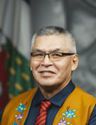
George Nerysoo Mackenzie Delta
Thank you, Mr. Speaker. I too will be supporting this motion. I dealt with personal issues in regards to medical travel. At one time my granddaughter was on life support, and her mother couldn't fly down on the same plane with her, so she had to go down a day later. But what if my granddaughter didn't make it at the time? It's because of policies that we have to go through.
And there was another instance where my niece was in a coma for about a month, and the whole family was fortunate that they had the financial resources to go down. But the majority of the Northwest Territories residents don't have that opportunity or advantage of having financial resources available to be with their loved ones and have to see them go down on their own. So it is important that for the well-being of our residents, the mental well-being, it's stressful when you have to see your loved one going on a plane and you can't be with them, or if they're down in southern Canada already. So it is important that we uphold these treaty rights and obligate them and make life easier for the residents of the Northwest Territories. So I will be supporting this motion. Thank you, Mr. Speaker.
Motion 73-20(1): Strengthening the Government of the Northwest Territories' Medical Travel Policy, Carried
Motions
The Speaker Shane Thompson
Thank you, Member from Mackenzie-Delta. To the motion. Member from the Dehcho.
Motion 73-20(1): Strengthening the Government of the Northwest Territories' Medical Travel Policy, Carried
Motions
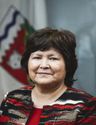
Sheryl Yakeleya Deh Cho
Thank you, Mr. Speaker. I too will be supporting the motion. Thinking of all the things all the Members talked about and also having to deal with constituents that travel out of territory and got hurt and eventually passed away in another jurisdiction and not being able to get the support that the family needed so they could be with their loved ones is just not right. So for that, and many of the reasons that my colleagues spoke about, I will be supporting the motion. Thank you.
Motion 73-20(1): Strengthening the Government of the Northwest Territories' Medical Travel Policy, Carried
Motions
The Speaker Shane Thompson
Thank you, Member from the Dehcho. To the motion. Member from Yellowknife North.
Motion 73-20(1): Strengthening the Government of the Northwest Territories' Medical Travel Policy, Carried
Motions

Shauna Morgan Yellowknife North
Thank you, Mr. Speaker. So I can certainly support this motion and would just note that my understanding is that the work that is being demanded here really aligns with what I've heard is already underway from the Department of Health and Social Services. And so I look forward to the government's response in that regard.
I don't see anything in the clauses here that actually addresses the concerns I am hearing from my colleagues around people who are already traveling out of the territory and then get into trouble and need help. So I won't address that now, but I am not sure that we're going to get a government response on that through this motion given that it's not in the operative clauses. Just wanted to note that, but it could be a topic of future conversation. Thank you, Mr. Speaker.
Motion 73-20(1): Strengthening the Government of the Northwest Territories' Medical Travel Policy, Carried
Motions
The Speaker Shane Thompson
Thank you, Member from Yellowknife North. To the motion. Member from the Sahtu.
Motion 73-20(1): Strengthening the Government of the Northwest Territories' Medical Travel Policy, Carried
Motions

Daniel McNeely Sahtu
Thank you, Mr. Speaker. I will make it short.
I will be supporting this motion for all the reasons. The non-treaty and treaty areas of the Northwest Territories, you can say okay, it's in half the area, it's a modern treaty and the other half is still under negotiations. But if you look back at the principles of the claim itself, there's wording to justify the expense of providing health care. Mahsi.
Motion 73-20(1): Strengthening the Government of the Northwest Territories' Medical Travel Policy, Carried
Motions
Motion 73-20(1): Strengthening the Government of the Northwest Territories' Medical Travel Policy, Carried
Motions
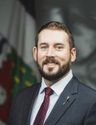
Julian Morse Frame Lake
Thank you, Mr. Speaker. Mr. Speaker, yeah, as previously noted, this is something that I know the health department is putting a lot of energy into working on, updating medical travel policy, the entire framework around it, and seeking to resolve some of the issues that are being raised here.
Insofar as I am interested to -- I will admit that the nuances of how NIHB and medical travel coincide and work together is a complex topic, and so I am interested in learning more about how that all works through the government's response to this motion. So insofar as we'll get a government response to this, I am interested to hear what the government has to say. So I can support it for those reasons. Thanks.
Motion 73-20(1): Strengthening the Government of the Northwest Territories' Medical Travel Policy, Carried
Motions
The Speaker Shane Thompson
Thank you, Member from Frame Lake. To the motion. Member from Great Slave.
Motion 73-20(1): Strengthening the Government of the Northwest Territories' Medical Travel Policy, Carried
Motions

Kate Reid Great Slave
Thank you, Mr. Speaker. I will also keep it brief. A few things I would like to say about this motion is I absolutely agree with the mover that there is the need to uphold the treaty rights on health care across the territory. That is undisputable.
I think the thing that frustrates me most about this, Mr. Speaker, is that medical travel is so urgent when you need it and so misunderstood when you need it and when you don't need it. I think there is more work we can do to explain how NIHB works and how it doesn't work, how Metis health benefits work and don't work adequately for our residents, and I do look forward to the work that the GNWT is already doing on medical travel policies and clarifying that for the residents of the Northwest Territories.
I don't have a lot more to say about it at this point except that clearly what we have is not working, Mr. Speaker, so I will leave it at that. Thank you.
Motion 73-20(1): Strengthening the Government of the Northwest Territories' Medical Travel Policy, Carried
Motions
The Speaker Shane Thompson
Thank you, member from Great Slave. To the motion. Member from Yellowknife Centre.